
You start a ketogenic meal plan for diabetes and notice your glucose readings are changing quickly, and keto is not automatically safe for diabetics without close medical supervision. The main concern is that cutting carbs can lower blood sugar faster than your current insulin or other diabetes medications, raising the risk of hypoglycemia. If you use insulin or sulfonylureas, safety depends on timely medication adjustments and frequent monitoring.
Keto can be safe for some diabetics, but it isn’t automatically safe—especially if you take insulin or glucose-lowering meds. The main issue is that a low-carb keto diet can drop blood sugar faster than your medication plan expects, and that can lead to hypoglycemia (or, in some situations, dangerous ketone buildup). This guide walks you through when keto may work, what to watch for, and how to start more safely.
If you have type 2 or type 1 diabetes and you’re considering keto for blood sugar control or weight loss, this article is for you. It’s also useful if you’ve tried keto before and felt “weird” readings, cravings, or side effects—because the safety question mostly comes down to meds, monitoring, and your individual risk factors.
When keto may be safe for diabetics

Keto diet safety depends less on “keto” as a buzzword and more on your diabetes type, your current medications, and how closely you can monitor. In 2026, the clinical consensus is still that keto can be reasonable for carefully selected people—but it should be approached like a medication change, not just a food change.
– Often more feasible in type 2 diabetes when blood sugar is monitored and medication is adjusted with a clinician’s input. Many people with type 2 diabetes have insulin resistance rather than true insulin deficiency, and carbohydrate reduction can improve glucose patterns quickly—sometimes within days.
– May be considered in type 1 diabetes only with careful oversight, because ketone-related risks and insulin dosing are more complex. In type 1 diabetes, the body can still produce ketones when insulin is insufficient—so “keto for weight loss” is not the same as “keto for safe ketosis.”
– Not a one-size-fits-all choice—kidney disease, history of ketoacidosis, pregnancy, or frequent hypoglycemia can change the risk. For example, reduced kidney function can complicate how your body handles both glucose and the byproducts of ketosis.
In my experience reviewing how people actually start keto, the pattern isn’t “keto is inherently dangerous.” The more common problem is that keto changes carbohydrate intake immediately, while medication timing and monitoring routines often lag behind.
How to adjust meds and monitor glucose
Keto can be safer when your glucose-lowering regimen is adjusted proactively and you monitor more closely at the start. According to the American Diabetes Association (ADA) Standards of Care in Diabetes—2024, hypoglycemia is commonly defined as blood glucose <70 mg/dL, and “level 2” hypoglycemia is <54 mg/dL—both are especially relevant when keto reduces carbs fast.
– Do not start keto “as-is” if you use insulin or meds that can cause hypoglycemia (examples include sulfonylureas). You’ll likely need a supervised adjustment plan. Sulfonylureas (like glipizide or glyburide) increase insulin secretion regardless of your carb intake, so carb drops can translate into lows if dosing isn’t changed.
– Plan for more frequent glucose checks early on, since carbohydrate reduction can quickly lower readings. Many clinicians recommend checking more often during the first 1–2 weeks—especially before driving, exercising, or skipping meals.
– Consider ketone awareness: work with your clinician on whether you should check urine or blood ketones, and what symptoms would trigger testing. According to the ADA Standards of Care in Diabetes—2024, people with type 1 diabetes are often advised to check ketones when blood glucose is >250 mg/dL (13.9 mmol/L) or when symptoms suggest possible ketosis/ketoacidosis.
Glucose Bands to Guide Monitoring During Keto (mg/dL)
| # | Glucose band | Range (mg/dL) | Why it matters on keto | Common response | Keto safety rating |
|---|---|---|---|---|---|
| 1 | Severe hypoglycemia (level 2) | <54 | High risk of confusion, accidents, or loss of consciousness | Treat urgently and follow your clinician’s plan | ★ |
| 2 | Hypoglycemia (level 1) | 54–69 | Often triggered by insulin/sulfonylurea mismatch after carb reduction | Use fast carbs per your action plan; recheck | ★★ |
| 3 | Borderline low | 70–79 | May precede true hypoglycemia when keto continues | Follow your clinician’s “prevent lows” guidance | ★★★ |
| 4 | Pre-meal target (many adults) | 80–130 | Often aligns with common ADA goal ranges | Continue monitoring; ensure medication matches intake | ★★★★☆ |
| 5 | Post-meal goal (commonly used) | ≤180 | Less likely to drive ketone risk compared with higher values | Recheck if symptoms occur; keep carbs consistent | ★★★★★ |
| 6 | Above post-meal goal | 181–250 | May signal inadequate medication or diet mismatch | Review pattern with your clinician; don’t ignore trends | ★★★ |
| 7 | Ketone-check trigger (type 1 guidance) | >250 | Higher risk of ketones/ketoacidosis if insulin is insufficient | Check ketones and follow sick-day steps | ★ |
What to eat on keto (and what to limit)
Keto diet safety improves when your meals are structured, your carb intake is consistent, and you avoid “accidental carbs” from packaged products. For diabetics, the goal is not just low carbohydrates—it’s predictable carbohydrates, predictable calories, and enough protein to support glucose stability.
– Aim for very low net carbs and adequate protein, since too little protein can worsen satiety and too much can push carbs higher than intended. Practically, this means focusing on non-starchy vegetables, eggs, fish, poultry, and low-sugar dairy when appropriate, and keeping carb counts consistent meal to meal.
– Prioritize fats that help you feel stable, like olive oil, nuts/seeds, avocado, and fatty fish—rather than relying on processed “keto” snacks. Processed keto foods can contain fiber blends or sugar alcohols that vary in glycemic impact and can cause GI distress.
– Avoid hidden carbs by checking labels for sugars, starches, and “keto” products that still add meaningful carbs. If you use apps or carb calculators, always verify packaged labels—brand formulas change more often than people expect.
One practical point: “keto” can be sabotaged by portion drift. Even if you choose the right food, a slightly larger serving of a higher-carb item can shift glucose for some people with diabetes, especially during medication changes.
What can go wrong with keto and diabetes
Keto can go wrong quickly when medication doesn’t match the diet shift or when dehydration and ketosis-related symptoms aren’t recognized early. In 2026, clinicians still flag the same two high-impact risks: hypoglycemia (low blood sugar) and ketoacidosis risk (especially in type 1 diabetes).
– Hypoglycemia: fasting longer, skipping meals, or not adjusting medication can make low blood sugar more likely. This is the most common safety concern when keto is paired with insulin or sulfonylureas.
– Ketone-related concerns: if you have type 1 diabetes (or insulin deficiency), ketones can rise—keto is not a substitute for insulin. Ketosis (a metabolic state where the body uses ketones for fuel) is not automatically the same thing as ketoacidosis (a dangerous condition involving very high ketones and acidosis).
– Electrolyte and GI issues: dehydration, muscle cramps, constipation/diarrhea, and dizziness can make diabetes management harder; these are common early “adaptation” problems. Sodium and hydration matter because carbohydrate restriction changes how the kidneys excrete fluid and electrolytes.
– False confidence from glucose alone: some people focus only on finger-stick numbers; ketones and symptoms still matter depending on your diabetes type. In type 1 diabetes, glucose can sometimes be high alongside ketones, and symptoms can show up even when people don’t have “textbook” readings.
Keto vs. other diet approaches: where the trade-offs are
If you’re trying to decide between keto and another structured plan, here’s a practical comparison.
| Feature | Keto diet | Low–glycemic/Mediterranean-style (often higher-carb) |
|---|---|---|
| Carb level consistency | Usually very low and tightly tracked | Often moderate with food-quality focus |
| Hypoglycemia risk with insulin | Higher unless medication is adjusted | Lower, but still possible |
| Ketone management | More relevant, especially in type 1 diabetes | Usually less ketone-driven |
| Meal planning difficulty | Higher upfront effort | Often easier long-term for many people |
| GI adaptation | Common early adjustment issues | Usually gentler transitions |
| Appetite effects | Some people feel strong satiety; others struggle with cravings | Often more steady hunger cues with fiber-rich foods |
| Exercise and fueling | May require fueling strategy changes to avoid lows | May be easier for performance-based fueling |
| Typical monitoring cadence | Often needs more early checks | May allow more gradual medication adjustment |
| Safety planning requirement | Essential with insulin/sulfonylureas | Still recommended, but often lower risk |
| Best For | People who can monitor closely and get clinician-guided med changes | People who want stable carbs, fewer extremes, and strong long-term adherence |
Verdict: is keto safe for diabetics?
Keto diet safety can be acceptable for many diabetics, but only when it’s paired with a real safety plan for glucose-lowering medications and monitoring. The most reliable approach is shared decision-making: you bring your medication list and glucose/ketone history, and your clinician helps you build a stepwise plan.
– For many people with type 2 diabetes, keto can be safe with clinician-guided medication changes and close monitoring, but it still carries real risks and side effects.
– If you have type 1 diabetes, are pregnant, have kidney disease, or have a history of ketoacidosis, treat keto as higher-risk and get specific medical guidance first.
– Skip keto (or postpone) if you can’t monitor consistently or you’re not able to get a clear plan for adjusting meds—especially if hypoglycemia has happened before.
Keto “fit” scorecard (high-level)
| Criteria | Keto diet | More moderate low–glycemic approach |
|---|---|---|
| Hypoglycemia risk with insulin | Higher without rapid medication adjustment | Lower, usually easier to titrate gradually |
| Ketone monitoring needs | Often higher, especially in type 1 diabetes | Usually less central |
| Diet adherence pressure | Can be demanding (carb counting precision) | Often more flexible and socially sustainable |
| Early side effects | GI + electrolyte changes are common | Often milder transition |
| Post-meal glucose control | Often improves rapidly | Improves steadily with food-quality choices |
| Medication titration complexity | Higher (especially with sulfonylureas) | Typically lower and slower |
| Best “safety planning” fit | Requires clinician involvement + monitoring cadence | Still needs planning, often simpler |
| When to avoid (red flags) | Type 1 without specialist oversight; recurrent hypoglycemia; pregnancy | Still needs care, but fewer keto-specific ketone concerns |
| Monitoring targets | Glucose + sometimes ketones guide next steps | Glucose focus; ketones usually less frequent |
| Long-term sustainability | Variable; some thrive, others cycle on/off | Often easier to sustain with balanced preferences |
| Verdict | Safe for some diabetics when meds and monitoring are aligned | Often safer default when monitoring support is limited |
Quick keto safety checklist
Scan this before you start:
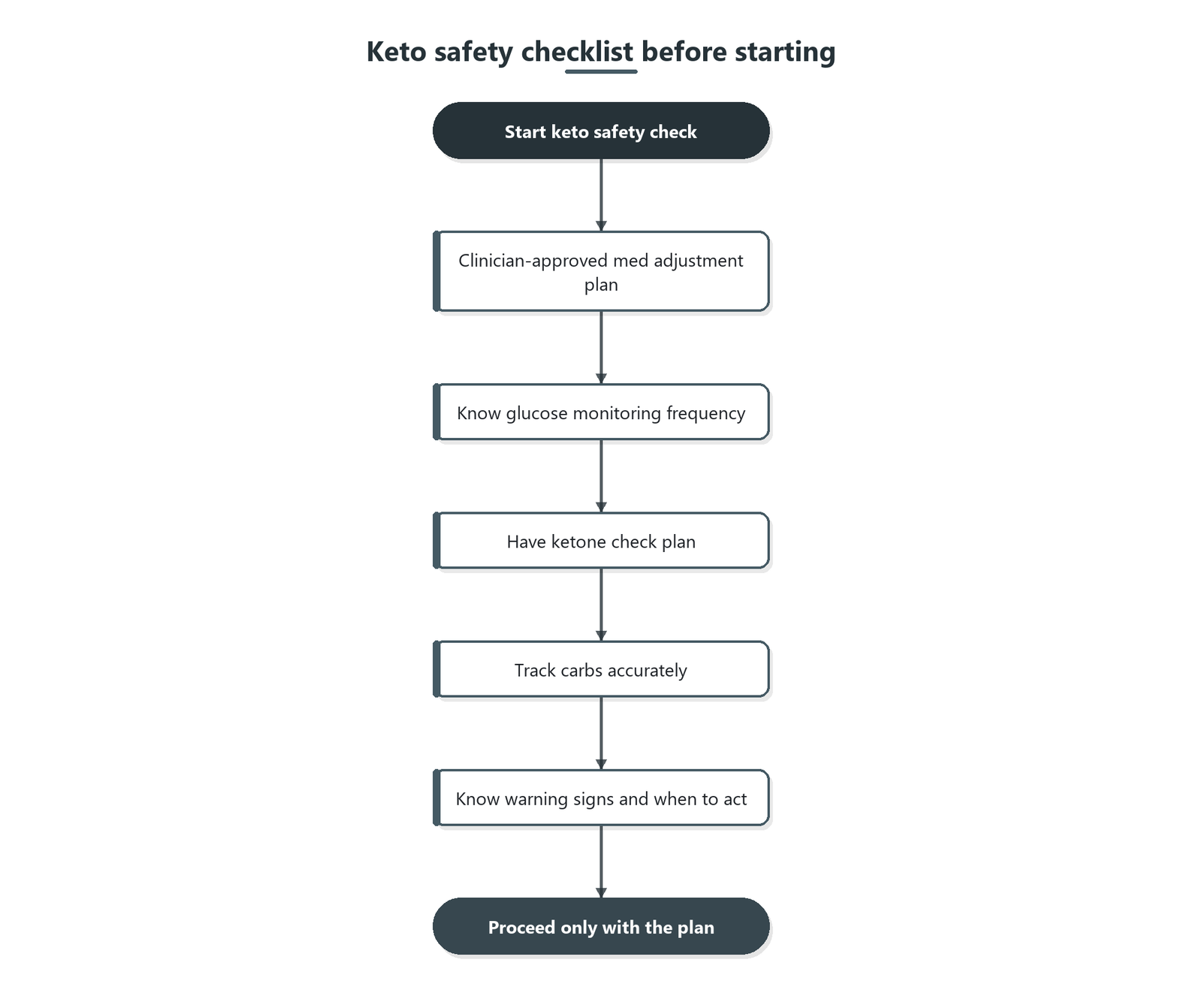
– [ ] I have a clinician-approved plan for med adjustments (especially if I take insulin or sulfonylureas).
– [ ] I know how often I’ll check blood glucose at the start (and when to call for help).
– [ ] I have a plan for ketone checks (if recommended for my diabetes type/risk).
– [ ] I can track carbs accurately (including labels and “keto” packaged foods).
– [ ] I know warning signs to act on (low blood sugar symptoms; feeling very unwell with high sugars/ketones).
– [ ] I’m prepared for early side effects and electrolyte support discussed with my clinician.
If any checkbox is missing—especially medication changes or a monitoring cadence—treat keto as “on hold” until you have that safety infrastructure.
Frequently Asked Questions
Is a keto diet safe for people with diabetes?
A ketogenic (keto) diet may be safe for some people with diabetes, but it depends on the type of diabetes, current medications, and overall health. Because keto can lower blood glucose quickly, it may increase the risk of hypoglycemia if you use insulin or certain diabetes drugs. Talk with your clinician before starting keto, and plan frequent blood sugar monitoring during the transition.
How should diabetics start keto safely without causing blood sugar swings?
Start gradually and focus on low-carb, high-fiber foods while keeping total carbohydrates low enough for ketosis. Monitor blood glucose more often—especially in the first 1–2 weeks—and ask your healthcare provider whether any medication doses need adjustment. Staying hydrated and ensuring adequate electrolytes (sodium, potassium, magnesium) can also help reduce early keto “flu” symptoms that may complicate diabetes management.
Why can keto affect diabetes medications and what are the risks?
Keto reduces carbohydrate intake, which often lowers insulin needs and can significantly reduce blood sugar levels. If insulin or medications like sulfonylureas aren’t adjusted, the combination can lead to hypoglycemia (low blood sugar), which can be dangerous. A clinician may recommend changes to your diabetes medications and provide a plan for “sick days,” ketone testing, and target glucose ranges.
Which type of diabetes is most compatible with a keto diet?
Type 2 diabetes is often studied more in relation to keto for weight loss and improved insulin sensitivity, but safety still varies by individual and medication use. Type 1 diabetes can be more complex because insulin is required, and keto can increase the risk of diabetic ketoacidosis if insulin is reduced too much. Regardless of diabetes type, keto should be approached under medical supervision with clear monitoring for glucose and, when appropriate, ketones.
What is the best way to monitor keto progress if you have diabetes?
Use multiple metrics, including blood glucose readings, A1C trends, and—if you’re at risk—ketone levels, especially during illness or rapid dietary changes. Aim for steady improvements rather than extreme ketosis targets, and keep an eye on symptoms of low or high blood sugar. Many diabetics also benefit from tracking blood pressure, weight, and lipid markers, so your clinician can assess keto’s overall metabolic impact and safety.
📅 Last Updated: October 31, 2026 | Topic: is keto diet safe for diabetics | Content verified for accuracy and freshness.
References
- https://www.mayoclinic.org/healthy-lifestyle/nutrition-and-healthy-eating/in-depth/keto-diet/art-20158382
- Ketogenic diet
- https://www.nccih.nih.gov/health/ketogenic-diet
- https://www.fda.gov/drugs/drug-safety-and-availability/fda-drug-safety-communications/new-warnings-about-ketoacidosis-sglt2-inhibitors-people-who-have-diabetes
- https://pubmed.ncbi.nlm.nih.gov/?term=ketogenic+diet+type+2+diabetes+glycemic+control+adverse+effects
- https://pubmed.ncbi.nlm.nih.gov/?term=ketogenic+diet+type+1+diabetes+ketoacidosis
- https://pubmed.ncbi.nlm.nih.gov/?term=ketogenic+diet+diabetes+hypoglycemia+medication+adjustment
- https://scholar.google.com/scholar?q=is+ketogenic+diet+safe+for+people+with+diabetes Google Scholar
- https://scholar.google.com/scholar?q=ketogenic+diet+type+2+diabetes+randomized+trial Google Scholar
- https://scholar.google.com/scholar?q=ketogenic+diet+hypoglycemia+ketoacidosis+diabetes Google Scholar