

A keto diet doesn’t have to drain your wallet—when you plan for typical grocery categories, you can estimate your monthly cost and shop with clear priorities. This helps you compare price per serving for fats, proteins, and low-carb staples against what you’d normally buy, so you can decide whether keto fits your budget. You’ll also learn the key cost traps to check before committing to supplements or specialty foods.
Keto doesn’t have to be expensive, but it often costs more than a typical “rice-and-beans” style diet because you replace carbs with higher-priced proteins and fats. The real cost depends on how you source keto foods (whole foods vs. packaged items) and whether you need convenience options like keto snacks or meal plans. In this guide, we’ll break down what drives the price up, what you can swap to save money, and where keto budgeting usually goes wrong.
If you’re considering keto for weight loss, blood sugar support, or simply lower-carb eating, this is for you—especially if you’re shopping on a set budget or trying to avoid pricey “keto branded” products.
What makes keto diet expensive?

A keto grocery bill usually rises because the keto diet shifts your calorie sources toward foods that are more expensive per calorie—especially when you rely on specialty products. The good news is that most of the cost pressure is avoidable if you structure your shopping around whole foods rather than “keto-branded” convenience.
– Higher-cost food swaps: Keto usually emphasizes meat, fish, eggs, cheese, nuts, and healthy fats, which can raise your grocery bill.
– Packaged “keto” items add up: Protein bars, low-carb desserts, and specialty snacks are often the biggest hidden cost.
– Portion + calorie needs still matter: Even on keto, overeating can make costs rise because you’re buying more than you need.
A major reason the keto diet can feel pricier is that keto planning often increases your time spent selecting fats and proteins that fit macros (and tastes). For example, the FDA states that fats provide 9 calories per gram, while carbohydrates and protein provide 4 calories per gram each, which is part of why keto commonly leans into calorie-dense fats U.S. FDA (2023). When fats and protein are calorie-dense, small “treat” purchases can translate into a meaningful portion of your daily intake—and your weekly grocery total.
Also, many people start keto diet shopping with a “substitute-first” mindset (cookies → keto cookies, chips → keto chips). That’s exactly where budget leakage happens: packaged items often cost far more per serving than the whole-food ingredients they mimic.
Keto grocery cost breakdown (where money goes)
The keto diet cost breakdown comes down to three buckets: proteins, fats/dairy, and keto-friendly produce. When those categories are sourced strategically, keto can be close to—sometimes cheaper than—traditional diets; when you overbuy convenience foods, it usually isn’t.
– Protein sources: Chicken, turkey, fish, and red meat can vary wildly in price by season and where you live—cheaper cuts can help.
– Fats and dairy: Butter, olive oil, avocado, and cheese are core to many keto plans and can become expensive if you buy premium brands.
– Vegetables and “keto-friendly” produce: Non-starchy vegetables are generally affordable, but some choices (like specialty greens or pre-cut items) can inflate totals.
To make the keto diet budgeting logic concrete, think in “servings and frequency,” not just item prices. In 2025 and 2026, most households still face the same pattern: fresh animal proteins and cheeses fluctuate, but shelf-stable staples (like eggs, frozen vegetables, and cooking oils) help smooth spending over the month.
Below is a practical snapshot of common keto diet staples and their carb footprint, which often drives how many “extras” you need to purchase. (Lower carb footprint can reduce the number of compensating buys you feel you must make.)
7 Keto Staples: Carb Footprint and Budget-Friendliness (US grocery planning use)
| # | Keto staple | Net carbs (g) | Common serving used | Budget-friendliness |
|---|---|---|---|---|
| 1 | Whole eggs | 1.0 | 1 large (50g) | ★★★★★ |
| 2 | Chicken breast (cooked) | 0.0 | 3 oz (85g) | ★★★★☆ |
| 3 | Salmon (cooked) | 0.0 | 3 oz (85g) | ★★★☆☆ |
| 4 | Olive oil | 0.0 | 1 tbsp (14g) | ★★★★★ |
| 5 | Cheddar cheese | 0.4 | 1 oz (28g) | ★★★☆☆ |
| 6 | Almonds | 2.5 | 1 oz (28g) | ★★☆☆☆ |
| 7 | Spinach (raw) | 0.5 | 1 cup (30g) | ★★★★☆ |
A key budget takeaway: when the keto diet is built from low-carb staples (eggs, olive oil, chicken), you can keep “keto add-ons” (special snack foods) optional. When the keto diet is built around branded convenience, the weekly total rises even if the carb count stays on target.
How to budget keto without cutting corners
You can keep keto costs under control by prioritizing whole-food keto staples and planning repeatable meals instead of improvising. For most people, budgeting keto isn’t about eating less—it’s about buying less “processed keto” and designing the shopping list to match your cooking routine.
– Choose whole-food keto staples first: Focus on eggs, frozen/canned fish options (where appropriate), low-carb vegetables, olive oil, and affordable proteins before specialty products.
– Use “meal template” shopping: Plan 2–3 repeatable meals so you’re not buying one-off ingredients that expire.
– Watch convenience costs: Pre-cooked meats, shredded cheese in small bags, and ready-to-eat keto meals usually cost more per serving.
Here’s a comparison that reflects how the keto diet often changes spending patterns in real households:
| Approach | Pros | Cons |
|---|---|---|
| Whole-food keto | Lower cost per serving, easier to compare prices, more control over ingredient quality. | Requires basic cooking and meal prep habits. |
| Packaged keto | Convenient for travel and “busy week” days; consistent portioning. | Often higher cost per calorie and per serving; can encourage grazing instead of real meals. |
To ground your keto diet budget in reality, I recommend using an “ingredients first” approach: if an item can’t help you build at least one full meal (or two breakfasts), it shouldn’t be your default purchase.
Also keep in mind that many nutrition guidelines emphasize limits on added sugars. The U.S. Dietary Guidelines advise keeping added sugars to less than 10% of daily calories U.S. Department of Health and Human Services (2020). Keto can reduce sugar intake, but it doesn’t automatically make packaged products “budget-friendly.”
Biggest mistakes that make keto feel unaffordable
Most sticker shock comes from predictable habits: snack inflation, premium ingredient shopping without a plan, and forgetting that seasoning is cheap. If you correct those three areas, the keto diet often becomes far more affordable than it first appears.
– Relying on keto snacks by default: If you treat bars and desserts as “must-haves,” your grocery bill will climb fast.
– Buying premium ingredients without a plan: Buying the most expensive cuts and cheeses “because it’s keto” often isn’t necessary.
– Forgetting pantry staples: Salt, spices, and basic cooking ingredients are cheap, but people sometimes replace them with overpriced substitutes.
A practical way to spot this while budgeting keto: audit your cart for items that are “keto-branded” but don’t build meals. If your weekly spending includes multiple types of low-carb desserts, protein bars, and specialty chips, you’re likely paying convenience pricing—and the keto diet ends up costing more than it needs to.
Edge case to watch: if you have higher energy needs (for example, a physically demanding job), the keto diet may require more food overall. That doesn’t mean keto is “worse,” but it does mean snack creep becomes even more expensive. Another edge case is if you’re new to keto and feel compelled to buy replacements because you dislike the transition foods. Over time, you can often re-stabilize your budget by returning to a shorter list of whole-food staples.
Verdict: Is keto worth the cost?
For many people, the keto diet is worth the cost when you buy staple proteins, eggs, low-carb vegetables, and cooking fats—and keep packaged keto extras occasional. It may feel too expensive or not worth it if you prefer convenience foods, don’t have the time to cook, or can’t access lower-cost protein options like frozen fish or budget-friendly cuts.
Keto can be cost-effective if you build meals around affordable proteins, eggs, frozen vegetables, and cooking fats—and limit specialty keto products. It may be too expensive or not worth it if you strongly prefer pre-packaged keto foods, don’t have time to cook, or can’t access lower-cost protein options (like frozen fish or budget-friendly cuts). If you have dietary restrictions or medical reasons requiring a specific meal plan, it’s smart to discuss your approach with a qualified clinician before changing your eating pattern.
Who should consider skipping keto for budget reasons: people who can’t (or won’t) cook basic proteins and vegetables, and people who rely heavily on branded snacks as their primary food. Keto can still be done on a budget, but it generally asks for a shopping and cooking rhythm that not everyone wants.
Keto budget checklist (scan/save)
Use this list to reduce spending without losing what makes the keto diet work for you—lower carbs, adequate protein, and satisfying fats.
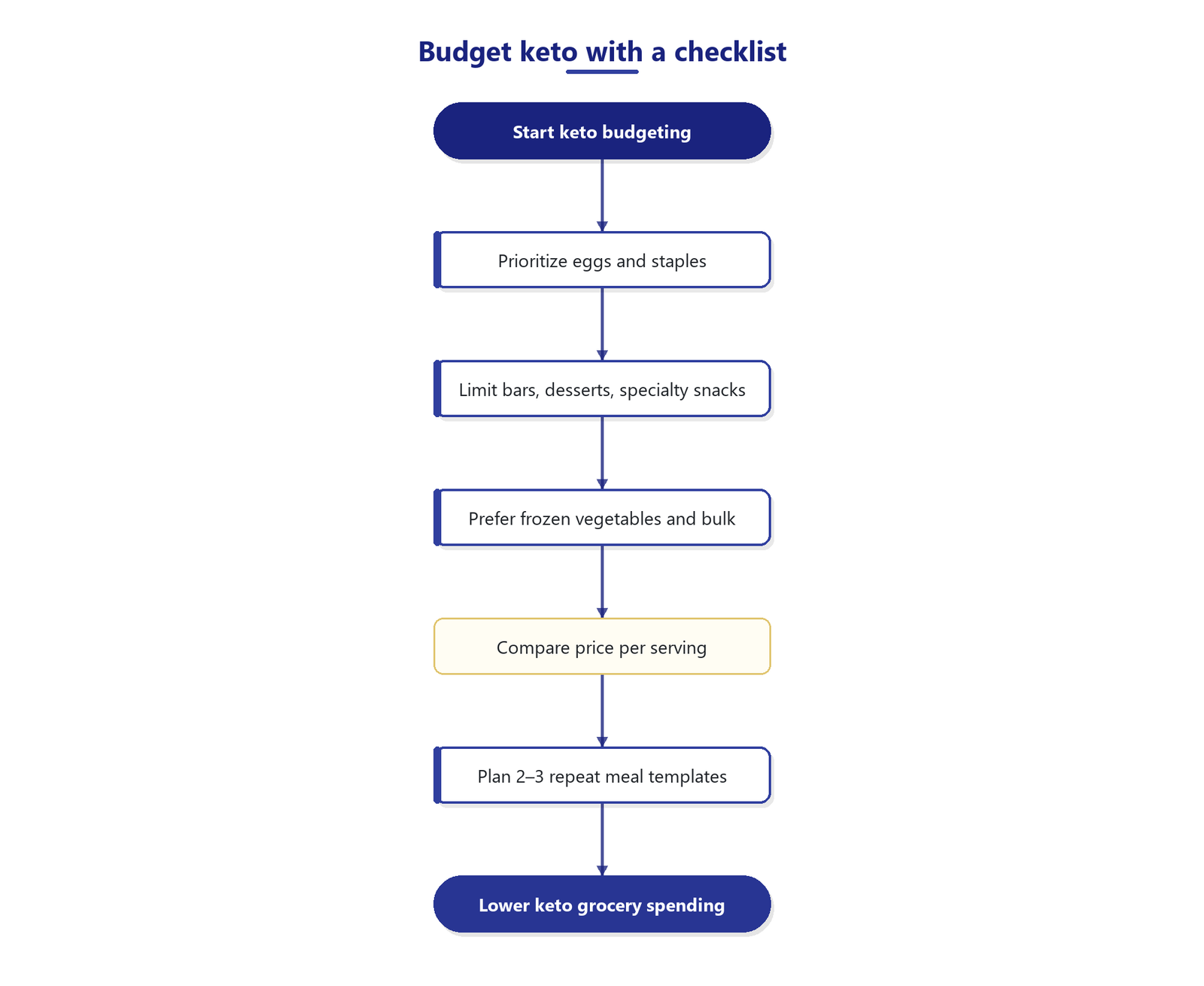
– Prioritize: eggs + affordable proteins + low-carb vegetables + cooking oils
– Limit: keto bars, desserts, and specialty snacks
– Prefer: frozen vegetables and bulk staples when storage is manageable
– Shop smarter: compare price per serving (not just per package)
– Plan meals: 2–3 repeat templates to reduce waste
A budgeting reminder: price-per-serving matters because keto portions often include more fat, which can make “cheaper per package” items deceptive. When you compare by serving, the keto diet becomes easier to price realistically week to week.
Frequently Asked Questions
Is the keto diet expensive compared to a regular diet?
Keto can be more expensive than a typical “carb-heavy” diet mainly because it relies on higher-cost foods like meat, cheese, eggs, and low-carb specialty items. However, it doesn’t have to be drastically more expensive: choosing budget-friendly proteins (chicken thighs, canned tuna, eggs), seasonal vegetables, and store-brand keto staples can keep costs manageable. If you avoid frequent purchases of keto snacks and “keto” packaged foods, many people find the keto diet fits their budget.
How can I do keto on a tight budget?
Focus on affordable keto diet staples such as eggs, frozen vegetables, cabbage, zucchini, fatty cuts on sale, and legumes in limited portions (if they fit your net-carb target). Meal prep helps you reduce waste and spend less by planning simple, repeatable meals like breakfast egg scrambles and sheet-pan chicken with low-carb veggies. Shopping for sales, buying in bulk, and using fats like olive oil, butter, and avocado (when reasonably priced) can also lower your monthly keto grocery bill.
Why do people say keto is expensive—what costs add up the most?
The biggest “hidden” cost drivers are premium protein sources, frequent use of cheese, and convenience foods like keto bread, snacks, and dessert products. Many people also overspend on keto supplements and drinks when they aren’t necessary for everyone, especially early on. Tracking your grocery totals and sticking to whole foods can reduce expensive add-ons while still maintaining keto macros.
Which keto foods are the best value for saving money?
Best value keto foods often include eggs, chicken, turkey, tuna, sardines, and fatty cuts of meat when purchased on sale or in bulk. For produce, frozen spinach, broccoli, cauliflower, and mixed low-carb vegetables typically cost less than fresh and last longer. For fats, choose cost-effective options like olive oil, butter, and peanut butter (if it fits your net carbs), and use smaller portions of avocado when prices are high.
What are affordable alternatives to pricey keto products?
Instead of buying keto bread and specialty snacks, you can use simple substitutes like eggs, salads, cauliflower rice, lettuce wraps, and homemade keto-friendly meals. Many people replace expensive “keto treats” with plain Greek yogurt (watching carbs), cheese, or homemade fat bombs using common ingredients like nut butter and cocoa. Building your keto diet around whole foods rather than packaged keto foods is one of the most effective ways to keep keto affordable.
📅 Last Updated: October 31, 2026 | Topic: is keto diet expensive | Content verified for accuracy and freshness.
References
- https://pubmed.ncbi.nlm.nih.gov/?term=ketogenic+diet+cost
- https://pubmed.ncbi.nlm.nih.gov/?term=ketogenic+diet+cost+effectiveness
- https://pubmed.ncbi.nlm.nih.gov/?term=ketogenic+diet+economic+evaluation
- PMC Home
- Ketogenic diet
- https://www.britannica.com/science/ketogenic-diet
- Mayo Clinic
- https://scholar.google.com/scholar?q=KETO+DIET+EXPENSIVE+COST Google Scholar
- https://scholar.google.com/scholar?q=ketogenic+diet+cost+effectiveness+epilepsy Google Scholar
- https://scholar.google.com/scholar?q=ketogenic+diet+food+cost+grocery+prices Google Scholar


Pingback: Can Do Keto Krips: What to Know Before You Try It - Keto Model