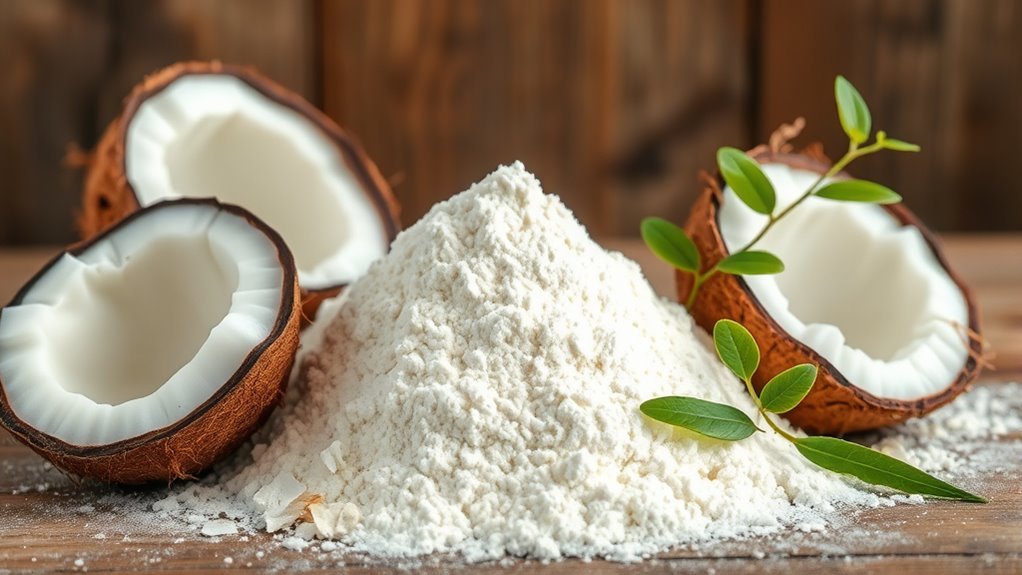

Yes, coconut flour is keto-friendly! It offers only around 6 grams of net carbs per 1/4 cup, making it a great option for low-carb diets. In addition to being low in carbs, it’s high in fiber and healthy fats, which can help with satiety and digestive health. However, it’s important to use it in moderation due to its absorbency. If you want to learn more about its benefits and how to use it, keep going!
What Is Coconut Flour?
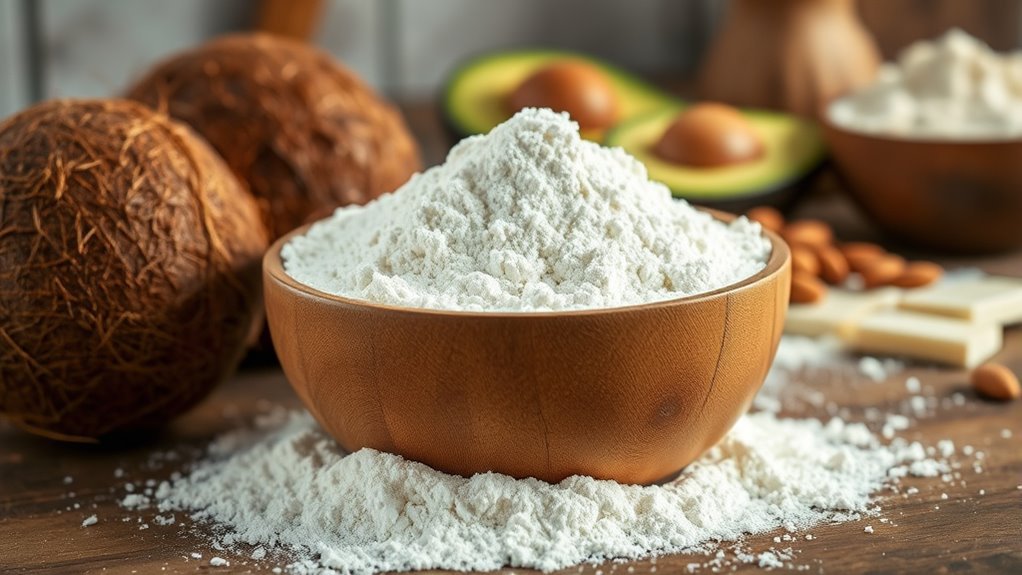
Coconut flour, a popular alternative to traditional flours, is made from the dried meat of coconuts. Its origins trace back to tropical regions where coconut palms thrive, making it a staple in many cultures. You’ll find various coconut flour types on the market, including finely ground and coarser options, each suited for different culinary uses. This versatile flour can be used in baking, thickening sauces, or as a gluten-free alternative in various recipes. With its unique flavor and texture, it appeals to those seeking healthier options. If you’re exploring alternatives, coconut flour stands out for its distinct properties and rich heritage, offering not just a food choice but a connection to its tropical roots. Additionally, its lower carbohydrate content makes it an appealing option for those following a ketogenic diet.
Nutritional Profile of Coconut Flour
When considering coconut flour as a baking ingredient, its nutritional profile plays a significant role in determining its suitability for various diets, including keto. This flour not only offers unique flavors but also several nutritional benefits, making it an appealing choice. Here are some key aspects of its profile:
- High in Fiber: Coconut flour is packed with dietary fiber, promoting digestive health.
- Low in Carbs: It contains fewer carbs compared to traditional flours, which is essential for keto.
- Rich in Healthy Fats: Coconut flour provides medium-chain triglycerides (MCTs) that may support weight loss.
- Protein Content: It has a decent amount of plant-based protein, contributing to satiety.
These attributes make coconut flour a valuable option for those seeking freedom in their dietary choices. Additionally, incorporating low-carb options like coconut flour empowers healthier choices in a keto diet.
Carbohydrate Content: Is It Low Enough for Keto?
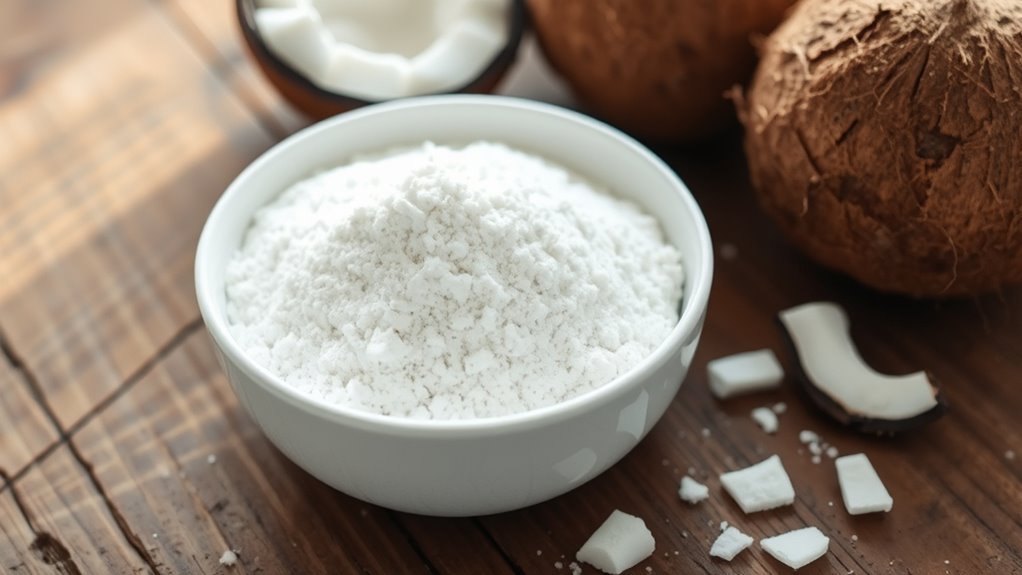
When considering coconut flour for a keto diet, it’s crucial to look at its carbohydrate content. With a lower net carb count compared to many other flours, it can be a suitable option for your low-carb needs. Let’s analyze how it stacks up against traditional flours and whether it fits your keto lifestyle. Additionally, coconut flour is high in fiber, which can help promote digestive health while adhering to a low-carb diet.
Coconut Flour Basics
If you’re exploring low-carb alternatives for baking, understanding the carbohydrate content of coconut flour is essential for a keto diet. Originating from the meat of coconuts, coconut flour comes in various forms, each suitable for different recipes. Here’s what you should know:
- Carbohydrate Content: Coconut flour typically contains about 20 grams of total carbs per 100 grams.
- Fiber Factor: It’s high in fiber, which can help reduce the net carb count.
- Versatile Varieties: You can find different coconut flour varieties, like finely ground and coarse, impacting texture.
- Absorption: Coconut flour absorbs more liquid than regular flour, affecting your recipe ratios.
With this knowledge, you can confidently incorporate coconut flour into your keto baking!
Net Carbs Analysis
Understanding net carbs is essential for anyone on a keto diet, especially when evaluating coconut flour. Coconut flour has a unique nutritional profile that makes it attractive for low-carb enthusiasts. By subtracting the fiber content from total carbohydrates, you can determine its net carbs.
Here’s a quick look at coconut flour’s carbohydrate breakdown:
| Component | Amount per 1/4 cup | Notes |
|---|---|---|
| Total Carbs | 16g | Includes all carbs |
| Fiber Content | 10g | High fiber helps reduce net carbs |
| Net Carbs | 6g | Suitable for keto |
With just 6g of net carbs per 1/4 cup, coconut flour can fit nicely into your keto lifestyle, offering versatility without compromising your carb limits.
Comparison With Other Flours
While coconut flour stands out for its low net carb content, it’s essential to compare it with other popular flours to see how it truly measures up for a keto diet. Here’s a quick breakdown:
- Coconut Flour: Approximately 6 grams of net carbs per 1/4 cup.
- Almond Flour: About 3 grams of net carbs per 1/4 cup.
- Flaxseed Meal: Roughly 0 grams of net carbs per 1/4 cup.
- Psyllium Husk: Close to 0 grams of net carbs per 1/4 cup.
In the almond flour comparison, you’ll notice that almond flour has lower carbohydrate content, making it more favorable for some keto dieters. Ultimately, coconut flour is still a strong contender, especially when combined with other low-carb options. Additionally, understanding recommended carb intake is crucial for maintaining ketosis while using coconut flour in recipes.
Health Benefits of Coconut Flour
Coconut flour offers several health benefits that make it an attractive option for those seeking a low-carb alternative to traditional flours. It’s high in fiber, which can help regulate your digestion and promote satiety, making it easier to manage your weight. Additionally, coconut flour’s low glycemic index means it won’t spike your blood sugar levels, an essential factor for anyone following a keto diet. This flour is also rich in healthy fats and contains essential nutrients like manganese and copper, supporting overall health. Plus, it’s gluten-free, which is great for those with gluten sensitivities. Incorporating coconut flour into your diet can provide these health benefits while allowing you to enjoy a variety of delicious, low-carb meals.
How to Use Coconut Flour in Keto Recipes
When cooking on a keto diet, coconut flour can be a versatile ingredient. You can use it for baking, but remember it absorbs more moisture than regular flour, so adjust your liquid ingredients accordingly. Additionally, it works well for thickening sauces and soups, providing a low-carb alternative to traditional thickeners.
Baking With Coconut Flour
If you’re venturing into keto baking, utilizing coconut flour can be a game-changer due to its unique properties. Here are some baking tips to help you succeed with this alternative flour:
- Use Less: Coconut flour is highly absorbent, so you’ll need only about 1/4 to 1/3 of the amount you’d use with regular flour.
- Increase Eggs: To maintain moisture and structure, add extra eggs—usually one for every 1/4 cup of coconut flour.
- Experiment with Recipe Variations: Combine coconut flour with other low-carb flours for different textures.
- Let the Batter Rest: This allows the flour to fully absorb liquids, improving the final product.
With these strategies, you’ll create delicious keto treats that satisfy your cravings!
Thickening Sauces and Soups
After mastering keto baking with coconut flour, you might find it useful for thickening sauces and soups too. Coconut flour can enhance sauce thickness and improve soup texture without adding significant carbs. Just remember, a little goes a long way! Start with one tablespoon, whisking it in gradually, and adjust as needed. Additionally, using coconut flour in your recipes can provide a low carbohydrate content that helps maintain ketosis.
Here’s a quick guide on how coconut flour compares to other thickeners:
| Thickener | Carb Count (per tbsp) | Sauce Thickness |
|---|---|---|
| Coconut Flour | 6g | Moderate |
| Almond Flour | 2g | Low |
| Xanthan Gum | 0g | High |
Using coconut flour, you can enjoy creamy sauces and hearty soups that fit your keto lifestyle perfectly!
Potential Drawbacks of Coconut Flour on a Keto Diet
While coconut flour can be a popular choice for those following a keto diet, it does come with potential drawbacks that might affect your overall success. You should be aware of the following issues:
- Sensitivity Reactions: Some individuals may experience allergic reactions to coconut, leading to discomfort.
- Digestive Issues: The high fiber content can cause bloating or gas if you’re not used to it.
- Flavor Profile: Coconut flour has a distinct taste that may not suit every recipe or palate.
- Nutrient Imbalance: Relying too heavily on coconut flour can limit your intake of other essential nutrients found in varied flours.
Being informed helps you make better choices on your keto journey!
Frequently Asked Questions
Can I Substitute Coconut Flour for Almond Flour in Keto Recipes?
You can substitute coconut flour for almond flour in keto recipes, but it’s not a one-to-one swap. Coconut flour has a denser texture and absorbs more moisture than almond flour. This means you’ll need to adjust the liquid in your recipe to avoid dryness. While almond flour provides a nutty flavor, coconut flour offers a hint of sweetness. Experimenting with these differences can lead to delicious results, so don’t hesitate to try!
Is Coconut Flour Suitable for Those With Nut Allergies?
Yes, coconut flour is suitable for those with nut allergies since it’s derived from coconuts, which aren’t classified as nuts. However, be cautious of coconut allergy considerations, as some individuals can be allergic to coconut itself. If you’re looking for nut-free baking alternatives, coconut flour can be a great option. Just make sure you check for cross-contamination with nuts during processing or packaging. Enjoy your baking freedom without the worry!
How Does Coconut Flour Affect Blood Sugar Levels?
Coconut flour has a low glycemic index, which means it’s less likely to spike your blood sugar levels compared to traditional flours. When you consume it, your body experiences a gradual glycemic response, allowing for more stable energy levels. This makes coconut flour a suitable option if you’re looking to manage your blood sugar effectively. Just remember to combine it with other ingredients to guarantee balanced nutrition in your meals.
Can I Use Coconut Flour in Baking Without Eggs?
Sure, you can bake with coconut flour without eggs! Just think of it as giving eggs a well-deserved day off. Egg substitutes like flaxseed meal, applesauce, or mashed bananas can work wonders. When using these, adjust your baking techniques; coconut flour absorbs moisture like a sponge. So, you might need to increase your liquid ingredients. With a little creativity, you’ll whip up delicious treats that even the egg lovers will envy!
What Is the Shelf Life of Coconut Flour?
Coconut flour typically has a shelf life of about 12 months when stored properly. To maximize freshness, keep it in an airtight container in a cool, dark place. If you notice any off smell, discoloration, or clumping, these are expiration signs indicating it’s time to discard it. Following these storage tips will help guarantee you get the best quality from your coconut flour for all your baking adventures!
References
- https://en.wikipedia.org/wiki/Coconut_flour
- https://www.healthline.com/nutrition/coconut-flour
- https://www.ncbi.nlm.nih.gov/pmc/articles/PMC5562030/
- https://www.ncbi.nlm.nih.gov/pmc/articles/PMC7073187/
- https://www.webmd.com/diet/obesity/coconut-flour-health-benefits
- https://www.health.harvard.edu/staying-healthy/the-truth-about-coconut-oil
- https://www.cdc.gov/nutrition/index.html