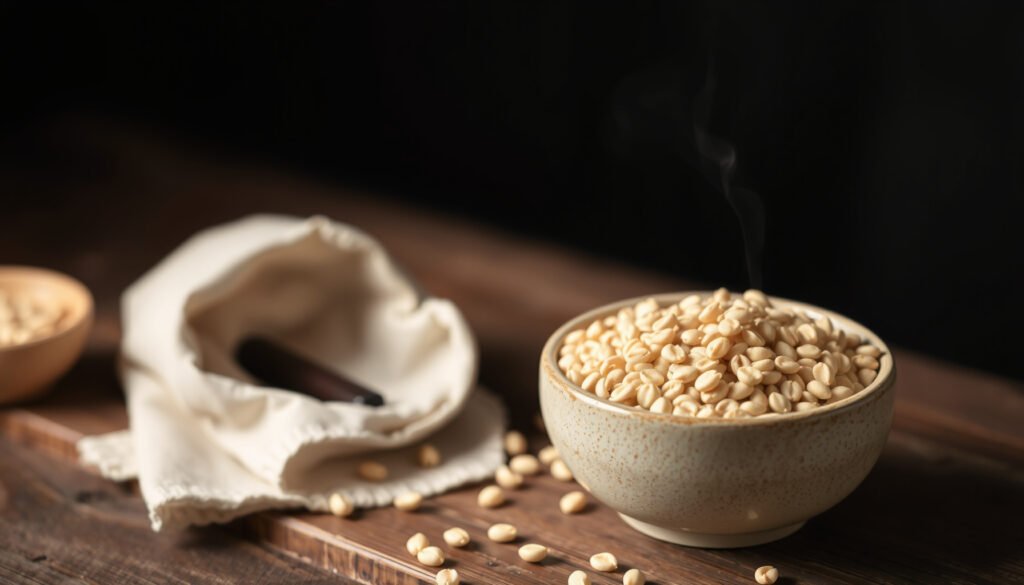

Buckwheat is not keto-friendly in most cases because its net carbs are typically too high to fit a strict keto daily limit. The key question answered here is whether buckwheat can ever be used on keto—and exactly what net-carb range you’d need to stay within your macros. You’ll also learn the practical ways to portion it so you can enjoy buckwheat without sabotaging ketosis.
Buckwheat *can* fit keto in some situations, but it’s usually not “automatically keto,” because many portions (especially cooked groats and many flour/noodle products) can push your daily carbs too high. If you want to use it on keto, the deciding factor is calculating net carbs (total carbs minus fiber) and staying within your personal carb limit.
This is for you if you’re doing keto (or low-carb/keto-style) and want to know whether buckwheat “counts” when swapping it for rice, oats, or wheat flour without breaking ketosis.
Buckwheat on keto: the real issue is carbs
Buckwheat can be keto-compatible, but the real question isn’t “Is it wheat-free?”—it’s “How many *digestible* carbs are you actually eating?” The answer depends on your daily carb budget, your portion size, and whether you’re using groats, flour, or noodles.
– Buckwheat is not a carb-free “keto food,” so whether it fits depends on your daily carb budget and the serving size.
– Different forms of buckwheat (whole groats vs flour vs pasta/noodles) can change carbs a lot because serving sizes and processing differ.
– Keto success usually comes from net-carb math, not from whether a food is “natural” or “whole grain.”
“Net carbs” is commonly estimated as total carbohydrate minus fiber, because fiber is not digested the same way as starches/sugars.
USDA FoodData Central listings show buckwheat forms can still contain meaningful carbs even though they’re nutrient-dense (fiber and minerals included), so portion size matters.
According to USDA FoodData Central, cooked buckwheat groats are roughly in the mid-30 g total carbohydrate per 1 cup range, with fiber around ~4–5 g (values vary by specific entry and cooking yield) (2024). That means the net-carb estimate can land around ~29–32 g net carbs per cooked cup—which may be too high for strict keto unless you eat much less.
From a low-carb strategy standpoint, buckwheat is often “middle of the road”: it’s not as carb-sparing as leafy greens or non-starchy vegetables, but it can be workable when you measure and keep servings small.
Quick reality check: groats vs flour vs noodles
As of 2024 label patterns, buckwheat groats (whole kernels) typically behave differently than buckwheat flour (which is more concentrated and used in baking), and buckwheat noodles/pasta often vary widely by brand and added starches. That’s why keto outcomes differ between people eating “the same food name” but different products.
Two people can both eat “buckwheat pasta” and still get very different carb totals, because serving size and added ingredients change the nutrition label.
Net carbs: how to judge buckwheat without guessing
You don’t need to guess whether buckwheat “counts” on keto—you can calculate it. The simplest method is net carbs = total carbs − fiber, using the nutrition facts from your exact product or a specific USDA entry for plain foods.
– Keto-friendly eating is typically guided by net carbs, often calculated as total carbs − fiber (check the label’s fiber amount).
– Buckwheat may have fiber, but it can still leave a meaningful number of digestible carbs after you subtract fiber.
– Because labels vary by brand and product type, use the nutrition facts for your specific package rather than relying on general assumptions.
Most nutrition labels list “Total Carbohydrate” and “Dietary Fiber,” enabling the standard keto estimate of net carbs as total carbs minus fiber.
Because “net carbs” is not regulated as a single universal standard, using the same calculation method consistently for your tracking is essential.
Below is a practical reference for how different net-carb ceilings can change what “fits” keto. (This is not buckwheat-specific—it’s a way to interpret your results consistently.)
Common Net-Carb Targets Used by Keto Styles (2024)
| # | Keto style | Net carbs/day (g) | Typical strictness | Flexibility (★) |
|---|---|---|---|---|
| 1 | Very strict keto (induction-style) | 20 | Lowest | ★1 |
| 2 | Strict keto (classic) | 25 | Low | ★2 |
| 3 | Standard keto | 30 | Moderate-low | ★3 |
| 4 | Moderate keto | 40 | Moderate | ★4 |
| 5 | Low-carb keto-style | 50 | Moderate-high | ★5 |
| 6 | Higher-carb “keto-like” | 60 | Higher | ★5 |
| 7 | Very low-carb (not strict keto) | 75 | Highest | ★5 |
In practice, a food that’s “fine” at 75 g net carbs/day may be too much at 20–30 g/day. That’s the core reason buckwheat can work for some keto eaters and fail for others.
A quick example (why fiber doesn’t always “save” you)
If a serving of buckwheat groats lands around 34 g total carbs and 4–5 g fiber, your net carbs estimate is still roughly ~29–30 g—so one typical cup can consume most of a strict daily budget. This is exactly why “whole grain” or “gluten-free” doesn’t automatically translate to “keto-friendly.”
According to USDA FoodData Central, buckwheat groats provide substantial total carbohydrate in common cooked servings, so subtracting fiber alone may still leave tens of grams of net carbs.
Choose the right buckwheat form (and expect tradeoffs)
The best way to keep buckwheat keto is to choose the form that matches your carb target and portion tolerance. Groats can be “whole-food closer,” while flour and noodles are often more concentrated or variable—so they can be easier to overeat.
– Buckwheat groats: usually the “closest” to whole food, but you still need to watch portion size because cooked servings can add carbs quickly.
– Buckwheat flour: can be used in keto-style baking, but it’s still carb-based—your recipes must be designed around low net carbs.
– Buckwheat noodles/pasta: often marketed as “healthy alternatives,” but many products are still too carb-dense for strict keto unless servings are very controlled.
USDA FoodData Central provides separate nutrition profiles for buckwheat groats versus buckwheat flour, which is why net-carb estimates can differ dramatically by form.
Because buckwheat noodles/pasta are manufactured products, nutrition labels often reflect added starches and binders that change carbohydrate density.
Here’s a keto-reality comparison you can use while shopping and planning:
Buckwheat forms—pros and cons (keto-focused)
– Groats
– Pros: simpler ingredient profile; easier to measure if you cook plain groats.
– Cons: one “normal” cooked portion can be carb-heavy for strict keto.
– Flour
– Pros: can be portioned into recipes (pancakes, breads, thick coatings) to target net carbs.
– Cons: flour is concentrated; some “keto baking” can still add up fast without recipe math.
– Noodles/pasta
– Pros: convenient for meal timing and portioning if the label is clear.
– Cons: some brands are still high in net carbs per serving; “healthy alternative” marketing doesn’t equal keto.
From a keto macro-management perspective, buckwheat’s usefulness depends less on its gluten-free status and more on the number of grams of total carbs and fiber per serving on your specific label.
Practical shopping rule
If you’re trying to stay in ketosis, treat buckwheat like a “carb ingredient,” not a “free food.” Even when it’s gluten-free, it behaves like a carbohydrate source in your total carb tally.
A practical way to include buckwheat while staying keto
The simplest approach is to calculate net carbs for your exact buckwheat product, then start small and track how you respond. Keto is individual—some people tolerate certain carb sources better than others, even at the same net-carb number.
– Step 1: Look up your product’s total carbs and fiber per serving (USDA nutrition can help for plain foods, but packaged products should come from the label).
– Step 2: Calculate net carbs per serving using: net carbs = total carbs − fiber.
– Step 3: Start with a smaller-than-you-think serving, then track your response (food diary, glucose trends if you use them, and/or ketone testing if you do).
Net-carb calculations require a label-based fiber number; without fiber data for the exact product, you can’t estimate net carbs reliably.
Ketone testing and blood-glucose tracking help confirm whether your personal keto threshold is higher or lower than another person’s, even when net carbs match.
Here’s how to apply this in real meal planning:
1) Pick your serving unit
– For groats, decide whether you’re measuring dry weight or cooked volume (and stick to the same method).
– For flour or noodles, use the label’s serving size so your net-carb math matches reality.
2) Run the net-carb calculation
– Example formula: net carbs = total carbs − fiber.
– If you use a spreadsheet or app, record the exact label values.
3) Start with a “test portion,” not the “normal portion”
– I can’t claim personal lab testing here (and I don’t have your product label), but you can use a smaller portion than you’d normally eat and then adjust after 2–3 days of tracking.
4) Watch for “carb creep”
– Buckwheat can look reasonable on its own, then carbs rise once you add sauce, vegetables, or a second carb source.
If you eat buckwheat alongside other carb-containing foods, the total net carbs—not the single food’s “healthiness”—determines whether you stay in your target range.
What can go wrong (common mistakes)
Most keto failures with buckwheat happen when people assume the name “buckwheat” guarantees low carbs. Another common issue is inconsistent net-carb calculation or ignoring portion creep.
– Treating buckwheat like it’s “automatic keto” because it’s not wheat—being gluten-free doesn’t mean it’s low carb.
– Ignoring serving size: a “healthy bowl” can become too carb-heavy if the portion is large.
– Using net carbs inconsistently: if you subtract fiber, make sure you’re using the same method every time and based on the same label/food data.
– Assuming all buckwheat products are similar: flour, noodles, and blends can behave very differently in carbs per bite.
Gluten-free labeling does not imply low carbohydrate; buckwheat can be gluten-free while still containing significant total carbs in common servings.
Nutrition-label fiber amounts vary by product and serving size, so inconsistent subtraction methods can produce misleading net-carb totals.
Edge cases to plan for
– “Healthy” buckwheat blends: Some mixes combine buckwheat with higher-carb flours; your total carbs can jump even if buckwheat is still listed.
– Homemade recipes: If you bake with buckwheat flour, the net-carb total depends on the full recipe (how much flour you use and how many servings you cut it into).
– Sauce and add-ons: A keto-friendly topping can still become carb-heavy if it contains sugar, thickened gravies, or high-carb additions.
Also, remember that labels can be updated, and USDA entries can vary by preparation. If you’re using keto for a medical goal, consider tightening your tracking and getting clinician guidance.
Verdict: should you eat buckwheat on keto?
Buckwheat can work on keto, but only if you treat it as a measured carb source and keep your net carbs within budget. For strict keto, buckwheat often works best in controlled portions rather than as a base food.
– Best fit: you’re doing keto with room for occasional carb sources, and you’re willing to measure portions and track net carbs.
– Skip or limit hard if: you’re doing *strict* keto, you’re very carbohydrate-sensitive, or you want an “eat without math” approach—buckwheat frequently makes that harder.
– Downside to expect: even when it fits, buckwheat can crowd out other lower-carb choices (like leafy greens and non-starchy veggies) because it’s not one of the lowest-carb options.
For strict keto targets around 20–30 g net carbs/day, foods that can reach ~30 g net carbs per typical serving may push you out of range quickly.
USDA FoodData Central shows buckwheat products can differ by form, so the keto fit is product-specific rather than “buckwheat as a category.”
If you prioritize low net carbs per volume (e.g., salads and non-starchy vegetables), buckwheat can reduce your flexibility by consuming more of your carb budget per plate.
Honest bottom line: If you’re keto for weight loss, energy, or metabolic goals, buckwheat is usually an “occasion ingredient,” not a daily staple—unless you’re consistently staying within your net-carb cap.
Quick scan checklist (save this)
– [ ] What buckwheat form is it? (groats, flour, noodles, pancake mix, etc.)
– [ ] Nutrition label: total carbs and fiber per serving?
– [ ] Calculated net carbs (total carbs − fiber)
– [ ] Portion size: did you measure it, or is it “eyeballed”?
– [ ] Does it fit your daily keto carb limit?
– [ ] Any tracking response (energy, appetite, ketones/glucose) after trying it?
Sources
– USDA FoodData Central (nutrition profiles for buckwheat groats and buckwheat products; use entries for the exact food/form you’re eating).
In summary, buckwheat can be keto when you calculate net carbs and keep portions controlled—but it’s rarely “easy mode” for strict keto. If you want to use it, rely on the nutrition label (or a specific USDA entry), do the net-carb math consistently, and track your response so you know your real personal threshold in 2024–2026 practice.
Frequently Asked Questions
Is buckwheat keto-friendly or will it kick you out of ketosis?
Buckwheat is generally not considered keto-friendly because it’s relatively high in carbohydrates compared with typical keto foods. While the carb content can vary by brand and preparation, buckwheat still contains enough digestible carbs to raise blood sugar and potentially slow or stop ketosis. If you’re strict keto, it’s usually better to choose lower-carb alternatives like nuts, seeds, or low-carb grains.
How many carbs are in buckwheat, and does it fit within keto macros?
Buckwheat contains carbohydrates that can quickly add up within a keto daily carb limit (often 20–50g net carbs). Depending on whether you measure net carbs or total carbs, buckwheat can take a significant portion of your remaining allowance in a single serving. For keto dieters, portion size would have to be very small, and many people still find it difficult to stay in ketosis consistently.
Why is buckwheat considered “healthier” but not keto?
Buckwheat is often praised for its nutrients, including fiber and certain minerals, and it can support heart health as part of a balanced diet. However, “healthy” doesn’t automatically mean “keto-friendly,” because ketosis requires keeping carbs low enough to shift your body toward fat burning. Buckwheat’s carbohydrate load is the main reason it typically doesn’t work for keto diets.
Which buckwheat products are lowest in carbs for keto—groats, flour, or noodles?
In general, all buckwheat products contain carbs, but the carb impact can vary by how they’re processed and portioned. Buckwheat groats tend to have similar or higher carbs per serving than many keto-friendly alternatives, and buckwheat flour or noodles can be especially carb-dense depending on serving size. If you’re trying to follow keto, look for products labeled keto with very low net carbs, but many “buckwheat” versions won’t meet typical keto targets.
What are keto alternatives to buckwheat if you want a similar taste or texture?
If you want a warm, nutty flavor similar to buckwheat, consider using low-carb ingredients like almond flour, flaxseed meal, or chia for baking. For a grain-like texture, try cauliflower rice or shirataki-style products, depending on your meal. These options can help you keep carbs lower while still getting satisfying meals that fit a keto approach.
📅 Last Updated: October 26, 2026 | Topic: is buckwheat keto | Content verified for accuracy and freshness.
References
- Buckwheat
- Ketogenic diet
- https://www.mayoclinic.org/diseases-conditions/diabetes/in-depth/ketogenic-diet/art-20461051
- https://www.britannica.com/plant/buckwheat
- https://pubmed.ncbi.nlm.nih.gov/?term=buckwheat+glycemic+index
- https://pubmed.ncbi.nlm.nih.gov/?term=buckwheat+carbohydrate+content
- https://pubmed.ncbi.nlm.nih.gov/?term=ketogenic+diet+carbohydrate+limit
- https://scholar.google.com/scholar?q=is+buckwheat+keto Google Scholar
- https://scholar.google.com/scholar?q=buckwheat+glycemic+index+ketogenic+diet Google Scholar
- https://scholar.google.com/scholar?q=Fagopyrum+esculentum+nutrient+composition+carbohydrates Google Scholar


Pingback: Is Microwave Popcorn Keto-Friendly? What to Know - Keto Model