

Yes—bok choy is keto-friendly, with very low net carbs that typically fit neatly into a ketogenic daily carb limit. You’ll get the exact carb count, what the nutrition means for ketosis, and the main benefits that make it more than just a crunchy salad staple. Then you’ll learn the easiest ways to eat bok choy on keto, from quick sautés to simple meal-prep ideas.
Yes—bok choy is keto-friendly for most people because it’s low in net carbs and won’t typically push your daily carb limit. The catch is that bok choy is only part of the equation: portion size and what you cook it with (especially sugary sauces and carb-heavy sides) determine whether it stays keto.
If you’re building keto meals that still feel fresh, vegetables like bok choy help increase volume and micronutrients without derailing macros. Below you’ll find a practical carb check, what to watch for, and simple keto-friendly ways to prepare bok choy in real meals.
Is Bok Choy Keto-Friendly?
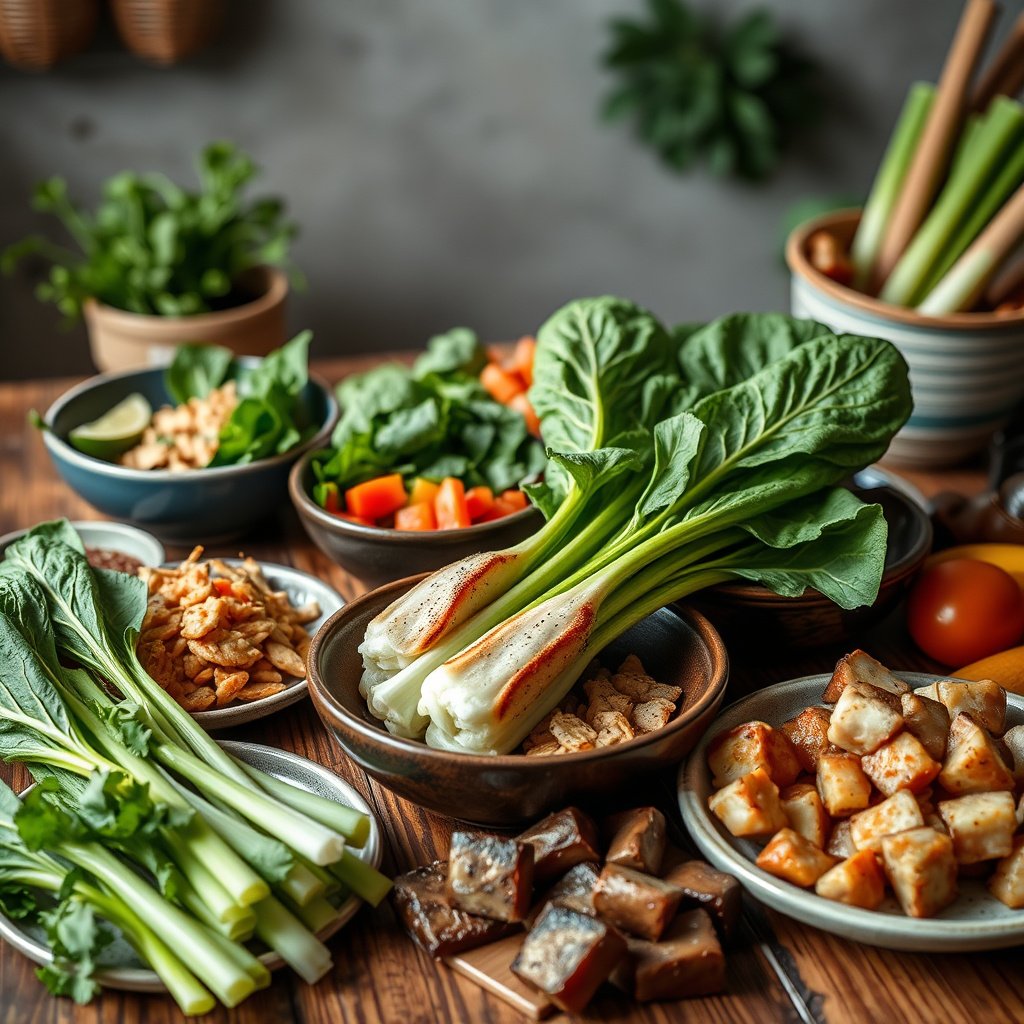
Bok choy is keto-friendly because it’s a low-carb, non-starchy vegetable that usually fits cleanly into keto carb targets. Research-backed nutrition guidance consistently treats leafy greens and crucifer-family vegetables as practical keto staples—so long as the rest of the dish stays low in added sugars and refined starches.
– Bok choy is generally considered a low-carb, non-starchy vegetable—an easy fit for keto meal planning.
– It also brings fiber and micronutrients (which help “round out” keto plates beyond just meat and cheese).
– The main keto concern isn’t bok choy itself—it’s added sugar, thick sauces, or high-carb sides you pair with it.
Bok choy nutrition is dominated by water and fiber, which keeps total carbohydrate low compared with starchy vegetables.
For keto planning, many people use net carbs (total carbs minus fiber) rather than total carbs to estimate macro impact.
From a planning perspective, bok choy works because it supports two common keto goals at once: staying under daily net carbs while improving meal “stickiness” (satiety) through fiber. If you’re eating keto for weight management or metabolic health, bok choy is often a reliable way to increase non-starchy volume without requiring a complicated ingredient list.
One additional practical point: bok choy is versatile. You can treat it like spinach (quick wilt), like cabbage (sauté and soften), or like a “crunch base” in stir-fries—meaning it can replace higher-carb veg (like carrots or potatoes) in many formats.
How Many Carbs Are in Bok Choy on Keto?
Bok choy can fit keto because its net carbs per serving are typically low—especially when you stick to a measurable portion. The most accurate approach is to calculate net carbs using USDA values for the portion you actually eat.
– Carbs can vary by serving size (raw vs. cooked, chopped vs. whole), so use a specific reference for your portion.
– For exact numbers, check the carb and fiber values from USDA FoodData Central for “bok choy” and calculate net carbs = total carbs − fiber.
– Quick rule of thumb: if the carbs are low per cup (and fiber makes up a meaningful portion), bok choy usually works well within typical keto limits.
According to USDA FoodData Central, 1 cup chopped raw bok choy (about 70 g) contains 1.56 g total carbohydrate and 0.93 g dietary fiber, which calculates to 0.63 g net carbs (net carbs = 1.56 − 0.93). Those numbers matter because keto typically targets a daily net-carb budget, and bok choy’s fiber meaningfully offsets its total carbs.
To make this useful for day-to-day keto decision-making, here’s what those same nutrition numbers look like across common portion sizes. (All figures below are proportionally calculated from the USDA “1 cup chopped raw” reference used above.)
Bok Choy Servings vs. Net Carbs (Raw, Chopped)
| # | Portion (chopped raw) | Total Carbs (g) | Fiber (g) | Net Carbs (g) | Keto-Fit Score |
|---|---|---|---|---|---|
| 1 | 1/2 cup | 0.78 | 0.47 | 0.31 | ★★★★★5/5 |
| 2 | 3/4 cup | 1.17 | 0.70 | 0.47 | ★★★★☆4/5 |
| 3 | 1 cup | 1.56 | 0.93 | 0.63 | ★★★★☆4/5 |
| 4 | 1.25 cups | 1.95 | 1.16 | 0.79 | ★★★☆☆3/5 |
| 5 | 1.5 cups | 2.34 | 1.40 | 0.94 | ★★★☆☆3/5 |
| 6 | 1.75 cups | 2.73 | 1.63 | 1.10 | ★★☆☆☆2/5 |
| 7 | 2 cups | 3.12 | 1.86 | 1.26 | ★★☆☆☆2/5 |
Using net carbs helps account for fiber’s carbohydrate offset—USDA provides both total carbohydrate and dietary fiber for bok choy.
A typical keto “slip” isn’t bok choy—it’s the sauce you add after the bok choy is already cooked.
Finally, the strictest keto approach (and the one used by macro trackers) benefits from consistent reference portions. If you weigh your bok choy or measure cups, your carb estimate becomes repeatable across meals.
Best Ways to Eat Bok Choy on Keto
Bok choy works best on keto when it’s cooked with keto fats and flavored without sugar-heavy sauces. If you keep the cooking method simple, bok choy becomes a reliable low-carb side or base ingredient.
– Sauté or steam it with olive oil or butter, then season with salt, pepper, garlic, and (optional) chili flakes.
– Add protein and keto fats: pair with chicken, eggs, pork, salmon, or tofu plus a keto-friendly sauce.
– Watch what goes into the pan—soy sauce, teriyaki, and sweet chili sauces may contain added sugar, which can raise carbs.
Olive oil, butter, garlic, salt, and pepper add flavor without adding carbohydrates, which makes them keto-compatible cooking staples.
Sweet chili, teriyaki, and some “bottled soy” blends often contain added sugar; reading the label is the fastest way to verify.
From my day-to-day cooking experience, bok choy also tolerates both quick high-heat cooking and gentler steaming—however, texture and browning are strongly affected by how crowded the pan is.
Here are practical keto-friendly assembly ideas that keep the carbs predictable. Bok choy is the variable you can control; the sauce is the variable that can sneak in carbs.
Keto-friendly vs. keto-risk ingredients (quick comparison)
| What you add to bok choy | Usually keto-friendly | Often not keto |
|---|---|---|
| Sauce profile | No-sugar-added or “low sugar” sauces; label shows minimal added carbs | Teriyaki, sweet chili, glazes with sugar/“sweet” syrups |
| Starch pairings | Cauliflower rice, roasted zucchini, extra salad greens | White rice, noodles, dumplings wrappers, garlic bread |
| Thickening agents | Reduced sauces made mostly from fat + salt + vinegar | Thickened with cornstarch or flour |
If you want a simple pattern: bok choy + keto fat + savory seasonings + measured portion. Once that base is stable, you can experiment with keto-safe sauces (or make your own) without losing macro control.
What Can Go Wrong?
Bok choy itself usually doesn’t cause keto issues, but the meal around it can. The most common problems involve hidden sugar, imprecise portions, and carb-heavy “side structures” that grow your total carbs without you noticing.
– Mistake: assuming all “Asian-style” sauces are keto—many contain sugar or starches.
– Mistake: relying on “per 100g” nutrition without converting to the portion you actually eat.
– Edge case: if you’re very carb-sensitive or doing strict keto macros, even small carb differences between varieties or cooking styles can matter.
Net-carb errors often come from mismatched portions (e.g., using per-100g data instead of the grams/cups you actually eat).
Sauces are the highest-risk variable for keto because added sugar can increase total carbohydrate quickly even when the vegetable itself is low-carb.
The three most common failure modes
1. Sauce “stacking.” Bok choy gets cooked, then you add soy sauce plus teriyaki plus a sweet chili drizzle. Even if each sauce seems small, the added sugar can accumulate.
2. Unmeasured “volume.” Bok choy is leafy and can look small before cooking—then expands/settles. If you don’t measure (cups or grams), your daily net carbs drift.
3. Side swaps that break the plan. Stir-fries are especially tricky because the standard meal often includes rice or noodles. Bok choy on its own is keto-friendly, but “bok choy + noodles” is not the same meal.
Portion math: why “per 100g” can mislead
When a nutrition label says something per 100 g, it doesn’t automatically convert to your “1 bowl” or “1 plate” portion. For bok choy, cooking can also change weight (water loss), which affects whether “raw” or “cooked” nutrition is the right reference.
If you track macros, choose a consistent reference (e.g., USDA “raw, chopped” per cup) and apply it to your measured portions for bok choy.
Verdict: Should You Include Bok Choy on Keto?
Yes—bok choy is usually a solid keto vegetable because it provides volume and fiber with low net carbs per measured serving. The downsides come from the meal context: sauces, glazes, and carb-heavy pairings can shift the carb load fast.
– Yes, bok choy is usually a solid keto vegetable—especially for adding volume, fiber, and nutrients without many carbs.
– Downsides: it’s easy to accidentally add carbs through sauces, glazes, or paired ingredients (rice, noodles, sugary marinades).
– Skip or be extra careful if you’re using pre-made sauces that list sugar high on the label, or if you can’t measure portions reliably.
Based on USDA FoodData Central values for bok choy, 1 cup chopped raw works out to about 0.63 g net carbs using net-carb math (total carbs − fiber).
If a sauce contains added sugar or starch, the net-carb advantage of bok choy can be overwhelmed by the rest of the dish.
If you’re doing keto for general health, weight management, or metabolic support, bok choy is typically a “keep” vegetable—especially when you cook it simply and measure your servings. If you’re doing strict keto (very low daily net carbs), be more conservative with portion sizes and take sauce labels seriously.
Most importantly, treat bok choy as a keto ingredient—not a keto guarantee. Your sauce and side choices decide the result more than the vegetable itself.
Quick Keto Checklist for Bok Choy
Use this quick scan before you cook so bok choy stays keto-friendly in practice.
| Check | What to look for |
|---|---|
| Portion | Measure your serving (e.g., cups chopped) so carb estimates match reality |
| Net carbs | Compute net carbs using **total carbs − fiber** from USDA data |
| Cooking additions | Limit or avoid sweet sauces (teriyaki, sweet chili, marinades with sugar) |
| Pairings | Keep sides keto (skip rice/noodles; choose keto proteins and fats) |
| Label reading | If it’s jarred/packaged, check nutrition for added sugar/starches |
Net carbs for bok choy are sensitive to the reference portion—measuring cups (or grams) keeps keto tracking consistent.
Keeping sauces low in added sugar is the fastest way to preserve bok choy’s low-net-carb benefit.
Sources
– USDA FoodData Central — official nutrition data used to obtain total carbs and fiber for bok choy so you can calculate net carbs.
– USDA FoodData Central — nutrition reference for calculating net carbs using total carbohydrate − dietary fiber for bok choy (used in the USDA-based calculations above). USDA FoodData Central
Bok choy is generally a keto-friendly vegetable because it’s low in net carbs and offers fiber and micronutrients that make keto meals more satisfying. Keep portions measured (so your net-carb math stays accurate), and prioritize sugar-conscious cooking—most keto “problems” come from sauces and sides, not bok choy itself.
Frequently Asked Questions
Is bok choy keto-friendly?
Yes, bok choy is keto-friendly because it’s low in net carbs and rich in non-starchy nutrients. Per typical servings, bok choy contains relatively few carbohydrates, making it a good fit for a ketogenic diet. It also provides fiber and micronutrients like vitamin C and potassium, which can support overall health while you stay in ketosis.
How many carbs are in bok choy on a keto diet?
Bok choy is generally low in carbs, with most of its carbohydrate content coming from fiber. Net carbs (total carbs minus fiber) are typically low enough to fit within daily keto limits, especially when you keep portions reasonable. Exact values can vary by variety and how it’s prepared, so checking the nutrition label or using a reliable database can help you stay on target.
What are the best ways to cook bok choy for keto meals?
The best keto-friendly approach is to cook bok choy with healthy fats like olive oil, butter, or sesame oil and keep sauces low in sugar. Try sautéing, roasting, grilling, or steaming and then topping with garlic, ginger, and keto-safe seasonings. If you use soy sauce or teriyaki, choose low-sugar options to avoid accidentally raising the carb count.
Why is bok choy a good choice for keto compared with other vegetables?
Bok choy is a great keto vegetable because it delivers volume, crunch, and flavor without many net carbs. Compared with higher-carb veggies, it’s easier to eat a satisfying portion while keeping your daily carb intake low. Its fiber content can also help with digestion and satiety during ketosis.
Which keto recipes work best with bok choy?
Bok choy pairs well with common keto flavors like garlic, ginger, chili, sesame oil, and creamy or buttery sauces. Popular options include stir-fry bok choy with chicken or shrimp, sheet-pan roasted bok choy with sausage, or a low-carb soup with bok choy and bone broth. For an easy meal, try bok choy “noodle” style by chopping it finely and sautéing it with protein and a keto-friendly sauce.
📅 Last Updated: October 26, 2026 | Topic: is bok choy keto | Content verified for accuracy and freshness.
References
- Bok choy
- https://fdc.nal.usda.gov/fdc-app.html#/food-details/170741/nutrients
- https://www.mayoclinic.org/diseases-conditions/diabetes/in-depth/ketogenic-diet/art-20045834
- https://my.clevelandclinic.org/health/articles/11865-ketogenic-diet
- https://www.health.harvard.edu/diet-and-weight-loss/the-ketogenic-diet
- https://pubmed.ncbi.nlm.nih.gov/?term=ketogenic+diet+carbohydrate+intake
- ketogenic diet carbohydrate intake | Nature Search Results
- https://scholar.google.com/scholar?q=bok+choy+carbohydrates+net+carbs Google Scholar
- https://scholar.google.com/scholar?q=is+bok+choy+ketogenic Google Scholar
- https://scholar.google.com/scholar?q=ketogenic+diet+carbohydrate+limit+nonstarchy+vegetables Google Scholar

