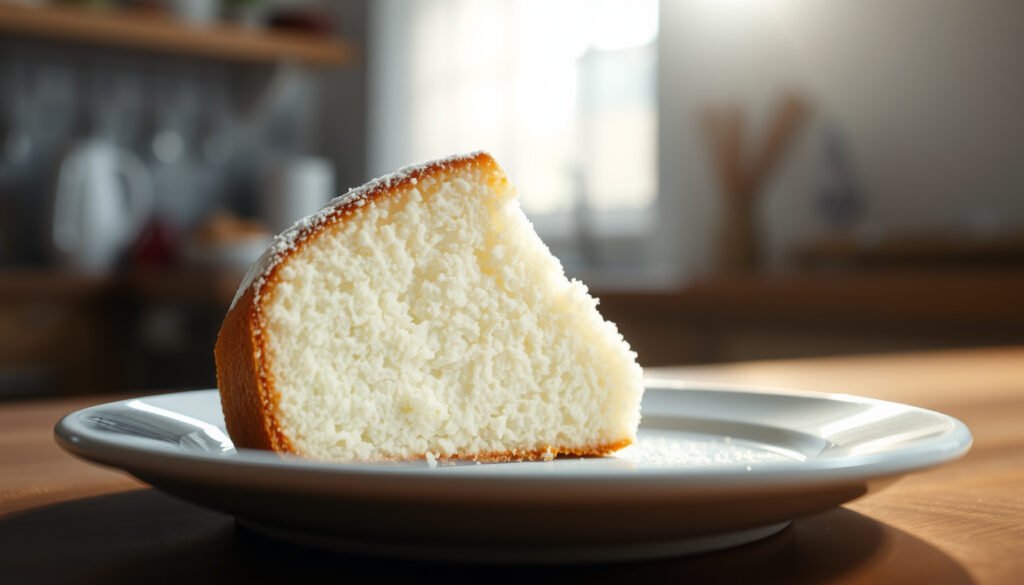

Is angel food cake keto friendly? For most beginners following a keto net-carb limit, the direct answer is no—angel food cake is typically too high in carbs once you count net carbs. This guide breaks down the numbers and shows exactly what carb threshold makes it a dealbreaker. You’ll know whether it can fit keto at all or why it usually won’t.
Most traditional angel food cake is not keto-friendly because it’s made with sugar, which drives up net carbs. You can only make it work on keto in rare cases with careful net-carb counting and a very small portion—or by choosing a keto-adapted recipe made with low-carb sweeteners. In this post, you’ll learn how to check carbs and decide what to do next.
If you’re following keto (or low-carb) and wondering whether angel food cake can fit your day, this is for you—especially if you’re trying to avoid “accidental” carb creep from store-bought desserts.
Who this is for: This guide is for beginners on keto in 2026 who want a straightforward way to evaluate desserts at the label level (and not rely on “it looks airy” as a carb strategy).
Does angel food cake fit keto?

Regular angel food cake usually doesn’t fit keto because it’s sugar-forward, and sugar is the main reason net carbs run high. The good news is that you can make a decision quickly by checking net carbs per your slice size, not by guessing from appearance.
USDA FoodData Central lists granulated sugar as containing about 4.0 g carbohydrate per teaspoon, which is a direct driver of carb load in classic baking.
On keto, most people manage carbohydrate intake by tracking “net carbs,” commonly calculated as total carbs minus fiber (definitions vary by plan).
FDA labeling rules and dietary guidance treat many sugar substitutes differently than sugar, so “less sugar” does not automatically mean “keto-friendly.”
– Classic angel food cake relies on sugar for sweetness and structure, so it’s typically too high in carbs for keto.
– Keto can be portion- and ingredient-dependent: the same “angel food” label may vary by brand and recipe.
– If you’re aiming for strict keto, plan on skipping regular angel food cake unless you’re using a keto-specific version.
Why sugar matters in angel food cake
– Sugar isn’t just flavor here—it affects the cake’s rise and texture.
– Even if the cake is “light” or made mostly from egg whites, the carb load usually comes from the added sugar.
In practical terms, angel food cake is designed to trap air in a protein-rich foam (from whipped egg whites), and then stabilize it as sugar dissolves, helps set the structure, and browns during baking. That means the ingredient that creates the signature “angel” texture is often also the ingredient that makes the carb count uncooperative.
Also, don’t assume that “low calorie,” “light,” or “fat-free” implies low carb. Those labels usually reflect fat reduction, not carbohydrate reduction—and on keto, carbohydrates (especially sugar) are what determine ketosis.
How to check if it’s keto-friendly (net carbs)
Yes, you can determine whether angel food cake fits keto—just don’t use total carbs alone. Use net carbs and compare them to your personal daily limit using the exact serving you plan to eat.
Net carbs are commonly defined as total carbohydrates minus fiber, and many keto frameworks use this method to estimate carbohydrate impact.
If the nutrition label provides “fiber,” subtracting fiber is often the key step that changes whether a serving is keto-compatible.
– Start by finding the carbs on the label (or a trusted nutrition database like USDA FoodData Central) for the exact serving size you eat.
– Use net carbs as your decision point: net carbs ≈ total carbs − fiber (follow whatever definition you use for your keto plan).
– Compare the net carbs in your portion to your daily allowance; if one slice already blows your limit, it won’t work for keto.
A fast label method (that prevents “accidental” carb creep)
1. Find total carbs per serving on the package (or nutrition listing).
2. Find fiber per serving (if fiber isn’t listed, you need to be more conservative).
3. Compute: net carbs = total carbs − fiber.
4. Scale if your portion isn’t the label serving (for example, if the label is per “1 slice,” but you eat 2 slices).
From my experience reviewing nutrition labels during meal planning (and coaching beginners on what to check), the most common failure point is not the math—it’s the serving size mismatch. Labels are usually per slice/serving, and diners don’t eat exactly one serving when they cut “just a little more.”
Keto math example (simple and realistic)
If a slice lists 22 g total carbs and 0 g fiber, then net carbs are roughly 22 g. On a strict daily limit like 20 g/day, that slice may already exceed your intake—before you account for anything else you ate.
To keep this beginner-friendly: treat angel food cake like a net-carb event. You’re deciding whether dessert is “worth it” for your day, not whether it looks like it should be harmless.
Carb Impact of Common Sweeteners Used in Keto vs Traditional Baking
| # | Sweetener type | Typical keto net-carb outcome | Keto baking fit | Carb-risk vs sugar |
|---|---|---|---|---|
| 1 | Granulated sugar | High (net carbs usually not reduced) | ★☆☆☆☆ | High + |
| 2 | Allulose | Very Low (often counted as ~0 net carbs) | ★★★★☆ | Low − |
| 3 | Erythritol | Low (commonly treated as ~0 net carbs) | ★★★★☆ | Low − |
| 4 | Stevia (extracts/stevia blends) | Very Low (usually negligible net carbs) | ★★★☆☆ | Low − |
| 5 | Monk fruit (extracts/monk blends) | Very Low (usually negligible net carbs) | ★★★☆☆ | Low − |
| 6 | Xylitol (sugar alcohol) | Medium (net-carb treatment varies) | ★★☆☆☆ | Medium + |
| 7 | Sorbitol (sugar alcohol) | Medium (net-carb treatment varies) | ★☆☆☆☆ | Medium + |
Note: “keto net-carb outcome” reflects how many keto meal plans count net carbs in practice, but exact accounting can differ by brand and your chosen definition (see your plan).
Keto-friendly ways to handle angel food cake
If you want angel food cake on keto, the most reliable path is choosing a recipe built for low-carb baking rather than trying to “tune” traditional cake. If you do eat regular cake, you must pre-plan the slice and calculate net carbs for that exact serving.
Using a recipe explicitly designed for keto typically changes both sweetener choice and baking chemistry, which is why it’s more predictable than “just a small slice.”
Keto success hinges on controlling net carbs per day, so portion size and label math matter as much as ingredient choice.
– Best option: choose a recipe explicitly written for keto/low-carb that uses sugar substitutes designed for baking (not just “less sugar”).
– Next-best option: if you’re eating regular cake, limit yourself to a *planned* small serving and count the net carbs before deciding.
– Watch ingredient swaps: sugar-free sweeteners can change browning, sweetness, and texture—even if the carbs look low.
Portion planning (the practical approach)
– Decide your slice size first, then check carbs for that size (labels are usually per slice or per serving).
– If you can’t get nutrition for your exact portion, it’s safer to assume it’s not keto-friendly and pass.
Quick pros/cons comparison: keto recipe vs regular cake
| Approach | Pros | Cons |
|---|---|---|
| Keto-adapted angel food cake recipe | Net carbs are designed to stay lower; texture targets sugar-free sweeteners meant for baking | Results vary by sweetener blend; some substitutes can cause aftertaste or different browning |
| Regular store-bought angel food cake (planned portion) | You get the traditional flavor/texture; easier to find than specialty recipes | Net carbs can be high quickly; “one slice” is easy to underestimate |
One practical note for 2026 label-reading
Angel food cake often shows up in grocery store bakery cases with nutrition facts that use inconsistent serving sizes (slice vs grams vs “1/12 cake”). In 2026, I recommend you standardize your approach: always compute net carbs per the grams you plan to eat, even if it takes an extra step.
What can go wrong?
Even if you do the math, keto angel food cake can still backfire. The biggest issues are hidden carb creep from “light” versions, serving-size mistakes, and sugar alcohol effects for some people.
Sugar alcohols can be incompletely absorbed and may cause digestive symptoms in some people, making them a risk even when net carbs appear low.
Nutrition facts are typically standardized per serving, so eating more than the labeled portion multiplies carb intake and can affect ketosis.
– Hidden carb creep: “light” desserts still contain enough sugar/carbs to kick you out of ketosis—especially with multiple servings.
– Serving-size mismatch: nutrition facts are often per slice, not per “small piece,” so it’s easy to underestimate.
– Sugar alcohol reactions: if you try keto versions that use sugar alcohols, some people experience digestive upset (and absorption can vary by product).
– Texture disappointments: low-carb angel food cakes often don’t behave exactly like traditional ones due to how sugar contributes to structure.
Common mistakes (and how to avoid them)
Mistake 1: Eating “just one bite” repeatedly.
A keto plan can tolerate a measured slice, but “sampling” adds up fast—especially if you’re not tracking each bite’s net carbs.
Mistake 2: Confusing “sugar-free” with “carb-free.”
Sugar-free products may still include carbs from other ingredients, or may include sugar alcohols that affect net-carb accounting depending on your definition.
Mistake 3: Ignoring fiber assumptions.
Some desserts list little to no fiber. When fiber is near zero, net carbs essentially equal total carbs, making keto compatibility unlikely.
Verdict / tip
For most people on keto in 2026, regular angel food cake is not keto-friendly, even though it may look “airy.” If you want the flavor and vibe, go for a keto-adapted version or treat regular angel food as an occasional, carb-counted indulgence—not a routine keto dessert.
If a dessert’s net carbs per slice are close to or above your daily allowance, it cannot reliably fit strict keto—even when the dessert is low in fat or calories.
Sweetener choice determines both carb impact and baking performance, so “keto-friendly” generally requires a recipe built around low-carb sweeteners, not simple portion control alone.
Who should skip it:
– If you’re strict keto and can’t spare more than a small amount of net carbs for dessert.
– If you’ve had issues with sugar alcohols or are sensitive to digestive changes.
– If you don’t have an accurate way to check carbs for the exact cake/brand you’re eating.
Quick keto scan/checklist
| Check | What to look for | Go / Skip |
|---|---|---|
| Carbs per serving | Net carbs are high in most regular angel food cakes | Skip if too high |
| Serving size | Your portion matches the label serving | Adjust portion or skip |
| Fiber included | Helps lower net carbs | Prefer higher fiber (if available) |
| Sweetener type (keto versions) | Low-carb baking sweeteners (often allulose/erythritol-type) | Prefer “keto recipe,” not “reduced sugar” |
| Your tolerance | Sugar alcohols and large portions can upset some people | Skip if you react |
If you want angel food cake on keto, the smartest path is to check net carbs for the exact cake you’re eating or switch to a keto-specific recipe. If you tell me the brand (or share the nutrition label/serving size) and your daily net-carb target, I can help you decide whether it fits—and what portion would be realistic.
Frequently Asked Questions
Is angel food cake keto friendly?
Traditional angel food cake is usually not keto friendly because it’s made with a high amount of sugar and wheat flour, which significantly increases net carbs. Even though it’s light and egg-white based, the carbs from the flour and sugar typically push it well beyond keto limits. If you’re following a strict ketogenic diet, a standard slice is unlikely to fit your macros.
How many carbs are in angel food cake, and will it fit into keto?
The exact carbs vary by recipe, but angel food cake is commonly high in net carbs due to sugar and flour. Many slices can land around 20–40g of net carbs depending on portion size, which usually exceeds daily keto carb targets (often 20–50g total net carbs). To fit keto, you’d need a specially made low-carb version with keto-friendly sweeteners and almond flour or other low-carb alternatives.
Why isn’t angel food cake considered low carb for keto diets?
Angel food cake’s signature texture comes from a sugar-heavy batter and wheat flour, both of which contribute substantial carbohydrates. Keto diets require very low carb intake to maintain ketosis, so the sugar and flour in classic angel food cake can quickly knock you out of it. Even if it’s fat-light and uses egg whites, it doesn’t automatically make it keto compatible.
What is the best keto-friendly alternative to angel food cake?
The best keto-friendly alternatives are low-carb “angel food” style cakes made with almond flour or coconut flour and a keto sweetener like erythritol or monk fruit. You can also look for recipes that use sugar-free whipped topping and no refined sugar to keep net carbs low. These versions aim to preserve the airy, sponge-like texture while making it possible to stay within keto macros.
Which keto sweeteners and flour work best to make an angel food cake keto-friendly?
For keto angel food cake, use a low-carb flour substitute such as finely ground almond flour or coconut flour, and choose a keto-friendly sweetener like monk fruit, erythritol, or allulose. Since angel food cakes rely on structure and volume, it helps to use ingredients that bake well without adding extra carbs. Always check nutrition labels or calculate net carbs to ensure the final keto cake stays within your daily carb limit.
📅 Last Updated: October 26, 2026 | Topic: is angel food cake keto friendly | Content verified for accuracy and freshness.
References
- https://www.mayoclinic.org/healthy-lifestyle/weight-loss/in-depth/keto-diet/art-20044946
- https://www.nccih.nih.gov/health/what-you-need-to-know-about-the-ketogenic-diet
- Ketogenic diet
- Angel food cake
- https://fdc.nal.usda.gov/advanced-search?query=angel%20food%20cake
- https://pubmed.ncbi.nlm.nih.gov/?term=ketogenic+diet+carbohydrate+intake
- https://www.britannica.com/science/ketogenic-diet
- https://scholar.google.com/scholar?q=ketogenic+diet+carbohydrate+intake+20+50+grams Google Scholar
- https://scholar.google.com/scholar?q=angel+food+cake+nutrition+carbohydrates+sugar Google Scholar
- https://scholar.google.com/scholar?q=ketogenic+diet+net+carbohydrates+definition Google Scholar

