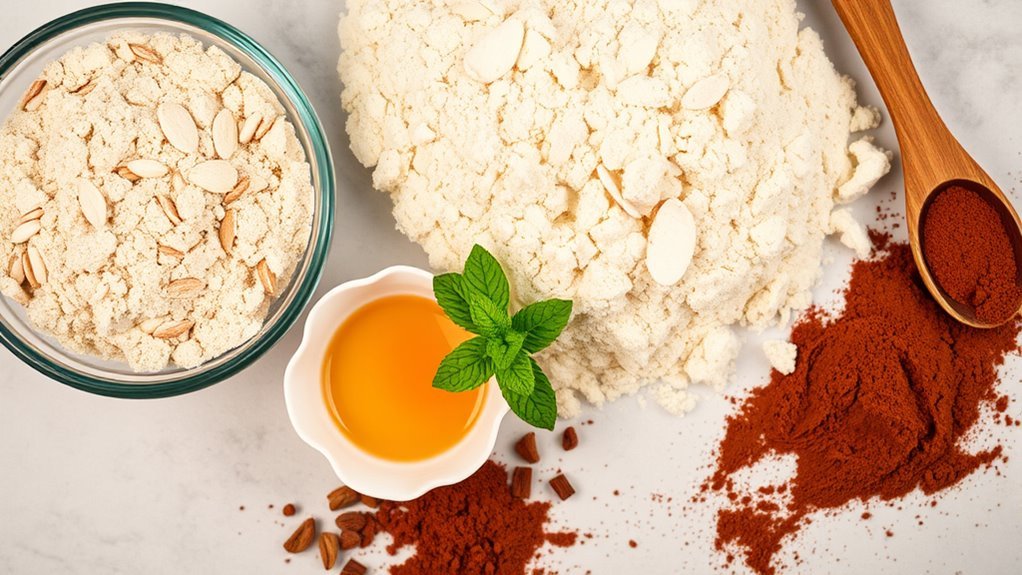

To make keto cookies, start by combining low-carb flours like almond or coconut flour with eggs and a keto-friendly sweetener like erythritol or stevia. Add healthy fats through nut butters or unsweetened cocoa powder for flavor. Monitor baking time closely to achieve a perfect texture, looking for golden edges and soft centers. Experiment with different flavorings or ingredients to customize your cookies. There’s much more to creating delicious keto treats, so explore our tasty options and tips!
Understanding the Keto Diet and Its Impact on Sweets

While you might miss traditional sweets on a keto diet, understanding its principles can help you enjoy delicious alternatives without derailing your progress. The key to success lies in maintaining a proper macronutrient balance, focusing on low-carb and high-fat options. By substituting ingredients, you can create dessert alternatives that satisfy your sweet tooth while keeping your carbohydrate intake in check. For example, using almond flour instead of wheat flour and natural sweeteners instead of sugar allows you to indulge without guilt. These alternatives support your keto lifestyle, enabling you to enjoy treats that align with your goals. Embracing the flexibility of keto can lead to newfound freedom in your dessert choices, proving that you don’t have to sacrifice enjoyment for health. Additionally, understanding macronutrient ratios is essential for successfully navigating the keto dessert landscape.
Essential Ingredients for Keto Cookies
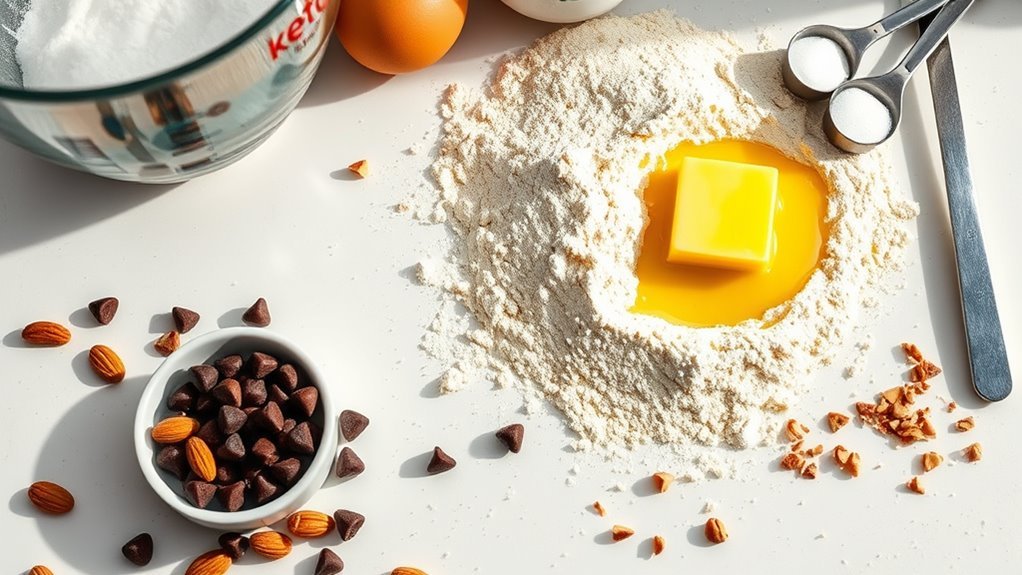
To create delicious keto cookies, you’ll need to focus on a few essential ingredients that align with your dietary goals. First, almond or coconut flour serves as a low-carb base and adds nutritional benefits like healthy fats and fiber. For binding, eggs are vital; they provide structure and moisture while keeping carbs in check. You can use unsweetened cocoa powder for chocolate flavor without the sugar. Additionally, consider ingredient substitutions like using erythritol or monk fruit sweetener to maintain sweetness without spiking blood sugar. Finally, incorporating nut butters can enhance flavor and texture while offering healthy fats. By selecting these ingredients thoughtfully, you’ll enjoy tasty cookies that fit your keto lifestyle without compromising on flavor. Including healthy fats in your recipes not only boosts flavor but also supports overall health on a keto diet.
Popular Keto Sweeteners and Their Benefits

When making keto cookies, choosing the right sweetener is essential for maintaining your diet. Natural sweeteners, like erythritol and stevia, offer low-calorie alternatives that won’t spike your blood sugar levels. Understanding these options can help you create delicious treats while sticking to your keto lifestyle. Additionally, allulose is a low-calorie sweetener that provides sweetness without raising blood glucose, making it a great choice for keto baking.
Natural Sweeteners Overview
As you navigate the world of keto baking, understanding natural sweeteners is vital for achieving the right flavor without compromising your diet. Natural sweeteners, like stevia, erythritol, and monk fruit, offer a range of benefits. They provide sweetness without spiking your blood sugar, making them ideal for a ketogenic lifestyle. These sweeteners come from various natural sources; for instance, stevia is derived from the leaves of the Stevia rebaudiana plant, while erythritol is found in fermented fruits. By incorporating these natural sweeteners into your keto cookies, you can enjoy delicious treats without the guilt. It’s important to choose high-quality products to maximize the natural sweeteners benefits and guarantee your baking remains both flavorful and health-conscious. Additionally, using low-sugar options, such as natural peanut butter, can further enhance your keto baking experience.
Low-Calorie Options Explained
Natural sweeteners not only enhance the flavor of your keto cookies but also offer low-calorie options that fit perfectly into your dietary goals. Using these low-calorie sweeteners allows you to enjoy guilt-free indulgence without compromising your carb count. Here’s a quick comparison of popular sweeteners to evaluate:
| Sweetener | Calories per tsp | Benefits |
|---|---|---|
| Stevia | 0 | Natural, zero-calorie |
| Erythritol | 0.2 | Sugar alcohol, low glycemic |
| Monk Fruit | 0 | Antioxidant properties |
| Allulose | 0.4 | Mimics sugar’s taste |
| Xylitol | 9 | Dental health benefits |
Incorporating these options will help you maintain your keto lifestyle while satisfying your sweet tooth. Additionally, including healthy fats in your recipes can improve the texture and richness of your cookies.
Impact on Blood Sugar
Understanding how popular keto sweeteners impact blood sugar can help you make informed choices while satisfying your cravings. Many keto sweeteners, like erythritol and monk fruit, have minimal or no effect on glucose levels. Erythritol, for instance, is absorbed but not metabolized, leading to negligible changes in blood sugar. Monk fruit, derived from a natural source, offers sweetness without raising glucose levels, making it a great alternative. Stevia is another option that doesn’t spike blood sugar, allowing you to indulge without guilt. By choosing these sweeteners, you can enjoy your keto cookies while keeping your blood sugar stable, empowering you to maintain your low-carb lifestyle without sacrificing flavor or satisfaction. Additionally, exploring alternative sweeteners can enhance your keto baking experience while supporting your dietary goals.
Tips for Perfect Keto Cookie Texture
To achieve the perfect texture in your keto cookies, start by choosing low-carb flours, such as almond or coconut flour, which can greatly impact the outcome. You should also adjust your sweetener ratios; too much can lead to a gummy texture. Finally, monitor your baking time closely, as overbaking can make cookies dry while underbaking can leave them too soft. Additionally, incorporating low-carb vegetables can enhance the texture and add nutritional value to your cookies.
Choose Low-Carb Flours
When you’re aiming for perfectly textured keto cookies, selecting the right low-carb flour is essential. Almond flour and coconut flour are popular choices, but they behave differently in recipes. Understanding their properties can help you achieve the desired texture.
| Flour Type | Characteristics |
|---|---|
| Almond Flour | Moist, slightly nutty flavor; great for chewy cookies. |
| Coconut Flour | Highly absorbent; requires more liquid and eggs for moisture. |
| Flaxseed Meal | Adds fiber; can be used as a binding agent. |
| Hazelnut Flour | Rich flavor; pairs well with chocolate. |
| Sunflower Seed Flour | Nut-free alternative; mild taste, good for allergies. |
Experimenting with these flours can lead to delightful results. Additionally, incorporating healthy fats from nuts can enhance the flavor and texture of your keto cookies. Don’t hesitate to mix them for a unique texture!
Adjust Sweetener Ratios
Selecting the right low-carb flour sets the stage for your keto cookies, but getting the sweetener ratios right is just as important for achieving the perfect texture. Different sweetener types can impact your cookie’s chewiness and moisture, so consider these tips:
- Use a blend of sweeteners for balanced flavor.
- Measure accurately using measuring techniques like weight for precision.
- Start with a smaller amount and adjust based on taste; you can always add more.
- Remember that some sweeteners, like erythritol, can create a cooling effect, so balance them with others like stevia or monk fruit.
Additionally, incorporating healthy fats into your recipes, such as peanut butter, can enhance both flavor and texture while keeping your cookies keto-friendly. Experimenting with these ratios will help you find that sweet spot, ensuring your keto cookies are not only delicious but also have the ideal texture you crave.
Monitor Baking Time
Baking time is essential for achieving the perfect texture in your keto cookies. Using baking timers can be a game-changer. Start by following the recommended baking time in your recipe, but remember that ovens vary. Check your cookies a couple of minutes before the timer goes off to assess cookie doneness. You’re looking for a golden edge and a slightly soft center; they’ll firm up as they cool. If they seem too soft, give them a few extra minutes, but be cautious—overbaking can lead to dry, crumbly cookies. Trust your instincts and adjust based on your oven’s behavior. Monitoring baking time guarantees your cookies turn out chewy and delicious, giving you the freedom to enjoy your keto treats guilt-free.
Easy Keto Cookie Recipes to Try
If you’re looking to satisfy your sweet tooth while sticking to a keto diet, there are countless delicious cookie recipes to explore. Here are some easy options you can try:
- Keto Chocolate Chip Cookies: These use almond flour and sugar-free chocolate chips for a classic treat without the carbs.
- Peanut Butter Cookies: Made with natural peanut butter, sweetener, and an egg, these cookies are simple and satisfying.
- Coconut Macaroons: Shredded coconut, egg whites, and a keto-friendly sweetener create a chewy delight.
- Almond Joy Cookies: Combining chocolate and coconut with a touch of almond essence, these cookies are a low-carb indulgence.
Each recipe allows you to enjoy your favorites while maintaining your keto lifestyle. Additionally, using low-carb ingredients can enhance the flavor and texture of your cookies. Happy baking!
Customizing Your Keto Cookie Flavors
How can you elevate your keto cookies beyond the basic recipes? Start by experimenting with flavor combinations that excite your palate. Think about adding ingredients like almond extract, orange zest, or even a pinch of sea salt to enhance sweetness. You can also play with spices like cinnamon or nutmeg for depth.
Don’t hesitate to make ingredient substitutions; swap out almond flour for coconut flour or use erythritol instead of stevia. Each change can transform your cookies while keeping them keto-friendly. If you crave chocolate, consider adding unsweetened cocoa powder or sugar-free chocolate chips. Embrace the freedom to create unique flavors that suit your taste, making your keto baking experience truly yours!
Storage Tips for Keto Cookies
After you’ve crafted your delicious keto cookies with unique flavors, proper storage is key to maintaining their freshness and texture. Here are some effective tips to guarantee your treats stay delightful:
Proper storage is essential for keeping your delicious keto cookies fresh and delightful.
- Use airtight containers: Store your cookies in airtight containers to keep moisture out and enhance cookie freshness.
- Portion control: Divide cookies into serving sizes before storing; this makes grabbing a snack easy and prevents overindulgence.
- Freezing methods: For longer storage, consider freezing your cookies. Wrap them individually in plastic wrap and place them in a freezer-safe bag.
- Thawing tips: When ready to enjoy, let cookies thaw at room temperature for a perfect texture.
Following these tips will help you savor your keto cookies for longer!
Creative Ways to Enjoy Keto Cookies
Wondering how to elevate your keto cookie experience? Consider making keto cookie sandwiches! Simply spread your favorite low-carb frosting or nut butter between two cookies for a delightful treat. You can also get creative with festive cookie decorations. Use sugar-free sprinkles or melted dark chocolate to enhance the visual appeal and taste of your cookies. These small touches not only make your treats more enjoyable but also perfect for special occasions. Pair your cookies with a cup of unsweetened almond milk or keto-friendly coffee for a satisfying snack. Experiment with different flavors and fillings to find your favorites, and enjoy the freedom of indulging in delicious keto cookies without the guilt!
Frequently Asked Questions
Can I Use Almond Flour Instead of Coconut Flour?
Think of almond flour and coconut flour as two dancers in a kitchen ballet; they each bring unique moves to the performance. You can definitely use almond flour instead of coconut flour, but be aware of their differences. Almond flour offers more fat and protein, delivering benefits like satiety, while coconut flour absorbs more moisture and is higher in fiber. Adjust your liquids accordingly to keep the balance in your keto creations!
How Do I Know if My Cookies Are Done Baking?
You’ll know your cookies are done baking when they’re golden brown around the edges but still soft in the center. For the best cookie texture, let them cool on the baking sheet for a few minutes before transferring them to a wire rack. This allows them to firm up without becoming too dry. Trust your senses; if they smell delicious and look set, you’ve nailed it! Follow these baking tips for perfect results every time.
Are Keto Cookies Suitable for Diabetics?
Yes, keto cookies can be suitable for diabetics. They often use low-carb ingredients like almond flour and coconut flour, which have a lower glycemic index compared to regular flour. Additionally, diabetic-friendly sweeteners like erythritol or stevia can replace sugar, reducing the impact on blood sugar levels. However, it’s crucial to monitor your personal response and consult with a healthcare professional to confirm these treats fit within your dietary plan. Enjoy the freedom of tasty options!
Can I Freeze Keto Cookies for Later Use?
Absolutely, you can freeze keto cookies for later use! Imagine having a stash of delicious treats ready whenever you want. For effective freezing techniques, wrap each cookie tightly in plastic wrap or place them in airtight containers. They can last up to three months in the freezer without sacrificing flavor or texture. Just thaw them at room temperature when you’re ready to enjoy, and you’ll have fresh cookies on demand!
How Many Carbs Are Typically in Keto Cookies?
Keto cookies typically contain around 1 to 5 grams of net carbs per serving, making them great low carb options for those on a ketogenic diet. This low carb count is achieved by using sugar substitutes like erythritol or almond flour instead of traditional flour and sugar. These substitutes help you satisfy your sweet tooth while keeping your carb intake low, allowing you the freedom to enjoy treats without derailing your dietary goals.
References
- https://www.healthline.com/nutrition/what-is-keto-diet
- https://www.ncbi.nlm.nih.gov/pmc/articles/PMC7019975/
- https://www.webmd.com/diet/what-is-the-keto-diet
- https://www.medicalnewstoday.com/articles/323890
- https://www.ketogenic.com/
- https://www.dietdoctor.com/low-carb/keto/keto-diet-guide
- https://www.verywellfit.com/keto-diet-5117185
- https://www.cdc.gov/healthyweight/assessing/bmi/adult_bmi/english_bmi_calculator/bmi_calculator.html
- https://www.nutrition.gov/topics/nutrition-101/what-ketogenic-diet