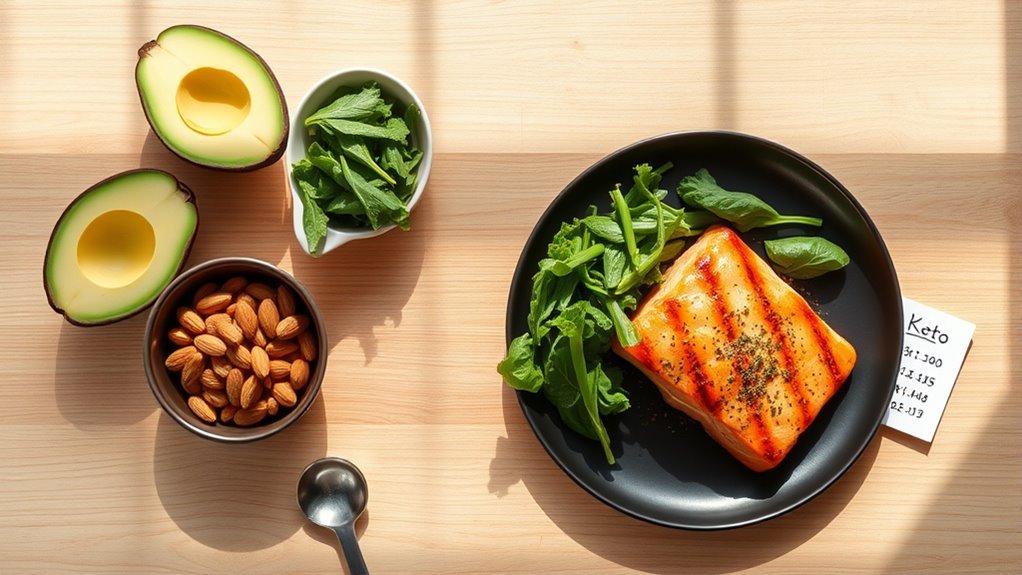

On a keto diet, you typically need to consume between 1,600 to 2,400 calories daily, depending on your activity level and health goals. Sedentary women might aim for 1,600 to 1,800 calories, while more active individuals may require 2,200 to 2,400 calories. Remember, the macronutrient breakdown should focus on 70-75% fats, 20-25% protein, and 5-10% carbohydrates. Tailoring your caloric intake is vital for maintaining energy and supporting ketosis, plus there’s more to evaluate for ideal results.
Understanding Caloric Needs for Women on Keto

When you’re considering a ketogenic diet, it’s important to understand your caloric needs, especially as a woman. Many women fall prey to keto misconceptions, believing that drastic calorie cuts will yield better results. However, this approach can negatively impact women’s health, leading to hormonal imbalances and fatigue. Instead, aim to find a balanced caloric intake that supports your body’s needs while still promoting ketosis. This means calculating your basal metabolic rate, factoring in activity levels, and adjusting your macros accordingly. Remember, the goal isn’t just weight loss; it’s about nourishing your body for peak health and energy. Embracing freedom in your dietary choices allows you to thrive on keto without sacrificing your well-being.
Factors Influencing Caloric Intake

When considering caloric intake on a keto diet, your activity level and metabolic rate play essential roles. Higher activity levels generally require more calories to support your body’s energy needs, while variations in metabolic rate can affect how efficiently you burn those calories. Understanding these factors can help you tailor your diet to meet your goals effectively.
Activity Level Impact
Although dietary choices are essential for maintaining a ketogenic lifestyle, your activity level greatly impacts how many calories you should consume. When evaluating your caloric needs, consider your exercise intensity and frequency. Higher levels of activity, like intense workouts or endurance training, require more energy, leading to increased caloric needs. Conversely, if your lifestyle choices include a more sedentary routine, you may not need as many calories. To strike the right balance, monitor how your body responds to different levels of activity, adjusting your intake accordingly. Finding the right calorie count tailored to your unique activity level allows you to enjoy the freedom of a keto diet while supporting your fitness goals effectively.
Metabolic Rate Variations
Your metabolic rate plays a significant role in determining how many calories you should consume on a keto diet. Factors like metabolic adaptation can change how your body processes energy over time, especially when you enter a state of ketosis. As your body adjusts, it may require fewer calories than before. Hormonal fluctuations, influenced by factors like stress and menstrual cycles, can also affect your metabolic rate and hunger levels. Understanding these variations is essential for tailoring your caloric intake. By recognizing your unique metabolic needs, you can embrace the freedom of making informed choices that align with your health goals while maneuvering the keto diet effectively. Adjusting calories based on these factors can enhance your overall success.
Determining Your Daily Caloric Needs
To effectively navigate the keto diet, it’s important to determine your daily caloric needs, as this forms the foundation for achieving your weight loss or maintenance goals. Understanding your caloric deficit is vital for optimizing female metabolism and ensuring you’re fueling your body correctly.
Here’s a simple table to help you visualize your caloric intake:
| Activity Level | Daily Calories Needed | Caloric Deficit for Weight Loss |
|---|---|---|
| Sedentary | 1,600 – 1,800 | 1,200 – 1,400 |
| Lightly Active | 1,800 – 2,000 | 1,400 – 1,600 |
| Moderately Active | 2,000 – 2,200 | 1,600 – 1,800 |
| Very Active | 2,200 – 2,400 | 1,800 – 2,000 |
Macronutrient Breakdown for Keto
Once you’ve established your daily caloric needs, the next step is to focus on the macronutrient breakdown that’s fundamental to the keto diet. Understanding the keto macronutrient ratios is essential for achieving your goals. Typically, your diet should consist of:
- 70-75% fats: Focus on healthy sources like avocados and nuts.
- 20-25% protein: Choose lean meats and fish for a balanced intake.
- 5-10% carbohydrates: Keep carbs low, primarily from non-starchy vegetables.
- Adequate hydration: Drink plenty of water to support metabolic processes.
- Electrolyte balance: Consider magnesium, potassium, and sodium for overall health.
Tips for Tracking Calories Effectively
While tracking calories on a keto diet might seem challenging at first, it can be simplified with a few effective strategies. Start by using effective tools like apps or websites designed for calorie tracking. They often come with a database of keto-friendly foods, making it easier to log your meals accurately. Keep a food journal as well; writing things down can enhance your awareness of what you’re consuming. Don’t forget to measure portion sizes to avoid underestimating your calorie intake. Finally, set realistic goals and review your progress regularly, which can help you stay motivated without feeling restricted. Remember, the goal is to enjoy your keto journey while being mindful of your caloric consumption.
Adjusting Calories for Weight Loss or Maintenance
To effectively adjust your calorie intake for weight loss or maintenance on a keto diet, you’ll first need to calculate your baseline intake based on your individual needs. It’s crucial to factor in your activity level, as this will influence how many calories you should consume. Regularly monitoring your progress can help you make informed adjustments to stay on track with your goals.
Calculate Your Baseline Intake
Calculating your baseline caloric intake is essential for effectively steering through the keto diet, whether you’re aiming for weight loss or maintenance. To determine your needs, consider using caloric calculators that take into account your age, weight, height, and activity level.
Make daily adjustments based on how your body reacts. Here are some tips to guide you:
- Monitor your weight weekly to assess progress.
- Adjust your caloric intake by 100-200 calories based on results.
- Consider macronutrient breakdowns for keto-specific goals.
- Stay hydrated, as water intake can affect hunger levels.
- Track your meals for accuracy and accountability.
Adjust for Activity Level
Adjusting your caloric intake based on your activity level is crucial for effectively managing the keto diet, whether you’re focused on losing weight or maintaining your current weight. Different activity types, such as cardio, strength training, or leisure activities, require varying amounts of energy. If you engage in high-intensity exercise, you might need additional calories to support your body’s demands. Conversely, if your activity level is low, you may need to reduce your intake to prevent weight gain. It’s important to listen to your body and adjust your calories accordingly, ensuring you’re fueling properly without exceeding your limits. By aligning your caloric intake with your exercise intensity, you’ll achieve a balanced approach to the keto lifestyle.
Monitor Progress Regularly
Monitoring your progress regularly is essential for making informed adjustments to your caloric intake, whether you’re aiming for weight loss or maintenance on the keto diet. Effective progress tracking allows you to understand how your body responds to different calorie levels and food choices. Here are some key methods to help you stay on track:
- Weigh yourself weekly to gauge overall trends.
- Take body measurements to see changes in muscle and fat.
- Keep a food diary to monitor your caloric intake.
- Assess your energy levels and mood for overall well-being.
- Adjust your calories based on your weight management goals.
Frequently Asked Questions about Caloric Intake on the Keto Diet for Women
1. How many calories should a woman consume on a keto diet?
Caloric intake on a keto diet can vary significantly based on a woman’s age, weight, activity level, and overall health goals. Generally, women on a keto diet may aim for a caloric intake ranging from 1,200 to 2,000 calories per day. It is essential to calculate your macronutrient ratios, focusing on high fats (70-75%), moderate proteins (20-25%), and very low carbohydrates (5-10%). Consulting a healthcare provider or nutritionist can help tailor these recommendations to individual needs.
2. How do I calculate my daily caloric needs on a keto diet?
To calculate your daily caloric needs for a keto diet, you can use the Basal Metabolic Rate (BMR) formula, which estimates the number of calories your body needs at rest. First, determine your BMR using an online calculator or the Mifflin-St Jeor equation. Then, multiply your BMR by an activity factor (ranging from 1.2 for sedentary to 1.9 for very active) to find your Total Daily Energy Expenditure (TDEE). Once you have your TDEE, you can adjust your caloric intake to create a deficit or surplus based on your weight loss or gain goals.
3. Will I gain weight if I eat too many calories on the keto diet?
Yes, consuming more calories than your body needs, even on a keto diet, can lead to weight gain. The ketogenic diet focuses on low carbohydrate intake to induce ketosis, but if you exceed your caloric needs with high-fat foods, you may still gain weight. It’s crucial to monitor your portion sizes and overall caloric intake while adhering to the macronutrient ratios to maintain weight loss or achieve your desired body composition.
4. Can I lose weight on a keto diet without counting calories?
While some individuals may experience weight loss on a keto diet without actively counting calories due to reduced hunger and appetite suppression, it is generally advisable to track your intake for optimal results. Focusing on high-fat, low-carb foods can help regulate hunger hormones, but being mindful of portion sizes and total caloric intake can further enhance weight loss efforts and ensure you are meeting your nutritional needs.
5. What are some tips for managing calories while on a keto diet?
To manage calories effectively while on a keto diet, consider the following tips:
- Plan your meals: Prepare your meals in advance to ensure you stick to your caloric and macronutrient goals.
- Use a food diary: Track what you eat to remain accountable and understand your eating patterns.
- Choose whole foods: Focus on whole, unprocessed foods that are naturally low in carbs and high in healthy fats.
- Monitor portion sizes: Pay attention to the amount of food you consume to avoid overeating, even healthy keto-friendly foods.
- Stay hydrated: Drinking plenty of water can help control hunger and assist in managing your overall caloric intake.
References
- https://www.ncbi.nlm.nih.gov/pmc/articles/PMC6520684/
- https://www.healthline.com/nutrition/ketogenic-diet-101
- https://www.webmd.com/diet/obesity/ss/slideshow-keto-diet
- https://www.hopkinsmedicine.org/health/wellness-and-prevention/the-keto-diet-what-you-need-to-know
- https://www.mayoclinic.org/healthy-lifestyle/nutrition-and-healthy-eating/in-depth/keto-diet/art-20459860
- https://www.nutrition.gov/topics/nutrition-101/dietary-guidelines/keto-diet
- https://www.cdc.gov/healthyweight/healthy_eating/dietary_guidelines.html