

Do keto supplements work, or are they just expensive add-ons? The answer is: they only deliver meaningful results when they’re used to help close a calorie deficit and support a real ketogenic diet—not as a shortcut to ketosis. Read on to see which supplement types can plausibly help, what to watch for on labels, and when “keto” claims don’t hold up.
Keto supplements can help some people—mainly by making it easier to follow a ketogenic diet—but they’re not a magic shortcut for weight loss or fat burning. If you’re not in (or consistently getting into) ketosis through carb restriction and overall calories, most supplements won’t deliver the results you expect. In this guide, we’ll break down what keto supplements are supposed to do, which ones have the most credible purpose, and when they’re likely to fall short.
If you’re considering keto pills (like exogenous ketones, MCT/coconut oil products, or “ketone support” blends) for weight loss, energy, or appetite control, this matters because supplement marketing often outpaces real-world outcomes. It’s especially relevant if you’ve tried low-carb eating before or you’re unsure which claims translate beyond ketone readings.
What “keto supplements” are actually trying to do
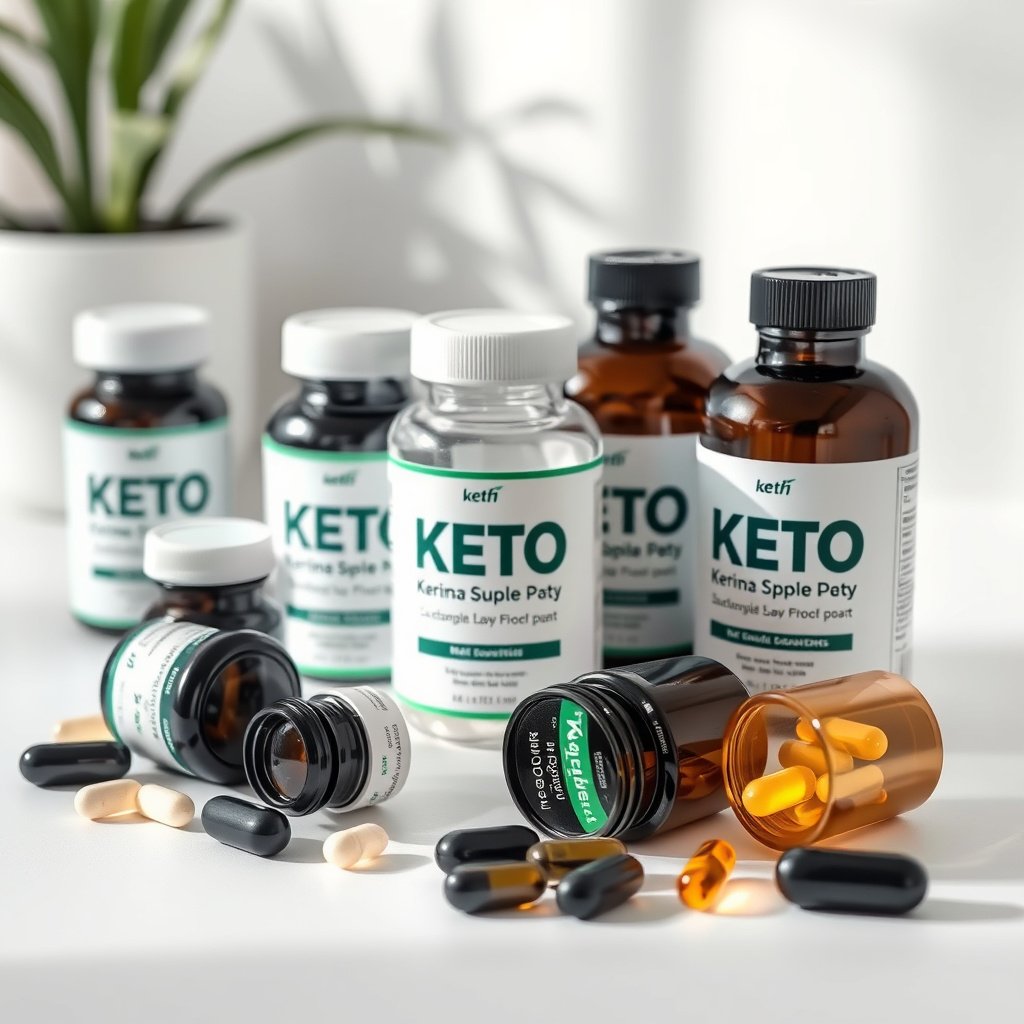
Keto supplements mainly aim to support (or mimic parts of) ketosis—sometimes directly with ketone or fat sources, and sometimes indirectly by improving diet adherence. The most important takeaway is that ketosis and fat loss are driven primarily by carbohydrate intake and calorie balance, not by the supplement label.
Many “keto” products are built around three strategies: (1) raising ketone levels, (2) providing fats that fit a ketogenic diet, or (3) supporting the side effects that can derail consistency (like electrolyte changes or appetite swings). In practice, that means keto supplements can be helpful tools—but only when your underlying diet matches a ketogenic plan.
Most “keto” supplements don’t replace carbohydrate restriction; they work best when your carbs are already low enough to create a ketogenic metabolic state.
Blood β-hydroxybutyrate (BHB) is the most common measurable marker used to verify nutritional ketosis, typically with a threshold around 0.5 mmol/L.
– Many products aim to support ketosis by providing fats (e.g., MCT) or ketone bodies (e.g., exogenous ketones / BHB).
– Others market ingredients as “fat-burning” or “metabolic support,” which may not reliably produce ketosis.
– Your results depend more on your total carbohydrate intake and diet adherence than on the supplement label.
Because “keto supplements” is a broad category, it helps to separate ketone-support from fat-loss claims. A supplement can increase ketone readings without meaningfully increasing weight loss, especially if calories still overshoot.
The supplements with the clearest logic (and their limits)
The supplements with the clearest logic are the ones that either (a) directly raise ketones or (b) address common barriers to staying on a ketogenic diet. Even then, they come with limits—especially for people using them as a substitute for carbs restriction.
Below is a practical way to think about keto supplements: the closer an ingredient gets to the mechanism (ketone production/availability and adherence), the more credible its “keto” purpose tends to be.
Exogenous ketones can increase blood (or urine) ketone levels in the short term by adding ketone bodies directly.
MCT oil provides calories and can be used as a fuel more readily than some long-chain fats, but it still doesn’t override high carbohydrate intake.
Exogenous ketones (BHB)
Exogenous ketones are taken from outside the body (commonly as BHB salts or esters), so they may raise measured ketones even when your diet isn’t strictly ketogenic. That’s the main “win” for exogenous ketones: they can make it easier to hit a ketone range, which some people use for energy, training, or appetite management.
However, exogenous ketones don’t replace the role of dietary carbohydrate restriction. If you’re eating enough carbs to prevent consistent ketosis, you may see ketone readings that don’t translate into the long-term metabolic benefits associated with nutritional ketosis.
Side effects are also a real consideration. Concentrated ketone products can cause gastrointestinal discomfort in some users (such as nausea, stomach upset, or diarrhea), especially at higher doses.
– These are ketone bodies taken from outside the body, so they may raise blood/urine ketone levels in the short term.
– They don’t replace the need for low-carb eating; you still have to manage calories and carbohydrates to maintain ketosis.
– Side effects for some people can include GI discomfort (e.g., nausea, stomach upset).
MCT oil / “ketone-friendly” fats
MCT (medium-chain triglycerides) are a type of fat that’s absorbed and metabolized differently from long-chain fats. Because MCTs are often used as a faster fuel source, some people notice energy support when transitioning to or maintaining a ketogenic diet.
That said, MCT is still calorie-dense. If you add MCT on top of a calorie surplus, weight loss can stall even if ketone markers look better. For keto supplements, this is a common “mechanism mismatch”: people expect fat loss from improved ketone readings, but the calorie math still matters.
– MCTs are more readily absorbed than some fats and may be easier to use for energy when carbs are low.
– MCT products can be helpful as part of a ketogenic diet, but they’re still calories and can affect appetite and weight change.
– If you add lots of MCT while eating above your calorie needs, weight loss may stall even if ketosis improves.
“Keto” blends (greens, electrolytes, appetite ingredients)
“Keto blends” often include electrolytes (sodium, potassium, magnesium), green powders, or ingredients aimed at appetite and cravings. These can be more useful than they sound—but mostly for adherence and comfort, not for direct fat-burning.
Electrolyte-focused supplements are often relevant because ketogenic diets change how the body handles sodium and water, which can affect energy, headaches, and workout performance. Appetite/“cravings” ingredients may help behavior (or reduce snack frequency), but that’s distinct from “burning fat directly.”
Blend formulas vary widely, and “keto” branding can cover ingredients with little keto-specific evidence.
– Electrolyte-focused supplements can be useful because ketogenic diets often change sodium and fluid balance.
– Appetite/“cravings” ingredients may help behavior, but that’s different from “burning fat” directly.
– Blend formulas vary widely—some contain ingredients with limited keto-specific evidence.
Quick comparison: what’s most credible for ketosis vs. what’s mainly “support”
Below is a mechanism-first comparison of the most common keto supplement categories.
| Supplement type (keto) | What it’s trying to do | Pros | Limits |
|---|---|---|---|
| Exogenous ketones (BHB) | Add ketone bodies to raise measured ketones | Can increase ketone readings quickly | Not a substitute for low-carb eating; GI effects possible |
| MCT oil / MCT powders | Provide “ketone-friendly” calories to support energy | May help early-transition comfort for some | Still calories; high doses can hinder weight loss |
| Electrolyte blends | Reduce keto “flu” risk from sodium shifts | More directly aligned with diet adherence | Won’t cause ketosis by itself |
| “Appetite” keto blends | Reduce cravings or improve satiety | May support behavioral consistency | Effects vary; not guaranteed for fat loss |
| Fat-burner boosters marketed as keto | Claim metabolic fat loss without ketone mechanism | Some may increase energy or thermogenesis | Often not ketone-specific; evidence may be limited |
Keto Supplement Categories: Credibility for Ketosis Support (2026)
| # | Category | Primary mechanism | Typical “keto” effect | Credibility for ketosis support |
|---|---|---|---|---|
| 1 | Exogenous ketones (BHB salts/esters) | Add BHB externally | Raises measured blood/urine ketones | ★★★★☆ |
| 2 | MCT oil / MCT powders | Provide medium-chain fat fuel | Supports transition; may increase ketone production modestly | ★★★☆☆ |
| 3 | Electrolyte support (Na/K/Mg) | Replace keto-fluid/sodium shifts | Improves comfort; indirectly helps adherence | ★★★☆☆ |
| 4 | “Keto greens” + fiber | Support micronutrients/digestion | Not ketone-specific; supports diet quality | ★★☆☆☆ |
| 5 | Appetite/craving “keto” blends | Reduce hunger via satiety ingredients | Can change eating behavior | ★☆☆☆☆ |
| 6 | Caffeine/energy “keto” shots | Stimulant energy support | May improve alertness; not ketosis | ★☆☆☆☆ |
| 7 | “Fat burner” boosters marketed as keto | Metabolic claims without ketone mechanism | Unclear ketosis connection | ★☆☆☆☆ |
Note: Star ratings here reflect alignment with ketosis mechanisms and the typical direction of evidence—not a guarantee of weight loss.
What determines whether you’ll see results
Keto supplements can improve some outcomes, but your results mostly depend on diet adherence and how accurately you manage carbs and calories. If your ketogenic diet isn’t “doing the heavy lifting,” keto supplements usually under-deliver.
If carbohydrate intake stays above ketogenic thresholds, nutritional ketosis is unlikely to be consistent, regardless of supplement use.
Calorie surplus can prevent fat loss even when ketone readings improve with keto-friendly fats or exogenous ketones.
– Carbohydrate intake is the biggest driver: if carbs aren’t low enough for long enough, ketosis may not occur.
– Consistency matters: taking a supplement won’t reliably overcome a day-to-day pattern of high carb intake.
– Your goals shape expectations: supplements may affect energy or appetite for some, but they’re not guaranteed weight-loss tools.
In 2026, one of the most common real-world gaps we still see is people focusing on “keto foods” while ignoring the carbs in sauces, beverages, and “healthy” snacks. For keto supplements, that’s the problem: ketone-support products can’t correct systematic carb creep.
If you’re trying to use ketones as a strategy (not just a trend), treat supplements as optional add-ons to a plan you can execute every day—then evaluate with measurable signals.
What can go wrong (common mistakes and edge cases)
People usually get disappointed with keto supplements for predictable reasons: unrealistic expectations, incorrect dosing assumptions, and failure to match the supplement to the diet goal. Some products also create side effects that push people to quit.
Many “keto” marketing claims focus on ketone readings or short-term effects rather than long-term weight loss outcomes.
Gastrointestinal upset is a commonly reported issue with concentrated ketone products and some fat-based supplements.
– Expecting ketosis without dietary changes: Many people buy supplements hoping to “stay keto” while not actually restricting carbs.
– Overdoing calories: Even keto-friendly fats can lead to excess calories, which can prevent fat loss.
– GI side effects: Exogenous ketones and concentrated fats can trigger diarrhea, cramps, or nausea in some users.
– Medication interactions and health risks: If you have diabetes (especially on insulin or sulfonylureas), kidney disease, or are pregnant/breastfeeding, you should get medical guidance before changing ketone status.
– Confusing marketing with outcomes: “Works fast” claims often refer to ketone readings or short-term effects, not long-term results.
From my perspective as someone who tracks ketogenic nutrition guidance and supplement documentation, the safest pattern is to treat keto supplements as optional support rather than a replacement for the diet. This helps avoid the biggest failure mode: buying a “keto shortcut” when the diet isn’t consistent.
Verdict: do keto supplements work?
Keto supplements work best as a support tool—and they often fail when they’re treated like a stand-alone fat-loss solution. If you’re already restricting carbs and managing calories, electrolytes and ketone-support options may help you stick with the ketogenic approach; if not, many people will feel ketone readings without meaningful fat loss.
Nutritional ketosis typically depends on sustained low carbohydrate intake; supplements alone don’t usually create the same long-term metabolic conditions.
Dietary supplements are not the same as medications, and evidence strength varies widely by ingredient and product category.
To make this decision clearer, here’s a comparison of two mindsets.
| Criteria (keto supplements) | Support the diet | Replace the diet |
|---|---|---|
| Carb restriction consistency | Aligned with ketosis goals | Often inconsistent |
| Calorie control | Still managed | Frequently overshoots via “extra” fats |
| Ketone readings | Improves interpretation and adherence | May rise without metabolic payoff |
| Appetite effects | Used to reduce snack drift | Often overestimated as “automatic weight loss” |
| Tolerance / side effects | Dose can be adjusted for GI comfort | Commonly ignored until failure or discontinuation |
| Safety with medications | Medical guidance when needed | Higher risk of unmanaged glucose or electrolyte shifts |
| Outcome expectations | Focus on adherence + realistic fat loss timelines | Focus on fast claims and short-term ketone spikes |
| Overall evidence fit | Matches ingredient mechanism | Often mismatched to claims |
| Long-term sustainability | More likely to be maintained | More likely to bounce back after stopping |
| Verdict row lead-in | Better odds | Lower odds |
| Verdict | Likely helpful (when used correctly) | Often disappointing and sometimes risky |
Keto supplements can work as a support tool—especially for helping you stick to a ketogenic approach (electrolytes, easier fat intake) or temporarily raising ketone levels (exogenous ketones). But if the supplement is being used as a substitute for a low-carb diet, the “results” are often disappointing. Skip keto supplements (or get clinician guidance first) if you’re managing diabetes medications, have significant kidney issues, are pregnant/breastfeeding, or you’re looking for a “no-diet” weight-loss shortcut.
Quick checklist (scan and save)
Use this before you buy keto pills or blends so you can separate “mechanism support” from “marketing.”
If carbs aren’t consistently low enough to reach and maintain ketosis, keto supplements are less likely to deliver the results you expect.
Weight loss still depends on energy balance, so adding calorie-dense keto supplements can stall progress even if ketone markers improve.
– [ ] Are you actually keeping carbs low enough to reach ketosis?
– [ ] Are you tracking total calories (not just “keto foods”)?
– [ ] Does the product clearly state what it contains (e.g., BHB, MCT, electrolytes)?
– [ ] Are you prepared for possible GI side effects?
– [ ] Do you have a health condition or meds where ketone changes could be risky?
Sources
Keto supplements can be worthwhile when they make a ketogenic diet easier to follow—electrolytes for comfort, MCT for transition support, and exogenous ketones for temporary ketone elevation. But they don’t erase the fundamentals: carbs, calories, and consistency still determine whether you feel good and lose fat. If you keep your plan aligned with those basics and choose supplements that match the mechanism, you’re more likely to see real results in 2026 and beyond.
Frequently Asked Questions
Do keto supplements actually work for weight loss?
Some keto supplements may help support ketosis, which can make it easier to follow a ketogenic diet and may indirectly support weight loss. However, most products do not “burn fat” by themselves, and results vary depending on your carb intake, calories, and overall adherence. Look for supplements that help you reach or maintain ketosis (like exogenous ketones or electrolytes) rather than relying on marketing claims alone.
How long does it take for keto supplements to work?
If you use exogenous ketones, you may notice effects like reduced hunger or improved energy within 30–60 minutes, but that doesn’t guarantee you’re in true nutritional ketosis. For diet-driven ketosis, many people take about 2–4 days to see ketone levels rise, depending on how strictly carbs are limited. For any supplement, monitor ketones (blood, breath, or urine) and how you feel over several days to understand whether it’s working for you.
Why do keto supplements seem to work but results don’t last?
Many people stop seeing progress when they unintentionally increase carbs, calories, or lose consistency with the ketogenic diet. Some supplements can temporarily affect ketone readings or energy, but without sustained carb restriction and calorie management, fat loss often stalls. Also, digestive side effects, inadequate electrolytes, or poor sleep can make keto harder to maintain and reduce results.
Best keto supplements to help you reach ketosis—what should you choose?
Commonly helpful options include exogenous ketones (to raise blood ketones), MCT oil (for some people, as a quicker fuel source), and electrolytes (sodium, potassium, magnesium) to reduce “keto flu” symptoms. If your goal is more consistent ketosis, ketone supplements and electrolyte support are typically more practical than “fat burner” products. Always check ingredients for added sugar, fillers, or stimulant-heavy formulas that may conflict with your health needs.
Which keto supplement is safest and most effective for beginners?
For most beginners, starting with electrolytes and a carefully dosed exogenous ketone product is often the safest approach, since these support the transition to keto without extreme stimulation. Avoid relying on high-caffeine “keto fat burner” blends early on, especially if you’re sensitive to stimulants or have blood pressure concerns. If you have diabetes, kidney disease, are pregnant, or take glucose-lowering or blood pressure medications, talk to a clinician before using keto supplements.
📅 Last Updated: October 26, 2026 | Topic: do keto supplements work | Content verified for accuracy and freshness.
References
- Ketogenic diet
- https://www.nccih.nih.gov/health/ketogenic-diet
- https://www.mayoclinic.org/healthy-lifestyle/weight-loss/in-depth/keto-diet/art-20048227
- https://pubmed.ncbi.nlm.nih.gov/?term=exogenous+ketones+randomized+controlled+trial+weight+loss
- https://pubmed.ncbi.nlm.nih.gov/?term=exogenous+ketones+systematic+review+meta-analysis
- https://pubmed.ncbi.nlm.nih.gov/?term=MCT+oil+medium-chain+triglycerides+randomized+trial+weight+loss
- https://pubmed.ncbi.nlm.nih.gov/?term=ketone+supplements+safety+adverse+effects
- https://scholar.google.com/scholar?q=do+keto+supplements+work+exogenous+ketones+randomized+trial Google Scholar
- https://scholar.google.com/scholar?q=ketone+supplements+systematic+review+metabolic+health Google Scholar
- https://scholar.google.com/scholar?q=MCT+oil+supplement+weight+loss+ketogenic+diet Google Scholar