

Yes, calories do matter on keto. While the diet encourages fat burning by shifting your body into ketosis, achieving a caloric deficit is essential for weight loss. Keep in mind that macronutrient balance—focusing on high fat, moderate protein, and low carbohydrates—also plays an important role. Tracking your caloric intake and adjusting macronutrient ratios can enhance your results. Want to optimize your approach? Explore more insights on effectively balancing calories and macronutrients.
Understanding Ketosis and Its Impact on Metabolism
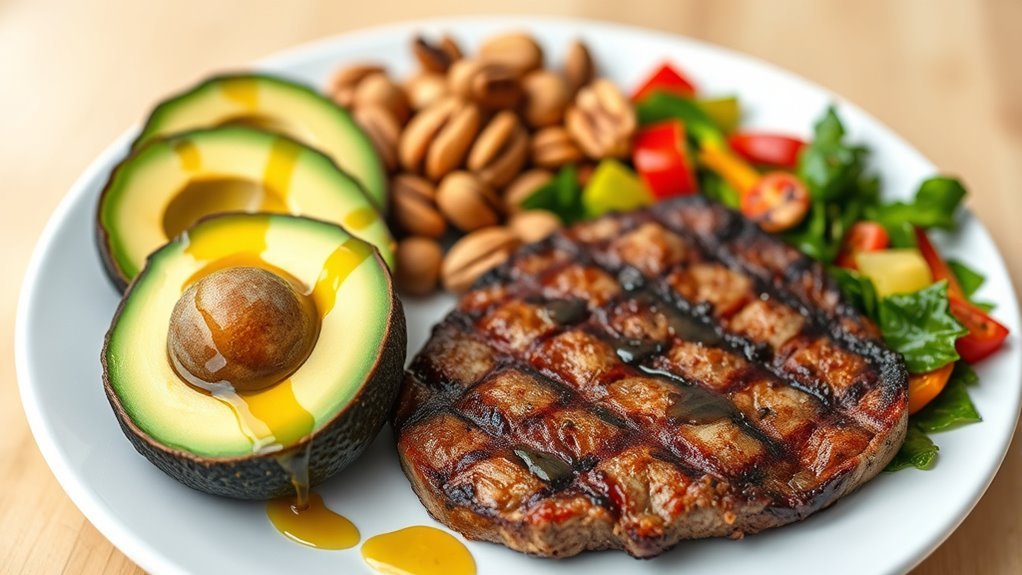
When you begin a ketogenic diet, understanding how ketosis affects your metabolism is essential. Ketosis is a metabolic state where your body shifts from burning carbohydrates to fat for energy. This shift, known as metabolic adaptation, can lead to several ketosis benefits, such as improved fat burning and enhanced mental clarity. As your body adapts, it becomes more efficient at utilizing fat stores, which can help with weight management. You might find that your hunger decreases, allowing for more freedom in meal timing and choices. However, it’s important to remember that while you can enjoy these benefits, maintaining a balanced approach guarantees you stay healthy and energized. Embracing this knowledge empowers you to navigate your keto journey with confidence.
The Role of Macronutrients in the Keto Diet

While many people focus on the carb content of their meals when following a ketogenic diet, the role of macronutrients—fats, proteins, and carbohydrates—cannot be overlooked. Understanding how to balance these macronutrients is vital for success on keto.
- Fat Intake: A higher fat intake is essential for reaching and maintaining ketosis, providing your body with a primary energy source.
- Protein Sources: While protein is important, it’s best to choose moderate amounts from high-quality sources like fish, eggs, and nuts to avoid excess glucose production.
- Carbohydrates: Keep carbs low, but don’t eliminate them entirely; non-starchy vegetables can provide essential nutrients without disrupting ketosis.
Caloric Deficit vs. Surplus: What Matters Most?

Balancing macronutrients is important on a ketogenic diet, but understanding caloric intake also plays a significant role in achieving your health goals. Whether you’re aiming for weight loss or maintenance, achieving a caloric balance is essential. A caloric deficit—consuming fewer calories than you burn—can lead to weight loss, while a surplus—consuming more—often results in weight gain. While keto can help regulate hunger and promote fat burning, it doesn’t negate the principles of caloric management. If you want freedom in your diet, you’ll need to pay attention to how calories fit into your overall strategy. Ultimately, being mindful of your caloric intake, alongside macronutrient ratios, empowers you to take control of your weight management journey effectively.
Individual Variability in Weight Loss on Keto
As you commence your ketogenic journey, it is crucial to recognize that individual variability plays a significant role in weight loss outcomes. Factors like metabolic adaptation and hormonal influences can impact how effectively you lose weight on keto.
Consider these influences:
Recognizing individual variability, including metabolic and hormonal factors, is essential for a successful ketogenic journey.
- Metabolic Adaptation: Your metabolism may adjust to a lower calorie intake, slowing weight loss over time.
- Hormonal Influences: Hormones like insulin and cortisol can affect fat storage and hunger, leading to different weight loss experiences among individuals.
- Genetic Factors: Your genetic makeup can determine how your body processes fats and carbohydrates, influencing your success on the diet.
Understanding these elements can empower you to tailor your approach, ensuring a more personalized and effective ketogenic experience.
Practical Tips for Balancing Calories and Macronutrients on Keto
Understanding individual variability can help you navigate the complexities of the ketogenic diet, particularly when it comes to balancing calories and macronutrients. To maintain your freedom while on keto, consider incorporating caloric tracking into your routine. This doesn’t mean you have to obsess over every bite; instead, it’s about being mindful of your intake. Use apps or journals to log your meals and guarantee you’re hitting your targets for fats, proteins, and carbs. Portion control is another key strategy. Being aware of serving sizes can prevent unintentional overconsumption. Experiment with different ratios and listen to your body’s hunger and satiety signals. With these practical tips, you can achieve a balanced approach that aligns with your personal goals on keto.
Frequently Asked Questions
1. Do I need to count calories while on a keto diet?
Counting calories is not strictly necessary on a keto diet. The primary focus of keto is to limit carbohydrate intake to induce ketosis, where the body burns fat for fuel instead of carbs. However, some people may find it helpful to monitor their caloric intake to ensure they are in a caloric deficit for weight loss or to maintain their weight. Ultimately, it depends on individual goals and how your body responds to the diet.
2. Can I eat unlimited calories on a keto diet?
While keto allows for higher fat intake, it does not mean you can eat unlimited calories without consequences. Consuming more calories than your body needs can lead to weight gain, even on a low-carb diet. It’s important to listen to your body, practice portion control, and be mindful of overall caloric intake to achieve your desired results.
3. How do I know if I am eating the right amount of calories on keto?
To determine the right amount of calories for your keto diet, consider factors such as your age, gender, activity level, and weight loss goals. Many people find success by calculating their Total Daily Energy Expenditure (TDEE) and then adjusting their caloric intake based on their goals. Tracking your food intake with apps can help you stay within your desired caloric range while ensuring you meet your macronutrient targets.
4. What happens if I exceed my calorie limit on keto?
Exceeding your calorie limit on a keto diet can lead to weight gain, as consuming more calories than your body burns results in a caloric surplus. Additionally, overeating, particularly on high-carb foods, can kick you out of ketosis, making it harder to return to a fat-burning state. It’s crucial to maintain a balanced approach to caloric intake to stay on track with your health and weight loss goals.
5. Are all calories equal on a keto diet?
Not all calories are equal, especially on a keto diet. The source of your calories matters significantly. For example, calories from healthy fats (like avocados and olive oil) support ketosis and provide essential nutrients, while calories from sugary or processed foods can hinder your progress and health. Focus on nutrient-dense foods that align with keto macronutrient ratios for optimal results.
References
- https://www.ncbi.nlm.nih.gov/pmc/articles/PMC7071628/
- https://www.health.harvard.edu/staying-healthy/the-ketogenic-diet
- https://www.webmd.com/diet/what-is-the-ketogenic-diet
- https://www.cdc.gov/healthyweight/assessing/bmi/adult_bmi/english_bmi_calculator/bmi_calculator.html
- https://www.verywellfit.com/understanding-the-keto-diet-5200296
- https://www.nutrition.gov/topics/nutrition-101/understanding-calories
- https://www.ncbi.nlm.nih.gov/pmc/articles/PMC6520897/