When following a keto diet, opt for low-carb milk options. Almond milk has about 1 gram of carbs per cup, while coconut milk is rich in healthy fats and adds creaminess. Hemp milk offers a nutritious profile with omega-3s and just 1 gram of carbs. Heavy cream is calorie-dense but low in carbs, making it satisfying. Unsweetened soy, macadamia nut, and cashew milk are also great choices. Discover more about each option to find what fits your needs best.
Understanding the Keto Diet and Dairy

When you’re diving into the keto diet, understanding how dairy fits into your meal plan is essential. The keto diet principles emphasize low-carb intake, which can make dairy a valuable source of fat and protein. However, not all dairy products are created equal. Full-fat options like cheese and heavy cream are often preferred, while low-fat varieties might contain added sugars that can disrupt ketosis.
You should also be aware of potential dairy digestion challenges. Many people are lactose intolerant, which can lead to discomfort when consuming certain dairy products. It’s vital to listen to your body and choose options that align with your dietary goals. Ultimately, exploring dairy’s role in your keto journey can offer both flavor and nutrition while ensuring you stay on track.
Almond Milk: A Nutty Alternative
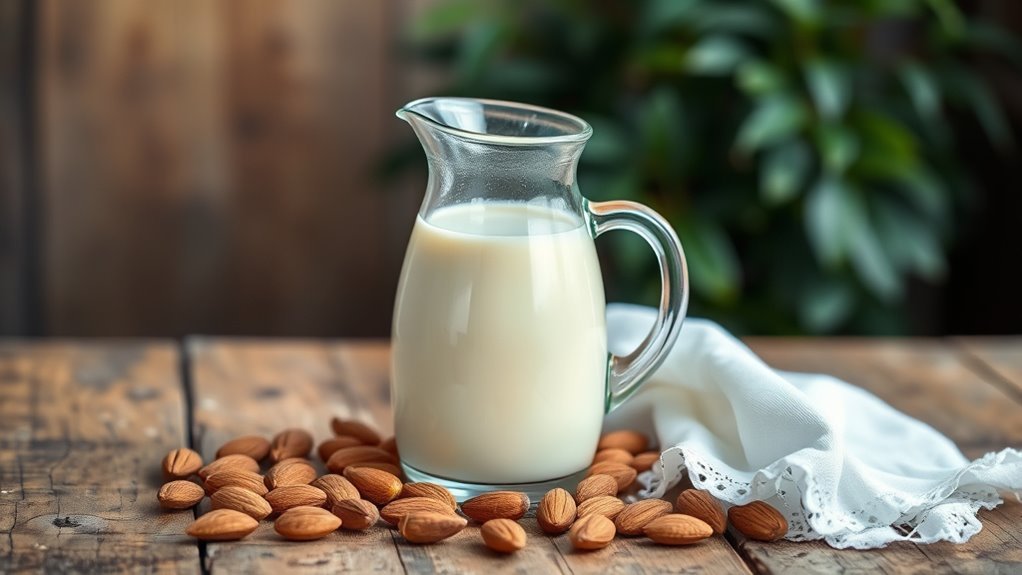
Almond milk is an increasingly popular choice for those on a keto diet, thanks to its low carbohydrate content and creamy texture. With only about 1 gram of carbs per cup, it fits perfectly into your daily macros. Plus, it offers several almond milk benefits, such as being rich in vitamin E and antioxidants. Here are three easy almond milk recipes you might enjoy:
Almond milk is a keto-friendly choice, offering low carbs and vitamin E benefits for a nutritious boost.
- Almond Milk Smoothie: Blend almond milk with your favorite low-carb fruits for a revitalizing drink.
- Almond Milk Coffee: Add it to your morning brew for a creamy, nutty flavor.
- Almond Milk Chia Pudding: Combine almond milk with chia seeds and let it thicken overnight for a nutritious breakfast.
These options help you stay on track while enjoying delicious flavors!
Coconut Milk: Creamy and Delicious

Coconut milk is another excellent option for those following a keto diet, offering a rich, creamy texture that’s hard to resist. It’s low in carbs and high in healthy fats, making it a perfect choice for maintaining ketosis. One of the key coconut milk benefits is its medium-chain triglycerides (MCTs), which can boost your energy and aid in weight loss. You can easily incorporate coconut milk into your diet with delicious coconut milk recipes, like smoothies, soups, or even keto-friendly desserts. Just remember to opt for unsweetened varieties to keep your carb count low. So, if you’re looking for a versatile, flavorful addition to your keto lifestyle, coconut milk is definitely worth considering. Enjoy the creamy goodness!
Unsweetened Soy Milk: A Protein-Packed Option
If you’re looking for a dairy-free alternative that packs a protein punch, unsweetened soy milk is an excellent choice for your keto diet. With its impressive protein content, it can help you meet your nutritional needs while keeping carbs in check. Here are some soy benefits to take into account:
- High Protein: Unsweetened soy milk typically contains around 7 grams of protein per cup, making it a great way to boost your intake.
- Low in Carbs: It usually has just 1-2 grams of carbs, perfect for maintaining ketosis.
- Heart Health: Soy is rich in isoflavones, which may support heart health and reduce cholesterol levels.
Incorporating unsweetened soy milk into your diet can be a delicious and nutritious way to stay on track!
Heavy Cream: Rich and Satisfying
Heavy cream is an excellent choice for those on a keto diet, as it’s low in carbohydrates and high in healthy fats. Incorporating heavy cream into your meals not only enhances flavor but also boosts nutritional value, providing essential vitamins and nutrients. From sauces to desserts, its versatility makes it a satisfying addition to your cooking repertoire.
Nutritional Benefits of Heavy Cream
While many people might overlook heavy cream in favor of lower-fat alternatives, it’s important to recognize its nutritional benefits, especially for those following a ketogenic diet. Heavy cream nutrition offers essential advantages that can support your health goals. Here are three key benefits:
- High in Healthy Fats: It contains approximately 36% fat, making it a great energy source for keto enthusiasts.
- Low in Carbs: With minimal carbohydrates, it fits perfectly into your low-carb lifestyle, allowing you to enjoy creamy textures without guilt.
- Rich in Vitamins: Heavy cream is a source of fat-soluble vitamins like A, D, E, and K, which are vital for overall well-being.
Try incorporating heavy cream recipes into your meals to reap these benefits while enjoying delicious flavors.
Cooking With Heavy Cream
Incorporating heavy cream into your cooking can elevate your dishes, providing both richness and satisfaction. It’s an excellent choice for keto-friendly recipes, enhancing flavors in soups, sauces, and desserts. With its high-fat content, heavy cream helps you stay in ketosis while enjoying delicious meals. You can whip it into sauces for pasta dishes or use it to create creamy soups that comfort and nourish.
If you’re looking for alternatives, consider heavy cream substitutes like coconut cream or unsweetened almond milk, though they may alter the taste slightly. Experiment with various heavy cream recipes to find what suits your palate best. With heavy cream, you’re not just cooking; you’re creating indulgent experiences that align with your keto lifestyle.
Macadamia Nut Milk: A Luxurious Choice
If you’re looking for a rich, creamy alternative to traditional dairy, macadamia nut milk might just be the perfect choice for your keto lifestyle. Packed with macadamia benefits, this luxurious milk option is not only low in carbs but also high in healthy fats, making it ideal for your ketogenic diet. Here are three reasons to contemplate incorporating it into your meals:
- Flavor: Its buttery taste elevates your coffee or smoothies.
- Versatility: Use it in luxurious recipes like creamy soups or dairy-free desserts.
- Nutrient-Rich: It’s an excellent source of vitamins and minerals, supporting overall health.
Cashew Milk: Smooth and Versatile
Cashew milk offers a smooth and creamy texture that makes it an excellent choice for those following a keto diet. One of the key cashew milk benefits is its low carbohydrate content, allowing you to enjoy it without derailing your ketosis. It’s also rich in healthy fats, which can help keep you satiated. You can easily incorporate cashew milk into your daily routine through various cashew milk recipes, like smoothies, soups, or even keto-friendly coffee. Its subtle flavor pairs well with both sweet and savory dishes, enhancing your culinary freedom. Plus, it’s dairy-free, making it suitable for those with lactose intolerance. Choosing cashew milk can elevate your keto experience while supporting your health goals.
Flax Milk: A Low-Calorie Alternative
While many milk alternatives can fit into a keto lifestyle, flax milk stands out as a low-calorie option that’s rich in nutrients. It offers numerous flax milk benefits that can enhance your diet without compromising your goals. Here are three reasons to take into account it:
Flax milk is a nutrient-rich, low-calorie alternative perfect for a keto lifestyle.
- Low in Calories: Flax milk typically contains only 30-50 calories per cup, making it a light choice.
- Omega-3 Fatty Acids: Packed with essential fatty acids, flax milk supports heart health and reduces inflammation.
- Versatile in Recipes: You can easily incorporate flax milk into various flax milk recipes, from smoothies to soups.
Embracing flax milk can help you stay on track with your keto journey while enjoying flavorful, nutrient-dense options.
Hemp Milk: Nutrient-Rich and Creamy
Flax milk is just one of the many alternatives available for those following a keto diet, but hemp milk deserves attention for its nutrient-dense profile and creamy texture. Rich in healthy fats, hemp milk offers numerous hemp benefits, making it an excellent choice for your keto lifestyle. It’s a great source of omega-3 and omega-6 fatty acids, which support heart health.
Here’s a quick comparison of hemp milk’s nutritional profile:
| Nutrient | Per 1 Cup (240ml) |
|---|---|
| Calories | 70 |
| Fat | 5g |
| Protein | 3g |
| Carbohydrates | 1g |
You can incorporate hemp milk into various hemp recipes, from smoothies to keto-friendly coffee, adding both flavor and nutrition.
Frequently Asked Questions
Can I Use Regular Cow’s Milk on a Keto Diet?
You can’t use regular cow’s milk on a keto diet due to its higher carbohydrate content. Instead, consider cow’s milk alternatives like almond milk, coconut milk, or unsweetened soy milk, which are lower in carbs. These keto milk substitutes can help you stay within your carb limits while still enjoying a creamy texture in your beverages and recipes. Just make sure to check labels for added sugars that could impact your keto goals.
How Do I Choose the Best Milk for Keto?
Choosing the best milk for keto can be a game-changer. You’ll want to focus on low-carb options like almond or coconut milk, which offer nut milk benefits, including healthy fats and fewer carbs. For a creamier alternative, consider heavy cream, but watch portion sizes. Your choice should align with your taste preferences and nutritional goals, ensuring you enjoy your diet without feeling restricted. Freedom in your choices is key to long-term success!
Is Lactose-Free Milk Suitable for a Ketogenic Diet?
Lactose-free milk isn’t the best choice for a ketogenic diet. While it’s lower in lactose, it still contains carbohydrates, which can hinder your ketosis. If you’re looking for lactose-free alternatives, consider unsweetened almond milk or coconut milk, as they’re low-carb options that fit better within keto guidelines. Always check labels for added sugars, and focus on options that allow you to enjoy the freedom of staying in ketosis while still having tasty beverages.
What Are the Carb Counts for Different Milk Options?
When comparing carb counts, nut milk options like almond milk usually have around 1-2 grams of carbs per cup, making them a great choice for low-carb diets. In contrast, coconut milk can range from 2-6 grams, depending on whether it’s canned or carton. Regular dairy milk, like whole or skim, often contains 12-13 grams of carbs per cup. Always check labels for accurate carb comparisons to stay aligned with your dietary goals.
Can I Make My Own Keto-Friendly Milk Alternatives?
Absolutely, you can make your own keto-friendly milk alternatives! Don’t worry if you think it’ll be complicated; homemade almond milk is surprisingly easy to prepare. Just blend soaked almonds with water and strain. For a richer option, coconut cream works wonders—just blend shredded coconut with water and strain. Both choices are low in carbs and customizable to your taste, giving you the freedom to enjoy dairy-free options without any guilt.
Frequently Asked Questions
1. What types of milk are considered keto-friendly?
Keto-friendly milk options typically include unsweetened almond milk, coconut milk, and macadamia milk. These alternatives are low in carbohydrates and high in healthy fats, making them suitable for a ketogenic diet. It’s important to choose unsweetened versions to avoid added sugars, which can disrupt ketosis.
2. Is whole milk allowed on a keto diet?
Whole milk can be consumed in moderation on a keto diet, but it is higher in carbs compared to nut or coconut milk alternatives. One cup of whole milk contains about 12 grams of carbohydrates, which can take up a significant portion of your daily carb allowance. If you choose to include whole milk, be sure to account for it within your daily macros.
3. Can I use heavy cream on a keto diet?
Yes, heavy cream is an excellent choice for those following a keto diet. It is very low in carbohydrates (less than 1 gram per tablespoon) and high in fats, which makes it ideal for achieving and maintaining ketosis. Heavy cream can be added to coffee, used in cooking, or as a base for keto-friendly sauces.
4. Are there any milk alternatives that should be avoided on keto?
Yes, certain milk alternatives should be avoided on a keto diet. Sweetened soy milk, oat milk, and rice milk are typically high in carbohydrates and sugars, which can hinder your ability to stay in ketosis. Always check the nutrition labels and opt for unsweetened varieties with lower carb content.
5. How can I incorporate keto-friendly milk into my diet?
You can incorporate keto-friendly milk into your diet in several ways. Use unsweetened almond or coconut milk in smoothies, coffee, or as a base for soups. Heavy cream can be whipped for desserts or added to sauces. Additionally, consider using these milk alternatives in baking recipes designed for keto, ensuring they complement your overall macro goals.
References
- https://www.healthline.com/nutrition/keto-diet-milk
- https://www.verywellfit.com/which-milks-are-keto-friendly-5191271
- https://www.ncbi.nlm.nih.gov/pmc/articles/PMC7078061/
- https://www.medicalnewstoday.com/articles/322518
- https://www.webmd.com/diet/obesity/ss/slideshow-keto-diet
- https://www.clevelandclinic.org/health/diet-nutrition/what-is-keto-diet
- https://www.nutrition.gov/topics/nutrition-101/what-ketogenic-diet
- https://www.bbc.co.uk/news/health-53433240