
Yes, there are plenty of keto pasta options! Traditional pasta is high in carbs, but alternatives like zucchini and shirataki noodles have only 1-3 grams per serving. Zucchini noodles are versatile and easily cooked, while shirataki noodles are nearly calorie-free. Other options include almond flour pasta and spaghetti squash, which can be delicious, low-carb substitutes. With the right sauces and seasonings, these keto-friendly pastas can satisfy your cravings while keeping you on track. You might discover even more options and tips ahead.
Understanding the Keto Diet and Carb Limits
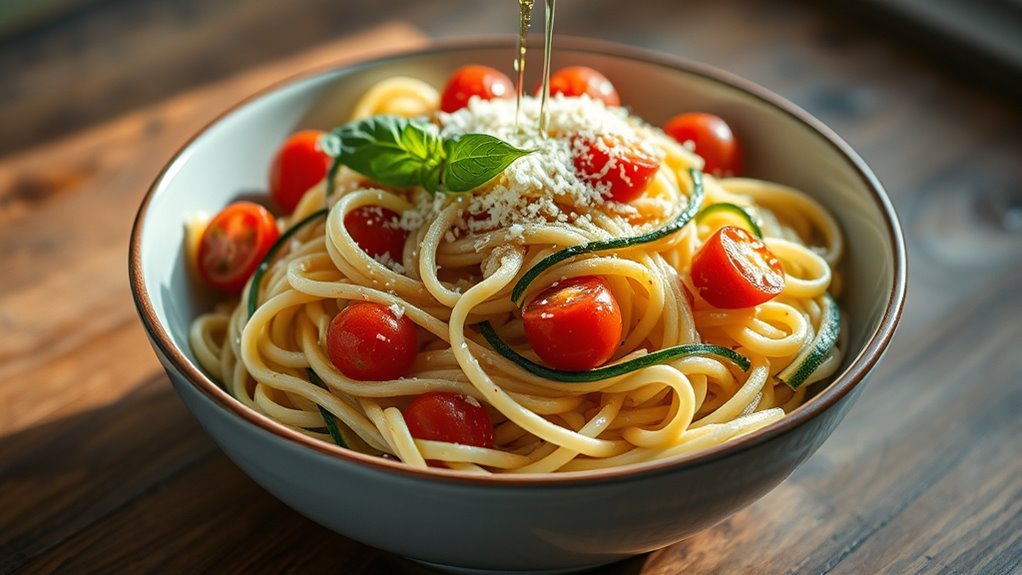
When you begin the keto diet, understanding carb limits is essential for achieving and maintaining ketosis. The keto principles emphasize reducing carbohydrate intake to about 20-50 grams per day, depending on your individual needs. This significant reduction helps your body shift from burning glucose to fat for fuel. Carb counting becomes vital here; it allows you to track your intake and stay within your limits. By focusing on low-carb, high-fat foods, you can enjoy a variety of meals while embracing the freedom to choose what you eat. Remember, this isn’t just about restricting carbs; it’s about understanding how your body responds to different foods and finding what works best for you on your keto journey.
Traditional Pasta vs. Keto-Friendly Alternatives
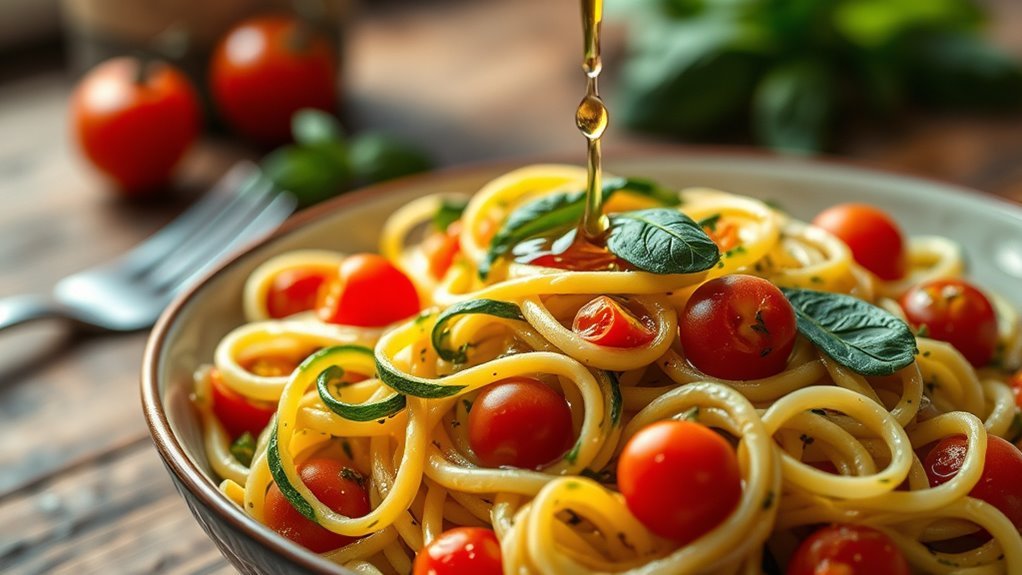
When you compare traditional pasta to keto-friendly alternatives, the most noticeable difference is in carb content, which can greatly impact your diet. Common ingredients like zucchini, almond flour, or konjac root can replace regular pasta, offering lower-carb options that still satisfy your cravings. Additionally, cooking techniques may vary, as these alternatives often require different methods to achieve the desired texture and flavor.
Carb Content Comparison
While traditional pasta is a staple in many diets, its high carbohydrate content can be a challenge for those following a ketogenic lifestyle. Typically, a serving of regular pasta contains around 40 grams of carbs, which can quickly exceed your daily limit on keto. In contrast, keto-friendly alternatives often boast considerably lower carb content. For instance, options like zucchini noodles or shirataki noodles can have as little as 1-3 grams of carbs per serving. This pasta comparison highlights the stark difference in carb levels, making it easier for you to adhere to your dietary goals. By choosing these alternatives, you can enjoy a satisfying meal without derailing your keto journey, allowing for both freedom and flavor in your diet.
Common Alternative Ingredients
Although traditional pasta is made primarily from wheat flour, keto-friendly alternatives often utilize a variety of unique ingredients to achieve a similar texture and taste without the high carb content. Here are some common options you can explore:
| Ingredient | Type | Carb Content (per serving) |
|---|---|---|
| Almond Flour | Keto Flour | ~2g |
| Zucchini Noodles | Vegetable-Based | ~2g |
| Coconut Flour | Keto Flour | ~6g |
| Shirataki Noodles | Vegetable-Based | ~0g |
These keto flour alternatives and vegetable-based options not only help you enjoy pasta dishes but also maintain your low-carb lifestyle. With these choices, you can savor your favorite meals while feeling empowered in your dietary decisions.
Cooking Techniques Differences
Cooking keto-friendly pasta requires different techniques compared to traditional methods, primarily due to the unique properties of alternative ingredients. For instance, when using zucchini noodles or shirataki, you’ll want to avoid overcooking, as they can become mushy quickly. Traditional cooking methods like boiling and draining won’t work the same way; instead, sautéing or lightly steaming these substitutes preserves texture and flavor.
Ingredient substitutions also play an essential role. Instead of traditional sauces, consider low-carb alternatives made with heavy cream or cauliflower. These adjustments not only enhance the dish but also align with your keto goals. Remember, mastering these cooking methods will empower you to enjoy pasta dishes without sacrificing your dietary choices. Embrace the freedom that comes with experimenting in the kitchen!
Zucchini Noodles: The Classic Veggie Option
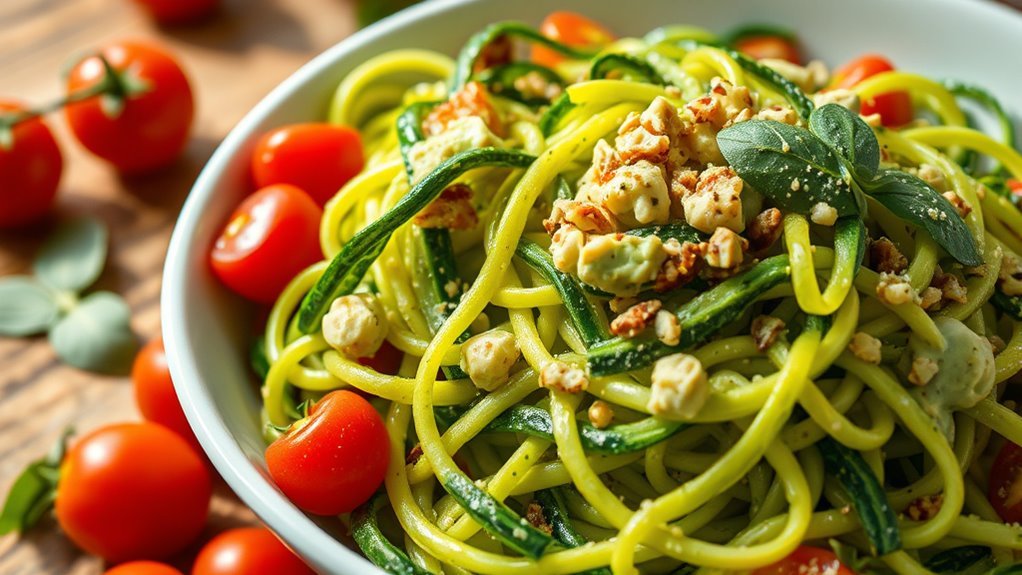
Zucchini noodles, or “zoodles,” are a nutritious alternative to traditional pasta, packed with vitamins and low in calories. You can prepare them in various ways, from spiralizing to sautéing, making them a versatile option for many dishes. We’ll explore their health benefits, preparation methods, and some tasty recipe ideas to help you incorporate this veggie into your meals.
Nutritional Benefits of Zucchini
Packed with essential nutrients, zucchini is a fantastic choice for anyone looking to enhance their diet, especially when transformed into noodles. This versatile veggie boasts a low calorie count while delivering impressive zucchini benefits, including vitamins A and C, potassium, and fiber. Its nutrient profile supports digestive health, helps regulate blood sugar levels, and promotes hydration due to its high water content. Plus, since zucchini is low in carbs, it’s an excellent option for those following a keto lifestyle. By incorporating zucchini noodles into your meals, you’re not just adding a tasty alternative to traditional pasta; you’re also boosting your overall nutrition. Enjoy the freedom of delicious meals without compromising your health goals!
Preparation Methods Explained
When it comes to preparing zucchini noodles, there are several effective methods that can enhance their texture and flavor. Spiralizing is a popular choice, creating long, thin strands that mimic traditional pasta textures. If you prefer a softer noodle, briefly steaming or sautéing your zucchini noodles can help, but be cautious not to overcook them, as they can become mushy. For those seeking a raw option, simply toss them with your favorite sauce pairings for a fresh dish. You might also consider briefly roasting them, which adds a delightful depth of flavor. Experimenting with these techniques allows you to find the perfect balance, making your zucchini noodles an exciting alternative to conventional pasta. Enjoy the freedom to customize your meals!
Recipe Ideas and Variations
If you’re looking to spice up your meals, zucchini noodles offer a versatile canvas for a variety of recipes and flavor profiles. As a popular keto pasta alternative, they can easily replace traditional noodles in countless dishes. For a classic recipe variation, try zucchini noodles with marinara sauce and sautéed shrimp for a light yet satisfying meal. You could also toss them with pesto and cherry tomatoes for a revitalizing summer dish. Don’t forget about adding spices like garlic and red pepper flakes to enhance flavors. If you crave something heartier, combine zucchini noodles with ground turkey in a savory stir-fry. The options are endless, allowing you the freedom to experiment while staying true to your keto lifestyle.
Shirataki Noodles: A Zero-Calorie Delight
Although traditional pasta can be high in carbohydrates, shirataki noodles offer a unique alternative for those following a keto diet. Made from konjac yam, these noodles are almost calorie-free and packed with shirataki benefits. You can easily incorporate them into your meals using various cooking methods.
Shirataki noodles provide a low-carb, calorie-free alternative to traditional pasta, perfect for keto enthusiasts.
Here are some tips to enjoy shirataki noodles:
- Rinse thoroughly: This removes the fishy smell.
- Sauté or stir-fry: Add them to your favorite sauces or veggies.
- Simmer in broth: Enhance flavor by simmering them in a savory broth.
- Use as a base: Pair with meats or keto-friendly toppings.
- Experiment with seasonings: Spice them up with herbs and spices for extra flavor.
With these tips, you’ll enjoy a delicious, guilt-free meal!
Almond Flour Pasta: Nutty and Delicious
Almond flour pasta is a fantastic low-carb alternative that can satisfy your pasta cravings while keeping you within your keto goals. Made from ground almonds, this nut flour offers several almond benefits, including healthy fats, fiber, and a good amount of protein. It’s a great choice for those looking to maintain energy levels without the sugar spikes associated with traditional pasta. You’ll find that almond flour pasta has a nutty flavor that pairs beautifully with various sauces and toppings, making it versatile for any meal. Plus, it’s gluten-free, which is perfect if you’re sensitive to gluten. By incorporating almond flour pasta into your diet, you can enjoy delicious meals while staying committed to your keto lifestyle.
Exploring Other Low-Carb Pasta Options
While almond flour pasta is a delicious option, there are several other low-carb pasta alternatives worth exploring. Thanks to low carb innovations, you’ve got some great pasta substitutes at your disposal:
Almond flour pasta is just the beginning; explore other innovative low-carb pasta alternatives to satisfy your cravings.
- Zucchini Noodles (Zoodles): Spiralized zucchini offers a fresh, crunchy texture.
- Shirataki Noodles: Made from konjac yam, these are extremely low in calories and carbs.
- Spaghetti Squash: When cooked, its flesh separates into strands resembling spaghetti.
- Cabbage Noodles: Thinly sliced cabbage can be sautéed for a hearty, low-carb dish.
- Chickpea Pasta: Higher in protein and fiber, but still a lower-carb alternative compared to traditional pasta.
These options let you enjoy your favorite dishes while staying on track with your low-carb lifestyle.
Tips for Cooking and Enjoying Keto Pasta Dishes
When you’re diving into the world of keto pasta, it’s essential to keep a few cooking tips in mind to maximize flavor and texture. Start by choosing high-quality keto pasta made from ingredients like almond flour or zucchini to guarantee a satisfying bite. When cooking, avoid overboiling; al dente is your friend. Pair your pasta with rich keto sauces like creamy Alfredo or zesty pesto to enhance taste without adding carbs. Don’t forget about pasta toppings—grated Parmesan, fresh herbs, or sautéed vegetables can elevate your dish. Experiment with spices to add depth, and always balance your flavors. By focusing on these elements, you’ll create delicious, satisfying keto pasta dishes that make your low-carb lifestyle enjoyable.
Frequently Asked Questions
Can I Eat Keto Pasta While Intermittent Fasting?
You shouldn’t eat keto pasta during intermittent fasting if you’re strictly following the guidelines. Intermittent fasting emphasizes periods of eating and fasting, and consuming any food, even keto-friendly options, can break your fast. However, if you’re not strict and want to enjoy it during your eating window, it’s fine as long as it fits within your overall keto goals. Just be mindful of how it affects your fasting benefits and overall progress.
Are There Any Health Benefits to Keto Pasta?
Yes, there are health benefits to keto pasta. When you follow a keto diet, these alternatives often contain fewer carbs and higher fiber, which can help manage blood sugar levels and promote satiety. They may also support weight loss by keeping you fuller longer. Additionally, many keto pasta options are made from nutritious ingredients like almond flour or zucchini, providing essential vitamins and minerals. So, you can enjoy pasta while still supporting your health goals!
How Do I Store Leftover Keto Pasta?
To store leftover keto pasta, let it cool before placing it in an airtight container. This helps with pasta preservation and prevents moisture buildup. You can keep it in the fridge for up to three days. If you want to extend its shelf life, consider freezing it in a freezer-safe bag, but be sure to label it with the date. Just reheat when you’re ready to enjoy your delicious keto meal again!
Can Children Eat Keto Pasta?
Yes, children can eat keto pasta, but it’s vital to take into account their nutritional needs. Did you know that about 20% of children are affected by obesity? A keto diet can be beneficial for some, but it’s critical to make certain they’re getting enough essential nutrients. If you’re incorporating keto pasta into your children’s diet, balance it with plenty of vegetables, proteins, and healthy fats to support their growth and development.
What Sauces Pair Well With Keto Pasta?
When you’re choosing sauces for keto pasta, creamy sauces are a fantastic option. Think Alfredo or a rich mushroom cream sauce, which can elevate the dish without adding carbs. You might also enjoy pesto, made from basil, garlic, and olive oil, for a fresh flavor. If you prefer something zesty, a homemade marinara using low-sugar tomatoes works well. These keto sauce pairings not only complement your pasta but also keep your meal satisfying and delicious!
Frequently Asked Questions about Keto Pasta
1. What is keto pasta?
Keto pasta refers to pasta alternatives that are low in carbohydrates and suitable for a ketogenic diet, which typically restricts carb intake to induce ketosis. Traditional pasta is made from wheat, which is high in carbs, while keto pasta is often made from ingredients like almond flour, coconut flour, or vegetable-based alternatives such as zucchini or spaghetti squash. These options provide a similar texture or experience while fitting into a low-carb lifestyle.
2. Where can I buy keto pasta?
Keto pasta can be found in various places, including health food stores, specialty grocery stores, and online retailers. Many brands offer keto-friendly pasta options made from alternative flours or vegetables. Popular online platforms like Amazon, Thrive Market, and the websites of specific health food brands also stock a wide variety of keto pasta products. Always check the nutritional information to ensure it fits your dietary needs.
3. How is keto pasta different from regular pasta?
The primary difference between keto pasta and regular pasta lies in their carbohydrate content. Regular pasta is made from wheat flour and is high in carbs, making it unsuitable for a ketogenic diet. In contrast, keto pasta is formulated from low-carb ingredients such as almond flour, konjac (shirataki), or vegetables, significantly reducing the carb count. This makes keto pasta a more suitable option for those looking to maintain a ketogenic lifestyle while still enjoying pasta dishes.
4. Can I make my own keto pasta at home?
Yes, making your own keto pasta at home is quite achievable and allows for customization based on your preferences. Common recipes include using almond flour or coconut flour mixed with eggs to create a dough. Another popular method is to use vegetables like zucchini or cauliflower, which can be spiralized or riced to mimic pasta shapes. There are many recipes available online that provide step-by-step instructions to help you create delicious and keto-friendly pasta dishes at home.
5. What are some popular brands of keto pasta?
Several brands offer keto pasta that has gained popularity among those following a ketogenic diet. Some notable brands include Palmini, which offers pasta made from hearts of palm; Miracle Noodle, known for its konjac-based noodles; and Explore Cuisine, which provides various legume-based pasta options that are lower in carbs. Each brand has its unique flavor and texture, so experimenting with different types can help you find the one that best suits your tastes and dietary requirements.
References
- https://www.healthline.com/nutrition/keto-pasta
- https://www.webmd.com/diet/what-is-keto-diet
- https://www.mayoclinic.org/healthy-lifestyle/nutrition-and-healthy-eating/expert-answers/keto-diet/faq-20426692
- https://www.ncbi.nlm.nih.gov/pmc/articles/PMC7071693/
- https://www.bbcgoodfood.com/howto/guide/what-keto-diet
- https://www.nutrition.gov/topics/nutrition-101/keto-diet
- https://www.cdc.gov/healthyweight/healthy_eating/dietary_guidelines.html
- https://www.verywellfit.com/what-is-keto-pasta-5195570