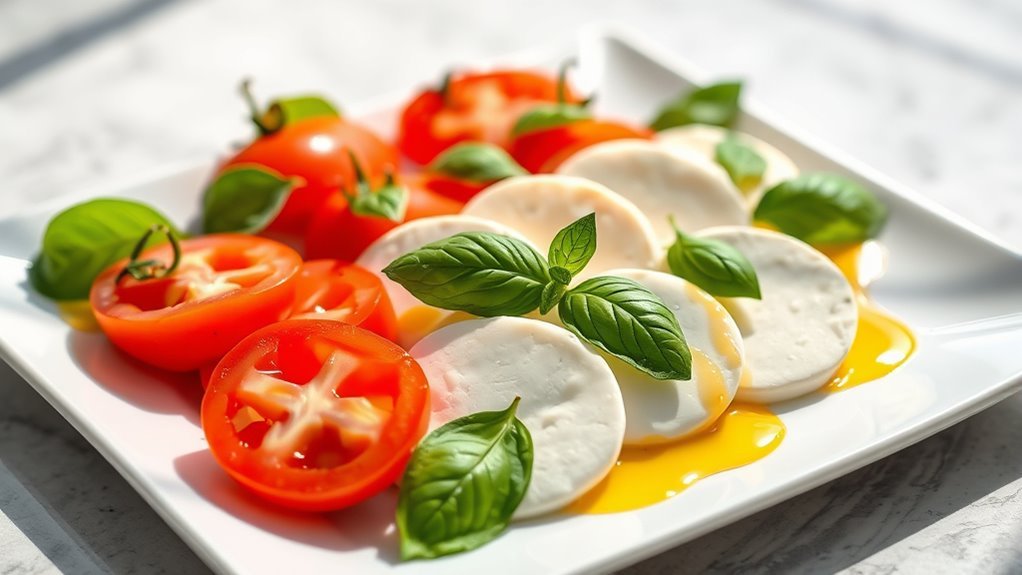

Yes, Caprese salad can be keto-friendly. It’s made with low-carb ingredients like tomatoes and fresh mozzarella, which are suitable for a low-carbohydrate diet. The salad typically includes healthy fats from olive oil and cheese, making it a great choice for anyone aiming to maintain ketosis. By choosing full-fat cheese and adjusting the portions, you can keep your meal aligned with keto principles. If you’re curious about enhancing your Caprese salad, explore some helpful modifications and serving ideas.
Understanding the Keto Diet
When you’re exploring dietary options, understanding the keto diet is crucial, especially if you’re considering its implications for your meals. The keto diet revolves around specific keto principles, primarily focusing on high-fat, low-carbohydrate intake. By greatly reducing carbs, your body enters a state of ketosis, where it burns fat for energy instead of glucose. This approach offers various diet variations, allowing for flexibility in food choices while maintaining low carbohydrate levels. You might find that some variations emphasize more protein or include different types of fats. However, it’s important to balance these elements to guarantee you’re meeting your nutritional needs. Understanding these fundamentals can empower you to make informed choices that align with your health goals while enjoying the freedom of diverse meal options.
Nutritional Breakdown of Caprese Salad
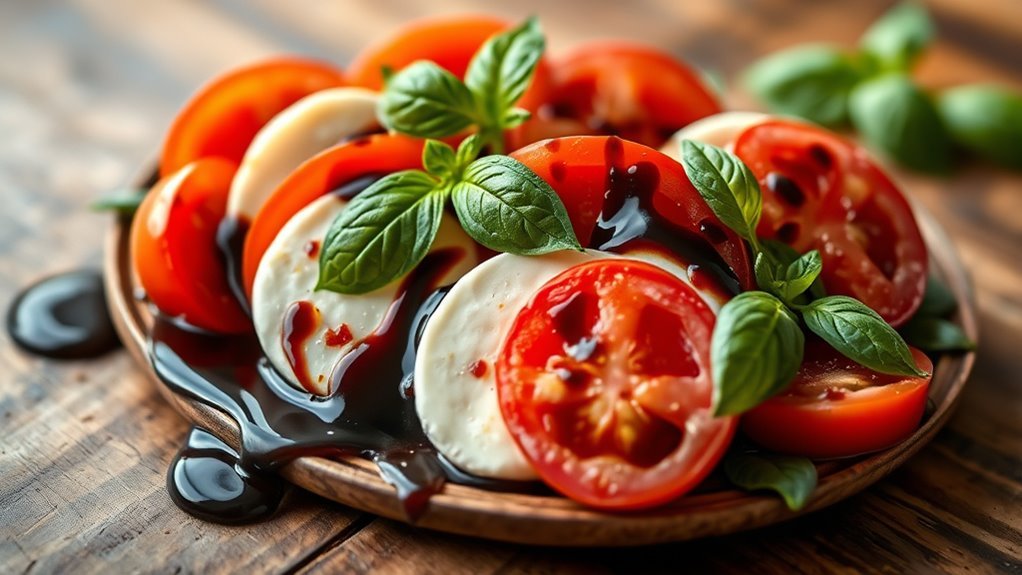
When you look at the nutritional breakdown of Caprese salad, you’ll notice it’s primarily composed of fresh ingredients like tomatoes, mozzarella, and basil. These components contribute to a macronutrient profile that’s relatively low in carbs, making it a suitable choice for those on a keto diet. Understanding the amounts of fats, proteins, and carbohydrates can help you see how this salad fits into your meal plan.
Macronutrient Composition
While you’re considering the keto-friendliness of Caprese salad, it’s essential to examine its macronutrient composition. This dish typically contains fresh mozzarella, tomatoes, and basil, providing a mix of fats, proteins, and carbohydrates. The macronutrient ratios generally lean towards higher fat content from the cheese and olive oil, moderate protein, and lower carbohydrates from the tomatoes. For instance, a serving can contain about 7 grams of carbs, 18 grams of fat, and 12 grams of protein. When making nutritional comparisons, you’ll find that this balance aligns well with keto guidelines, particularly if you adjust portions or ingredients. Overall, Caprese salad can fit into a low-carb lifestyle while offering an invigorating option for those seeking freedom in their dietary choices.
Low-Carb Ingredients
A Caprese salad’s low-carb profile is primarily attributed to its fresh ingredients, making it a great choice for those following a ketogenic diet. The salad features keto-friendly vegetables like ripe tomatoes and fresh basil, both of which are low in carbohydrates. Additionally, mozzarella cheese adds protein and healthy fats without greatly increasing carb content. You can enhance your salad with low carb toppings such as olive oil and balsamic vinegar in moderation, keeping your macros in check. This combination not only satisfies your cravings but also aligns with your keto goals. Overall, Caprese salad is a delicious, nutritious option that supports a low-carb lifestyle while allowing you to enjoy fresh, vibrant flavors.
Tomatoes: A Keto-Friendly Choice?
How do tomatoes fit into a keto diet? Tomatoes are surprisingly keto-friendly, especially when you consider their low carb content. Most tomato varieties, like cherry and grape, contain about 2-3 grams of net carbs per 100 grams. Plus, they offer numerous health benefits, including antioxidants and vitamins.
Here’s a quick comparison of some popular tomato varieties:
| Tomato Variety | Net Carbs (per 100g) | Health Benefits |
|---|---|---|
| Cherry | 3g | High in Vitamin C |
| Grape | 3g | Rich in Lycopene |
| Roma | 2.5g | Good for heart health |
| Beefsteak | 3.5g | Anti-inflammatory properties |
| Sun-dried | 7g | Packed with nutrients |
Enjoying tomatoes in moderation can help you stay on track with your keto lifestyle while reaping their health benefits!
The Role of Fresh Mozzarella in Keto
Fresh mozzarella can be a valuable addition to your keto diet, offering both flavor and nutritional benefits. This cheese is low in carbohydrates and high in healthy fats, making it a perfect fit for those following a ketogenic lifestyle. Here are some fresh mozzarella benefits you might enjoy:
Fresh mozzarella enhances your keto diet with low carbs, high healthy fats, and delicious flavor.
- High Protein Content: Supports muscle maintenance and repair.
- Rich in Calcium: Essential for bone health and muscle function.
- Low in Carbs: Fits seamlessly into your daily carb limits.
- Versatile Cheese Alternative: Great for salads, snacks, or main dishes.
Incorporating fresh mozzarella allows you to enjoy delicious meals without compromising your keto goals. Plus, it’s an excellent option for those looking to explore different cheese alternatives while maintaining a satisfying diet.
Basil: an Herb With Benefits
Basil is more than just a flavorful herb; it offers a range of health benefits that complement a keto diet. Packed with antioxidants, basil can help reduce inflammation and support overall wellness. The essential oils in basil, such as eugenol, may even promote heart health by improving circulation and lowering blood pressure. You’ll find various basil varieties, like sweet basil and Thai basil, each bringing unique flavors and benefits to your meals. Incorporating these herbs into your dishes not only enhances taste but also adds nutritional value. So, whether you’re whipping up a Caprese salad or a simple pesto, embracing basil can elevate your keto experience while nurturing your body. Enjoy the freedom of flavor and health!
Olive Oil: A Healthy Fat Source
Olive oil stands out as a cornerstone of the Mediterranean diet and is particularly valued in keto cooking for its healthy fat content. Rich in monounsaturated fats, it offers numerous health benefits, including improved heart health and reduced inflammation. When incorporating olive oil into your meals, consider these cooking tips:
- Use extra virgin olive oil for maximum flavor and nutrients.
- Drizzle it over salads for added richness.
- Sauté vegetables to enhance their taste while keeping carbs low.
- Pair it with herbs and spices to elevate your dishes.
Balsamic Vinegar and Its Carbohydrate Content
While balsamic vinegar is a popular choice for enhancing the flavor of salads, it’s important to be mindful of its carbohydrate content when following a keto diet. Typically, a tablespoon of balsamic vinegar contains about 2-3 grams of carbs, which can add up if you’re not careful. If you’re looking for lower-carb options, consider vinegar alternatives like apple cider vinegar or red wine vinegar, which usually have fewer carbs. You might also encounter balsamic reduction, often sweeter and thicker due to added sugars, making it less suitable for keto. Always check labels and track your intake to maintain your carb limits while still enjoying flavorful, vibrant salads on your keto journey.
Modifications for a Keto Caprese Salad
To make a Caprese salad keto-friendly, you’ll want to focus on cheese selection, low-carb dressing alternatives, and suitable vegetable options. Choosing high-fat cheeses like mozzarella or burrata can enhance the dish while keeping it low in carbs. Additionally, exploring low-carb dressings and substituting high-carb vegetables can help you maintain your keto lifestyle without sacrificing flavor.
Cheese Selection Tips
When crafting a keto-friendly Caprese salad, cheese selection plays an essential role in maintaining low carbohydrate levels while guaranteeing rich flavors. Opt for cheese types that are high in fat and low in carbs, like fresh mozzarella or burrata. These cheeses not only complement the tomatoes but also provide a creamy texture that enhances your dish.
- Choose full-fat varieties for better flavor and keto compliance.
- Store cheese properly in the fridge to maintain freshness and prevent spoilage.
- Experiment with different cheese types, such as feta or goat cheese, for a unique twist.
- Always check the nutrition label to guarantee you’re staying within your carb limits.
With the right cheese, your Caprese salad can be both delicious and keto-friendly!
Low-Carb Dressing Options
Choosing the right dressing is essential for keeping your Caprese salad keto-friendly without sacrificing flavor. Opt for low carb dressings that enhance your dish while maintaining your dietary goals. A simple olive oil and balsamic vinegar combination can be a delicious choice, but make sure the vinegar is used sparingly to keep the carb count low. Consider creating your own keto friendly vinaigrettes using high-quality olive oil, herbs, and spices to personalize the flavor. Mustard-based dressings can also add a zesty kick without excessive carbs. Remember, the key is to balance taste and nutrition, allowing you to enjoy your Caprese salad while adhering to your keto lifestyle. With these options, you won’t feel deprived in your culinary journey.
Vegetable Alternatives Suggested
While traditional Caprese salad features fresh tomatoes, mozzarella, and basil, you can make some tasty modifications to keep it keto-friendly. By swapping high-carb ingredients for low-carb alternatives, you can enjoy a revitalizing dish without compromising your diet.
Consider these vegetable alternatives:
- Zucchini noodles: They add a fun twist while mimicking pasta’s texture.
- Cucumber slices: Crisp and invigorating, they provide a nice crunch.
- Roasted bell peppers: Sweet and flavorful, they add depth to your salad.
- Arugula or spinach: These leafy greens offer a peppery taste and essential nutrients.
These modifications will help you stay within your carb limits while still savoring the essence of a Caprese salad. Enjoy the freedom to experiment with flavors!
Serving Suggestions for Keto Caprese
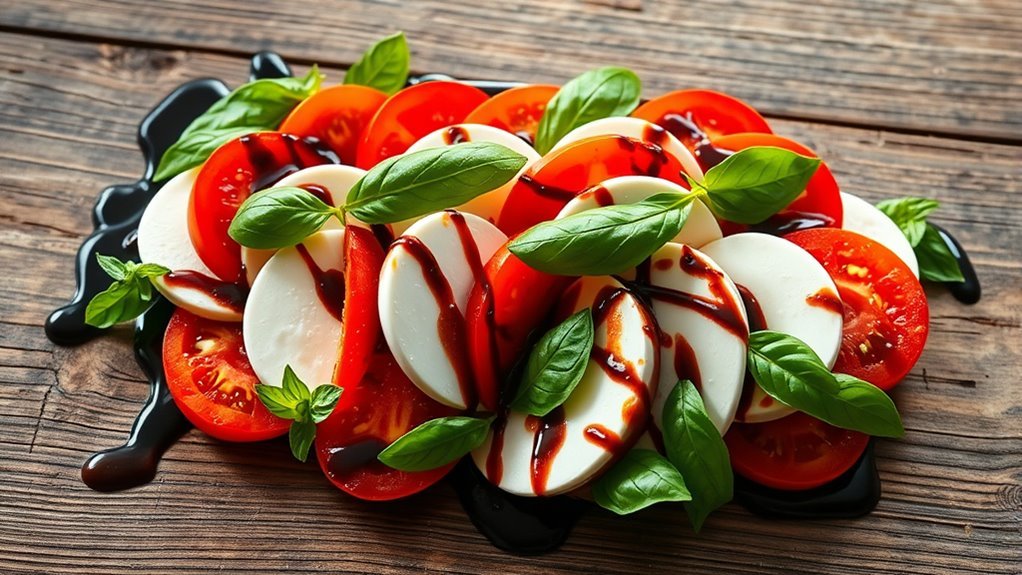
To elevate your Keto Caprese salad, consider pairing it with complementary flavors and textures that enhance both taste and nutritional value. Adding keto friendly toppings, like sliced avocado or crispy prosciutto, can bring richness and a satisfying crunch. You might also sprinkle some crushed red pepper for a spicy kick. Remember, portion control is key; even with low-carb ingredients, moderation helps maintain your keto goals. Serving your salad alongside a protein source, like grilled chicken or shrimp, can make it a complete meal. Drizzling a bit of balsamic glaze adds sweetness without too many carbs, enhancing the overall experience. These combinations not only keep your salad exciting but also guarantee you’re staying true to your ketogenic lifestyle.
Other Low-Carb Salad Options to Consider
When exploring other low-carb salad options, you’ll find that a variety of ingredients can keep your meals exciting and aligned with your dietary goals. Incorporating keto-friendly vegetables and low carb toppings can enhance both flavor and texture without compromising your carb limits. Here are some delicious ideas to contemplate:
- Spinach and arugula with avocado and feta cheese
- Zucchini noodles topped with olives and cherry tomatoes
- Cauliflower rice salad mixed with bell peppers and herbs
- Cucumber and radish salad dressed with olive oil and lemon
These combinations not only provide essential nutrients but also make your salads more enjoyable. Feel free to mix and match to suit your taste preferences while staying on track with your low-carb lifestyle!
Frequently Asked Questions
Can I Use Other Cheeses in a Keto Caprese Salad?
Absolutely, you can use other cheese varieties in your keto Caprese salad! Think outside the mozzarella box and try fresh burrata for a creamy twist or goat cheese for a tangy flavor profile. These alternatives not only enhance the salad’s taste but also keep it low in carbs. Just remember to check the nutritional info on any cheese you choose to confirm it fits within your keto goals. Enjoy exploring those delicious options!
Is Caprese Salad Suitable for Meal Prep on a Keto Diet?
Yes, Caprese salad’s perfect for keto meal prep! When you store it, keep the mozzarella, tomatoes, and basil separate until you’re ready to eat. This helps maintain freshness and prevents sogginess. You can store the ingredients in airtight containers in the fridge for up to three days. Just remember to add olive oil and balsamic vinegar right before serving to keep the flavors vibrant. Enjoy your delicious, low-carb meal!
How Does Caprese Salad Fit Into a Balanced Keto Meal?
When it comes to balancing your keto meals, Caprese salad hits the nail on the head. It offers a nutritious blend of fresh mozzarella, tomatoes, and basil, providing essential fats and vitamins. To maintain nutrition balance, keep an eye on portion control, ensuring you don’t overdo the carbs from tomatoes. This salad can be a revitalizing side or a light main, giving you the freedom to enjoy delicious flavors without compromising your goals.
Can I Add Protein to My Keto Caprese Salad?
Absolutely, you can add protein to your keto Caprese salad! Consider incorporating protein sources like grilled chicken, shrimp, or even prosciutto for a savory twist. These salad variations not only enhance flavor but also boost your protein intake, keeping your meals satisfying and aligned with your keto goals. Just remember to keep your total carb count in check while enjoying these additions, ensuring your salad remains balanced and delicious.
What Are Some Keto-Friendly Alternatives to Balsamic Vinegar?
If you’re lookin’ for balsamic vinegar substitutes, you’ve got some tasty options. Consider using apple cider vinegar mixed with a touch of stevia for sweetness. Another great choice is lemon juice or a homemade low carb dressing with olive oil and herbs. You might also try red wine vinegar with a splash of sugar-free syrup. These alternatives keep your dish flavorful while staying true to your keto lifestyle. Enjoy your freedom to experiment!
Frequently Asked Questions about Caprese Salad and Keto Diet
1. Is Caprese salad keto-friendly?
Yes, Caprese salad can be considered keto-friendly. The main ingredients are fresh mozzarella, tomatoes, and basil, which are low in carbohydrates. However, it’s important to pay attention to portion sizes and the type of dressing used, as added sugars can increase carb content.
2. What are the carb counts in a typical Caprese salad?
A typical serving of Caprese salad, which includes fresh mozzarella, tomatoes, and basil, contains approximately 2-5 grams of net carbohydrates, depending on the quantity of tomatoes used. This makes it suitable for those following a ketogenic diet, which generally allows for 20-50 grams of net carbs per day.
3. Can I make Caprese salad more keto-friendly?
Yes, you can make Caprese salad even more keto-friendly by reducing the number of tomatoes or substituting them with lower-carb vegetables like cucumbers or avocados. Additionally, using high-quality olive oil and avoiding sweet dressings can help maintain the salad’s low carb content.
4. What are the health benefits of Caprese salad on a keto diet?
Caprese salad is rich in healthy fats from mozzarella and olive oil, which are beneficial for those on a keto diet. It also provides essential vitamins and minerals from fresh tomatoes and basil. Antioxidants found in tomatoes can help combat inflammation, while the healthy fats support satiety and energy levels.
5. How can I incorporate Caprese salad into my keto meal plan?
Caprese salad can be enjoyed as a side dish or a light main course. Consider pairing it with grilled chicken or shrimp for added protein. It can also be used as a topping for zucchini noodles or served alongside a keto-friendly charcuterie board. Experiment with different herbs and spices to enhance flavors while keeping it keto-friendly.
References
- https://www.healthline.com/nutrition/keto-diet-foods#foods-to-eat-and-avoid
- https://www.medicalnewstoday.com/articles/323823
- https://www.ncbi.nlm.nih.gov/pmc/articles/PMC7071450/
- https://www.webmd.com/diet/ss/slideshow-keto-diet
- https://www.verywellfit.com/keto-diet-foods-5112670
- https://www.health.harvard.edu/staying-healthy/the-keto-diet-what-you-need-to-know
- https://www.cdc.gov/healthyweight/healthy_eating/dietary_guidelines.html
- https://www.nutrition.gov/topics/nutrition-101/dietary-guidelines-nutrition-planning
- https://www.eatright.org/health/dietary-guidelines-and-myplate/what-is-the-ketogenic-diet
- https://www.washingtonpost.com/lifestyle/wellness/keto-diet-explained/2019/02/20/1c5f2168-1f7e-11e9-8b59-0c97395b8102_story.html