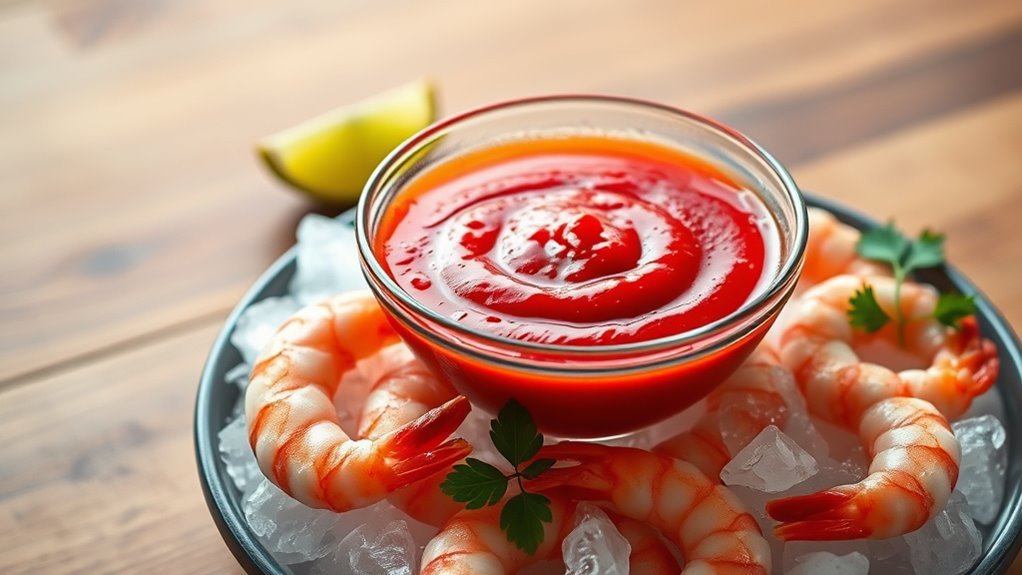

Cocktail sauce typically isn’t keto-friendly due to its carb content, mainly from ketchup. A standard serving can contain 4 to 6 grams of carbs, which can add up quickly. However, you can enjoy it in moderation with some adjustments. Using sugar-free ketchup and keeping your portion sizes small can make it more suitable for a low-carb diet. Curious about more alternatives and tips? There’s plenty more to explore to make your cocktail sauce keto-compatible.
Understanding Cocktail Sauce Ingredients
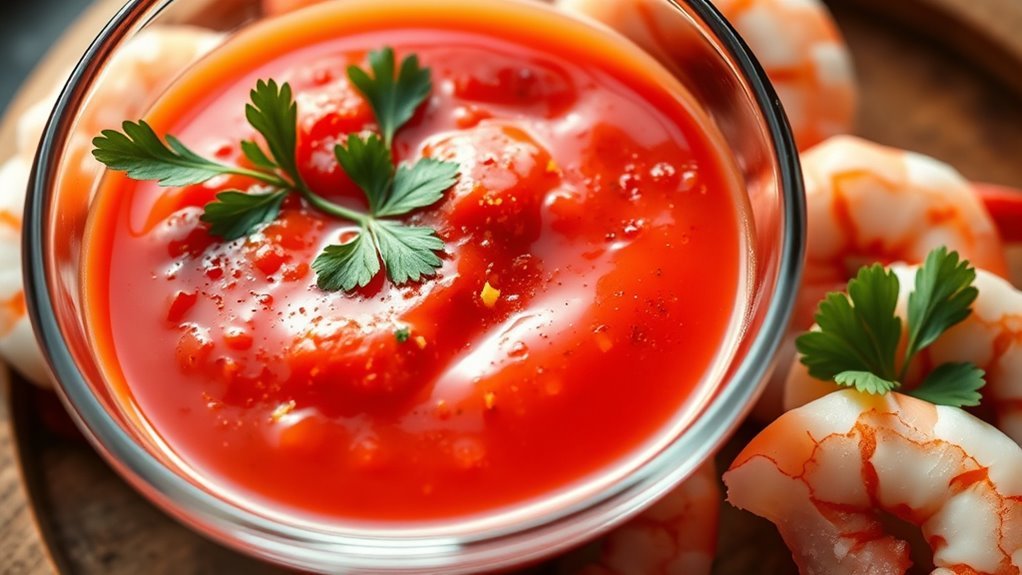
When you’re diving into the world of cocktail sauce, it’s essential to understand what goes into it, especially if you’re following a ketogenic diet. Cocktail sauce has a rich history, often associated with seafood dishes, dating back to the 19th century. Traditionally, it’s made from a mixture of ketchup, horseradish, lemon juice, and spices. However, ingredient variations abound; some recipes use alternative bases or sweeteners. If you’re keen on keto, it’s vital to look for low-sugar or homemade options, as conventional ketchup can be high in carbs. By being mindful of these ingredient variations, you can enjoy cocktail sauce while staying aligned with your dietary goals, preserving that sense of freedom in your culinary choices.
Nutritional Breakdown of Traditional Cocktail Sauce
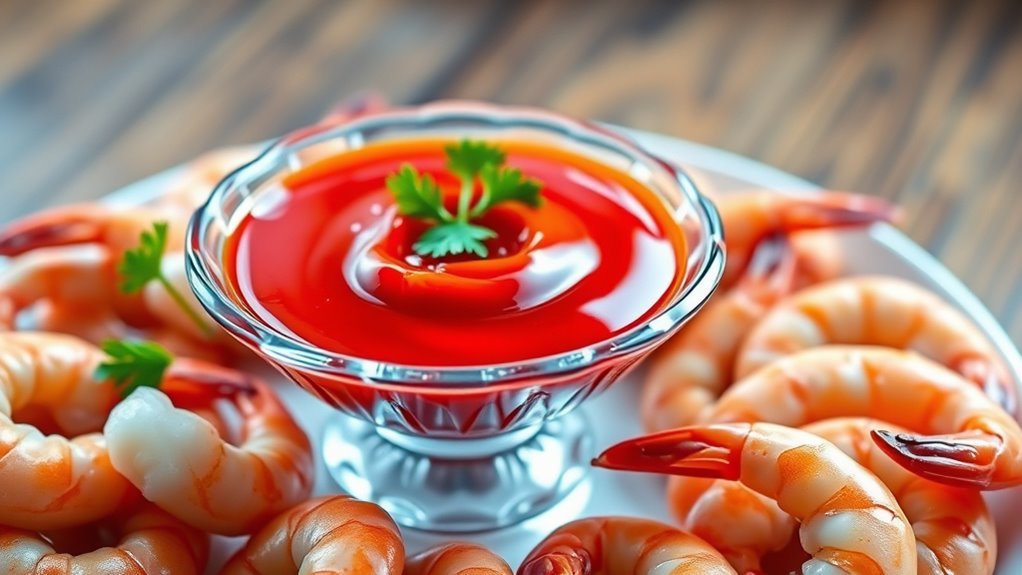
When you look at traditional cocktail sauce, it’s important to contemplate its key ingredients, like ketchup, horseradish, and spices. These components contribute not only to the flavor but also to the overall nutritional profile, particularly its carbohydrate content. Understanding these factors can help you determine if cocktail sauce fits into your keto lifestyle.
Key Ingredients Overview
Cocktail sauce, a popular condiment often paired with seafood, typically consists of a few key ingredients that contribute to its distinct flavor and nutritional profile. The primary components include ketchup, horseradish, lemon juice, and Worcestershire sauce. Ketchup provides a sweet base, while horseradish adds a spicy kick, creating a unique balance of flavor profiles. Lemon juice brightens the sauce, enhancing its freshness, and Worcestershire sauce contributes depth with its savory notes. These ingredients work together to create a tangy and zesty condiment that complements shrimp and other seafood dishes. While you’re enjoying cocktail sauce, it’s crucial to reflect on how these key ingredients fit into your overall dietary choices, especially if you’re mindful of nutritional content.
Carb Content Analysis
A standard serving of traditional cocktail sauce, typically around two tablespoons, contains approximately 4 to 6 grams of carbohydrates. For those of you with dietary restrictions, it’s crucial to evaluate how this fits into your daily carb allowance, especially on a keto diet. While the sauce offers a delightful mix of flavors, including tangy tomatoes and zesty horseradish, these flavor profiles come with a carb cost. If you’re aiming for a low-carb lifestyle, you might want to use cocktail sauce sparingly or look for alternative recipes that reduce the carbohydrate content. By being mindful of portion sizes and ingredient choices, you can still enjoy the bold taste of cocktail sauce without compromising your dietary goals.
Carb Content in Cocktail Sauce
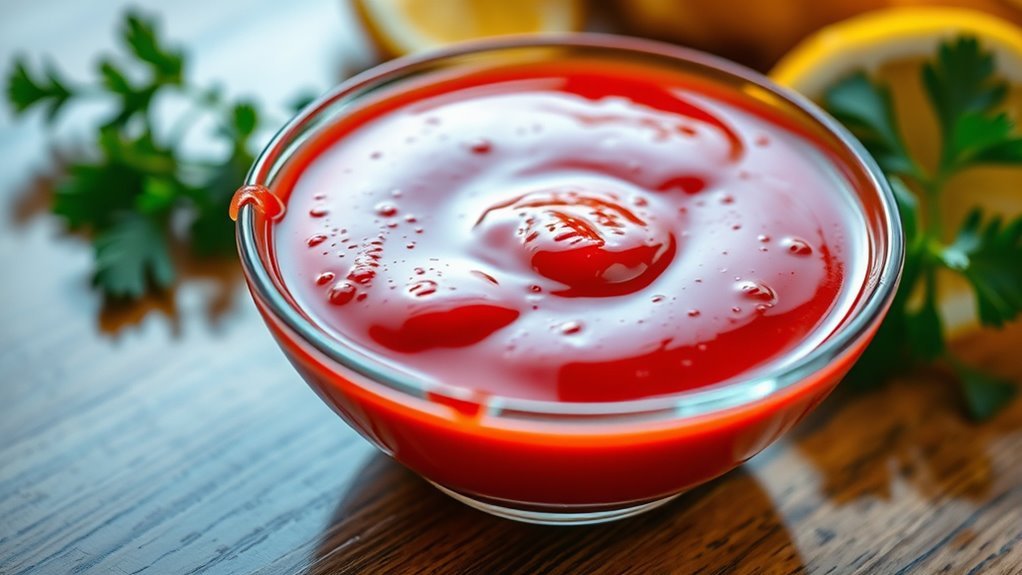
How many carbs are in cocktail sauce, and does it fit into a keto diet? Typically, a two-tablespoon serving of traditional cocktail sauce contains about 4 to 6 grams of carbohydrates, primarily from sugar and tomato paste. These carb sources can quickly add up, especially if you enjoy larger servings. If you’re following a strict keto diet, it’s crucial to evaluate how these carbs fit into your daily limit, which is generally around 20 to 50 grams. While cocktail sauce can be enjoyed occasionally, be mindful of portion sizes to avoid exceeding your carb tolerance. Always check labels if you’re purchasing pre-made sauces, as recipes can vary considerably, impacting their suitability for your keto lifestyle.
Keto-Friendly Alternatives to Traditional Cocktail Sauce
While traditional cocktail sauce may not align with a strict keto diet, there are several tasty alternatives you can make at home or find in stores that keep your carb count low. Consider using a blend of low-carb ingredients like sugar-free ketchup and horseradish, which can deliver that classic kick without the carbs. You can also explore avocado-based dips or a zesty garlic aioli for a creamy, satisfying option. Many brands offer keto dipping sauces that utilize sugar substitutes, allowing you to enjoy flavor without the guilt. Always check the labels for hidden sugars, as some products can still pack in carbs. With these alternatives, you can enjoy your seafood while staying true to your keto lifestyle.
How to Make a Low-Carb Cocktail Sauce
For those looking to enjoy seafood while adhering to a low-carb diet, making your own cocktail sauce at home can be a satisfying solution. Start with keto ingredients like sugar-free ketchup, which provides a base without the carbs. Add freshly squeezed lemon juice for brightness, and horseradish for that signature kick. To achieve flavor balance, consider incorporating Worcestershire sauce and a pinch of salt. Mix everything together, adjusting the horseradish and lemon to suit your taste. This homemade version not only keeps your carb count low but also allows you to control the ingredients for quality and flavor. Enjoy your low-carb cocktail sauce with shrimp or crab, and savor the freedom of indulging while staying true to your dietary goals!
Pairing Seafood With Cocktail Sauce on a Keto Diet
When pairing seafood with cocktail sauce on a keto diet, you’ll want to focus on low-carb options like shrimp, crab, and fish. Making your own keto-friendly cocktail sauce can enhance the flavor while keeping your carb count in check. Additionally, experimenting with different spices and herbs can elevate the taste profile of your seafood dishes.
Low-Carb Seafood Options
If you’re following a keto diet, pairing low-carb seafood options with cocktail sauce can be a delicious way to enjoy a meal without compromising your dietary goals. Low carb shrimp is an excellent choice, as it’s high in protein and low in carbs, making it perfect for your keto lifestyle. You can also opt for keto fish like salmon or mackerel, which are rich in healthy fats and omega-3s. These seafood options not only fit your dietary needs but also provide essential nutrients. When combined with a keto-friendly cocktail sauce, you’ll enhance the flavor while keeping your carb count low. Enjoy these delicious pairings for a satisfying and guilt-free meal that supports your health goals!
Homemade Keto Cocktail Sauce
Pairing low-carb seafood with a homemade keto cocktail sauce can elevate your meal while keeping your carb intake in check. Traditional cocktail sauces often contain sugar, but you can create delicious homemade variations using low-carb ingredients. Start with sugar-free ketchup, which offers a tangy base without the carbs. Add horseradish for a kick, and a splash of lemon juice for brightness. You can also experiment with flavor enhancements like Worcestershire sauce or garlic for a personalized touch. This not only complements your seafood but also aligns with your keto lifestyle. By preparing your own sauce, you gain control over ingredients, ensuring it fits your dietary needs while enjoying the freedom to savor bold flavors.
Flavor Pairing Suggestions
As you explore the world of seafood on a keto diet, finding the right flavor pairings with your homemade cocktail sauce can enhance your dining experience. Consider pairing shrimp or crab with the sauce, as their mild flavors complement its tangy notes. For an exciting twist, add spicy ingredients like horseradish or chili sauce to kick things up a notch. Don’t forget about citrus flavors—squeezing fresh lemon or lime juice into your cocktail sauce can brighten the overall taste and balance richness. Grilled salmon or a seafood platter can also pair beautifully, creating a satisfying and keto-friendly meal. Experimenting with these combinations can elevate your seafood dishes while keeping your diet on track. Enjoy the freedom of flavor!
Tips for Staying Within Your Carb Limits
Staying within your carb limits can be challenging, especially when enjoying popular condiments like cocktail sauce. To help you navigate this, consider these tips on carb tracking and portion control:
| Tip | Description |
|---|---|
| Measure Portions | Use a tablespoon to control serving size. |
| Read Labels | Check for hidden sugars in ingredients. |
| Plan Your Meals | Incorporate low-carb options alongside sauces. |
Enjoying Cocktail Sauce in Moderation
Cocktail sauce can still be a flavorful addition to your meals, even when you’re mindful of your carb intake. The key is enjoying it in moderation. By limiting your serving size, you can reap the moderation benefits, allowing you to savor the tangy flavor without derailing your keto goals. A small amount can provide significant flavor enhancement, elevating your dishes without adding excessive carbs. Consider pairing it with shrimp or other low-carb options to maintain balance. Remember, it’s about finding that sweet spot where you can indulge in the taste you love while staying aligned with your dietary preferences. Embracing moderation gives you the freedom to enjoy your favorites without guilt, ensuring you stay on track with your lifestyle choices.
Frequently Asked Questions
Can I Store Homemade Cocktail Sauce in the Fridge?
Yes, you can store homemade cocktail sauce in the fridge. It usually lasts about one to two weeks when kept in an airtight container. To maximize its shelf life, make certain it’s sealed properly. Remember, if you notice any changes in color, smell, or texture, it’s better to discard it. Enjoy the freedom of making your own sauce, but keep an eye on those signs to guarantee it stays fresh!
What Seafood Pairs Best With Cocktail Sauce?
Shrimp varieties like large, succulent shrimp or shrimp cocktail are classic pairings with cocktail sauce. If you prefer crab options, consider sweet Dungeness or lump crab meat, which complements the sauce’s tangy flavor perfectly. The zesty notes of cocktail sauce enhance the natural sweetness of these seafood choices, making them a delightful combination. So, whether you’re hosting a gathering or treating yourself, these pairings will elevate your seafood experience. Enjoy!
Is Store-Bought Cocktail Sauce Keto-Friendly?
Store-bought cocktail sauce often contains sugar and other carbohydrates, making it less keto-friendly. However, you can find brands that use keto alternatives like natural sweeteners or low-carb ingredients. Always check the label for store-bought ingredients and their carb counts. If you want to stay within your keto goals, consider making your own cocktail sauce using keto-friendly ingredients like sugar-free ketchup, horseradish, and a squeeze of lemon for flavor.
How Long Does Cocktail Sauce Last in the Pantry?
Cocktail sauce can last up to a year in the pantry if unopened, thanks to preservatives. Once opened, its shelf life drops to about 3 to 6 months. For best results, store it in a cool, dark place and guarantee the lid is tightly sealed. Always check for signs of spoilage, like changes in color or smell. Following these storage tips will help you enjoy your cocktail sauce for as long as possible!
Can I Use Cocktail Sauce as a Marinade?
Sure, you can use cocktail sauce as a marinade, because who wouldn’t want a mix of ketchup and horseradish on their meat? While it’s unconventional, it can add a unique flavor. Just keep in mind that there are plenty of marinade alternatives that might suit your palate better. If you’re experimenting, consider adding some herbs or spices to balance the sweetness of the sauce. Explore those cocktail sauce recipes for some inspiration!
Frequently Asked Questions about Cocktail Sauce and Keto Diet
1. Is cocktail sauce keto-friendly?
Cocktail sauce can be keto-friendly, but it depends on the specific ingredients used. Traditional cocktail sauce contains ketchup, which is high in sugar. However, you can make a low-carb version by using sugar-free ketchup or combining horseradish with low-carb sweeteners. Always check the ingredients to ensure they fit within your daily carb limit.
2. What are the main ingredients in cocktail sauce?
The primary ingredients in traditional cocktail sauce include ketchup, horseradish, lemon juice, and Worcestershire sauce. Ketchup is the main source of sugar, while horseradish adds a spicy kick. To make it keto-friendly, consider using lower-carb alternatives for the ketchup and avoiding any added sugars.
3. How can I make a keto-friendly cocktail sauce at home?
To make a keto-friendly cocktail sauce, mix together 1/2 cup of sugar-free ketchup, 2 tablespoons of prepared horseradish, a squeeze of lemon juice, and a dash of hot sauce if you like it spicy. Adjust the ingredients to taste, and store in the refrigerator for up to a week. This homemade version will contain significantly fewer carbs than the traditional recipe.
4. How many carbs are in traditional cocktail sauce?
Traditional cocktail sauce can have around 4-6 grams of carbohydrates per tablespoon, primarily due to the sugar content in ketchup. If you’re following a strict keto diet, it’s essential to limit your intake or opt for a homemade low-carb version to keep your carb count in check.
5. Can I eat cocktail sauce with shrimp on a keto diet?
Yes, you can enjoy cocktail sauce with shrimp on a keto diet, provided that you use a low-carb version of the sauce. Shrimp is naturally low in carbs and high in protein, making it a great addition to a keto meal. Just be mindful of the amount of sauce you use to control your carb intake.
References
- https://www.healthline.com/nutrition/keto-diet-food-list
- https://www.medicalnewstoday.com/articles/323337
- https://www.verywellfit.com/what-is-cocktail-sauce-5198170
- https://www.businessinsider.com/what-is-cocktail-sauce-2020-2
- https://www.ncbi.nlm.nih.gov/pmc/articles/PMC7074532/
- https://www.ketodietapp.com/Blog/post/2020/02/12/How-to-Make-Keto-Cocktail-Sauce
- https://www.researchgate.net/publication/329713649_Keto_diet_and_its_effects_on_health
- https://www.cdc.gov/nutrition/index.html