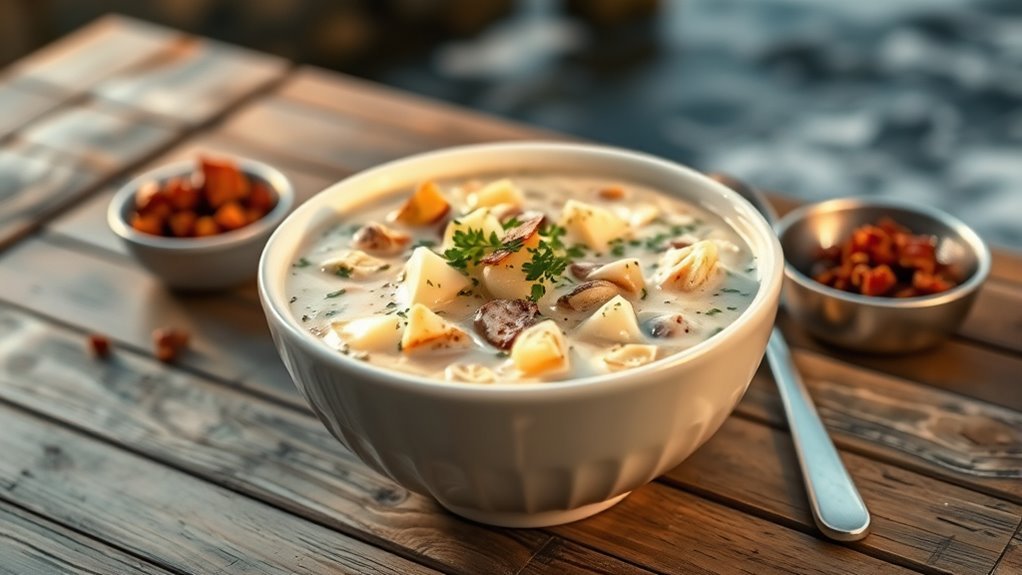

Clam chowder can be keto-friendly, but you’ll need to choose ingredients carefully. Traditional recipes often contain potatoes and flour, resulting in 15-20 grams of carbs per cup. To enjoy chowder on a keto diet, consider using cauliflower instead of potatoes and heavy cream for richness. Toppings like crispy bacon and fresh herbs enhance flavor without adding carbs. If you want to learn more about making low-carb chowder and other options, keep going!
Understanding the Nutritional Content of Clam Chowder
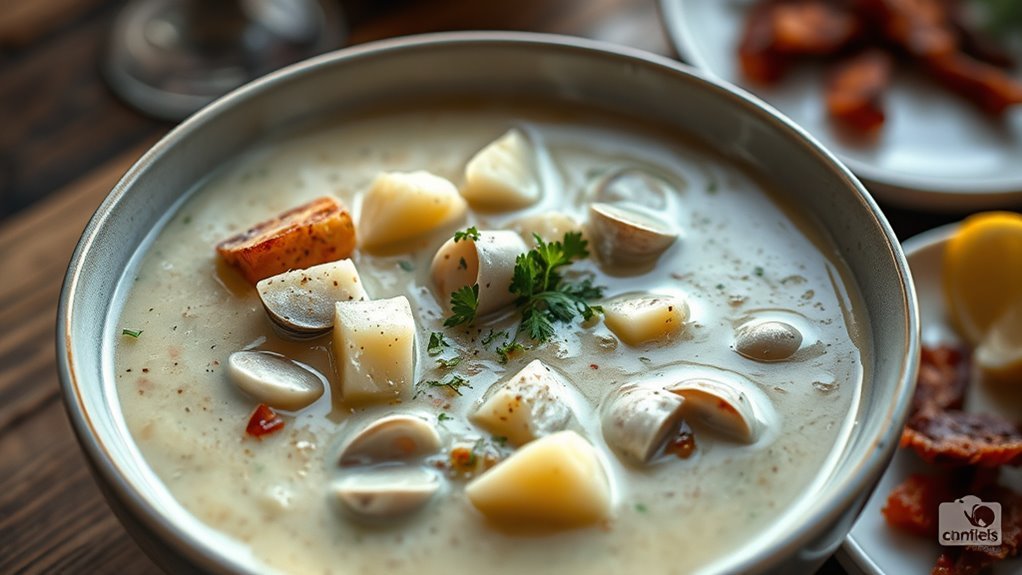
When it comes to understanding the nutritional content of clam chowder, it’s essential to look beyond its creamy texture and savory flavor. Clam chowder has a rich history, originating from the coastal regions of New England, where it was a staple for fishermen. Nutritional comparisons reveal that while clam chowder is high in protein and packed with vitamins and minerals, it also contains significant amounts of fat and carbohydrates, primarily from the cream and potatoes often used in traditional recipes. If you’re mindful of your dietary choices, it’s vital to take these factors into account. Understanding the balance between flavor and nutrition can empower you to make informed decisions about including clam chowder in your diet while enjoying its historical significance and comforting taste.
Carbohydrates in Traditional Clam Chowder
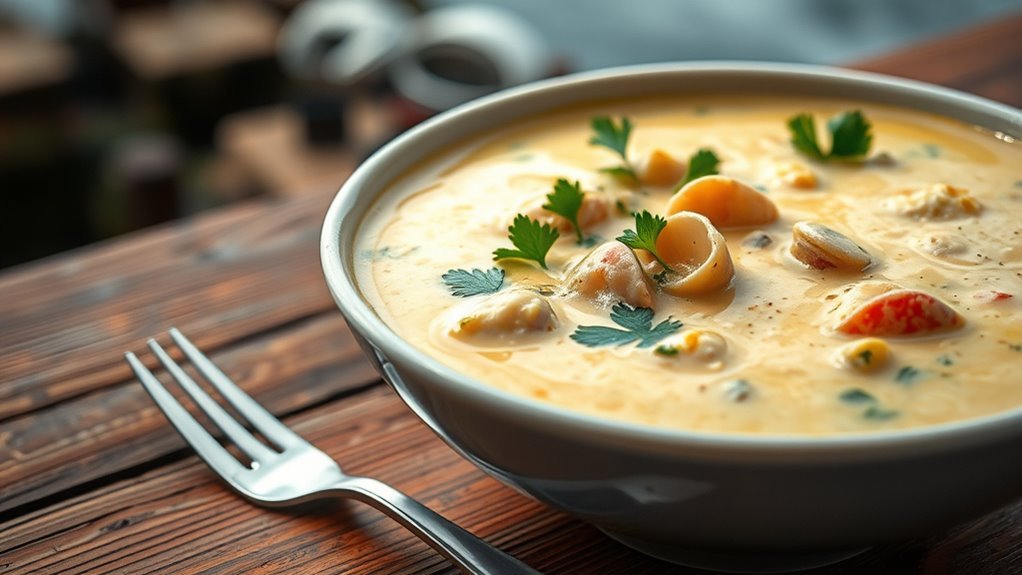
When considering traditional clam chowder, it’s important to look at the ingredients that contribute to its carbohydrate content. Factors like potatoes and flour can greatly increase carb levels, so serving sizes also matter. Fortunately, there are low-carb alternatives that you can explore if you’re aiming to keep your meal keto-friendly.
Ingredients Impacting Carbs
Traditional clam chowder, a creamy and savory dish, often contains several ingredients that greatly impact its carbohydrate content. The most significant contributors are potatoes and flour, commonly used as thickening agents. Potatoes, found in many chowder variations, add a substantial amount of carbs, while flour can further increase the total. While clam types, such as New England or Manhattan, may differ in base ingredients, they often share these high-carb components. If you’re aiming for a keto-friendly option, consider alternatives like cauliflower or xanthan gum for thickening. By substituting these ingredients, you can enjoy a delicious chowder without the excess carbohydrates that traditional recipes typically include, allowing for more freedom in your dietary choices.
Serving Size Considerations
Understanding serving size is key to managing carbohydrate intake in traditional clam chowder. A typical serving size of clam chowder is about one cup, which can contain around 15-20 grams of carbohydrates, depending on the recipe. If you’re mindful of your carb goals, portion control becomes essential. You might find that enjoying a smaller serving—say half a cup—can greatly reduce your carb intake while still allowing you to savor the dish. It’s important to read labels or check recipes for specific carb counts, as variations exist. By being aware of serving sizes, you can indulge in clam chowder without compromising your dietary freedoms, ensuring you maintain a balanced approach to your keto lifestyle.
Low-Carb Alternatives Available
While many love the creamy richness of traditional clam chowder, it often comes packed with carbohydrates primarily from ingredients like potatoes and flour. If you’re looking to enjoy clam chowder while staying within your low-carb lifestyle, there are plenty of low-carb substitutes you can use. Instead of potatoes, try cauliflower for a similar texture without the carbs. Almond flour or coconut flour can serve as keto-friendly thickeners instead of traditional wheat flour. You could also incorporate cream cheese or heavy cream to enhance the richness without adding excess carbs. By making these simple swaps, you can create a delicious, satisfying clam chowder that aligns with your keto goals, allowing you the freedom to enjoy this classic dish without compromise.
Keto-Friendly Alternatives for Clam Chowder
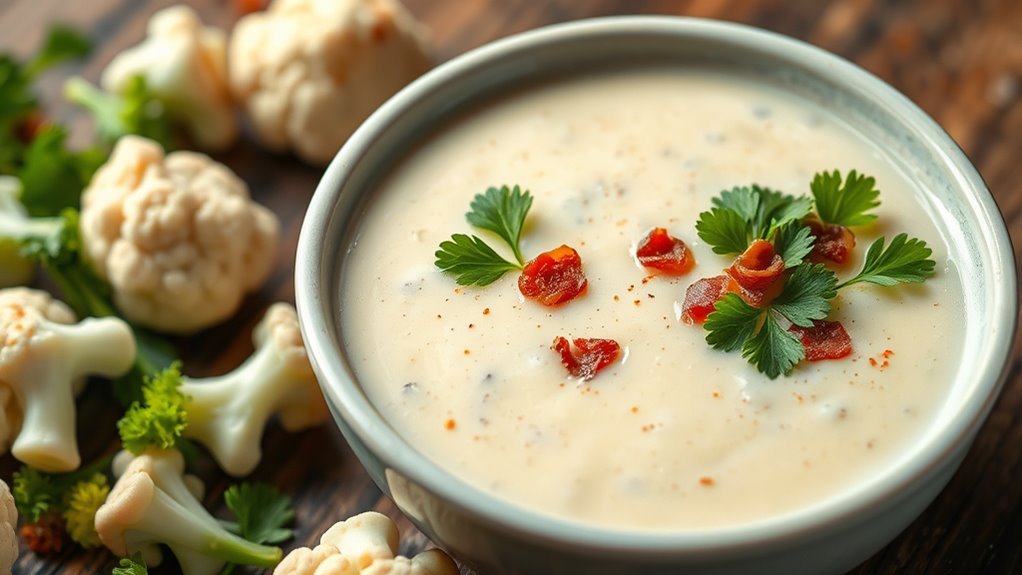
If you’re looking to enjoy clam chowder without derailing your keto diet, there are several delicious alternatives to contemplate. Opt for keto chowder ingredients like cauliflower or zucchini instead of traditional potatoes, which can help you maintain low-carb levels. For seafood substitutes, consider using shrimp or crab, both of which pack flavor while keeping carbs in check. You can also use coconut milk or heavy cream for a rich, creamy base that adds depth without the carbs. By mixing in herbs and spices like thyme or dill, you can elevate your chowder experience. These substitutes not only align with keto guidelines but also provide a satisfying, flavorful meal that won’t compromise your dietary goals. Enjoy your chowder freedom!
How to Make a Low-Carb Clam Chowder Recipe
To create a delicious low-carb clam chowder, it is essential to focus on key ingredients that maintain flavor without adding excess carbohydrates. Here’s how you can whip up a keto-friendly version:
Creating a flavorful low-carb clam chowder starts with choosing the right ingredients to keep carbs at bay.
- Cauliflower: Replace potatoes with cauliflower for a creamy texture while keeping carbs low.
- Heavy Cream: Use heavy cream instead of milk for richness, enhancing the chowder’s flavor and creaminess.
- Bacon: Add crispy bacon for a smoky, savory element that complements the clams beautifully.
Health Benefits of Clams on a Keto Diet
Clams are an excellent addition to your keto diet, providing a nutrient-dense source of protein that supports muscle health. They’re also rich in omega-3 fatty acids, which can help reduce inflammation and support heart health. Plus, their low carb content makes them a perfect fit for maintaining your ketogenic lifestyle.
Nutrient Dense Protein Source
When considering high-quality protein sources for a keto diet, clams stand out due to their impressive nutrient profile. Not only are they low in carbohydrates, but they also provide significant nutrient benefits. Here are three key reasons to include clams in your diet:
- High in Protein: Clams offer around 20 grams of protein per 3-ounce serving, making them an excellent choice for muscle maintenance.
- Rich in Vitamins and Minerals: They’re packed with essential nutrients like vitamin B12, iron, and selenium, crucial for overall health.
- Low-Calorie Option: Clams are low in calories, allowing you to enjoy a nutrient-dense protein source without derailing your keto goals.
Incorporating clams can help you meet your protein needs while enjoying their unique flavors.
Omega-3 Fatty Acids
Including clams in your keto diet not only boosts your protein intake but also provides a valuable source of omega-3 fatty acids. These healthy fats offer numerous omega 3 benefits, such as reducing inflammation and supporting heart health. Clams are one of the best seafood sources for omega-3s, making them an excellent choice for those following a low-carb lifestyle. By incorporating clams into your meals, you can improve your overall nutrient profile while enjoying delicious flavors. Plus, the omega-3s found in clams can enhance brain function and may even help with mood regulation. So, if you want to maximize your health benefits on a keto diet, consider adding clams to your menu for a tasty and nutritious boost.
Low Carb Content
For those on a keto diet, the low carb content of clams makes them a smart addition to your meals. These shellfish not only fit well into your macro goals but also offer a range of health benefits. Here’s a quick nutritional comparison:
- Carbohydrates: Clams contain less than 5 grams of carbs per 100 grams, making them ideal for your keto lifestyle.
- Protein: They’re high in protein, which helps keep you satiated and supports muscle health.
- Minerals: Clams are rich in essential minerals like iron and zinc, boosting your overall nutrient intake.
You can easily incorporate clams into various recipe variations, from chowders to salads, ensuring you enjoy delicious meals without compromising your diet.
Tips for Enjoying Clam Chowder While Staying Keto
Although traditional clam chowder is often thickened with flour and loaded with potatoes, you can still enjoy this creamy seafood dish while adhering to a keto diet. Start by using a low-carb thickener like xanthan gum or almond flour instead of flour. Swap out potatoes for cauliflower, which mimics the texture without the carbs. For a rich flavor, consider cream substitutes such as coconut cream or heavy whipping cream. Top your chowder with healthy toppings like crispy bacon, fresh herbs, or a sprinkle of cheese to enhance its taste and keep it keto-friendly. Finally, be mindful of portion sizes to guarantee you stay within your daily carb limits while savoring this delightful dish. Enjoy your chowder guilt-free!
Exploring Store-Bought Clam Chowder Options
When you’re looking for a quick and convenient option, how do store-bought clam chowders measure up regarding keto compatibility? Many options exist, but not all are created equal. Here are three things to check on the nutritional labels:
When choosing store-bought clam chowders, consider their carb counts, ingredients, and fat content for keto compatibility.
- Carbohydrate Content: Look for options with lower total carbs; ideally, under 10 grams per serving.
- Ingredients: Aim for clam chowders with fewer fillers like flour or potatoes, which can spike carb counts.
- Fat Content: Higher fat content can be beneficial for a keto diet, so consider cream-based varieties.
Frequently Asked Questions
Can I Freeze Clam Chowder for Later Use on a Keto Diet?
Yes, you can freeze clam chowder for later use! To do this effectively, use proper freezing techniques. First, let the chowder cool completely. Then, transfer it to airtight storage containers or heavy-duty freezer bags, leaving some space for expansion. Label each container with the date to keep track of freshness. When you’re ready to enjoy it, just thaw in the fridge overnight and reheat gently—this way, you’ll savor every delicious bite!
What Toppings Are Keto-Friendly for Clam Chowder?
For keto-friendly toppings on your clam chowder, consider using cheese alternatives like shredded mozzarella or nutritional yeast for a cheesy flavor without the carbs. Fresh herb toppings, such as parsley, chives, or dill, not only enhance the taste but also add a pop of color. These options let you enjoy your clam chowder while staying aligned with your keto goals, giving you the freedom to indulge without the guilt.
Are There Dairy-Free Options for Keto Clam Chowder?
Absolutely, there are dairy-free options for keto clam chowder! In fact, around 30% of people are opting for dairy alternatives due to lactose intolerance or dietary preferences. You can use coconut cream as a rich substitute for traditional dairy, giving your chowder that creamy texture without the carbs. Other dairy alternatives like almond milk or cashew cream can also work well, allowing you to enjoy a delicious, guilt-free chowder that fits your keto lifestyle.
How Does the Cooking Method Affect Clam Chowder’s Keto Status?
The cooking method can greatly affect clam chowder’s keto status. If you’re using traditional techniques with high-carb ingredients like potatoes, you might not stay within keto limits. However, by employing cooking techniques like slow cooking or pressure cooking, you can enhance flavors while incorporating ingredient substitutions—like cauliflower instead of potatoes. This way, you create a creamy, satisfying chowder that aligns with your keto goals, allowing for delicious freedom in your diet.
Is It Safe to Eat Clam Chowder During Ketosis?
Yes, it’s generally safe to eat clam chowder during ketosis, but you’ll want to evaluate a nutritional analysis first. Traditional recipes often include high-carb ingredients like potatoes. For a keto-friendly option, think about ingredient substitutions, such as using cauliflower instead of potatoes. This way, you can enjoy the dish without compromising your ketosis. Always be mindful of portion sizes and the overall carb content to maintain your desired state.
Frequently Asked Questions about Clam Chowder and Keto
1. Is clam chowder low in carbohydrates?
Clam chowder can vary in carbohydrate content depending on the recipe. Traditional recipes that include potatoes and flour as thickeners can be high in carbs, making them less suitable for a ketogenic diet. However, if you choose or prepare a keto-friendly version that uses low-carb ingredients, such as cauliflower or xanthan gum, you can significantly lower the carb count.
2. Can I make clam chowder keto-friendly?
Yes, you can make keto-friendly clam chowder by substituting high-carb ingredients. For instance, replace potatoes with cauliflower or turnips and use heavy cream or coconut milk instead of milk or broth that contains added sugars. Additionally, ensure to avoid any flour-based thickeners and use alternatives like almond flour or cream cheese for a creamy texture.
3. What are the typical ingredients in traditional clam chowder?
Traditional clam chowder typically includes clams, potatoes, onions, celery, and cream or milk. The carb content is mainly derived from the potatoes, which can significantly increase the overall carbohydrate count. Some variants may also include flour as a thickener, further adding to the carb content.
4. How can I check the carb content of clam chowder?
To check the carb content of clam chowder, you can look at the nutrition label if it’s a store-bought product. For homemade versions, use a nutrition calculator or app to input the ingredients and their quantities. This will give you a precise measurement of the total carbs per serving, allowing you to determine if it fits within your keto diet.
5. Are there any store-bought clam chowder options that are keto-friendly?
Yes, some brands offer low-carb or keto-friendly clam chowder options. When shopping, look for products that specifically state “low carb” or “keto” on the packaging. Always review the ingredient list and nutrition facts to ensure they do not contain high-carb ingredients like potatoes or added sugars. Popular brands may vary, so it’s essential to do some research before purchasing.
References
- https://www.healthline.com/nutrition/keto-diet-foods
- https://www.ncbi.nlm.nih.gov/pmc/articles/PMC6470854/
- https://www.webmd.com/diet/what-is-the-keto-diet
- https://www.verywellfit.com/keto-diet-foods-5115188
- https://www.bbcgoodfood.com/howto/guide/keto-diet-what-you-need-know
- https://www.eatright.org/health/dietary-guidelines-and-myplate/understanding-the-keto-diet
- https://www.nutrition.gov/topics/whats-food/keto-diet
- https://www.southernliving.com/recipes/keto-chowder-recipes
- https://www.medicalnewstoday.com/articles/ketogenic-diet-101-what-to-eat-and-what-to-avoid