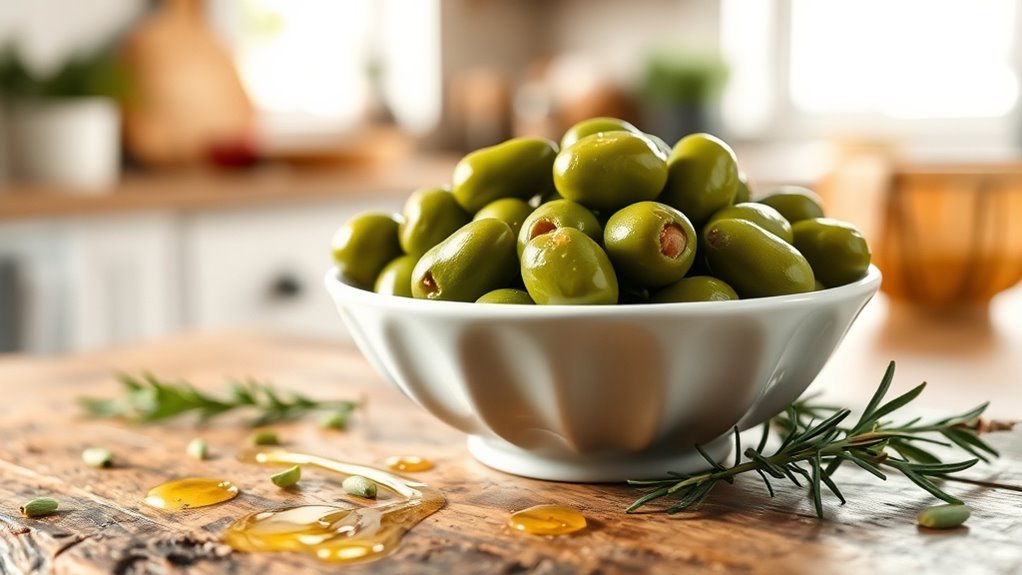

Yes, green olives are keto-friendly! They contain about 1-2 grams of net carbs per serving, making them a great option for low-carb diets. Packed with heart-healthy monounsaturated fats and antioxidants, they also provide essential vitamins and minerals. Enjoying them in moderation can enhance your meals while keeping you aligned with your keto goals. If you’re interested in creative ways to incorporate green olives into your diet, there’s more to explore!
Nutritional Profile of Green Olives
When you’re considering whether green olives fit into a keto diet, it’s crucial to look at their nutritional profile. Green olives, part of a variety of olive types, offer a low-carb snack option. They contain healthy fats, particularly monounsaturated fats, which can support heart health. A standard serving size—typically around 10 olives—provides about 1 gram of net carbs. This makes them a practical choice for those adhering to a ketogenic lifestyle. Additionally, they’re rich in antioxidants and vitamins, enhancing their nutritional value. However, it’s important to monitor serving sizes, as overindulging can lead to higher carb intake. Enjoying green olives in moderation can help you maintain your keto goals while savoring their unique flavor.
Carb Content in Green Olives
Green olives are particularly appealing for those on a keto diet because of their low carb content. Typically, a serving of green olives contains about 1-2 grams of net carbs, making them an excellent choice for carb counting. Different olive varieties can slightly vary in their carb content, but generally, they remain low. For instance, Kalamata and Castelvetrano olives also fit well within a keto framework. This means you can enjoy these flavorful snacks without worrying about exceeding your daily carb limit. Incorporating green olives into your meals can add variety while keeping your carb intake in check. So, whether you toss them in salads or enjoy them straight from the jar, green olives can be a satisfying addition to your keto lifestyle.
Health Benefits of Green Olives
Green olives are packed with nutrients that can support your overall health. They’re rich in antioxidants, which help combat oxidative stress, and their healthy fats are beneficial for heart health. Including green olives in your diet may provide you with these advantages while keeping your meals flavorful.
Nutrient Density Profile
Although many people enjoy olives for their distinct flavor, their impressive nutrient density profile makes them a standout choice for those seeking health benefits. Green olives, especially, offer a range of nutrients that enhance your well-being:
- Healthy Fats: Rich in monounsaturated fats, they support heart health and improve nutrient absorption.
- Vitamins and Minerals: They provide essential vitamins E and K, along with minerals like iron and copper, which are crucial for various bodily functions.
- Low Calorie Content: With minimal calories, they fit perfectly into a keto-friendly diet without compromising your macros.
Incorporating different olive varieties into your meals can maximize these benefits, giving you not just flavor but a nutritious boost to your lifestyle.
Antioxidant Properties
When you incorporate green olives into your diet, you’re not just enjoying a flavorful snack; you’re also benefiting from their powerful antioxidant properties. These olives are rich in antioxidant compounds like vitamin E, oleuropein, and hydroxytyrosol, which help combat oxidative stress in your body. By reducing free radicals, these antioxidants can play a vital role in preventing cellular damage, ultimately supporting your overall health. The health benefits of incorporating green olives extend beyond mere nutrition; they may also contribute to improved immune function and reduced inflammation. So, if you’re looking for a tasty way to boost your antioxidant intake, green olives are a fantastic choice that allows you to enjoy your food while nourishing your body.
Heart Health Benefits
Incorporating olives into your diet can greatly benefit your heart health, thanks to their high content of monounsaturated fats and beneficial compounds. Here are three key heart health benefits you should know:
- Reduced Risk of Heart Disease: The healthy fats in green olives may lower bad cholesterol levels, reducing the risk of heart disease.
- Anti-inflammatory Properties: Olives contain antioxidants that help combat inflammation, a known contributor to heart issues.
- Heart-Healthy Olive Oil: Using olive oil as a dressing or cooking oil can provide similar benefits, promoting overall cardiovascular health.
How Green Olives Fit Into a Keto Diet
Green olives are not just a flavorful addition to your meals; they also fit seamlessly into a keto diet. Packed with healthy fats, they align perfectly with keto guidelines that prioritize low carbohydrate intake. A serving of green olives contains minimal carbs, making them an excellent snack option when you’re aiming to maintain ketosis. Their high monounsaturated fat content can support your overall health while contributing to feelings of fullness. Additionally, green olives contain antioxidants and anti-inflammatory properties, which can enhance your well-being. By incorporating them into your dishes or enjoying them alone, you can enjoy the rich flavors without straying from your keto goals. So, go ahead and savor those green olives on your keto journey!
Serving Suggestions for Green Olives
There are countless ways to enjoy green olives, making them a versatile addition to your meals and snacks. Here are a few serving suggestions to get you started:
- Olive Tapenade: Blend green olives with capers, garlic, and olive oil for a delicious spread. It pairs perfectly with keto crackers or fresh veggies.
- Stuffed Olives: Get creative with stuffed olive ideas! Try filling them with cream cheese, feta, or even jalapeños for a spicy kick.
- Salads: Toss green olives into salads for added flavor and healthy fats. They complement leafy greens, tomatoes, and cucumbers beautifully.
Whether you’re snacking or adding them to a dish, green olives can elevate your meals while keeping you aligned with your keto lifestyle. Enjoy!
Common Misconceptions About Olives
While many people enjoy olives as a flavorful snack or ingredient, several misconceptions can cloud their health benefits and culinary uses. One common myth is that all olive varieties are high in calories and fat, but the truth is, they’re nutrient-dense and can fit well into a balanced diet. Myths debunked reveal that olives actually contain healthy fats, antioxidants, and vitamins. Another misconception is that only green olives are beneficial; both green and black olives provide unique health advantages. Additionally, some believe olives are too salty to be healthy, but rinsing them can reduce sodium levels considerably. Understanding these facts can empower you to enjoy olives confidently as part of your diet.
Other Low-Carb Snack Alternatives
If you’re looking to maintain a low-carb lifestyle, exploring various snack alternatives can help keep your diet diverse and satisfying. Here are some healthy snacks to contemplate:
- Nuts and Seeds: Almonds, walnuts, and pumpkin seeds are high in healthy fats and low in carbs, making them perfect for snacking.
- Cheese Crisps: Baked cheese crisps offer a crunchy, savory treat while keeping carb counts low. They’re easy to make at home or find pre-packaged.
- Vegetable Sticks with Dip: Celery, cucumber, or bell pepper sticks paired with guacamole or a low-carb ranch dip provide freshness and crunch.
These snack ideas not only satisfy cravings but also align with your low-carb goals, giving you the freedom to enjoy delicious options without guilt.
Frequently Asked Questions
Can Green Olives Help With Weight Loss on a Keto Diet?
Yes, green olives can support weight loss on a keto diet due to their low caloric content and high healthy fat content. They’re rich in monounsaturated fats, which may help keep you satiated. Additionally, olives provide nutritional benefits, like antioxidants and vitamins, that can enhance your overall health. Just remember to enjoy them in moderation, as it’s easy to overindulge, but they can definitely fit into your keto lifestyle and help you feel free.
Are There Any Allergens Associated With Green Olives?
While green olive allergies are rare, they can occur in some individuals, affecting about 1% of the population. If you’ve experienced symptoms like itching or swelling after consumption, it’s worth consulting a healthcare professional. Additionally, olive oil sensitivities can also arise, leading to digestive issues for some. Always pay attention to how your body reacts to these foods, as maintaining freedom in your diet means knowing what works for you.
How Should Green Olives Be Stored for Freshness?
To keep your green olives fresh, store them in a cool, dark place. If they’re in brine, leave them submerged to prevent spoilage. Once opened, transfer them to an airtight container and refrigerate for peak freshness. For longer storage, consider freezing olives in a sealed bag, though texture may change. By following these olive storage methods and freshness tips, you’ll guarantee your olives stay delicious for as long as possible.
Do Green Olives Have Any Anti-Inflammatory Properties?
Yes, green olives possess anti-inflammatory benefits you can’t ignore. Packed with antioxidants, they help combat inflammation much like olive oil does. Imagine enjoying a tasty snack that not only satisfies your cravings but also supports your health. Studies show that the compounds in olives can reduce inflammation markers, contributing to overall well-being. So, go ahead and indulge in green olives, knowing they’re doing your body good while providing that sense of freedom you seek.
Can I Eat Green Olives on Other Diets Besides Keto?
Absolutely, you can eat green olives on various diets, including the Mediterranean diet, which emphasizes healthy fats and whole foods. Green olive nutrition is rich in monounsaturated fats, antioxidants, and vitamins, making them a great snack or addition to meals. Their low carbohydrate content fits well with many dietary preferences, so you can enjoy them while still achieving your health goals. Just be mindful of portion sizes to maintain balance!
Frequently Asked Questions about Green Olives and the Keto Diet
1. Are green olives low in carbohydrates?
Yes, green olives are low in carbohydrates, making them a suitable option for those following a ketogenic diet. A typical serving of green olives (about 10 olives) contains approximately 2 grams of carbohydrates, which is quite low compared to other snack options. This low carb content allows you to enjoy green olives without significantly impacting your daily carbohydrate limit on a keto diet.
2. Do green olives provide any health benefits?
Absolutely! Green olives are packed with healthy fats, particularly monounsaturated fats, which can promote heart health. They are also rich in antioxidants, vitamins (such as vitamin E), and minerals (like iron and copper). These nutrients can help reduce inflammation and support overall health, making green olives a nutritious addition to a keto-friendly diet.
3. Can I eat marinated green olives on a keto diet?
Yes, you can eat marinated green olives on a keto diet, but it’s essential to check the ingredients used in the marinade. Some marinades may contain sugars or high-carb additives that could increase the carbohydrate content. Always opt for options with minimal added sugars and natural ingredients to ensure they remain keto-friendly.
4. How can I incorporate green olives into my keto meals?
Green olives can be incorporated into your keto meals in various ways. You can add them to salads for extra flavor, include them in tapenade as a spread, or use them as a topping for grilled meats and fish. They also make a great snack on their own or can be paired with cheese for a delicious keto-friendly appetizer.
5. Are there any downsides to eating green olives on a keto diet?
While green olives are generally beneficial for a keto diet, moderation is key. They are high in sodium, which can lead to increased blood pressure or water retention if consumed excessively. Additionally, some people may have sensitivities to olives or experience digestive issues if they eat them in large quantities. As with any food, it’s best to enjoy them in moderation as part of a balanced diet.
References
- https://www.healthline.com/nutrition/keto-diet-foods#fats
- https://www.ncbi.nlm.nih.gov/pmc/articles/PMC7022827/
- https://www.medicalnewstoday.com/articles/323688
- https://www.ketodietapp.com/Blog/post/What-to-Eat-on-the-Keto-Diet
- https://www.verywellfit.com/what-are-keto-friendly-vegetables-5197691
- https://www.mayoclinic.org/healthy-lifestyle/nutrition-and-healthy-eating/expert-answers/what-is-the-keto-diet/faq-20458435
- https://www.bbcgoodfood.com/howto/guide/keto-diet-what-eat-and-avoid
- https://www.cdc.gov/healthyweight/healthy_eating/dietary_guidelines.html