Counting calories on keto isn’t strictly necessary, but it can help you be more aware of your food choices and stay on track with your weight loss goals. The high-fat, low-carb nature of keto often leads to appetite control, which makes managing a caloric deficit easier. However, obsessing over numbers can detract from enjoying your meals. Striking a balance between calorie awareness and food enjoyment could enhance your keto experience, and there are tips to help you find that balance.
Understanding the Keto Diet Basics

While many diets focus on calorie counting, the ketogenic (keto) diet takes a different approach by prioritizing macronutrient ratios. Instead of obsessing over every calorie, you’ll prioritize high-fat, moderate-protein, and low-carb foods, which helps your body enter ketosis. This metabolic state allows your body to burn fat for fuel instead of carbohydrates. The keto diet emphasizes nutrient density, encouraging you to choose foods rich in vitamins and minerals, like avocados, leafy greens, and nuts. By focusing on what you eat rather than just how much, you can enjoy a more satisfying and sustainable lifestyle. You’ll find that this approach can lead to increased energy levels and improved mental clarity without the constraints of traditional calorie-counting diets.
The Importance of Macronutrients on Keto

When following a keto diet, understanding macronutrients becomes fundamental to achieving and maintaining ketosis. The typical macronutrient ratios for keto are high fat, moderate protein, and very low carbohydrates. This balance helps your body switch from burning glucose to burning fats for energy.
Choosing the right protein sources is essential; think grass-fed meats, eggs, and plant-based options like tofu. These not only provide essential amino acids but also support muscle maintenance, especially as fat becomes your primary fuel.
The Role of Calories in Weight Loss
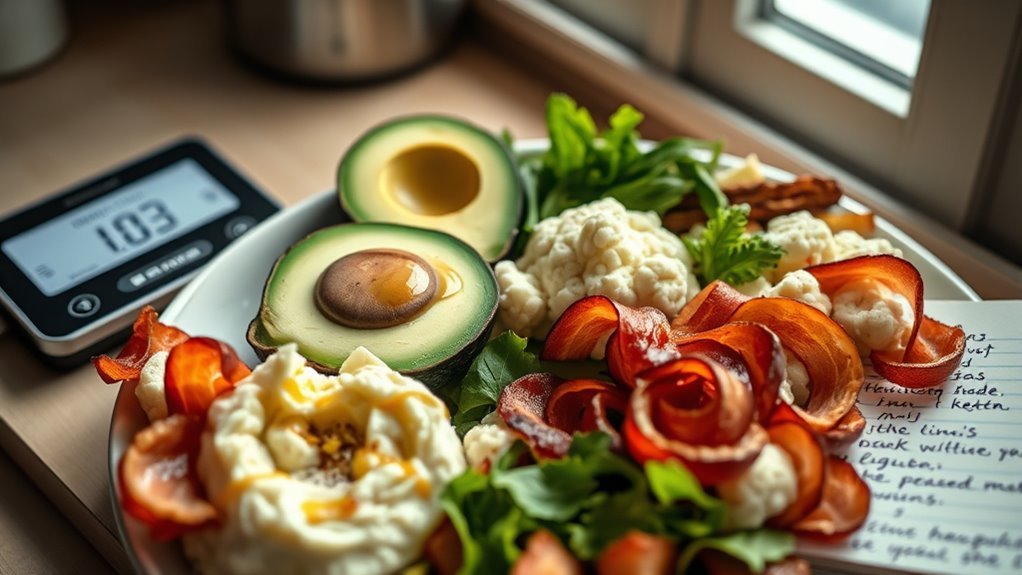
When it comes to weight loss, maintaining a caloric deficit is vital, regardless of the diet you follow. While the ketogenic diet promotes a unique metabolism that encourages fat burning, understanding how calories fit into this framework is essential for success. By balancing your caloric intake with your macronutrient ratios, you can optimize your weight loss efforts on keto.
Caloric Deficit Importance
Understanding the importance of a caloric deficit is essential for anyone looking to lose weight effectively, especially on a ketogenic diet. Achieving caloric balance is critical; you need to consume fewer calories than you burn to create that deficit. While keto’s high-fat, low-carb approach can help with appetite control, remember that weight management still hinges on calories. You might find it liberating to focus on the quality of your food, but don’t ignore the quantity. Tracking your intake guarantees you’re in a deficit, facilitating weight loss. Ultimately, it’s about finding a sustainable way to enjoy your meals while maintaining that caloric deficit, allowing you to embrace the freedom of a healthier lifestyle.
Keto’s Unique Metabolism
Although the ketogenic diet is known for its low-carb, high-fat approach, it’s essential to recognize how this unique metabolism interacts with calorie intake. When you achieve keto adaptation, your body becomes adept at burning fat for fuel, which can lead to metabolic flexibility. This means your body can efficiently switch between burning fat and carbohydrates as needed.
Here are some key points about calories on keto:
- Keto adaptation allows you to utilize fats more efficiently.
- Metabolic flexibility may reduce hunger and cravings.
- Caloric needs can vary depending on activity levels.
- You might not need to count calories strictly.
- Focus on nutrient-dense foods to support your goals.
Understanding these aspects can empower you to embrace the keto lifestyle more freely.
When Counting Calories May Be Beneficial
Counting calories can play an essential role in your ketogenic journey, especially if you’re aiming for specific weight loss or health goals. By fostering caloric awareness, you can better understand how your food choices impact your body. This knowledge empowers you to make intentional decisions that align with your objectives. Mindful eating becomes easier when you’re aware of the caloric content of your meals, helping you avoid mindless snacking or overeating. If you’re struggling to achieve your desired results, tracking your intake may reveal patterns that need addressing. Remember, it’s not just about the numbers; it’s about learning to listen to your body while enjoying the freedom that a keto lifestyle can offer. Embrace this journey with balance and awareness.
Potential Downsides of Calorie Counting
While calorie counting can provide valuable insights, it also comes with potential downsides that might hinder your progress on a ketogenic diet. You might find that focusing too much on numbers can lead to diet stress and even trigger emotional eating. Here are some potential pitfalls:
- It can create an unhealthy obsession with food.
- You may overlook the quality of nutrients in favor of quantity.
- It could lead to anxiety around meal times.
- You’re at risk of feeling deprived or restricted.
- It might distract you from enjoying your food and social meals.
Ultimately, while tracking calories can be useful, it’s important to strike a balance that allows you the freedom to enjoy your ketogenic journey without undue stress.
Tips for Tracking Your Intake on Keto
When tracking your intake on a keto diet, using tracking apps can simplify the process and provide valuable insights. It’s also vital to focus on your macronutrient ratios, as the balance of fats, proteins, and carbohydrates plays a significant role in achieving ketosis. By combining these strategies, you can guarantee that you’re meeting your dietary goals effectively.
Use Tracking Apps
Using tracking apps can greatly enhance your ability to monitor your food intake on a ketogenic diet. These tools not only help with meal planning and progress monitoring but also boost your overall user experience. Here are some key benefits to reflect on:
- Data accuracy: Verify you’re tracking your macros correctly.
- Goal setting: Clearly define your dietary objectives.
- Integration features: Sync with other health apps for thorough tracking.
- Community support: Connect with others on the same journey for motivation.
- Meal planning: Easily plan and log your meals in advance.
Focus on Macros
To successfully navigate a ketogenic diet, it’s essential to focus on your macronutrient ratios, as this can make or break your progress. Aim for a typical keto macro ratio of about 70% fats, 25% protein, and 5% carbohydrates. This balance helps your body enter and maintain ketosis, where it burns fat for fuel. Additionally, paying attention to nutrient timing can enhance your results—consider consuming your carbs around workouts to support energy without disrupting ketosis. Use tracking apps to monitor your intake and adjust as needed. Remember, it’s not just about counting calories; it’s about understanding how your food choices fit into your overall macro ratios. This approach allows you to enjoy your meals while still staying on track.
Finding the Right Balance for Your Goals
Finding the right balance for your goals on a ketogenic diet involves more than just counting calories; it requires an understanding of macronutrient ratios that align with your personal health objectives. To achieve ideal caloric balance and goal alignment, consider the following:
- Set clear goals: Define what you want to achieve—weight loss, muscle gain, or improved energy levels.
- Understand macros: Focus on getting adequate fats, moderate proteins, and minimal carbs.
- Monitor progress: Regularly check how your body responds to your dietary choices.
- Stay flexible: Adjust your intake based on your results and lifestyle changes.
- Listen to your body: Tune in to hunger cues and energy levels to find what truly works for you.
This approach empowers you to enjoy the freedom of a keto lifestyle while reaching your goals effectively.
Frequently Asked Questions about Counting Calories on Keto
1. Do I need to count calories on a keto diet?
Counting calories on a keto diet is not strictly necessary for everyone. The primary focus of the keto diet is to maintain a state of ketosis, which is achieved by consuming low carbohydrates and high fats. However, for those looking to lose weight, counting calories can be helpful in managing portion sizes and ensuring a caloric deficit. It ultimately depends on your individual goals and how your body responds to the diet.
2. What is the role of calories in a ketogenic diet?
Calories play a crucial role in any diet, including keto. While the macronutrient ratios (high fat, moderate protein, and low carbohydrates) are vital for achieving ketosis, the total calorie intake still affects weight loss or gain. Consuming excessive calories, even from keto-friendly foods, can hinder weight loss progress. Therefore, being mindful of calorie intake while focusing on the right macronutrient balance is important.
3. How can I track my calorie intake on keto?
You can track your calorie intake on keto through various methods. Mobile apps like MyFitnessPal or Cronometer allow you to log your food intake and monitor your macronutrient ratios and calories. Additionally, keeping a food diary can help you stay accountable. Just be sure to note the specific brands and preparation methods, as they can affect the nutritional values significantly.
4. What happens if I exceed my calorie limit on keto?
Exceeding your calorie limit on a keto diet can lead to weight gain, as you may not be in a caloric deficit necessary for weight loss. Additionally, consuming too many calories can hinder your ability to maintain ketosis, especially if those calories come from carbohydrates. It’s essential to strike a balance between enjoying keto foods and keeping an eye on portion sizes to achieve your health goals.
5. Should I prioritize macronutrients over calories on keto?
On a keto diet, it is generally more important to prioritize macronutrients—specifically, maintaining the right ratios of fats, proteins, and carbs—over strictly counting calories. However, this doesn’t mean you should ignore calories entirely. Finding a balance is key; focusing on healthy, keto-friendly foods while being mindful of your overall caloric intake can help you achieve and maintain your health and weight loss goals more effectively.
References
- https://www.ncbi.nlm.nih.gov/pmc/articles/PMC6520897/
- https://www.healthline.com/nutrition/keto-diet-101
- https://www.cdc.gov/healthyweight/assessing/bmi/adult_bmi/english_bmi_calculator/bmi_calculator.html
- https://www.webmd.com/diet/obesity/ss/slideshow-keto-diet-overview
- https://www.ketogenic.com/research/
- https://www.sciencedirect.com/science/article/pii/S2212267219300160
- https://www.mayoclinic.org/healthy-lifestyle/nutrition-and-healthy-eating/in-depth/keto-diet/art-20459824
- https://ods.od.nih.gov/factsheets/Calcium-HealthProfessional/
- https://www.health.harvard.edu/staying-healthy/the-ketogenic-diet-what-you-need-to-know
- https://www.nutrition.gov/