Yes, sugar-free Jello is keto-friendly! It’s low in calories and carbs, making it a suitable option for your ketogenic diet. Made with artificial sweeteners, it typically won’t kick you out of ketosis. However, be mindful of how these sweeteners affect your cravings and digestion. While it offers a sweet treat, moderation is essential to avoid potential health concerns. There’s much more to explore about its ingredients and alternatives for keto desserts.
Understanding the Ingredients of Sugar-Free Jello

When you’re considering whether sugar-free Jello fits into a keto diet, it is essential to understand its ingredients. Sugar-free Jello typically contains gelatin, artificial sweeteners, and flavoring agents. The gelatin types used can vary, but most are derived from animal sources, such as beef or pork. This is important to note if you’re concerned about dietary restrictions. The ingredient sources of artificial sweeteners like aspartame or sucralose can also influence your decision. While they’re low in carbs, some people prefer to avoid them for health reasons. By examining these components, you can make a more informed choice about whether sugar-free Jello aligns with your keto lifestyle. Balancing enjoyment with nutritional goals is key to your freedom in dietary choices.
Nutritional Breakdown: Carbs and Calories
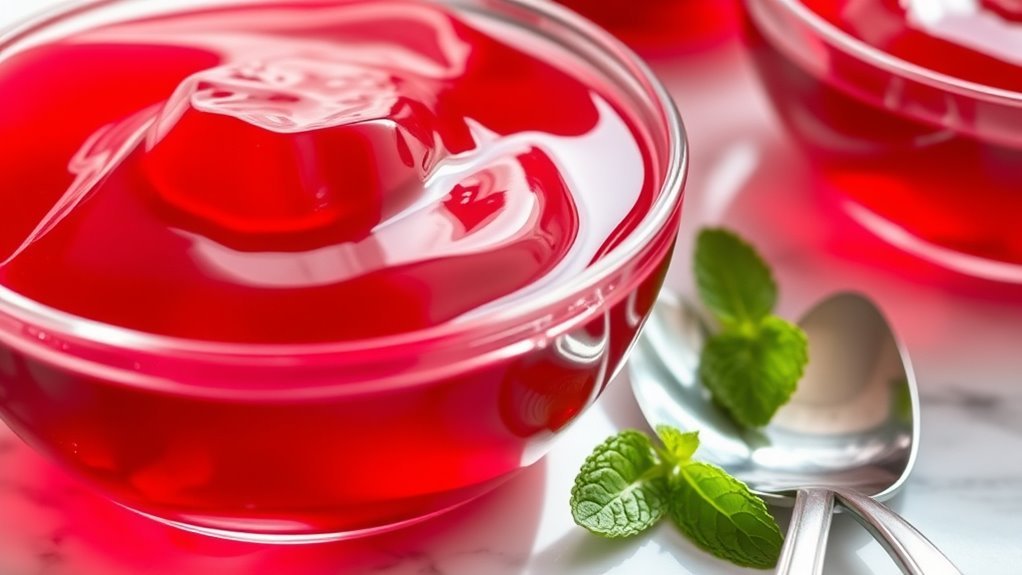
When considering sugar-free Jello on a keto diet, it’s important to look closely at its carb content and caloric impact. Typically, sugar-free Jello contains minimal carbohydrates, making it appealing for those monitoring their intake. However, understanding how these factors fit into your overall dietary goals is essential for maintaining ketosis.
Carb Content Analysis
Sugar-free Jello typically contains a minimal amount of carbohydrates, making it a popular choice for those following a ketogenic diet. Most varieties have less than 1 gram of net carbs per serving, which is considerably lower than many traditional dessert options. When you look at jello comparisons, you’ll find that these products often use artificial sweeteners, which contribute to their low carb content. Instead of high-carb sources like sugar or flour, you’re getting a guilt-free treat that won’t derail your keto goals. This makes sugar-free Jello not only a satisfying option but also a versatile one. Whether you enjoy it alone or incorporate it into recipes, it fits seamlessly into a low-carb lifestyle while providing a sweet escape.
Caloric Impact Overview
Understanding the caloric impact of sugar-free Jello is just as important as its carbohydrate content for those on a ketogenic diet. While sugar-free Jello is low in calories—typically around 10 calories per serving—the caloric comparison with other dessert options can be striking. Traditional gelatin desserts often contain added sugars, greatly increasing their calorie count. With various jello variations available, you can enjoy different flavors while keeping your caloric intake in check. It’s crucial to remember that, while low in calories, moderation is key. Enjoying sugar-free Jello as an occasional treat can fit nicely within your daily caloric goals, allowing you to indulge without compromising your keto lifestyle. So, make informed choices that align with your dietary freedom.
The Impact of Artificial Sweeteners on Keto
While many people on a keto diet turn to artificial sweeteners as a way to satisfy their sweet cravings without impacting their carb intake, the effects of these substitutes can be complex. Understanding their keto compatibility is vital to making informed choices. Here’s a quick overview:
| Sweetener | Carbs (per serving) | Keto Compatibility |
|---|---|---|
| Stevia | 0 | High |
| Erythritol | 0.2 | High |
| Aspartame | 1 | Moderate |
| Sucralose | 0 | High |
While most artificial sweeteners won’t kick you out of ketosis, individual responses vary. It’s essential to monitor how they affect your cravings and overall health. Choose wisely!
Potential Health Concerns of Sugar-Free Jello
While sugar-free Jello can fit into a keto diet, it’s important to contemplate potential health concerns. The artificial sweeteners used may impact your digestive health and could lead to issues like bloating or gas. Additionally, relying on such products might risk nutrient deficiencies if they replace more nutrient-dense foods in your diet.
Artificial Sweeteners Impact
Have you ever wondered how artificial sweeteners in sugar-free Jello might affect your health? These sweetener types, like aspartame and sucralose, can offer a low-calorie alternative, but they come with potential health effects. While they don’t spike blood sugar levels, some studies suggest they may alter gut microbiota or trigger cravings for sweet foods. Individual responses vary, and some people report headaches or digestive issues after consumption. It’s vital to weigh the benefits of enjoying a guilt-free dessert against these possible drawbacks. If you’re seeking freedom in your dietary choices, being informed about the effects of artificial sweeteners can help you make the best decision for your health journey. Always listen to your body and adjust accordingly.
Digestive Health Issues
Although sugar-free Jello can be a tempting low-calorie treat, it may lead to digestive health issues for some individuals. Many sugar substitutes, like sorbitol and aspartame, can disrupt gut health, causing bloating, gas, or diarrhea in sensitive people. These artificial sweeteners may interfere with your body’s digestive enzymes, which can impact nutrient absorption. If you’re someone who values digestive balance, it’s essential to pay attention to how your body reacts after consuming such products. While sugar-free Jello can fit into a keto lifestyle, it’s wise to contemplate moderation and monitor any symptoms. Ultimately, ensuring a well-rounded diet may contribute more positively to your overall gut health than relying solely on low-calorie options.
Nutrient Deficiency Risks
Since sugar-free Jello is often marketed as a low-calorie treat, it can be easy to overlook potential nutrient deficiencies associated with its consumption. While it may satisfy your sweet tooth, it lacks essential vitamins and minerals. Regularly relying on sugar-free Jello might impact your nutrient absorption, as it doesn’t provide the necessary nutrients your body craves. Over time, this can lead to vitamin deficiencies, which may affect your overall health. For instance, inadequate vitamin intake can result in fatigue, weakened immunity, and poor bone health. To maintain balanced nutrition, consider incorporating whole foods rich in vitamins and minerals into your diet. Remember, moderation is key; it’s all about enjoying treats while ensuring your body gets what it needs.
Creative Ways to Incorporate Sugar-Free Jello Into Your Diet
If you’re looking for a fun and versatile ingredient to add to your keto diet, sugar-free Jello offers a range of creative possibilities. Here are some ideas to incorporate it into your meals:
- Jello Parfaits: Layer sugar-free Jello with whipped cream and berries for a delightful dessert.
- Jello Smoothies: Blend sugar-free Jello with unsweetened almond milk and spinach for a revitalizing, low-carb drink.
- Jello Snacks: Cut set Jello into cubes for a quick, satisfying snack that’s easy to grab on the go.
- Jello Molds: Get creative with molds to make fun shapes, perfect for parties or kids.
These options not only taste great but also keep your keto lifestyle exciting and enjoyable!
Alternatives to Sugar-Free Jello for a Keto-Friendly Dessert
While sugar-free Jello can fit into a keto diet, you might want to explore other dessert options that also align with your low-carb lifestyle. For a rich treat, try keto chocolate mousse made with heavy cream and cocoa powder. If you’re craving cookies, almond flour cookies are a fantastic choice that won’t kick you out of ketosis. Coconut cream parfaits offer a creamy, layered delight, while chia seed pudding provides a nutritious, fiber-packed option. For something creamy yet indulgent, keto cheesecake bites are a hit. Finally, avocado chocolate pudding combines healthy fats with a decadent flavor, making it a perfect keto dessert. These alternatives will keep your sweet tooth satisfied without compromising your dietary goals.
Frequently Asked Questions about Sugar Free Jello and Keto
1. Is sugar free Jello keto-friendly?
Yes, sugar free Jello is generally considered keto-friendly. It contains minimal carbohydrates, with most varieties having less than 1 gram of net carbs per serving. This makes it a suitable dessert option for those following a ketogenic diet, as it won’t significantly impact your daily carb intake. However, always check the specific product labels for exact nutritional information.
2. What are the ingredients in sugar free Jello?
Sugar free Jello typically contains water, gelatin, artificial sweeteners (like aspartame or sucralose), flavorings, and food coloring. The absence of sugar is what makes it a low-calorie option, but it’s important to note that some people may be sensitive to artificial sweeteners, which can affect their keto diet or overall health.
3. Can I make my own keto-friendly Jello?
Absolutely! You can make your own keto-friendly Jello using unsweetened gelatin, water, and your choice of low-carb sweeteners such as stevia or erythritol. You can also add pureed low-carb fruits or extracts for flavor. This way, you have full control over the ingredients and can avoid artificial additives.
4. Are there any health concerns with consuming sugar free Jello?
While sugar free Jello can be a low-calorie, low-carb treat, it contains artificial sweeteners which some studies suggest may lead to digestive issues for certain individuals. Additionally, some people may have sensitivities or prefer to avoid artificial ingredients altogether. It’s always best to consume such products in moderation and be attentive to how your body responds.
5. How can I incorporate sugar free Jello into my keto diet?
Sugar free Jello can be incorporated into your keto diet as a dessert, snack, or even as part of a low-carb meal prep. It can be enjoyed on its own or topped with whipped cream (preferably made with heavy cream) for added richness. You can also use it as a base for parfaits with nuts or seeds for added texture and nutrition, keeping in mind to track your total carb intake.
References
- https://www.healthline.com/nutrition/keto-diet-foods#sugar-free-jello
- https://www.livestrong.com/article/13761104-is-sugar-free-jello-keto-friendly/
- https://www.ncbi.nlm.nih.gov/pmc/articles/PMC6517061/
- https://www.webmd.com/diet/obesity/news/20200908/the-keto-diet-explained
- https://www.mayoclinic.org/healthy-lifestyle/nutrition-and-healthy-eating/expert-answers/keto-diet/faq-20458844
- https://www.cdc.gov/healthyweight/healthy_eating/sugar_sweetened_beverages.html
- https://www.nutrition.gov/topics/nutrition-101/sugar-and-sweeteners