Yes, soy sauce is generally keto-friendly due to its low carbohydrate content—typically about 1 gram per tablespoon. This makes it a great flavor enhancer for your meals without greatly impacting your carb intake. However, be mindful of portion sizes and the high sodium levels, which can affect health and hydration. If you’re looking for additional options or alternatives, there are other tasty choices that fit well within a keto lifestyle. There’s more to explore!
Understanding Soy Sauce and Its Ingredients
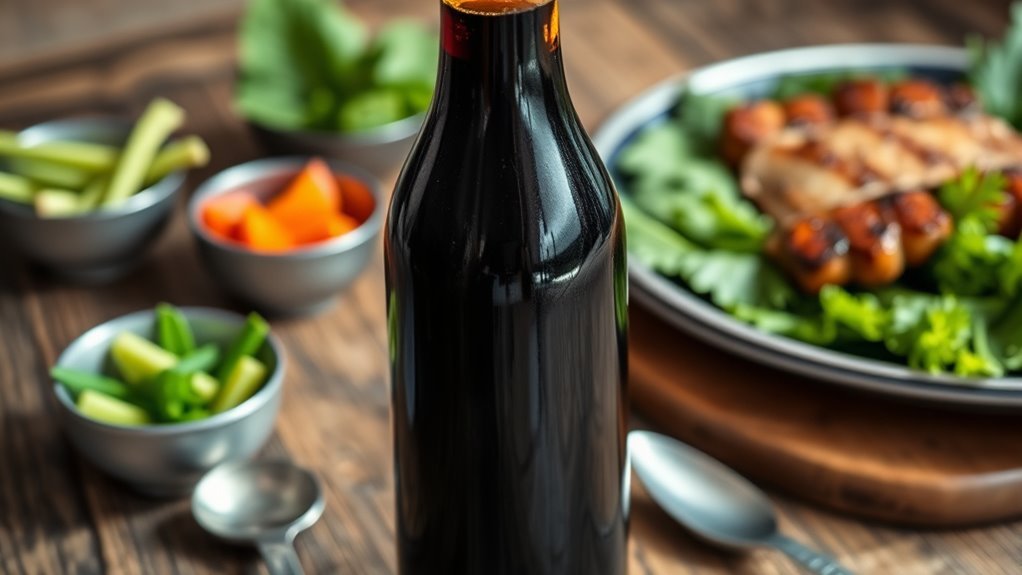
Soy sauce, a staple in many Asian cuisines, is made through the fermentation of soybeans, wheat, salt, and water. Its history dates back over 2,500 years, originating in China before spreading throughout Asia. You’ll find various soy sauce varieties, each offering unique flavors and uses. For instance, light soy sauce is saltier and commonly used for seasoning, while dark soy sauce is thicker and adds sweetness to dishes. Tamari, a gluten-free option, is popular among those avoiding wheat. Understanding these differences helps you choose the right soy sauce for your culinary needs. Whether you’re adding depth to stir-fries or enhancing sushi, knowing the nuances of soy sauce can elevate your cooking while respecting its rich tradition.
Nutritional Profile of Soy Sauce
When contemplating the culinary applications of soy sauce, it’s important to understand its nutritional profile, especially if you’re mindful of dietary choices like keto. Different soy sauce types can offer various nutritional benefits, making them versatile condiments. Here are three key aspects to contemplate:
Understanding soy sauce’s nutritional profile is crucial for mindful dietary choices, especially for those following keto.
- Low Calorie: Most soy sauces contain only a few calories per tablespoon, making them a flavor booster without adding significant calories.
- Protein Source: Soy sauce provides a small amount of protein, contributing to your daily intake in a flavorful way.
- Minerals: It contains essential minerals like sodium and potassium, which can be beneficial in moderation.
Carbohydrate Content in Soy Sauce

When considering soy sauce on a keto diet, it’s essential to look at its carbohydrate content. Different types of soy sauce can vary greatly in carbs, and your serving size can play a vital role in how it fits into your daily intake. Let’s break down these factors to see how they affect your keto-friendly choices.
Soy Sauce Carbs Overview
Understanding the carbohydrate content in soy sauce is essential for anyone following a ketogenic diet. This condiment, with a rich soy sauce history dating back over a thousand years, is made through a fermentation process that impacts its nutritional profile. Here’s a quick overview of the carb content:
- Typical Serving: One tablespoon of soy sauce contains about 1 gram of carbohydrates.
- Impact on Keto: This low carb count makes it a suitable option for many on a keto diet, allowing you to enjoy flavor without compromising your carb limit.
- Varieties: Different soy sauce production methods can slightly alter the carb content, so it’s helpful to check labels.
Types of Soy Sauce
Soy sauce comes in several varieties, each with its own flavor profile and nutritional characteristics, including carbohydrate content. Light soy typically has fewer carbs and a salty taste, making it versatile for many dishes. Dark soy, richer and sweeter, contains more carbs due to added sugars. Tamari sauce, often gluten-free, generally has a similar carb content to light soy but varies by brand. Low sodium soy offers less salt but similar carb levels. Flavored soy sauces, like mushroom soy, can have added sugars, increasing their carb count. Organic soy options may have fewer additives, but carb content varies. Always check labels for specifics, especially if you’re watching carbs on a keto diet.
Serving Size Impact
A single tablespoon of soy sauce typically contains about 1 gram of carbohydrates, making it a low-carb option for those on a keto diet. However, portion control is key to maintaining your carb intake. Here are a few tips to keep in mind regarding serving size:
- Stick to 1 tablespoon or less to minimize carb consumption.
- Consider using soy sauce as a flavor enhancer rather than a main ingredient.
- Pair it with low-carb foods like vegetables or meat to balance your meal.
Impact of Soy Sauce on Ketosis
When considering soy sauce in your keto diet, it’s vital to analyze its carbohydrate content, as even small amounts can impact your ketosis. Additionally, the high sodium levels in soy sauce may affect your overall health and hydration, which is important on a low-carb diet. Balancing these factors will help you determine if soy sauce fits into your ketogenic lifestyle.
Carbohydrate Content Analysis
While many condiments can disrupt ketosis, soy sauce can be a surprising addition to a low-carb diet due to its relatively low carbohydrate content. When considering keto guidelines, it’s essential to analyze the carbohydrate sources in your diet. Here’s what you need to know about soy sauce:
- Carbohydrate Count: A typical tablespoon of soy sauce contains about 1 gram of carbs, making it a minimal addition to your daily intake.
- Serving Size: You’re unlikely to consume large quantities of soy sauce, so the impact on your carb count is minimal.
- Flavor Enhancer: It can add a savory depth to your meals without derailing your ketosis efforts.
Using soy sauce wisely allows you to enjoy flavorful dishes while sticking to your low-carb lifestyle.
Sodium Considerations in Diet
Although soy sauce can be a flavorful addition to a keto diet, it’s vital to take into account its sodium content, which can greatly influence your overall health. High sodium intake can lead to various health implications, including increased blood pressure and cardiovascular issues. While soy sauce is a common sodium source, it’s important to balance your consumption according to dietary guidelines. If you’re watching your sodium levels, consider using low-sodium soy sauce or alternative flavoring options. Monitoring your sodium intake is significant, particularly on a keto diet where processed foods might sneak in extra salt. Ultimately, enjoying soy sauce in moderation can keep your meals satisfying without jeopardizing your health.
Alternatives to Traditional Soy Sauce
If you’re looking to cut down on carbs while still enjoying the savory flavor of soy sauce, there are several alternatives that can fit into a keto diet. Here are three options you might consider:
- Coconut Aminos: This soy sauce alternative is made from fermented coconut sap and has a slightly sweeter flavor. It’s low in carbs and gluten-free, making it a popular choice.
- Tamari Sauce: This is a gluten-free soy sauce that typically contains fewer carbs than traditional soy sauce. It’s rich in umami flavor and works well in various dishes.
- Liquid Aminos: A non-fermented soy sauce alternative, liquid aminos is made from soy protein and offers a similar taste with fewer carbs.
These options can help you maintain flavor without compromising your keto goals.
Tips for Using Soy Sauce on a Keto Diet
When you’re following a keto diet, using soy sauce can still be a flavorful addition to your meals, provided you keep an eye on portion sizes. Consider using low-sodium soy sauce to minimize sodium intake while still enjoying that umami flavor. You can also explore various marinade options, mixing soy sauce with keto-friendly ingredients like garlic, ginger, or sesame oil. This not only enhances flavor but also keeps your meals exciting. Remember to measure your servings—just a tablespoon can go a long way! Finally, experiment with soy sauce in stir-fries or salad dressings for that delicious flavor enhancement without derailing your keto goals. Embrace this versatile ingredient and enjoy your meals while staying on track!
Frequently Asked Questions about Soy Sauce and Keto Diet
1. Is soy sauce keto-friendly?
Yes, soy sauce can be considered keto-friendly in moderation. It is low in carbohydrates, with about 1 gram of carbs per tablespoon. However, it’s essential to choose a low-sodium or gluten-free variant if you are particularly sensitive to sodium or gluten in your diet.
2. How many carbs are in soy sauce?
Soy sauce typically contains around 1 gram of carbohydrates per tablespoon. This makes it a suitable condiment for those following a keto diet, as it allows for flavor enhancement without significantly impacting daily carb intake.
3. Can I use soy sauce in keto recipes?
Absolutely! Soy sauce can add umami flavor to various keto recipes, such as stir-fries, marinades, and dressings. Just be mindful of the quantity you use, as the sodium content can add up quickly, and balance it with other low-carb ingredients.
4. Are there any alternatives to soy sauce for a keto diet?
Yes, there are several alternatives to soy sauce that are also keto-friendly. Coconut aminos is a popular choice; it is slightly sweeter but lower in sodium and carbs. Tamari, a gluten-free soy sauce alternative, can also be a good option. Always check the nutrition labels to ensure they fit within your keto guidelines.
5. Does soy sauce contain sugar?
Traditional soy sauce may contain some sugar, but the amount is minimal. Most regular soy sauces have less than 1 gram of sugar per tablespoon. For those on a strict keto diet, it’s advisable to check the label for added sugars, especially in flavored or specialty soy sauces.
References
- https://www.ncbi.nlm.nih.gov/pmc/articles/PMC6520667/
- https://www.healthline.com/nutrition/keto-diet-foods
- https://www.mayoclinic.org/healthy-lifestyle/nutrition-and-healthy-eating/expert-answers/keto-diet/faq-20454767
- https://www.webmd.com/diet/obesity/what-is-the-keto-diet
- https://www.medicinenet.com/what_is_the_keto_diet/article.htm
- https://www.ketoconnect.net/what-is-keto/