Yes, salsa can definitely be keto-friendly! Most fresh varieties are low in carbohydrates, often containing just 4-5 grams of net carbs per serving. Homemade salsas usually have minimal sugar, making them even better for your keto goals. You can customize flavors and spice levels to suit your taste while keeping carbs in check. Just be cautious with store-bought options, as they might have added sugars. If you’re curious about recipe ideas and pairings, there’s plenty more to explore!
Understanding the Keto Diet
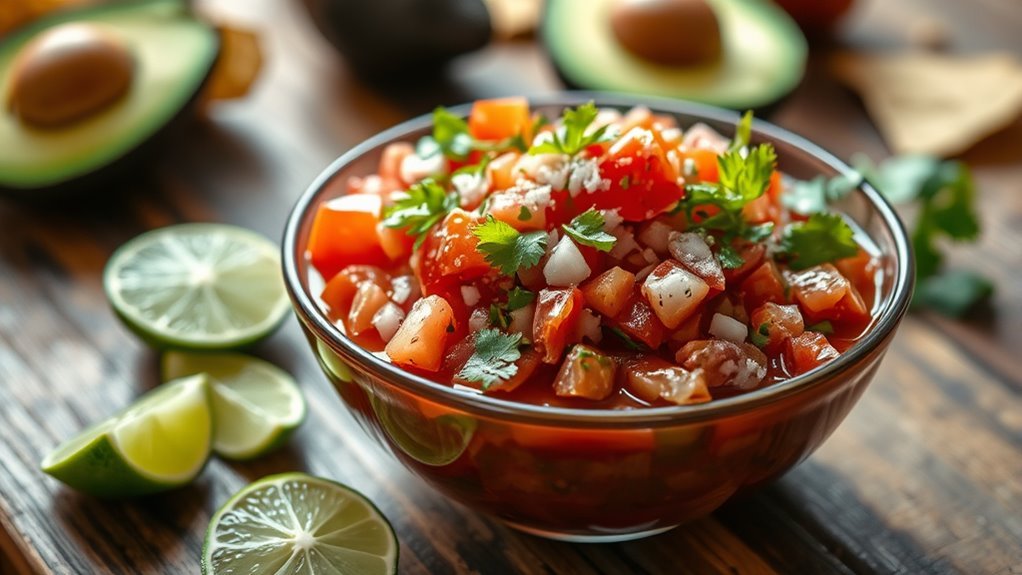
When you immerse yourself in the keto diet, it’s essential to understand its core principles. At its heart, the keto diet focuses on reducing carbohydrate intake and replacing it with healthy fats. This shift encourages your body to enter a state of fat adaptation, where it becomes more efficient at burning fat for energy instead of glucose. You’ll be aiming for a macronutrient ratio typically around 70% fat, 25% protein, and 5% carbohydrates. Understanding these keto principles helps you make informed food choices that align with your goals. As you navigate this lifestyle, remember that achieving fat adaptation takes time and patience, but the freedom it offers regarding energy and appetite control can be immensely rewarding.
The Basics of Salsa
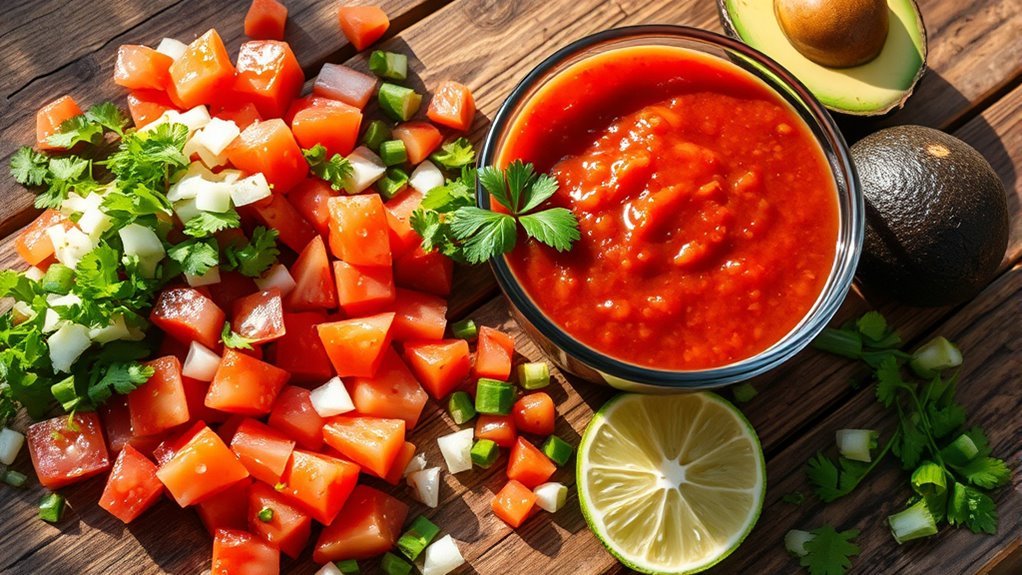
While salsa is often celebrated for its vibrant flavors and versatility, it’s important to understand its ingredients and nutritional profile. Originating in Mexico, salsa has a rich history that reflects various regional influences. You’ll find numerous salsa varieties, from the fresh and chunky pico de gallo to the smooth and spicy salsa verde. Each type brings its unique blend of ingredients, allowing for endless culinary creativity. Historically, salsa has been a staple in Latin cuisine, often enjoyed with tortilla chips, tacos, or grilled meats. Understanding these fundamentals can help you appreciate salsa beyond its taste, giving you the freedom to explore different types while also being mindful of their nutritional aspects.
Common Ingredients in Salsa
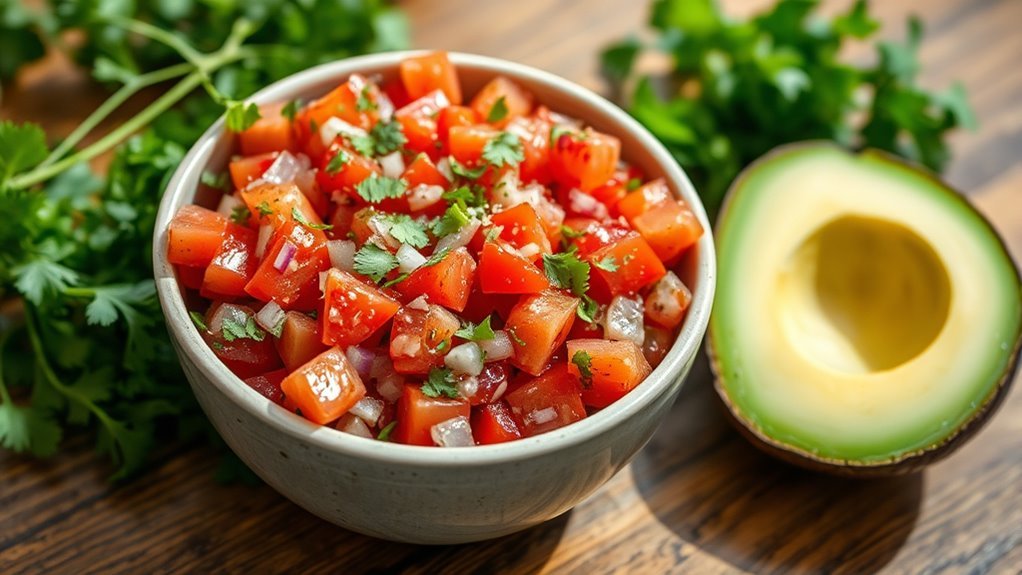
Salsa’s diverse flavors come from a variety of common ingredients that contribute to its distinctive taste and texture. You’ll often find tomatoes, onions, and peppers as the base, but fresh herbs like cilantro can elevate the flavor profile. Whether you prefer a mild or fiery kick, spicy variations featuring jalapeños or habaneros add excitement to your dish.
Here’s a quick look at some common salsa ingredients:
| Ingredient | Description |
|---|---|
| Tomatoes | The main base; provides sweetness. |
| Onions | Adds crunch and sharpness. |
| Fresh Herbs | Enhances flavor with freshness. |
Experimenting with these components lets you create your own salsa masterpiece, tailored to your taste. Enjoy the freedom of flavor!
Nutritional Breakdown of Salsa
When you look at salsa, it’s important to contemplate its ingredients and how they contribute to its nutritional profile. Typically low in carbs, salsa can offer health benefits like vitamins and antioxidants, making it a flavorful addition to your meals. Understanding the carb content can help you make informed choices, especially if you’re following a keto diet.
Ingredients in Salsa
Salsa is a vibrant condiment that packs a flavorful punch, making it a popular choice for many dishes. The ingredients in salsa primarily include tomatoes, onions, peppers, and cilantro, which contribute to its bold taste and fresh ingredient selection. When you choose to make salsa at home, you can control the quality of these components and adjust the flavors to suit your palate. Different salsa flavor profiles can be achieved by varying the types of peppers or adding ingredients like garlic, lime juice, or spices. This allows for a nutritious and versatile condiment that can elevate your meals while maintaining a healthy profile. So, get creative with your salsa and enjoy those fresh, vibrant flavors!
Carb Content Analysis
Although it’s often enjoyed as a flavorful addition to meals, understanding the carb content of salsa is essential for those following a ketogenic diet. Most traditional salsa variations, like fresh tomato salsa, typically contain around 4-5 grams of net carbs per serving. However, it’s vital to check labels, as some store-bought options may have added sugars, increasing carb counts considerably. If you’re looking for carb alternatives, consider using salsa made from lower-carb vegetables like zucchini or even avocado-based salsas, which can be delicious and keto-friendly. By being mindful of the ingredients, you can enjoy the zest of salsa while staying true to your dietary goals, making it easier to maintain your freedom in food choices.
Health Benefits Overview
Understanding the nutritional breakdown of salsa reveals that it can be a healthy addition to your diet, particularly when made from fresh ingredients. Most salsa varieties are low in calories and packed with vitamins and minerals, especially vitamin C from tomatoes and peppers. These ingredients also contain antioxidants that can help reduce inflammation and promote heart health. The fiber in salsa aids digestion, making it a satisfying option for those looking to maintain a healthy weight. Plus, the versatility of salsa means you can experiment with different ingredients, enhancing its health advantages. Whether you opt for a classic tomato salsa or a fruity variation, it’s a delicious way to enjoy nutrients without compromising your dietary freedom.
Store-Bought vs. Homemade Salsa
When choosing between store-bought and homemade salsa, it’s important to contemplate ingredient quality, nutritional value, and your personal flavor preferences. Store-bought options can be convenient but may contain preservatives and added sugars that could affect your keto diet. On the other hand, homemade salsa allows you to customize ingredients for maximum freshness and health benefits.
Ingredient Quality Comparison
While many people enjoy the convenience of store-bought salsa, homemade versions often offer superior ingredient quality that can make a significant difference in both flavor and nutritional value. When you make salsa at home, you control ingredient sourcing—choosing fresh, organic tomatoes, herbs, and spices that meet your personal quality standards. This means you can avoid preservatives, artificial flavors, and added sugars commonly found in commercial products. In contrast, store-bought salsas may prioritize shelf stability over freshness, affecting taste and health benefits. By crafting your own salsa, you embrace the freedom to tailor flavors and guarantee that every ingredient aligns with your dietary goals. The choice is clear: homemade salsa can elevate your culinary experience while supporting your health.
Nutritional Value Differences
Although both store-bought and homemade salsa can add flavor to your meals, their nutritional values can differ markedly. When you look at nutritional comparisons, store-bought options often contain preservatives, added sugars, and higher sodium levels, which may not align with your health goals. On the other hand, homemade salsa allows you to control ingredients, offering fresher options and the ability to customize spice levels. Different salsa varieties, such as pico de gallo or roasted salsa, can also provide unique nutrient profiles based on your choices. If you’re following a keto diet, opting for homemade can guarantee that you’re keeping carbs in check while maximizing flavor without unnecessary additives. Consider your priorities and choose accordingly!
Flavor Customization Options
If you’re looking to enhance the flavor of your dishes, the choice between store-bought and homemade salsa can make a significant difference. Here are some customization options you might consider:
- Spice levels: Adjust the heat by adding jalapeños or chipotle.
- Ingredient substitutions: Use tomatoes, mangoes, or even peaches for varied flavor profiles.
- Fresh herbs: Cilantro, parsley, or basil can elevate freshness.
- Citrus zests: Lime or lemon zest adds brightness.
While store-bought options are convenient, homemade salsa allows for sweetness adjustments and texture changes. You can control heat variations and tailor it to your personal taste, ensuring every bite complements your keto-friendly meals perfectly. The freedom to craft your salsa means you can experiment endlessly!
Low-Carb Salsa Options
When you’re following a keto diet, finding low-carb salsa options can be a delicious way to enhance your meals without derailing your carb count. Many salsa varieties, like pico de gallo or tomatillo salsa, often contain minimal carbohydrates, making them ideal choices. You can also explore salsas made from grilled vegetables, which provide rich flavor profiles without the extra carbs.
When shopping, check the label for added sugars, as some commercial salsas can be sneaky with their carb content. Alternatively, making your own salsa at home allows you to control ingredients and tailor flavors to your liking. Fresh herbs, spices, and low-carb veggies can elevate your salsa while keeping it keto-friendly. Enjoy the freedom of flavorful options!
How to Incorporate Salsa Into Your Diet
Incorporating salsa into your diet can be both enjoyable and beneficial, as it adds flavor without considerably increasing your carb intake. Here are some tips to help you get started:
- Experiment with different salsa variations, like mango or avocado salsa, to keep things interesting.
- Use salsa as a marinade for meats or veggies during meal prep to enhance flavor.
- Add a spoonful to your scrambled eggs or omelets for a zesty breakfast boost.
- Pair salsa with low-carb snacks, such as celery sticks or cheese crisps, for a satisfying treat.
Salsa Pairings for Keto Meals
When it comes to pairing salsa with keto meals, the right combinations can enhance both flavor and nutrition. You can experiment with ideal meat options, fresh vegetables, and low-carb snacks to create satisfying dishes that fit your dietary goals. Let’s explore some tasty pairings that will keep your meals exciting while staying within your carb limits.
Ideal Meat Combinations
Salsa can elevate your keto meals, especially when paired with the right meats. Choosing the ideal meat combinations enhances flavor profiles and creates exciting texture contrasts. Here are some excellent meat choices to contemplate:
- Grilled chicken: Light and versatile, it absorbs salsa flavors well.
- Steak: Rich and robust, perfect for spicier salsas that complement its intensity.
- Pork: Offers a subtle sweetness, great with fruit-based salsa pairings.
- Fish: A light option that pairs beautifully with citrus salsas.
Contemplate various cooking methods like grilling or sautéing to enhance the textures. Each protein option can bring unique spice levels to your meal. Experiment with serving suggestions to find your perfect salsa pairing, and enjoy the freedom of flavor in your keto journey!
Fresh Vegetable Accompaniments
The right fresh vegetable accompaniments can elevate your keto meals alongside salsa, adding both nutrition and crunch. Think of crunchy bell peppers, cucumbers, and radishes as perfect companions. These low-carb options not only enhance the flavor but also provide essential vitamins and minerals. You can also experiment with fresh herbs like cilantro or parsley to brighten up your salsa and vegetable dips. They add a layer of freshness that complements the dish beautifully. Combine your salsa with a variety of veggies for dipping, and you’ll create a satisfying snack that aligns with your keto lifestyle. By incorporating these fresh ingredients, you’ll enjoy a delicious and healthy eating experience without compromising your goals.
Low-Carb Snack Options
If you’re looking to keep your snacks low in carbs while enjoying the vibrant flavors of salsa, there are plenty of excellent pairing options. Incorporating healthy dips can elevate your snacking while sticking to your keto goals. Here are some tasty salsa alternatives that work well:
- Guacamole: Creamy and packed with healthy fats.
- Cream cheese dip: Rich and satisfying, perfect for a flavorful scoop.
- Pico de gallo: Fresh and zesty, it complements most dishes wonderfully.
- Olive tapenade: A savory option that adds a Mediterranean flair.
These options not only enhance your salsa experience but also contribute to a fulfilling, low-carb lifestyle. So go ahead, mix and match for satisfying snacks that keep your taste buds happy without compromising your diet!
Potential Pitfalls With Salsa
While many enjoy salsa as a flavorful addition to their meals, there are potential pitfalls to weigh when following a keto diet. You’ll want to pay close attention to the ingredients, as some salsa brands contain salsa preservatives and added sugars that can derail your carb count. Here’s a quick overview:
| Salsa Type | Sugar Content (per 2 tbsp) | Preservatives | Keto Friendly? |
|---|---|---|---|
| Store-bought | 2-4g | Yes | Sometimes |
| Homemade | 0-2g | No | Yes |
| Organic | 1-3g | Minimal | Usually |
| Low-carb | 0g | No | Yes |
Delicious Keto Salsa Recipes
When you’re on a keto diet, finding satisfying and low-carb recipes can be a challenge, but delicious keto salsa can elevate your meals without compromising your carb count. Here are some tasty variations to try:
- Classic Tomato Salsa: Combine diced tomatoes, onions, cilantro, and lime juice for a fresh taste.
- Spicy Variations: Add jalapeños or chipotle peppers to kick up the heat.
- Fruit Salsas: Use avocados or berries to create unique flavor profiles while keeping carbs in check.
- Herb-Infused Salsa: Incorporate fresh herbs like basil or mint for a rejuvenating twist.
These keto salsas not only enhance your dishes but also keep you aligned with your dietary goals. Enjoy the freedom to experiment with flavors while staying low-carb!
Is salsa keto-friendly?
Yes, salsa can be keto-friendly! Traditional salsa is primarily made from tomatoes, onions, peppers, and spices, which are all low in carbohydrates. However, it’s essential to check the ingredients and nutritional information, as some store-bought salsas may contain added sugars or high-carb ingredients. Opt for fresh or homemade salsa for the best keto-friendly option.
What are the carb counts in typical salsa?
The carbohydrate content in salsa can vary significantly based on the ingredients used. On average, a two-tablespoon serving of fresh tomato salsa contains about 2-4 grams of carbohydrates, with around 1-2 grams of net carbs, making it suitable for a keto diet. Always check labels for specific brands, as some may contain more sugar and carbohydrates due to added ingredients.
Can I use salsa as a dip on a keto diet?
Absolutely! Salsa can be a great dip for keto-friendly snacks. Pair it with low-carb vegetables like cucumber, celery, or bell peppers. You can also use it with keto-friendly chips made from cheese or almonds. Just be mindful of portion sizes to keep your carb intake in check.
Are there any types of salsa that are not keto-friendly?
Yes, some types of salsa may not be keto-friendly. For example, fruit salsas (like mango or pineapple salsa) typically have higher sugar content, which can lead to increased carbohydrate counts. Additionally, salsas that include added sugars or high-carb fillers should be avoided. Always read ingredient labels or make your own to ensure it fits your keto lifestyle.
How can I make a keto-friendly salsa at home?
Making a keto-friendly salsa at home is simple! Start with diced tomatoes, chopped onions, minced garlic, and chopped peppers (like jalapeños, if you like heat). Add fresh cilantro, lime juice, and salt to taste. You can also include avocado for creaminess. This allows you to control the ingredients and ensure it’s low in carbs while being packed with flavor.
References
- https://www.healthline.com/nutrition/keto-diet-foods
- https://www.medicalnewstoday.com/articles/what-is-the-keto-diet
- https://www.ncbi.nlm.nih.gov/pmc/articles/PMC6838220/
- https://www.cdc.gov/healthyweight/assessing/bmi/adult_bmi/english_bmi_calculator/bmi_calculator.html
- https://www.verywellfit.com/keto-diet-foods-5115093
- https://www.webmd.com/diet/what-is-the-keto-diet
- https://www.mayoclinic.org/diets/keto-diet/expert-answers/faq-20458840
- https://www.eatright.org/health/wellness/preventing-illness/keto-diet-facts
- https://www.hsph.harvard.edu/nutritionsource/healthy-weight/dietary-approaches/keto-diet/
- https://www.ncbi.nlm.nih.gov/books/NBK202024/