Yes, salami is keto-friendly, typically containing less than 1g of carbohydrates per serving. It’s high in protein and fat, making it a suitable option for low-carb diets. However, be mindful of sodium levels, preservatives, and the quality of the meat you choose. Opt for nitrate-free and organic varieties to minimize health risks. With its rich flavor, salami can enhance many dishes while adhering to your keto meal plan. There’s more to discover about its nutritional benefits and serving ideas!
Understanding the Nutritional Profile of Salami
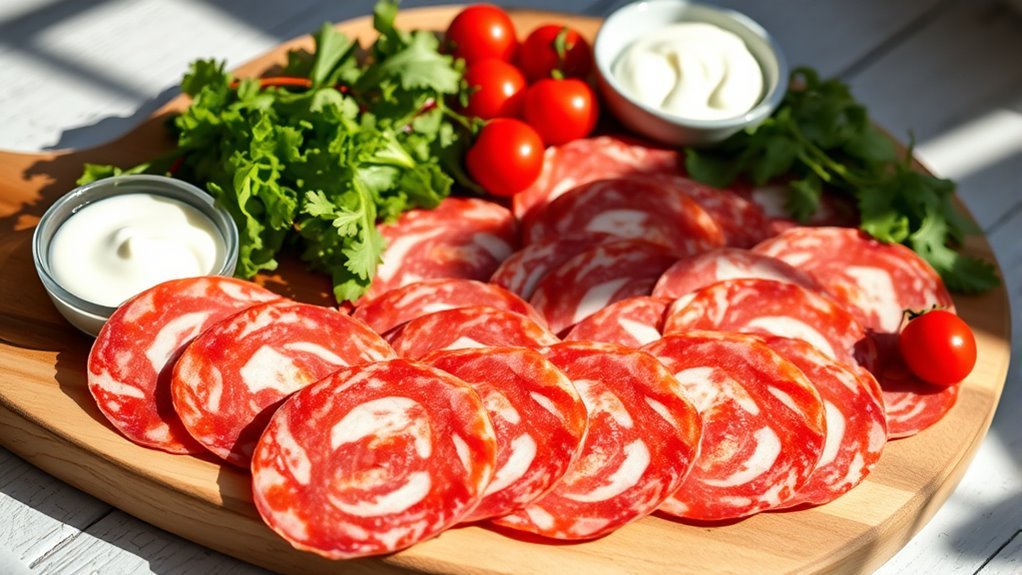
When considering a keto diet, understanding the nutritional profile of salami is essential. Salami, with roots tracing back to ancient civilizations, boasts a rich history that’s as diverse as its many varieties. From Genoa to pepperoni, each type of salami offers unique flavors and textures, influenced by regional spices and curing techniques. Generally high in protein and fat, salami can fit well into a low-carb lifestyle, providing essential nutrients while satisfying cravings. However, you should also be mindful of sodium levels and preservatives, which can vary among brands. By exploring different salami varieties and their origins, you can enjoy the freedom of choice while adhering to your dietary goals. Balancing indulgence with nutritional awareness will help you make informed decisions.
Carbohydrate Content in Salami
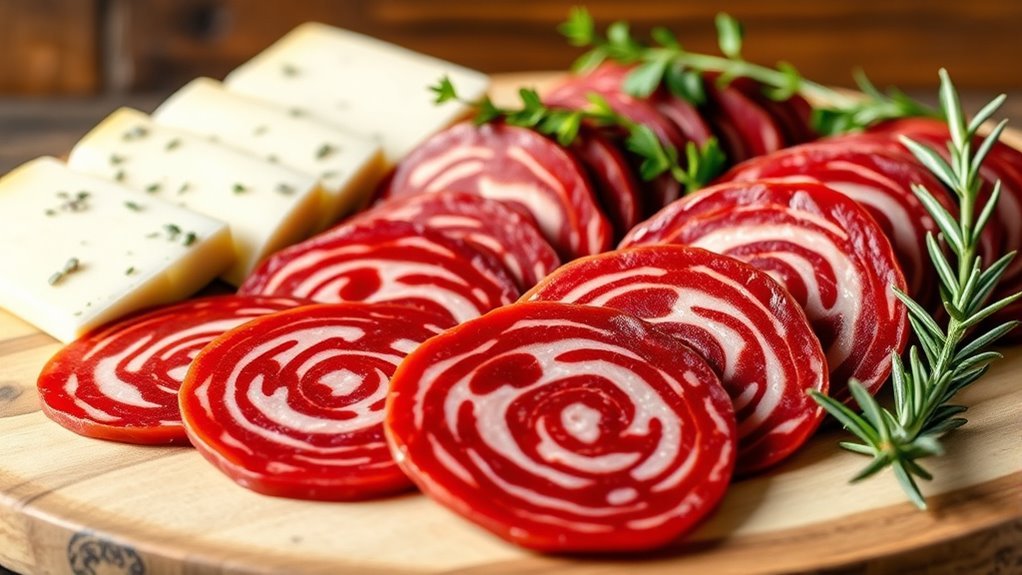
Although salami is primarily known for its high protein and fat content, its carbohydrate levels are typically quite low, making it a favorable option for those on a keto diet. Most salami varieties contain less than 1 gram of carbs per serving, allowing you to enjoy them as keto snacks without worrying about exceeding your carb limit.
Here’s a quick comparison of some common salami varieties:
| Salami Variety | Carbs (g) per 1 oz | Notes |
|---|---|---|
| Genoa Salami | <1 | Mild and slightly sweet |
| Pepperoni | <1 | Spicy and flavorful |
| Hard Salami | <1 | Firm texture |
| Soppressata | <1 | Rich and robust flavor |
Incorporating these can keep your keto journey enjoyable!
Protein and Fat Breakdown
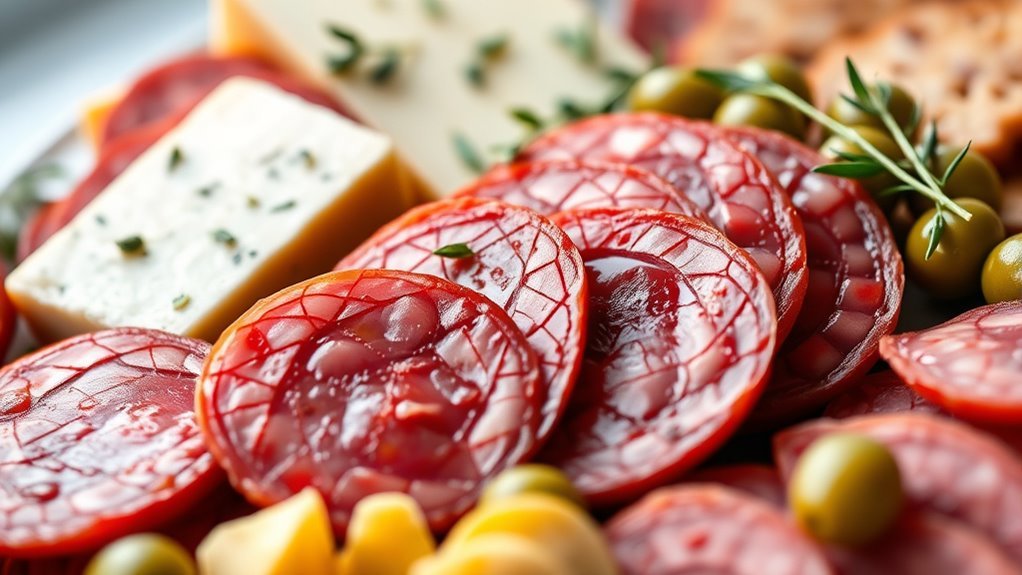
When considering salami in a keto diet, it’s important to look at its macronutrient composition, particularly the protein and fat content. Most salami varieties are high in fat and provide a decent amount of protein, making them potentially keto-friendly options. However, you’ll want to check for added sugars or fillers that could impact their suitability for your low-carb lifestyle.
Macronutrient Composition
While exploring the macronutrient composition of salami, it’s essential to note that this cured meat is primarily composed of protein and fat, making it a potentially suitable option for those following a ketogenic diet. Different salami types offer varying nutritional benefits, but generally, you’ll find:
- Protein: Salami typically contains around 20g of protein per 100g serving, supporting muscle maintenance and satiety.
- Fat: With fat content ranging from 25g to 35g, it provides a good source of energy, vital for keto dieters.
- Carbohydrates: Most salami types are low in carbs, usually under 1g per serving, aligning well with the keto lifestyle.
Keto-Friendly Ingredients
Salami’s appeal as a keto-friendly ingredient lies in its impressive protein and fat breakdown. Various salami varieties not only offer rich flavor profiles but also provide essential nutrients that align with a ketogenic lifestyle. Here’s a quick look at the typical breakdown:
| Nutrient | Amount per 100g |
|---|---|
| Protein | 22g |
| Total Fat | 30g |
| Saturated Fat | 10g |
| Carbohydrates | 1g |
With such a low carbohydrate content, salami can easily fit into your daily macros. Plus, its versatility means you can enjoy it in salads, as snacks, or in charcuterie boards, enhancing your meals while staying true to your keto goals. Embrace the freedom of flavor!
Potential Health Benefits of Salami
Although many people enjoy salami as a tasty snack or sandwich filling, it also offers several potential health benefits that might surprise you. Here are a few salami benefits you might want to contemplate:
- Protein Source: Salami is high in protein, which supports muscle growth and repair, making it a great addition to your diet.
- Rich in Nutrients: It contains essential vitamins and minerals, including B vitamins and zinc, which play crucial roles in your body’s functions.
- Healthy Fats: The fats in salami can provide energy and help in the absorption of fat-soluble vitamins, contributing to overall salami health.
How Salami Fits Into a Keto Meal Plan
If you’re following a keto meal plan, incorporating salami can be a delicious way to add variety without compromising your carbohydrate limits. Salami varieties, such as pepperoni or genoa, are typically low in carbs and high in fat, making them great options for your meals. You can enjoy salami as a snack with cheese, cucumbers, or olives, or add it to salads for a flavorful boost. For a quick meal pairing, consider stacking salami on lettuce wraps with avocado and your favorite keto-friendly sauces. With numerous salami types available, you can mix and match to keep your meals exciting while staying within your dietary goals. Embrace the freedom of choice and get creative with your keto culinary adventures!
Choosing the Right Type of Salami
When choosing salami, the quality of the meat plays an essential role in your keto diet. You’ll want to check for additives that might increase carb content and detract from the health benefits. Comparing the carb content among different types can help you make the best choice for your low-carb lifestyle.
Meat Quality Matters
Choosing the right type of salami is essential for anyone following a keto diet, as the quality of meat can greatly impact both nutrition and flavor. Prioritize salami made from high-quality meat sourced from reputable producers that adhere to strict quality standards. Here are three key factors to evaluate:
- Grass-Fed or Pasture-Raised: These options often contain higher omega-3 fatty acids and fewer additives.
- Nitrate-Free Options: Look for salami that avoids synthetic preservatives for a cleaner profile.
- Organic Certification: Choosing organic means the meat comes from animals raised without antibiotics or hormones.
Check for Additives
While enjoying salami on a keto diet can be satisfying, it’s essential to check for additives that might compromise your health goals. Many processed meats, including salami, can contain preservatives, fillers, and artificial flavors that raise additive concerns. These additives can not only affect your keto journey but also your overall well-being. To make informed choices, seek brands that prioritize ingredient transparency, listing all components clearly. Look for salami made from high-quality meats without unwanted additives. By focusing on cleaner options, you can enjoy the flavors of salami without jeopardizing your dietary objectives. Always remember, being proactive about what you consume empowers you to make the best choices for your body and lifestyle.
Carb Content Comparison
How can you determine which type of salami fits best into your keto diet? The key lies in understanding the carb content of various salami varieties. While most salami is low in carbs, some options may have hidden sugars or fillers. Here’s a quick comparison to help you choose wisely:
- Traditional Salami: Usually contains about 1-2 grams of carbs per serving, making it a great keto option.
- Turkey Salami: Often lower in fat but can contain 3-4 grams of carbs, so check labels for keto substitutions.
- Veggie-Infused Salami: These can pack higher carbs due to added ingredients, so read the nutrition facts carefully.
Choosing the right salami can keep your keto journey enjoyable and satisfying!
Serving Suggestions for Keto-Friendly Salami
When you’re looking to enjoy salami on a keto diet, there are plenty of delicious serving suggestions that can enhance your experience. Consider pairing salami with high-fat cheeses like cheddar or gouda for a satisfying snack. You can also roll it up with cream cheese and add some herbs for a flavorful bite. For a revitalizing twist, serve salami with cucumber slices or bell pepper strips; their crunch complements the richness of the meat well. If you’re hosting, create a charcuterie board featuring salami alongside olives, nuts, and avocado. These salami pairings not only elevate your meal but also keep you aligned with your keto goals. Get creative with these serving ideas, and enjoy the versatility of salami!
Risks and Considerations When Eating Salami
Although salami can be a tasty addition to your keto diet, it’s important to be aware of certain risks and considerations. Here are three key points to keep in mind:
- Health Risks: Salami is processed meat, which may be linked to an increased risk of various health issues, including heart disease and certain cancers.
- Sodium Levels: Most salami varieties are high in sodium, which can lead to elevated blood pressure and other cardiovascular problems if consumed in excess.
- Quality Matters: Not all salamis are created equal; some contain fillers and preservatives that could undermine your health goals.
Being mindful of these factors can help you enjoy salami in moderation while maintaining a balanced keto lifestyle.
Alternative Cured Meats for a Keto Diet
If you’re looking for alternatives to salami that fit your keto diet, there are several cured meats that can satisfy your cravings while offering great flavor and nutritional benefits. Options like prosciutto, pancetta, and pepperoni are excellent keto alternatives. These cured meats are typically low in carbs and high in fat, making them suitable for your dietary needs. Just be mindful of added sugars or fillers in some brands, as they can increase carb counts. Bresaola, a lean dried beef, is another great choice, providing protein without excess fat. Incorporating a variety of these cured meats can keep your meals exciting while adhering to your keto lifestyle. Enjoy the freedom to explore different flavors while staying on track!
Frequently Asked Questions about Salami and Keto Diet
1. Is salami keto-friendly?
Yes, salami is generally considered keto-friendly. It is low in carbohydrates and high in fat, making it an excellent choice for those following a ketogenic diet. However, it’s essential to check the nutrition label for added sugars or fillers that can increase carb content.
2. How many carbs are in salami?
The carb content in salami can vary by brand and type, but on average, a 1-ounce serving of salami contains around 0-1 gram of carbohydrates. This low carb count makes it suitable for a keto diet, where daily carb intake is typically limited to around 20-50 grams.
3. What are the health benefits of eating salami on a keto diet?
Salami can be beneficial on a keto diet due to its high-fat content, which helps keep you satiated and promotes ketosis. It also provides protein, essential vitamins, and minerals. However, moderation is key, as salami can be high in sodium and saturated fats.
4. Can I eat salami every day on a keto diet?
While you can include salami in your daily keto meal plan, it’s important to consume it in moderation. Regularly eating processed meats can increase sodium intake and may have health implications. Balancing salami with other whole foods like vegetables, nuts, and healthy fats is recommended for optimal nutrition.
5. Are there any alternatives to salami for a keto diet?
Yes, there are several alternatives to salami that are also keto-friendly. Options include other cured meats like pepperoni, prosciutto, and chorizo. Additionally, you can consider plant-based options, such as seitan or tempeh, which can be prepared to mimic the flavors of salami while fitting into a keto framework.
References
- https://www.healthline.com/nutrition/what-is-a-keto-diet
- https://www.ncbi.nlm.nih.gov/pmc/articles/PMC6461449/
- https://www.webmd.com/diet/obesity/what-is-the-keto-diet
- https://www.ketoconnect.net/what-is-keto/
- https://www.cdc.gov/healthyweight/healthy_eating/index.html
- https://www.mayoclinic.org/healthy-lifestyle/nutrition-and-healthy-eating/in-depth/keto-diet/art-20459795
- https://www.medicalnewstoday.com/articles/321953
- https://www.journals.elsevier.com/nutrition-research