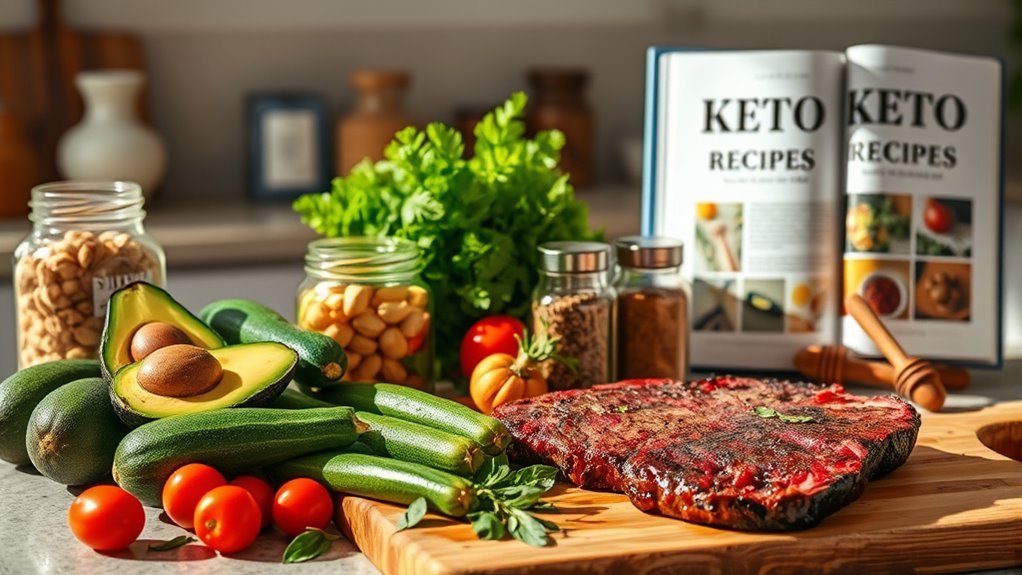

To begin a keto diet, start by reducing your carbohydrate intake drastically and increasing healthy fats. Aim for a macronutrient ratio of about 70% fat, 25% protein, and only 5% carbohydrates. Set clear weight goals to track your progress, and plan meals with high-fat, low-carb recipes to keep things exciting. Don’t forget to prep snacks like nuts or cheese to combat cravings. Stick around to discover more tips for grocery shopping and overcoming challenges on your keto journey.
Understanding the Ketogenic Diet
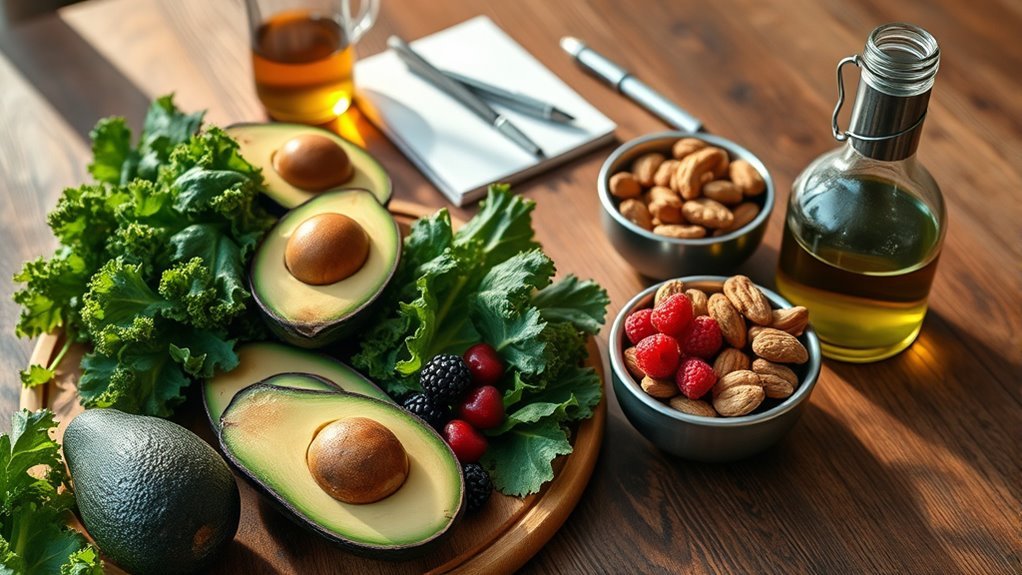
Understanding the ketogenic diet can be a game-changer for those looking to enhance their health and manage their weight effectively. At its core, the keto principles focus on reducing carbohydrate intake while increasing healthy fats. This shift prompts your body to enter a state of ketosis, where it burns fat for energy instead of carbs. Many diet misconceptions suggest that eating fat leads to weight gain, but research shows that healthy fats can actually promote weight loss and improve metabolic health. By embracing the keto lifestyle, you can enjoy a range of delicious foods while gaining more control over your cravings. Remember, it’s about finding freedom in your food choices, not restriction. Start learning and implementing these principles for lasting change.
Macronutrients: The Key Components
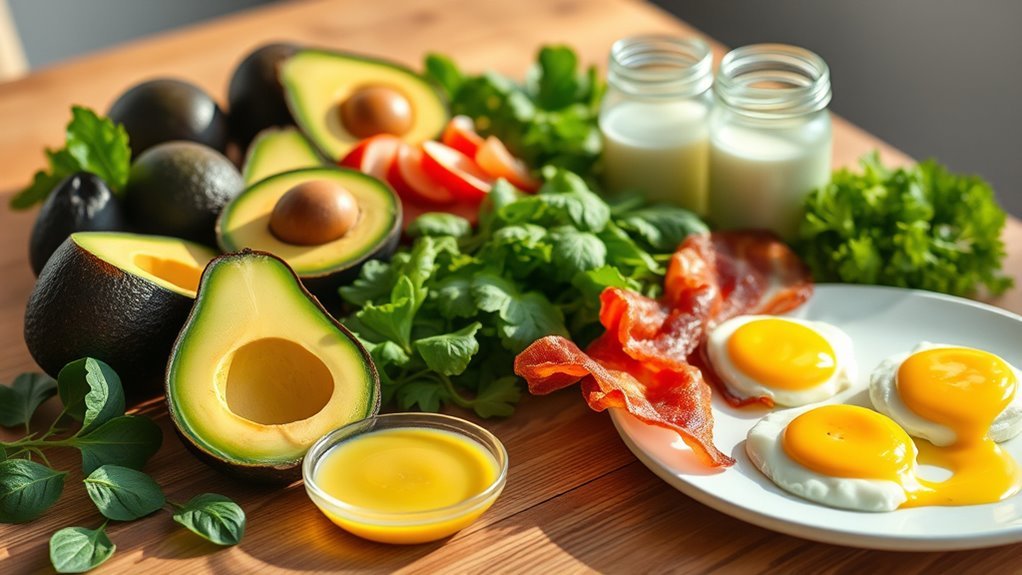
Understanding macronutrient ratios is essential for a successful keto diet, as they dictate how your body will utilize energy. You’ll want to focus on incorporating healthy fats while managing your protein intake to maintain ketosis effectively. By grasping these key components, you can tailor your diet to meet your health goals.
Understanding Macronutrient Ratios
When you commence a keto diet, getting a grasp on macronutrient ratios is essential for success. This low-carb approach typically emphasizes a ratio of about 70% fat, 25% protein, and 5% carbohydrates. By engaging in macronutrient tracking, you can guarantee you’re meeting these targets while enjoying a variety of foods. It’s important to remember that everyone’s body is different, and you may need to make ratio adjustments based on your personal goals and how your body responds. Whether you’re aiming for weight loss, improved energy, or enhanced mental clarity, understanding these ratios will empower you to make informed choices. With this knowledge, you can enjoy the freedom to explore delicious keto-friendly meals while staying on track.
Importance of Healthy Fats
While many diets focus on cutting fat, the keto diet emphasizes its importance as a primary energy source. Incorporating healthy fats into your meals not only keeps you satiated but also helps your body enter ketosis, where it burns fat for fuel. Choosing the right fat sources is essential for peak health and energy levels.
Here’s a quick reference table for healthy fats:
| Fat Source | Benefits | Usage Ideas |
|---|---|---|
| Avocado | Rich in monounsaturated fats | Salads, smoothies |
| Olive Oil | Anti-inflammatory | Cooking, dressings |
| Coconut Oil | Medium-chain triglycerides | Baking, coffee |
| Nuts & Seeds | High in fiber | Snacks, toppings |
Incorporate these fats to thrive on your keto journey!
Protein Intake Guidelines
To successfully navigate the keto diet, you’ll need to pay attention to your protein intake, as it plays a crucial role in maintaining muscle mass and overall health. Aim for around 20-25% of your daily calories from protein, which generally translates to about 0.6 to 1.0 grams per pound of lean body mass. Focus on quality protein sources like grass-fed beef, wild-caught fish, and organic poultry. Timing also matters; consuming protein evenly throughout the day helps optimize muscle repair and satiety. Try incorporating protein-rich meals and snacks at regular intervals to keep your energy levels stable. By balancing your protein intake wisely, you’ll support your keto journey while enjoying the freedom to choose varied, nutritious foods.
Setting Your Keto Goals
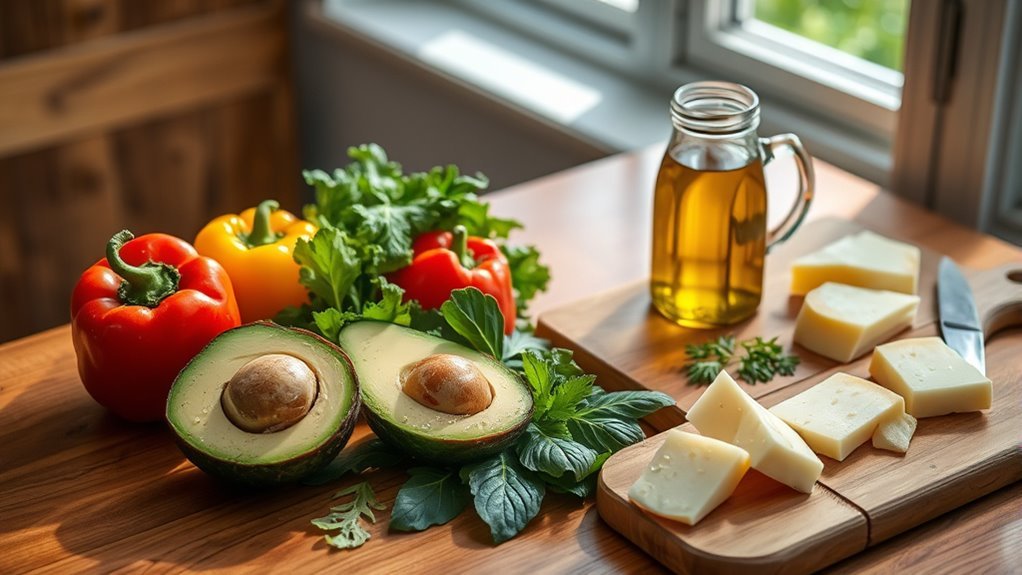
Setting clear weight goals is essential to your keto journey, as it gives you a target to aim for. It’s important to be realistic about your timeline, as sustainable weight loss takes time and consistency. By establishing these parameters, you can track your progress and stay motivated throughout the process.
Define Your Weight Goals
Establishing clear weight goals is essential for your success on the keto diet, as it provides a roadmap for your journey. Start with a weight assessment to determine where you currently stand. This involves knowing your starting weight, body measurements, and body fat percentage, which can help you visualize your goals. Once you have this baseline, visualize what achieving your desired weight looks and feels like. This mental picture can motivate you during challenging times. Aim for specific targets, whether it’s a certain number of pounds or fitting into a favorite outfit. Remember, the more defined your goals are, the easier it’ll be to track your progress and stay committed. Embrace this freedom to reshape your health and well-being.
Set Realistic Timeline
While starting your keto journey, it’s essential to set a realistic timeline for achieving your goals. Establishing realistic expectations helps you stay motivated and prevents frustration. Remember, weight loss isn’t always linear; some weeks may yield more progress than others. Aim for a sustainable rate of 1-2 pounds lost per week, allowing your body to adjust to this new lifestyle. Be prepared for timeline adjustments as you learn what works best for you. If you hit a plateau, don’t panic—reevaluate your diet and exercise routine. Focus on non-scale victories, like improved energy and better mood. This way, you’ll enjoy the freedom and flexibility of the keto lifestyle, making your journey more satisfying and achievable.
Meal Planning for Success
To guarantee your success on the keto diet, effective meal planning is essential. Begin your keto meal prep by selecting recipes that excite you and are easy to make. Focus on high-fat, low-carb ingredients like avocados, eggs, and leafy greens. Consider batch cooking; preparing several meals at once saves time and keeps you on track. Create a weekly menu that incorporates diverse recipe ideas to prevent boredom. Don’t forget to include snacks, like nuts or cheese, to keep your energy levels steady. By planning your meals in advance, you’ll gain control over your food choices, making it easier to stick to your goals. Embrace the freedom that comes with being organized and proactive in your keto journey!
Grocery Shopping on Keto
After you’ve planned your meals, the next step is to tackle grocery shopping on keto. A solid grocery list is key to success. Focus on keto staples and low carb alternatives to keep your meals exciting and satisfying. Here are some tips to take into account:
- Prioritize seasonal produce for freshness and flavor.
- Don’t forget to check for budget shopping options to save money.
- Always read labels to avoid hidden sugars and carbs.
When you hit the store, stick to your list to make meal prep easier. Explore snack options like nuts or cheese to curb cravings. With a little planning, grocery shopping can be a breeze, giving you the freedom to enjoy your keto journey!
Staying Motivated and Overcoming Challenges
Staying motivated on your keto journey can be challenging, especially when faced with cravings or social situations that tempt you to stray from your plan. To keep your motivation high, consider implementing some effective strategies for challenge management.
Here’s a helpful table to guide you:
| Motivation Strategies | Challenge Management |
|---|---|
| Set realistic goals | Identify triggers |
| Track your progress | Prepare for social events |
| Find a support group | Have keto-friendly snacks on hand |
What is a Keto Diet?
A Keto diet, short for ketogenic diet, is a high-fat, adequate-protein, and very low-carbohydrate diet. The aim is to induce a state of ketosis in the body, where fats are burned for energy instead of carbohydrates. This shift in metabolism can lead to weight loss and improved health markers for many individuals.
How do I start a Keto Diet?
To start a Keto diet, begin by calculating your daily macronutrient needs, focusing on high fats (70-75%), moderate proteins (20-25%), and low carbohydrates (5-10%). Gradually reduce your carbohydrate intake to around 20-50 grams per day. Incorporate foods like avocados, nuts, seeds, fatty fish, and low-carb vegetables while avoiding sugary foods, grains, and high-carb fruits. It’s also advisable to drink plenty of water and consider tracking your food intake to stay on course.
What can I eat on a Keto Diet?
On a Keto diet, you can enjoy a variety of foods including: healthy fats such as olive oil, coconut oil, and butter; proteins like meat, fish, eggs, and cheese; and low-carb vegetables such as spinach, kale, broccoli, and cauliflower. Berries can be consumed in moderation, while high-carb foods like bread, pasta, sugary snacks, and most fruits should be avoided.
What are the side effects of starting a Keto Diet?
When starting a Keto diet, some individuals may experience side effects known as the “Keto flu,” which can include fatigue, headache, dizziness, nausea, irritability, and difficulty sleeping. These symptoms are generally temporary and can be alleviated by staying hydrated, ensuring adequate electrolyte intake, and gradually reducing carbohydrates instead of making drastic changes all at once.
How long does it take to enter ketosis?
The time it takes to enter ketosis can vary from person to person, but generally, it takes about 2 to 7 days of following a strict low-carb, high-fat diet. Factors such as your previous carbohydrate intake, activity level, and metabolic rate can influence the duration. Monitoring your ketone levels through tests can help you determine when you’ve reached ketosis.
References
- https://www.ncbi.nlm.nih.gov/pmc/articles/PMC7072250/
- https://www.health.harvard.edu/staying-healthy/the-ketogenic-diet
- https://www.cdc.gov/healthyweight/assessing/bmi/adult_bmi/english_bmi_calculator/bmi_calculator.html
- https://www.webmd.com/diet/what-is-the-ketogenic-diet
- https://www.nutrition.gov/topics/nutrition-101/dietary-patterns/keto-diet
- https://www.mayoclinic.org/healthy-lifestyle/nutrition-and-healthy-eating/expert-answers/keto-diet/faq-20458829
- https://www.journalofclinicalnutrition.org/content/early/2020/06/23/jcn.2020.0002.full
- https://www.usda.gov/topics/food-and-nutrition
- https://www.bbc.com/news/health-51192093