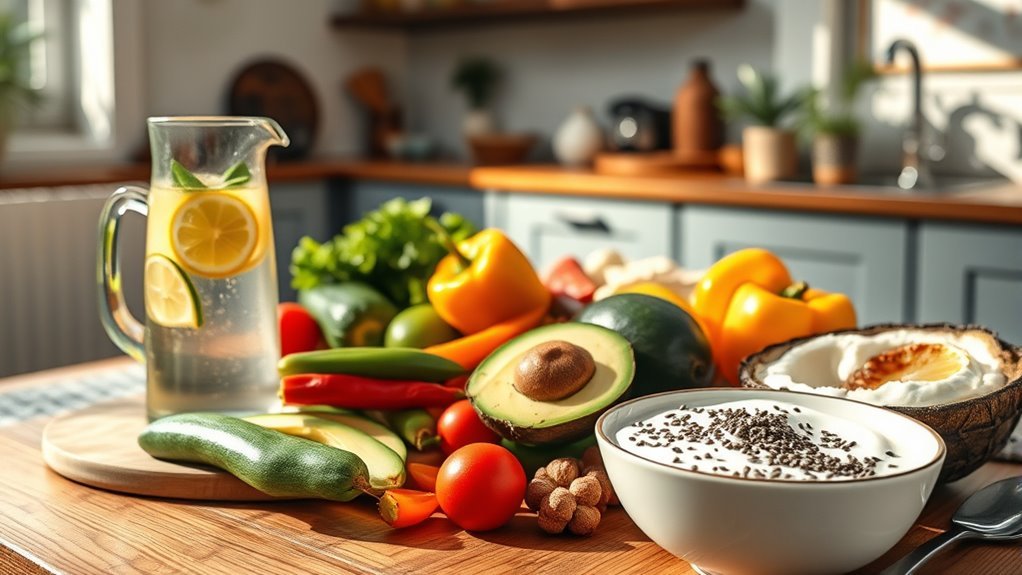

To avoid keto flu, stay well-hydrated and guarantee you’re balancing your electrolytes with foods rich in potassium and magnesium, like leafy greens and avocados. Gradually reduce your carbohydrate intake by 10-20% each week to ease into ketosis. Incorporate nutrient-dense foods, focusing on healthy fats and lean proteins. If needed, consider supplementation to maintain essential vitamins and minerals. These steps can help make your change smoother, and there’s more to discover about optimizing your keto journey.
Understand the Causes of Keto Flu

When you switch to a ketogenic diet, you might experience what’s commonly referred to as “keto flu.” This phenomenon occurs as your body adjusts to burning fat for fuel instead of carbohydrates. The initial phase of keto adaptation can lead to symptoms such as fatigue, headaches, and irritability, primarily due to reduced carbohydrate intake. Your body’s energy levels may dip as it learns to efficiently use fat as its primary energy source. During this adjustment, it’s essential to understand that these symptoms are temporary. They signal your metabolic shift, and with time, your body will adapt, improving your overall energy levels and mental clarity. Embracing this change can empower you to achieve the freedom that a ketogenic lifestyle offers.
Stay Hydrated and Maintain Electrolyte Balance
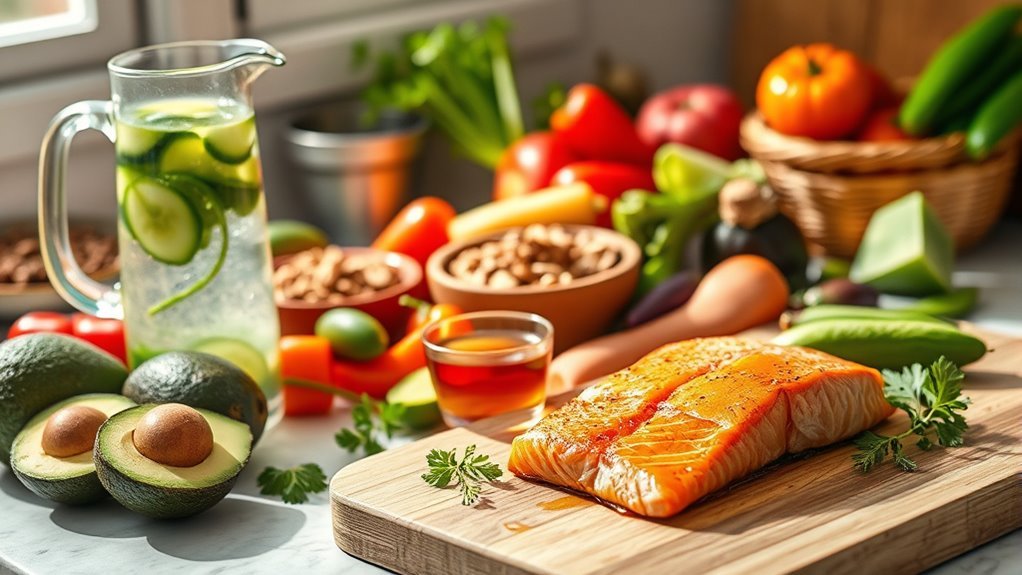
Staying hydrated and maintaining your electrolyte balance is essential during the change to a ketogenic diet, especially as your body adapts to a new metabolic state. Dehydration and electrolyte imbalances can intensify symptoms of keto flu, so implementing effective hydration strategies is important.
Consider these electrolyte sources to keep your levels balanced:
- Leafy greens: Rich in potassium and magnesium.
- Bone broth: A great source of sodium and minerals.
- Avocados: Packed with potassium and healthy fats.
- Nuts and seeds: Provide magnesium and other essential nutrients.
Make sure you drink plenty of water throughout the day. By focusing on hydration and electrolytes, you’ll help your body shift smoothly into ketosis, minimizing discomfort along the way.
Gradually Reduce Carbohydrate Intake
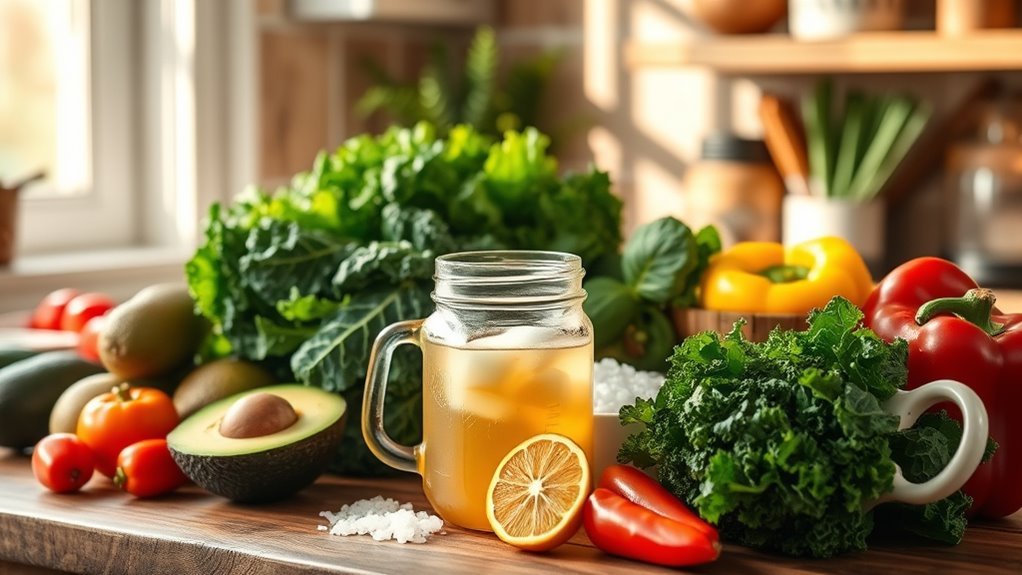
To ease your shift into ketosis and minimize the risk of keto flu, it’s wise to gradually reduce your carbohydrate intake instead of making drastic cuts all at once. Start by identifying your current carb consumption and aim to decrease it by 10-20% each week. This gradual progression helps your body adapt without overwhelming it. You might also consider carbohydrate cycling, where you alternate between low-carb days and slightly higher-carb days, allowing for flexibility and reducing potential withdrawal symptoms. This method can make the process feel less restrictive, helping you maintain a sense of freedom in your food choices. By taking it step by step, you’ll ease into ketosis while supporting your body’s natural rhythms.
Incorporate Nutrient-Dense Foods
As you lower your carbohydrate intake, it’s important to focus on incorporating nutrient-dense foods into your diet. This approach not only supports your shift but also helps prevent keto flu symptoms. Prioritize healthy fats and consider nutrient timing to optimize your energy levels. Here are some foods to include:
- Avocados: Packed with healthy fats and fiber.
- Leafy greens: Rich in vitamins and minerals, low in carbs.
- Nuts and seeds: Great sources of healthy fats and protein.
- Fatty fish: High in omega-3 fatty acids, promoting heart health.
Consider Supplementation for a Smoother Transition
While shifting to a ketogenic diet can be challenging, considering supplementation can ease the process and help mitigate keto flu symptoms. Electrolyte supplementation is particularly important, as a drop in sodium, potassium, and magnesium levels can lead to fatigue, headaches, and muscle cramps. Incorporating these minerals can help maintain balance and energy.
Additionally, many people experience vitamin deficiencies when cutting out carbs, so a good multivitamin may be beneficial. B vitamins, in particular, play an essential role in energy production and mood regulation. By addressing these potential deficiencies and ensuring adequate electrolyte levels, you can support your body’s shift to ketosis and enjoy the freedom that comes with a well-managed ketogenic lifestyle.
Frequently Asked Questions about Avoiding Keto Flu
What is Keto Flu and why does it occur?
Keto flu refers to a group of symptoms that some people experience when they transition to a ketogenic diet. This can occur due to the body adjusting to a state of ketosis, where it relies on fat for fuel instead of carbohydrates. Symptoms may include headaches, fatigue, nausea, and irritability, often resulting from dehydration, electrolyte imbalances, and carbohydrate withdrawal.
How can I prepare my body to avoid Keto Flu?
To prepare your body for a ketogenic diet and minimize the chances of experiencing keto flu, gradually reduce your carbohydrate intake over a week or two before starting the diet. This allows your body to adjust more smoothly. Additionally, increasing your intake of healthy fats and staying hydrated can help ease the transition. Incorporating electrolyte-rich foods or supplements can also support your body as it adapts.
What should I eat to prevent Keto Flu symptoms?
To prevent keto flu symptoms, focus on consuming nutrient-dense foods that are high in healthy fats and low in carbohydrates. Foods like avocados, nuts, seeds, olive oil, and fatty fish are excellent choices. Additionally, incorporating leafy greens and low-carb vegetables can provide essential vitamins and minerals. It’s also beneficial to include foods rich in electrolytes, such as bone broth and leafy greens, to help maintain balance in your body.
How important is hydration in preventing Keto Flu?
Hydration is crucial when transitioning to a ketogenic diet, as the body tends to excrete more water and electrolytes during this process. Proper hydration can help alleviate symptoms of keto flu, such as headaches and fatigue. Aim to drink plenty of water throughout the day and consider adding electrolyte-rich beverages or supplements to maintain optimal hydration levels and support your body’s transition.
What should I do if I experience Keto Flu symptoms?
If you experience keto flu symptoms, it’s important to listen to your body. Ensure you are staying well-hydrated and consider increasing your intake of electrolytes through foods or supplements. Rest is also essential, so allow your body to recover. If symptoms persist or are severe, consider consulting with a healthcare professional for personalized advice and support.
References
- https://www.healthline.com/nutrition/keto-flu
- https://www.ncbi.nlm.nih.gov/pmc/articles/PMC6470860/
- https://www.webmd.com/diet/ss/slideshow-keto-flu
- https://www.mayoclinic.org/healthy-lifestyle/nutrition-and-healthy-eating/in-depth/keto-diet/art-20459614
- https://www.verywellfit.com/what-is-keto-flu-5186512
- https://www.sciencedirect.com/science/article/pii/S2212267219300041
- https://www.ketogenic.com/keto-flu/