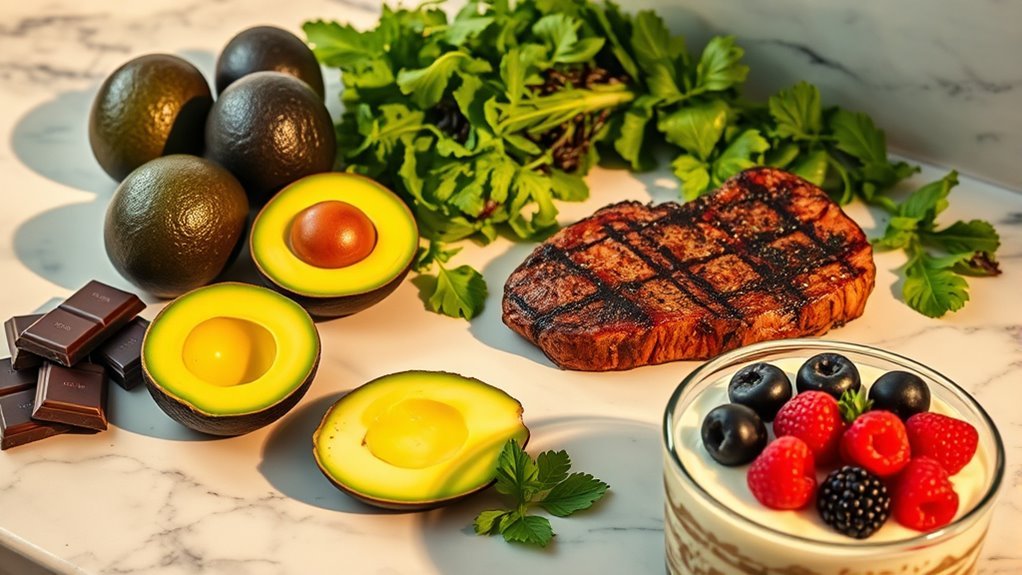

To determine how many calories for a keto diet, you’ll first calculate your basal metabolic rate (BMR), then adjust based on your activity level using multipliers (1.2 for sedentary, up to 1.9 for extra active). For weight loss, aim for 10-12 calories per pound of body weight; for maintenance, 12-15. Remember, the key macronutrient ratio for ketosis is 70-75% fat, 20-25% protein, and 5-10% carbs. There’s much more to explore on optimizing your keto journey.
Understanding Caloric Needs on a Keto Diet
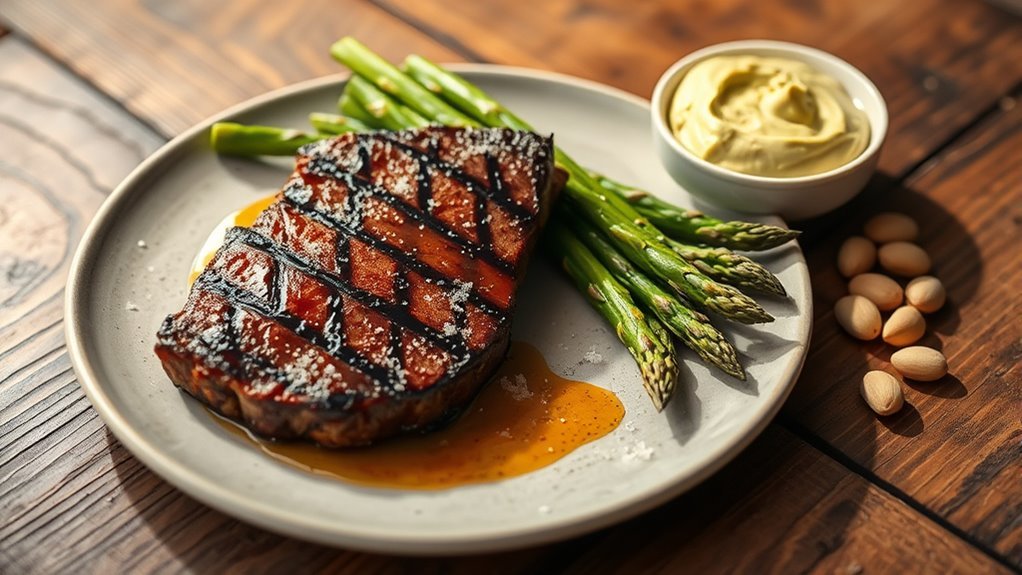
Understanding your caloric needs on a keto diet is vital for achieving your health goals, especially since the macronutrient composition differs greatly from traditional diets. The keto diet emphasizes high fats, moderate proteins, and very low carbohydrates. This shift can enhance your energy levels by encouraging your body to utilize fat for fuel instead of glucose. As you adjust your intake, you’ll likely experience increased mental clarity and sustained energy throughout the day, showcasing some notable keto benefits. However, it’s important to find the right balance for your individual needs to avoid energy dips or weight loss plateaus. By paying attention to your caloric intake, you’ll empower yourself to maximize the advantages of the keto lifestyle and enjoy greater freedom in your health journey.
Calculating Your Daily Caloric Intake

To effectively tailor your keto diet, you’ll need to calculate your daily caloric intake based on your specific goals, whether it’s weight loss, maintenance, or muscle gain. Start by evaluating your Basal Metabolic Rate (BMR) and then factor in your activity level.
Here’s a simple breakdown to guide your keto adjustments:
| Activity Level | Multiplication Factor |
|---|---|
| Sedentary | 1.2 |
| Lightly Active | 1.375 |
| Moderately Active | 1.55 |
| Very Active | 1.725 |
| Extra Active | 1.9 |
Multiply your BMR by the appropriate factor to determine your daily caloric intake. From there, you can adjust your macros to fit the keto lifestyle.
Macronutrient Ratios for Ketosis
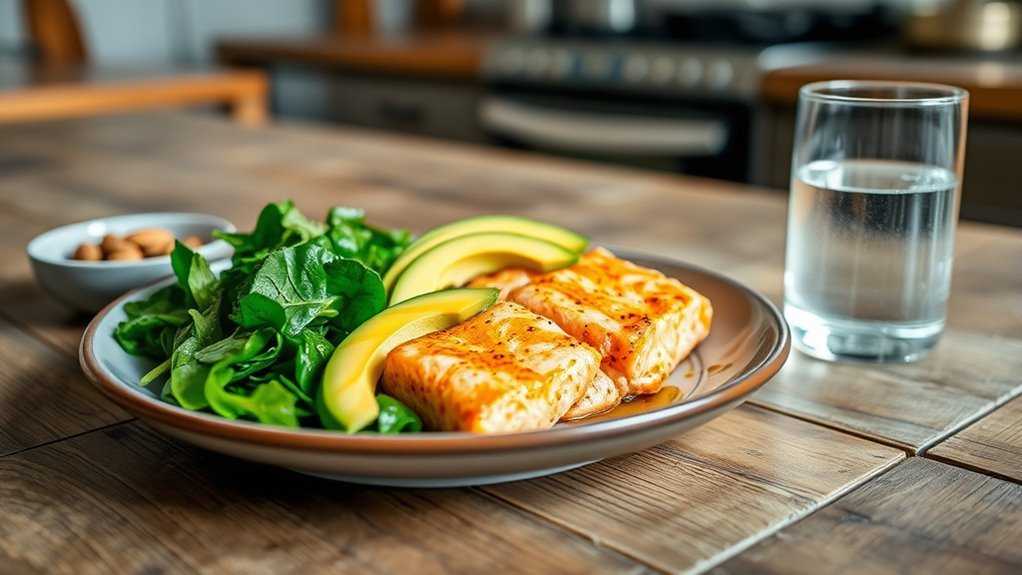
Achieving ketosis requires you to adhere to specific macronutrient ratios that promote fat burning while minimizing carbohydrate intake. For a successful keto diet, aim for a keto macronutrient balance of approximately 70-75% fat, 20-25% protein, and only about 5-10% carbohydrates. This high-fat intake is essential for shifting your body into ketosis, where it primarily uses fat for energy instead of glucose. Ideal fat intake includes healthy sources like avocados, nuts, and olive oil, which not only help in maintaining energy levels but also support overall health. By sticking to these ratios, you empower your body to efficiently burn fat, giving you the freedom to experience sustained energy and potential weight loss benefits associated with the keto lifestyle.
Adjusting Calories for Weight Loss or Maintenance
While you’re embracing the keto lifestyle, adjusting your calorie intake is essential for achieving either weight loss or maintenance goals. Understanding your caloric needs helps you tailor your approach effectively. Here’s a simple framework to guide your caloric adjustments:
| Goal | Daily Caloric Intake | Notes |
|---|---|---|
| Weight Loss | 10-12 calories/lb | Create a deficit |
| Maintenance | 12-15 calories/lb | Sustain current weight |
| Active Lifestyle | 15-18 calories/lb | Adjust based on activity |
| Sedentary | 8-10 calories/lb | Minimal activity level |
| Adjustments | Varies | Monitor and tweak as needed |
Tips for Tracking Your Calories Effectively
Since tracking your calories is essential for staying on course with your keto goals, implementing effective strategies can make this process easier and more accurate. Start by meal prepping; it allows you to plan your meals ahead, ensuring you control portion sizes and calorie intake. Use a food scale to measure your ingredients, as this helps you maintain accurate portions. Consider utilizing a calorie-tracking app; they often have extensive food databases, making it simpler to log what you eat. Finally, don’t forget to periodically reassess your goals and adjust your calorie targets as needed. By mastering these techniques, you’ll gain the freedom to enjoy your meals while still achieving your keto objectives.
1. How many calories should I consume on a keto diet?
The number of calories you should consume on a keto diet depends on several factors including your age, sex, weight, height, and activity level. Generally, a daily intake of 1,500 to 2,500 calories is common for many individuals, but it is essential to create a calorie deficit if your goal is weight loss. A common starting point is to calculate your Total Daily Energy Expenditure (TDEE) and then reduce your intake by 10-20% to promote weight loss while maintaining ketosis.
2. How do I calculate my macronutrient ratios on a keto diet?
To calculate your macronutrient ratios on a keto diet, you should aim for about 70-75% of your total calories from fats, 20-25% from protein, and only 5-10% from carbohydrates. For example, if you consume 2,000 calories per day, you would aim for around 140-150 grams of fat, 100-125 grams of protein, and 25-50 grams of carbohydrates. Use a macronutrient calculator or tracking app to help you stay on track with these ratios.
3. Can I eat too few calories on a keto diet?
Yes, consuming too few calories on a keto diet can lead to negative effects such as nutrient deficiencies, loss of muscle mass, and metabolic slowdown. It is crucial to consume adequate calories to maintain energy levels, support bodily functions, and promote overall health. If you find yourself feeling weak or fatigued, it may be a sign that you’re not eating enough, and you should consider increasing your calorie intake.
4. How can I ensure I’m in ketosis while managing my calorie intake?
To ensure you are in ketosis while managing your calorie intake, focus on maintaining the correct macronutrient ratios and eating whole, unprocessed foods. Regularly check your ketone levels with urine strips or blood meters to confirm that you are in ketosis. Additionally, consider meal prepping and tracking your food intake using apps to ensure you remain within your calorie and macronutrient targets.
5. Are there specific foods I should prioritize for a keto diet to meet my calorie needs?
Yes, when following a keto diet, prioritize high-fat and low-carb foods to meet your calorie needs. Foods such as avocados, nuts and seeds, fatty fish, olive oil, cheese, and low-carb vegetables should be staples in your diet. These foods not only provide the necessary fats and calories but also essential nutrients to support your overall health while on a keto diet.
References
- https://www.ncbi.nlm.nih.gov/pmc/articles/PMC6313446/
- https://www.health.harvard.edu/staying-healthy/the-keto-diet-what-you-need-to-know
- https://www.cdc.gov/nutrition/index.html
- https://www.webmd.com/diet/what-is-the-keto-diet
- https://www.mayoclinic.org/healthy-lifestyle/nutrition-and-healthy-eating/expert-answers/keto-diet/faq-20409679
- https://www.eatright.org/health/diseases-and-conditions/diabetes/the-ketogenic-diet
- https://www.nutrition.org.uk/healthyliving/basics/keto-diet.html
- https://www.jamanetwork.com/journals/jama/fullarticle/2763340