Sushi typically isn’t keto-friendly due to its primary ingredient, rice, which is high in carbohydrates. Traditional sushi rolls can contain 30-45 grams of carbs per cup of rice, making it hard to stick to the low-carb goals of a ketogenic diet. However, there are low-carb alternatives like cauliflower rice and sashimi, which is just fish. If you’re curious about how to make keto-friendly sushi or need tips for dining out, there’s plenty more to explore.
Understanding the Ketogenic Diet
Understanding the ketogenic diet can seem intimidating at first, but it’s fundamentally about reducing carbohydrate intake and increasing fat consumption to encourage your body to enter a state of ketosis. The keto principles focus on limiting carbs to about 5-10% of your total caloric intake while fats should make up around 70-75%. You’ll find various diet variations, such as targeted or cyclical keto, that can suit different lifestyles and fitness goals. These adaptations offer flexibility, allowing you to enjoy a broader range of foods while still pursuing ketosis. Embracing the keto diet can provide you with a sense of freedom, enabling you to explore new culinary experiences while optimizing your energy and mental clarity.
Traditional Sushi Ingredients
When you think about traditional sushi, rice is often the most prominent ingredient, providing a significant source of carbohydrates. However, sushi also features a variety of fish, which supplies essential protein, along with vegetables that contribute valuable nutrients. Understanding these components is key to determining how sushi fits into your dietary preferences, especially on a keto diet.
Rice and Carbohydrates
Although sushi is often celebrated for its fresh flavors and intricate presentation, the traditional ingredients, particularly rice, pose a significant challenge for those following a ketogenic diet. Sushi rice is high in carbohydrates, making it tough to incorporate into a low-carb lifestyle. Here are some key points to take into account about its carb content:
- Sushi rice typically contains around 45 grams of carbs per cup.
- Sticky texture increases your likelihood of overeating.
- Rolls often include extra ingredients like sauces, adding even more carbs.
- Traditional sushi often pairs rice with high-carb accompaniments like tempura.
For those seeking freedom in their diet, it’s crucial to be mindful of these factors when enjoying sushi.
Fish and Protein
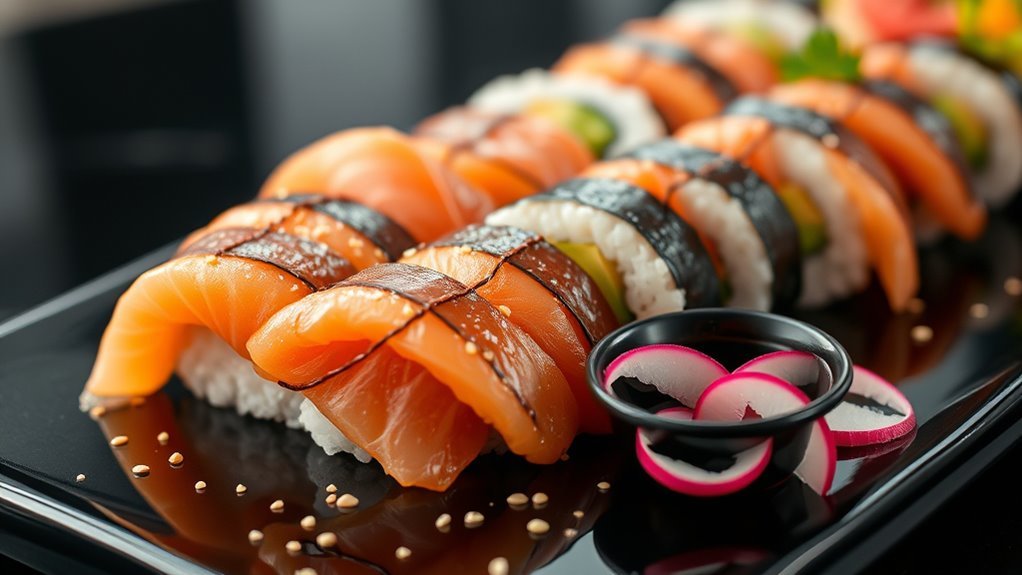
While sushi rice may be off-limits for a keto diet, the fish and protein found in traditional sushi can still be a great option. Sushi varieties like sashimi and nigiri highlight protein sources such as salmon, tuna, and mackerel, which are rich in healthy fats and essential nutrients. These fish not only provide high-quality protein but also offer omega-3 fatty acids, known for their anti-inflammatory properties and heart health benefits. Opting for these protein-rich options allows you to enjoy the flavors of sushi without the carbs. By focusing on the fish, you can maintain your keto lifestyle while indulging in the delightful essence of sushi. So, immerse yourself in these delicious protein sources that keep your meal both satisfying and keto-friendly!
Vegetables and Nutrients
Many traditional sushi ingredients include a variety of vegetables that can enhance both the flavor and nutritional value of your meal. These vegetable varieties not only add texture but also contribute important nutrient benefits. Here are some common vegetables found in sushi:
- Cucumber – Low in calories and hydrating, providing vitamin K.
- Avocado – Packed with healthy fats and fiber, promoting heart health.
- Carrot – Rich in beta-carotene, supporting eye health and immunity.
- Seaweed – A powerhouse of vitamins and minerals, aiding digestion.
Incorporating these vegetables into your sushi doesn’t just create vibrant colors; it also boosts the overall nutrient profile, making your meal more satisfying and beneficial. Enjoy the freedom of mixing and matching these ingredients to suit your taste and health goals!
Carbohydrate Content in Sushi Rolls
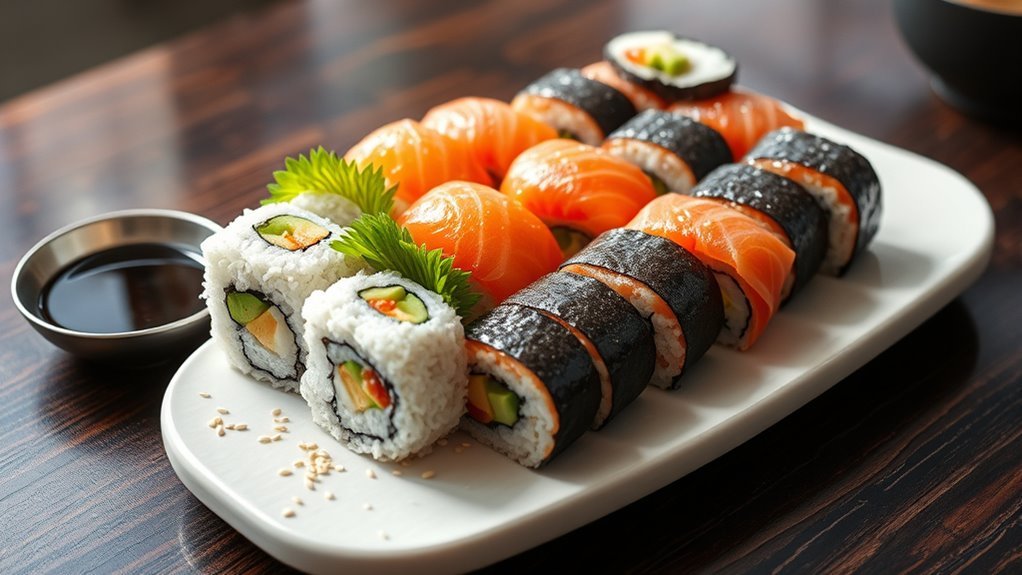
When you think about sushi rolls, the carbohydrate content often comes from the sushi rice, which is typically high in carbs due to its sticky nature. However, there are low-carb alternatives available, such as cauliflower rice, that can help you enjoy sushi while keeping your carb intake in check. Understanding these options can make a significant difference in your keto journey.
Sushi Rice Composition
Sushi rice serves as a fundamental component of sushi rolls, playing an essential role in both texture and flavor. It’s high in carbohydrates, which can be a concern for those following a keto diet. Here’s what you should know about its composition:
- Short Grain: Sushi rice is typically a short-grain variety, giving it that sticky texture.
- Carbohydrate Content: A typical serving can have around 30-40 grams of carbs.
- Preparation Methods: Traditional rice preparation methods involve rinsing and soaking before cooking to achieve the right consistency.
- Sushi Rice Alternatives: If you’re looking for options, consider cauliflower rice or konjac rice as lower-carb substitutes.
Understanding these aspects can help you make informed choices about your sushi experience while still enjoying its delightful flavors.
Low-Carb Alternatives Available
For those on a keto diet, traditional sushi rolls can present a considerable challenge due to their high carbohydrate content. However, you can still enjoy sushi by opting for low-carb alternatives. Consider using low carb wraps instead of rice, which greatly cuts down on carbs while still delivering that familiar sushi experience. Another great option is sushi made with cauliflower rice; it mimics the texture of traditional rice but contains far fewer carbs. You can even try sashimi, which consists of just fish and no rice at all. By choosing these alternatives, you can savor the flavors of sushi without derailing your keto goals, giving you the freedom to enjoy your favorite dishes in a healthier way.
Low-Carb Sushi Alternatives
Although traditional sushi is often associated with high carbohydrate content due to rice, there are plenty of low-carb alternatives that can satisfy your cravings without derailing your keto lifestyle. Here are some great sushi substitutes:
- Cauliflower Rice: Use finely chopped cauliflower as a base instead of sushi rice.
- Cucumber Boats: Hollowed cucumbers can hold your favorite fillings for a revitalizing bite.
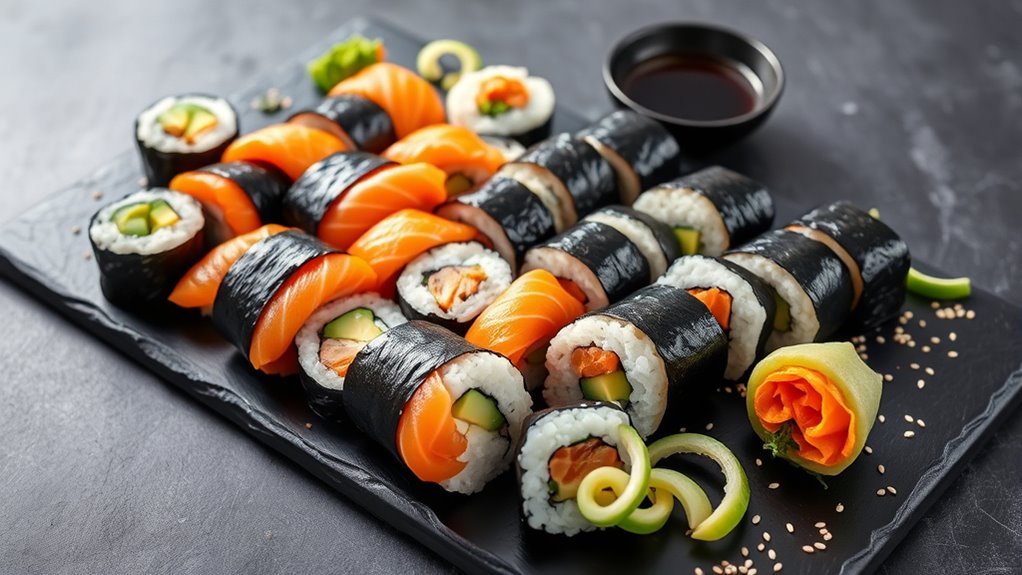
- Nori Wraps: Roll your ingredients in nori sheets for a satisfying crunch without carbs.
- Zucchini Noodles: Spiralized zucchini can mimic the texture of rice in sushi rolls.
These alternatives not only keep your carb count low but also allow you to enjoy sushi creatively while staying true to your keto goals.
Sashimi: A Keto-Friendly Option
When looking for a keto-friendly option, sashimi stands out as an excellent choice. Made from thinly sliced raw fish, it’s low in carbs and packed with protein, making it ideal for your keto lifestyle. Sashimi benefits include high omega-3 fatty acids, which can support heart health and reduce inflammation. Plus, it’s a versatile dish—sashimi variations can include salmon, tuna, and mackerel, allowing you to enjoy different flavors while sticking to your dietary goals. Since sashimi is free from rice and other high-carb ingredients, you can indulge without guilt. So, next time you’re craving something fresh and satisfying, consider reaching for sashimi as your go-to keto option—it’s a delicious way to stay on track!
Making Sushi at Home: Tips for Keto
If you’re enthusiastic to enjoy sushi while adhering to a keto diet, making it at home can be a fun and rewarding experience. With a few simple tips, you can create delicious sushi rolls without the carbs. Here’s how to get started:
Enjoying sushi on a keto diet is easy and fun—just follow a few simple tips to create delicious low-carb rolls at home!
- Choose a keto-friendly base: Use cauliflower rice instead of traditional sushi rice for a low-carb alternative.
- Pick your fillings: Opt for fresh vegetables like cucumber and avocado, along with seafood like tuna or salmon.
- Experiment with ingredient substitutions: Try using nori wraps instead of soy wrappers for added flavor without the carbs.
- Master sushi rolling: Practice rolling tightly for a perfect bite-sized piece.
With these tips, you can enjoy sushi your way while staying true to your keto lifestyle!
Dining Out: Choosing Keto Sushi
While dining out, you can still enjoy sushi without straying from your keto diet by making informed choices. Focus on selecting sushi with low-carb toppings and be mindful of the rice. Opt for sashimi or rolls wrapped in cucumber instead of rice. Here’s a quick reference table to help you:
| Sushi Type | Keto-Friendly Options |
|---|---|
| Sashimi | Salmon, Tuna, Mackerel |
| Rolls | Cucumber rolls, Avocado rolls |
| Toppings | Cream cheese, Spicy mayo |
Remember dining etiquette: ask your server about ingredients and sauces to avoid hidden carbs. Enjoy your meal, respect your diet, and savor the flavors—freedom in choices is key!
Creative Keto Sushi Recipes
Creating delicious keto sushi at home can be both fun and satisfying, especially since you can customize it to fit your dietary needs. With a few creative sushi ideas, you can explore keto flavors that keep your taste buds excited. Here are some simple ideas:
- Cucumber Rolls: Use thin cucumber strips as a base and fill with cream cheese, smoked salmon, and avocado.
- Cauliflower Rice Maki: Substitute traditional rice with seasoned cauliflower rice and roll it with your favorite veggies and proteins.
- Avocado Boats: Halve avocados, fill with tuna or crab salad, and garnish with sesame seeds.
- Zucchini Noodles: Spiralize zucchini, toss with soy sauce, and wrap around shrimp or chicken.
These creative options allow you to enjoy sushi while staying on track with keto!
Is sushi keto-friendly?
Sushi can be keto-friendly, but it largely depends on the type of sushi you choose. Traditional sushi made with rice is typically high in carbohydrates due to the rice content, which is not suitable for a ketogenic diet. However, sashimi (slices of raw fish without rice) and certain rolls that use low-carb alternatives, such as cucumber or avocado instead of rice, can fit within a keto diet.
What types of sushi are best for a keto diet?
The best types of sushi for a keto diet include sashimi, which is just raw fish, and sushi rolls made without rice. Look for options like cucumber rolls (kappa maki) or avocado rolls. Additionally, you can enjoy nigiri with a small piece of fish on top of a small portion of cauliflower rice, which is a low-carb alternative.
Can I have sushi with rice on a keto diet?
While technically you can have sushi with rice on a keto diet, it is not recommended due to the high carbohydrate content. A typical sushi roll contains anywhere from 30 to 50 grams of carbs, which could exceed your daily carb limit on a ketogenic diet. If you’re craving sushi, consider opting for low-carb alternatives instead.
What should I avoid when eating sushi on a keto diet?
When following a keto diet, you should avoid sushi varieties that contain rice, tempura (battered and fried), and rolls with high-carb sauces or ingredients, such as sweet soy sauce or sugary toppings. Additionally, be cautious with any rolls that include fruits, as they can add unnecessary carbs to your meal.
Are there any keto-friendly sushi restaurants?
Many sushi restaurants are becoming more accommodating to various dietary preferences, including keto. Look for places that offer sashimi, low-carb rolls, or allow for customization of your sushi order. You can also check the menu for options that explicitly mention low-carb or keto-friendly dishes. It’s always a good idea to ask the chef or staff for recommendations tailored to your dietary needs.
References
- https://en.wikipedia.org/wiki/Ketogenic_diet
- https://www.healthline.com/nutrition/sushi-keto
- https://www.ncbi.nlm.nih.gov/pmc/articles/PMC6466364/
- https://www.medicalnewstoday.com/articles/what-is-a-keto-diet
- https://www.cdc.gov/healthyweight/assessing/bmi/adult_bmi/index.html
- https://www.webmd.com/diet/what-is-the-ketogenic-diet
- https://www.jamanetwork.com/journals/jama/fullarticle/2675773