
Chickpea pasta isn’t considered keto-friendly due to its higher carbohydrate content, with about 30-40 grams per serving. While it has more protein and fiber than traditional pasta, it may disrupt ketosis if you exceed your daily carb limits. For strict keto followers, alternatives like zucchini or shirataki noodles might be better options. Understanding how chickpea pasta fits into your dietary goals is essential, and there’s more to explore regarding its nutritional impact and alternatives.
Nutritional Profile of Chickpea Pasta
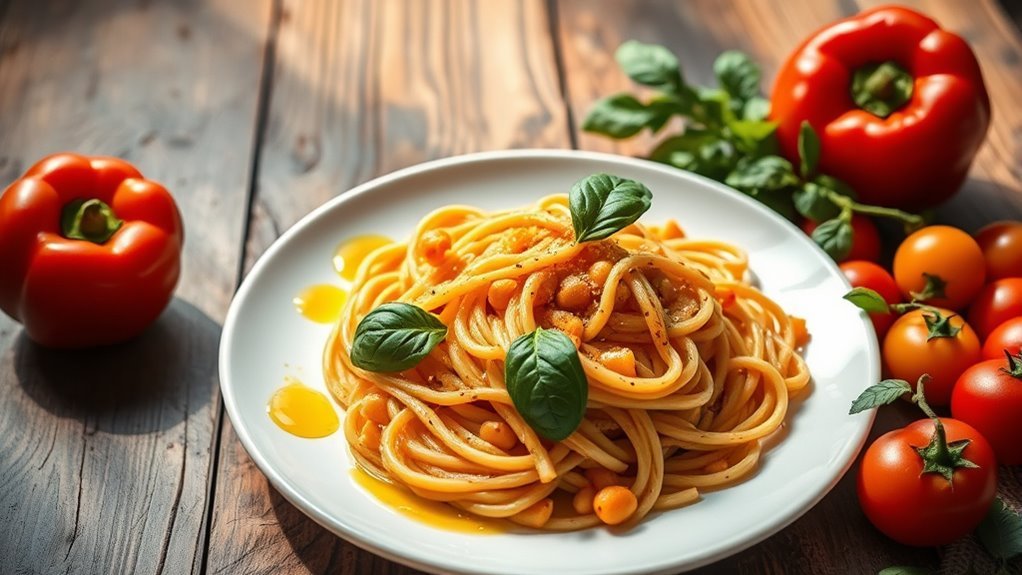
When considering the nutritional profile of chickpea pasta, you’ll find it offers a different composition compared to traditional wheat pasta. Chickpea nutrition is particularly higher in protein and fiber, making it a great choice if you’re looking for pasta alternatives that keep you feeling full longer. A typical serving contains about 14 grams of protein and 8 grams of fiber, which can support digestive health and muscle maintenance. Additionally, chickpea pasta has a lower glycemic index, helping to stabilize blood sugar levels. This makes it appealing for those seeking nutritious, plant-based options. By incorporating chickpea pasta into your meals, you can enjoy the familiar comfort of pasta while benefiting from enhanced nutritional value.
Carbohydrate Content and Keto Guidelines
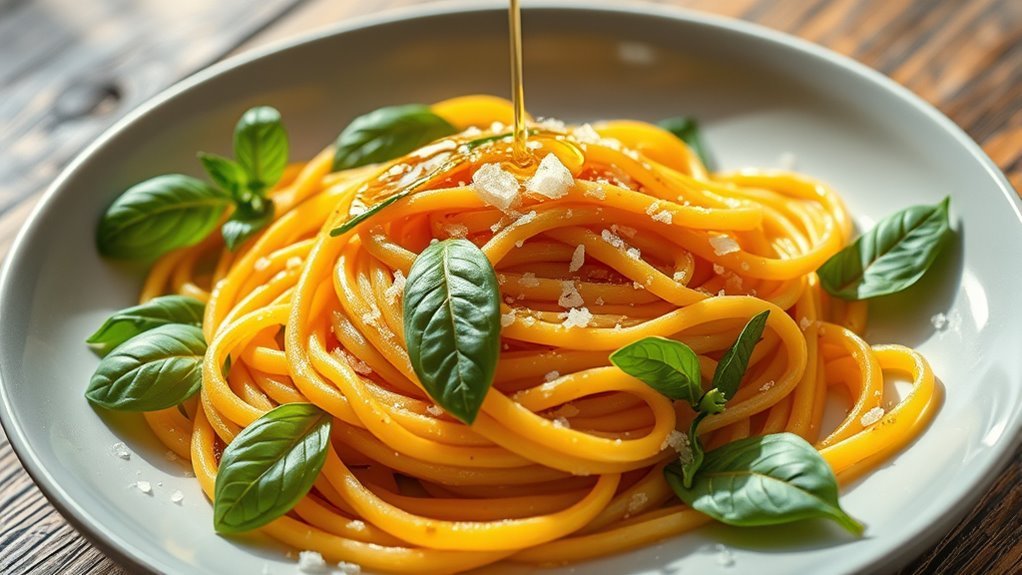
Although chickpea pasta offers a range of nutritional benefits, its carbohydrate content raises questions for those following a ketogenic diet. The keto guidelines typically recommend keeping daily carb intake between 20-50 grams. Here’s what you should consider:
- Carb Count: Chickpea pasta contains around 30-40 grams of carbohydrates per serving, which can quickly consume your limits.
- Fiber Impact: While high in fiber, which is beneficial, it doesn’t notably reduce the net carbs enough for strict keto adherents.
- Alternative Options: If you’re committed to keto, exploring lower-carb pasta alternatives like zucchini noodles or shirataki noodles might be wise.
Ultimately, balancing your choices with your carbohydrate limits is essential for maintaining ketosis while enjoying your meals.
Protein and Fiber Benefits
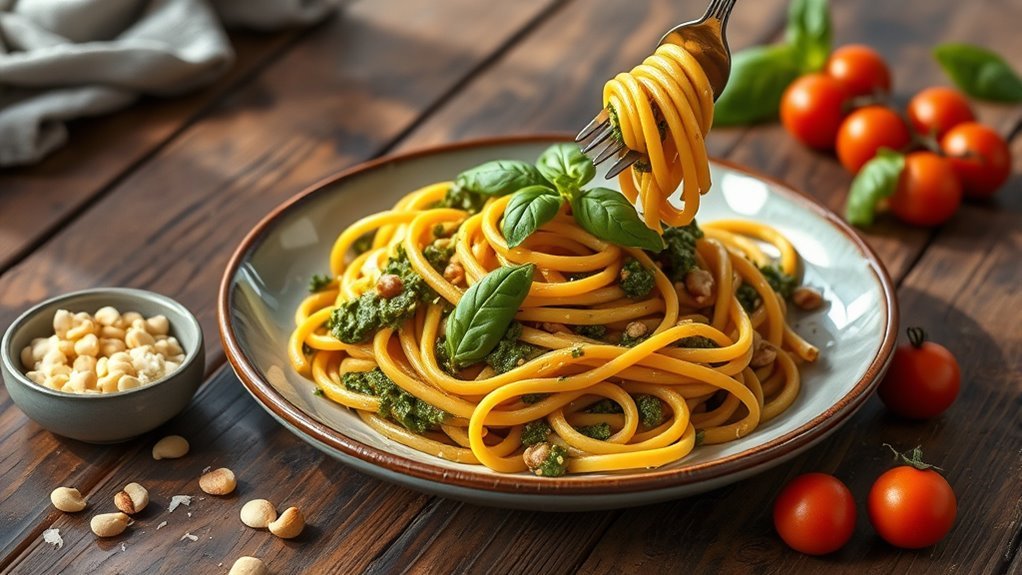
Chickpea pasta is a great source of protein, offering about 14 grams per serving, which can help support muscle maintenance and repair. It’s also rich in fiber, providing around 6 grams, which is beneficial for digestion and can help you feel fuller for longer. Incorporating chickpea pasta into your meals can add both nutritional value and satiety to your diet.
High Protein Content
While many pasta alternatives fall short in protein content, chickpea pasta stands out due to its impressive nutritional profile. If you’re looking for a high protein option that aids in muscle building, here’s why chickpea pasta might be your best bet:
- Protein Density: With about 14-15 grams of protein per serving, it provides more protein than traditional pasta.
- Essential Amino Acids: It contains all nine essential amino acids, supporting your body’s muscle repair and growth.
- Versatile Nutrition: Chickpea pasta can easily be incorporated into various meals while maintaining a balanced diet.
This high protein content not only helps in muscle building but also keeps you fuller for longer, making it a smart choice for anyone focused on a healthy lifestyle.
Rich in Fiber
Fiber is an essential component of a healthy diet, and chickpea pasta delivers it in abundance. With its impressive fiber content, it becomes one of the top fiber sources available, making it a valuable addition to your meals. This high fiber intake can greatly benefit your digestive health, promoting regular bowel movements and reducing the risk of digestive issues. Plus, a diet rich in fiber can help you feel fuller for longer, assisting in weight management. Chickpea pasta not only adds variety to your dishes but also aligns with your health goals, ensuring you enjoy the freedom of eating well without sacrificing taste. So, if you’re seeking nutritious options, chickpea pasta is an excellent choice for your keto-friendly meals.
Comparing Chickpea Pasta to Traditional Pasta
When comparing chickpea pasta to traditional pasta, it’s essential to reflect on their nutritional profiles and how they fit into various diets. Here are three key points to evaluate:
- Protein Content: Chickpea pasta typically contains more protein than traditional pasta, making it a great option for those looking to increase their intake.
- Fiber: Chickpea pasta is rich in fiber, which can aid digestion and keep you full longer—offering significant chickpea benefits.
- Carbohydrates: Traditional pasta is higher in carbs, while chickpea pasta provides a more balanced option for those exploring pasta alternatives.
Incorporating chickpea pasta into your diet can be a smart choice, especially if you’re seeking healthier options that align better with your nutritional goals.
How to Incorporate Chickpea Pasta in Keto Meals
Although chickpea pasta may not be strictly keto-friendly due to its higher carbohydrate content compared to other low-carb alternatives, it can still be incorporated into your meals in moderation. One way to enjoy its nutritional benefits is by pairing it with low-carb veggies and healthy fats. Consider a chickpea pasta salad with spinach, cherry tomatoes, and olive oil for a revitalizing lunch. You can also create a hearty dinner with a chickpea pasta stir-fry, loaded with bell peppers and zucchini, topped with grilled chicken or shrimp. Remember to balance your portions to stay within your carb limits. Embrace these chickpea pasta benefits while exploring creative keto meal ideas that satisfy your cravings without compromising your goals.
Potential Alternatives to Chickpea Pasta
If you’re looking for alternatives to chickpea pasta that align better with a keto lifestyle, there are several options worth considering. These potential substitutes offer low carb options while still allowing you to enjoy delicious meals. Here are three great choices:
- Zucchini Noodles (Zoodles): Spiralized zucchini is a fantastic low-carb alternative that adds nutrients and texture.
- Shirataki Noodles: Made from konjac yam, these noodles are extremely low in carbs and calories, perfect for keto diets.
- Cauliflower Pasta: Cauliflower can be blended and formed into pasta shapes, providing a versatile and low-carb option.
Exploring these alternatives can help you stay within your keto goals while still enjoying satisfying dishes.
Impact on Ketosis and Blood Sugar Levels
When considering chickpea pasta on a keto diet, it’s important to examine its carbohydrate content, as too many carbs can hinder your state of ketosis. You’ll also want to understand how this pasta affects your blood sugar levels, since a significant spike could impact your overall health goals. Balancing these factors can help you make an informed decision about including chickpea pasta in your meals.
Carbohydrate Content Analysis
Understanding the carbohydrate content in chickpea pasta is essential for anyone considering a ketogenic diet. While chickpea pasta is a popular alternative to traditional pasta, it contains a significant amount of carbohydrates. Here’s a breakdown:
- Carbohydrate Sources: Chickpea pasta typically has around 25 grams of carbs per serving, primarily from chickpeas.
- Dietary Fiber: It also boasts about 10 grams of dietary fiber, which can be beneficial for digestion and may impact net carbs.
- Keto Compatibility: For a strict keto diet, this carbohydrate content can be too high, potentially hindering your state of ketosis.
Ultimately, if you’re aiming for lower carb intake, chickpea pasta might not align with your goals. Always consider your individual needs and consult with a nutritionist if necessary.
Blood Sugar Response
While many people enjoy chickpea pasta as a healthier alternative, its impact on blood sugar levels could complicate your keto journey. Chickpea pasta contains a higher carbohydrate content compared to traditional pasta, which can lead to a notable glucose response. When you eat it, your blood sugar may spike, making it challenging to maintain the low-carb state essential for ketosis. This glucose response can hinder your body’s ability to burn fat for fuel. If you’re committed to a strict keto diet, it’s vital to monitor how chickpea pasta affects your individual blood sugar levels. Ultimately, understanding your body’s response can help you make more informed dietary choices and stay on track with your keto goals.
Recipes Featuring Chickpea Pasta
Chickpea pasta, which is rich in protein and fiber, can be a versatile ingredient in various recipes that cater to different dietary preferences. You can explore creative cooking with chickpea pasta by trying out these delicious options:
Chickpea pasta is a nutritious, protein-packed ingredient that adapts beautifully to various dietary needs and delicious recipes.
- Chickpea Pasta Salad: Toss cooked chickpea pasta with fresh veggies, olive oil, and your favorite herbs for a revitalizing meal.
- Creamy Chickpea Pasta: Sauté garlic and spinach, then mix in a plant-based cream for a luscious sauce to coat your pasta.
- Chickpea Mac and Cheese: Combine chickpea pasta with a cheesy nutritional yeast sauce for a comforting dish that’s both satisfying and nutritious.
These chickpea pasta recipes highlight how you can enjoy flavorful meals while embracing dietary freedom without sacrificing taste.
Final Thoughts on Chickpea Pasta and Keto
If you’re considering incorporating chickpea pasta into a ketogenic diet, it’s important to weigh its nutritional profile against your carb goals. While chickpea pasta offers some health benefits, such as high protein and fiber content, it also contains more carbohydrates than traditional pasta. Depending on your specific dietary considerations, it could potentially disrupt ketosis if you exceed your daily carb limit. If you’re looking for alternatives, there are options like zucchini noodles or shirataki noodles that are lower in carbs. Ultimately, finding a balance that allows you to enjoy your meals while still adhering to your keto lifestyle is key. Evaluate how chickpea pasta fits into your overall dietary strategy and make informed choices that support your health and freedom.
Frequently Asked Questions
1. Is chickpea pasta keto-friendly?
Chickpea pasta is generally not considered keto-friendly because it is higher in carbohydrates compared to traditional pasta alternatives. A typical serving of chickpea pasta can contain around 30-40 grams of carbs, which can exceed the daily carb limit for those following a strict ketogenic diet. For a keto diet, it’s advisable to choose low-carb alternatives such as zucchini noodles or shirataki noodles.
2. How does the carb content of chickpea pasta compare to regular pasta?
Chickpea pasta typically contains more carbohydrates than traditional wheat pasta. For example, a 2-ounce serving of chickpea pasta might have about 35 grams of carbs, while the same serving of regular pasta has around 40 grams. However, chickpea pasta is also rich in fiber and protein, which can be beneficial for overall nutrition, but it remains high in carbs for those on a low-carb diet.
3. What are some low-carb alternatives to chickpea pasta?
For those on a ketogenic diet, some excellent low-carb alternatives to chickpea pasta include:
- Zucchini noodles (zoodles): Made from spiralized zucchini, these are very low in carbs and calories.
- Shirataki noodles: Also known as konjac noodles, they are made from the konjac root and contain minimal carbohydrates.
- Spaghetti squash: When cooked, the flesh of spaghetti squash separates into strands that resemble pasta and is low in carbs.
- Palmini pasta: Made from hearts of palm, this pasta is low in carbs and offers a unique texture.
4. Are there any health benefits to eating chickpea pasta?
Yes, chickpea pasta has several health benefits. It is high in protein and fiber compared to traditional pasta, which can help with satiety and digestive health. The fiber content can promote a healthy gut, and chickpeas are also rich in vitamins and minerals such as iron, magnesium, and folate. However, individuals on a ketogenic diet should be mindful of the carb content when considering these benefits.
5. Can chickpea pasta be integrated into a balanced diet?
Absolutely! Chickpea pasta can be a great addition to a balanced diet for those who are not strictly following a ketogenic regimen. It provides essential nutrients, and when paired with healthy fats and vegetables, it can create a nutritious meal. For those on a low-carb diet, moderation is key, and it’s important to account for the carbohydrate content in the overall meal plan.
References
- https://www.healthline.com/nutrition/chickpea-pasta-keto
- https://www.medicalnewstoday.com/articles/chickpea-pasta-nutrition
- https://www.ncbi.nlm.nih.gov/pmc/articles/PMC5611135/
- https://www.washingtonpost.com/lifestyle/2021/09/15/chickpea-pasta-keto/
- https://www.bbcgoodfood.com/howto/guide/chickpea-pasta-nutrition-health-benefits
- https://www.eatright.org/food/nutrition/dietary-guidelines-and-myplate/understanding-the-ketogenic-diet
- https://www.cdc.gov/healthyweight/healthy_eating/what_is_a_healthy_diet.html
- https://www.nutrition.gov/topics/whats-food/nutrition-basics/chickpeas-beans-pulses
- https://www.vegetariantimes.com/recipes/chickpea-pasta-recipe/
- https://www.sciencedirect.com/science/article/abs/pii/S0955286317300502