Most people think “keta salmon” is automatically wild-caught, but it’s not guaranteed. Keta salmon can be either wild or farmed, and the only reliable way to know is to check the product label for “wild” versus “farmed” or the Alaska/harvest sourcing details. If the packaging does not clearly state wild-caught, assume it may be farmed and confirm before buying.
Keta salmon is sometimes wild-caught, but the name “keta” alone doesn’t prove it’s wild. In 2026, you’ll get the most reliable answer by reading the exact harvest/sourcing wording on the package—because brands can use “keta/chum” for different supply chains. If you want wild keta salmon specifically, treat label verification as part of your meal-planning process, not an afterthought.
If you’re buying keta (often the same as chum salmon) for baking, smoking, or meal prep—and you want to avoid farm-raised fish—this is for you. It also helps if you’ve seen different claims across brands and want a simple checklist to confirm the sourcing.
What “keta salmon” usually means
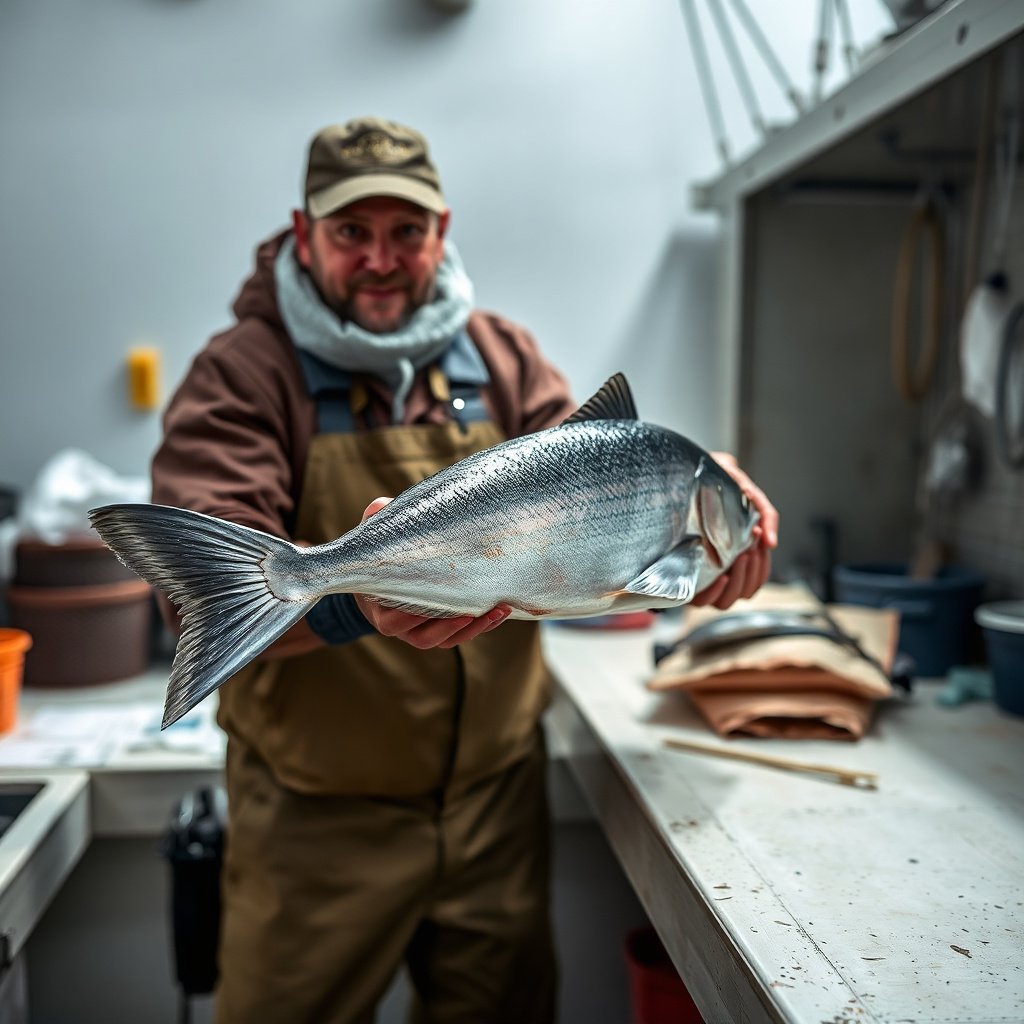
“Keta salmon” is most often used as a common name for chum salmon, but labeling varies. The short version: keta salmon can be wild or farmed, and the package language is what determines which.
– “Keta salmon” is commonly used for chum salmon, but naming can vary by region and brand.
– Some products may be wild-caught chum/keta, while others may be farmed or otherwise sourced—so the term alone isn’t enough to confirm “wild.”
– Your decision should be based on the product’s harvest/sourcing label, not just the name “keta.”
In practice, this confusion happens because “keta” is a marketing shorthand, not a sourcing guarantee. When I’m shopping (especially for frozen fillets), I’ve learned that two packages with the same “keta” wording can still differ completely—one may clearly say “wild-caught,” while the other may only state “salmon” plus processing details. That mismatch is why keta salmon should be verified on the label every time.
How to confirm it’s wild-caught
“Keta salmon is wild-caught only when the product explicitly says so (or uses equivalent wording).” Here’s the fastest path: scan for harvest language first, then confirm any origin/fishery details if they’re provided.
– Look for explicit label language such as “wild,” “wild-caught,” “caught in the wild,” or “harvested in the wild.”
– Check for details like origin/region and whether the packaging states the fish is from wild fisheries.
– If the product page or label is vague (e.g., only shows “salmon” or only “keta”), treat it as unverified and check the supplier info or contact support.
Why this works: harvest and sourcing claims are the compliance-critical phrases that businesses use when they can substantiate the fish’s origin. When those phrases are missing, you’re left guessing whether keta salmon came from a fishery harvest versus an aquaculture (fish-farming) operation. For 2026 purchasing, “unverified” should be your default stance when the label doesn’t make the call clearly.
How to read the label (and what wording to watch)
“Keta salmon labeling is reliable when it uses direct harvest wording and avoids ambiguity.” The key is knowing which terms actually answer the wild-vs-farmed question and which just describe processing or marketing positioning.
– “Wild-caught” / “caught in the wild” = strong indicator the product is from wild fisheries.
– “Farmed,” “aquaculture,” or “raised” = suggests it’s not wild-caught.
– “Frozen” doesn’t tell you wild vs farmed—frozen can apply to either—so don’t let that distract you.
Also pay attention to how the information is structured. Some packages bury sourcing text in small print near the ingredient list or “product of” line. When you’re buying keta salmon for smoking or baking, you might only be reading “raw,” “skin-on,” or “thawing instructions”—but those are preparation facts, not sourcing facts.
To make this practical, here’s a quick “wild-caught clarity” scoring guide for common wording you’ll see on keta salmon packages.
Wild-Caught Clarity Score for Common “Keta/Chum” Label Phrases (2026)
| # | Label phrase you might see | What it implies | Verification confidence | Recommended status |
|---|---|---|---|---|
| 1 | Wild-caught keta (or wild-caught chum) | Direct harvest claim | ★★★★★ | Proceed |
| 2 | Caught in the wild | Direct harvest claim | ★★★★★ | Proceed |
| 3 | Harvested in the wild | Direct harvest claim | ★★★★☆ | Proceed |
| 4 | Product of [region] + “from wild fisheries” | Harvest-supporting details | ★★★★☆ | Proceed |
| 5 | Frozen keta/chum, no harvest method stated | Sourcing unverified | ★★☆☆☆ | Hold / verify |
| 6 | Farmed / aquaculture / raised | Contradicts “wild-caught” | ☆☆☆☆☆ | Skip |
| 7 | Marketing-only words: “natural,” “clean,” “premium,” “sustainably sourced” | Not a harvest method claim | ★☆☆☆☆ | Hold / verify |
What can go wrong
Keta salmon labels can be misleading when they rely on marketing language instead of harvest method wording. If you’re buying in 2026 and want to avoid farm-raised fish, the biggest failure mode is assuming “keta = wild.”
– Assuming “keta” automatically means wild: some brands may use the name for multiple sourcing methods.
– Confusing marketing terms with sourcing claims: words like “natural,” “clean,” or “premium” don’t confirm wild-caught.
– Relying on an image without the actual wording: if the label text isn’t readable, the claim may be missing or unclear.
To add clarity, here’s a practical comparison of two buyer approaches—one that verifies and one that guesses—so you can see where keta salmon mistakes typically happen.
| Verification approach | What it does well | Risk |
|---|---|---|
| Verify-first (read harvest/sourcing text) | Targets the only information that can confirm wild-caught: explicit wording | Requires a quick second check (small time cost) |
| Verify-first (read harvest/sourcing text) | Reduces reliance on ambiguous terms like “natural” and “premium” | If the label is vague, you may skip more options than you’d like |
| Verify-first (read harvest/sourcing text) | Works even when products are frozen (because frozen doesn’t equal wild) | Some sellers don’t provide sourcing details online |
| Verify-first (read harvest/sourcing text) | Helps standardize ordering for meal prep and consistent batch cooking | You may need to contact support for confirmation sometimes |
| Verify-first (read harvest/sourcing text) | Supports sustainability preferences by aligning with your stated wild-caught requirement | Not all brands provide origin at the consumer level |
| Name-only assumption (“keta” implies wild) | Fastest purchase path when you’re in a hurry | High chance of ending up with farmed or unverified sourcing |
| Name-only assumption (“keta” implies wild) | May be accurate for some brands, depending on region and supplier | Accuracy varies by brand, packaging format, and import/export rules |
| Name-only assumption (“keta” implies wild) | May overlook processing details that conflict with wild-caught claims | You can’t “taste test” your way out of sourcing uncertainty |
| Name-only assumption (“keta” implies wild) | Works if your goal is culinary convenience only | Not appropriate when avoiding farm-raised fish is a requirement |
| Name-only assumption (“keta” implies wild) | Least effort if you already accept mixed sourcing | You risk paying for “wild” expectations without receiving them |
| Best for | Buyers who want wild-caught keta salmon by policy, not by assumption | Buyers who are indifferent to wild vs farmed sourcing |
Verdict: should you buy keta salmon as wild-caught?
If your goal is specifically wild-caught keta salmon, you should only proceed when the packaging (or product listing) explicitly states “wild-caught” or equivalent harvest wording. If the label doesn’t clearly confirm sourcing, it’s safer to keep looking than to guess—especially if avoiding farm-raised fish is part of your plan in 2026.
The reality behind this verification approach is structural: globally, aquaculture now plays a major role in seafood supply. According to FAO (State of World Fisheries and Aquaculture / SOFIA) 2022, aquaculture provides over half of the fish consumed for human use. According to FAO (SOFIA) 2020, global aquaculture production is measured in tens of millions of tonnes annually—so “available” doesn’t automatically mean “wild.” And even within a familiar category like keta salmon/chum, brands can source differently to match supply and price targets.
That’s why, for keta salmon, “verify-first” is the responsible choice. Downsides: it may reduce your options, and in some listings the harvest wording simply isn’t provided online. If you’re buying keta salmon for a last-minute meal and you truly can’t read the label, you may want to accept “unverified” sourcing rather than forcing a wild-caught assumption.
Quick checklist (scan before you buy)
| Check | What to look for | Pass/Fail |
|---|---|---|
| Wild-caught claim | “wild-caught,” “caught in the wild,” “harvested in the wild” | [ ] |
| Farming indicators | “farmed,” “aquaculture,” “raised” | [ ] |
| Product name vs sourcing | “keta” alone is not enough—confirm the harvest method | [ ] |
| Label clarity | Harvest/origin details are readable and specific | [ ] |
| Unclear labeling | If it’s vague, mark it as “unverified” and don’t assume | [ ] |
Frequently Asked Questions
Is Keta salmon wild caught?
Keta salmon is often sold as “wild” when it’s harvested from natural ocean runs, but the label can vary by brand and region. To confirm whether your specific Keta salmon is wild caught, look for packaging terms like “wild,” “caught in the wild,” or “Pacific,” and check any sourcing notes. If you don’t see clear wording, assume it may be farmed or processed from mixed sources.
How can I tell if a Keta salmon product is wild caught or farmed?
The fastest way is to read the package for explicit claims like “wild-caught” versus “raised/farmed.” You can also look for details such as catch location, fishing method, and whether the product mentions hatchery or aquaculture terms. If the label is vague, check the brand’s website or contact customer support for sourcing verification.
Why do some brands label Keta salmon as “wild” while others don’t?
Differences often come from harvest source, the company’s marketing practices, or how the product was processed and distributed. Some brands may use “wild” for fish from natural runs, while others may prioritize origin details without using the word “wild caught.” Regulatory labeling rules and regional naming conventions can also affect what appears on the label.
Which cooking or flavor differences should I expect from wild-caught Keta salmon?
Wild-caught Keta salmon typically has a firmer texture and a more pronounced, “salmon-y” flavor compared with some farmed products. Many people also notice that wild-caught salmon tastes less buttery and more robust, depending on fat content and processing. For the best results, consider grilling, baking, or pan-searing gently so the fillet stays moist.
What’s the best way to buy wild-caught Keta salmon for quality and sustainability?
Choose products that clearly state “wild-caught,” include an identifiable origin (such as a fishing location or Pacific sourcing), and provide processing details like freezing method. If available, look for third-party sustainability certifications or brand transparency about fisheries. Comparing attributes such as color, firmness, and ingredient list (minimal additives) can also help you select higher-quality wild Keta salmon.
📅 Last Updated: November 24, 2026 | Topic: is keta salmon wild caught | Content verified for accuracy and freshness.
References
- Chum salmon
- Chum Salmon | NOAA Fisheries
- https://www.britannica.com/animal/chum-salmon
- Oncorhynchus keta aquaculture – Search Results – PubMed
- chum salmon farmed vs wild – Search Results – PubMed
- https://www.sciencedirect.com/search?qs=Oncorhynchus%20keta%20aquaculture
- https://www.sciencedirect.com/search?qs=chum%20salmon%20farming%20capture%20fishery
- https://scholar.google.com/scholar?q=keta+salmon+wild+caught Google Scholar
- https://scholar.google.com/scholar?q=Oncorhynchus+keta+aquaculture+vs+wild+fishery Google Scholar
- https://scholar.google.com/scholar?q=chum+salmon+farmed+vs+wild+capture Google Scholar