
Honey is not ideal for the keto diet due to its high sugar content, which can spike blood glucose levels and disrupt ketosis. Even a small amount can hinder your body’s ability to burn fat effectively. If you’re aiming to stay in ketosis, consider alternatives like stevia or erythritol, which won’t affect your blood sugar. Finding a satisfying sweetness on keto is possible, and learning how to do so can make your journey more enjoyable.
Understanding the Keto Diet and Its Requirements
While following the keto diet, it is essential to understand its fundamental principles and requirements. At its core, the keto diet emphasizes low carbohydrate intake to shift your body into a state of ketosis, where it burns fat for fuel instead of glucose. To achieve this, you’ll need to focus on specific macronutrient ratios: typically, around 70-75% of your calories should come from fats, 20-25% from protein, and only about 5-10% from carbohydrates. This balance allows your body to adapt to burning fat efficiently. Understanding these keto fundamentals not only helps you make informed food choices but also empowers you to maintain flexibility within your diet, giving you the freedom to enjoy meals without feeling restricted.
The Nutritional Profile of Honey

When you consider adding honey to your diet, it’s important to examine its nutritional profile. Honey is more than just a sweetener; it offers both benefits and drawbacks. Here are three key points to keep in mind:
- Calories and Carbs: A tablespoon of honey contains about 64 calories and 17 grams of carbohydrates.
- Nutrients: Honey provides small amounts of vitamins and minerals, including vitamin C and calcium, enhancing its appeal.
- Antioxidants: It’s rich in antioxidants, which can support your immune system and overall health.
While honey benefits include natural energy boosts and potential anti-inflammatory properties, its drawbacks lie in its high sugar content, which could hinder your keto goals. Balancing these aspects is essential for informed dietary choices.
How Honey Affects Ketosis
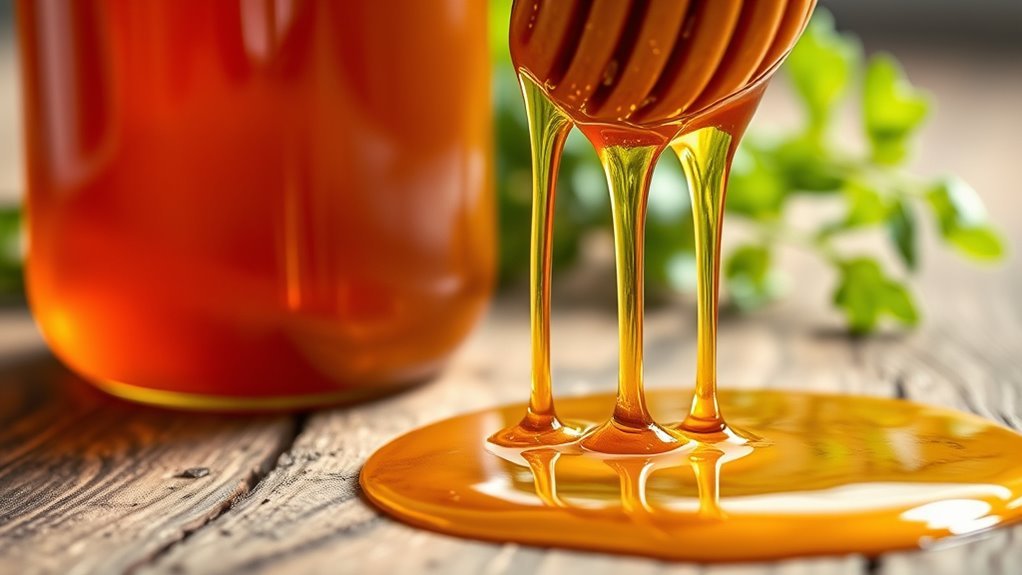
Adding honey to your diet can greatly impact your state of ketosis. When you consume honey, its natural sugars can spike your blood glucose levels, leading to an increase in insulin production. This can disrupt ketosis, as your body may switch from burning fat to using glucose for energy. Honey consumption, even in moderation, can have significant ketosis effects, making it challenging to maintain the metabolic state required for effective fat burning. If you’re aiming for a strict ketogenic diet, it’s essential to monitor your honey intake carefully. While it offers some health benefits, the impact on your ketosis might outweigh these advantages, so you’ll want to reflect on your overall dietary goals before indulging.
Alternatives to Honey for Sweetening on Keto
If you’re looking for sweetening options that align with a ketogenic diet, several alternatives can satisfy your cravings without disrupting ketosis. Here are three great options:
- Stevia Options: Derived from the leaves of the Stevia plant, stevia is a zero-calorie sweetener that won’t spike your blood sugar. It’s available in liquid or powdered forms, making it versatile for various recipes.
- Erythritol Benefits: This sugar alcohol has minimal calories and a low glycemic index. It’s often favored for its taste, which closely resembles sugar without the carbs.
- Monk Fruit Sweetener: Another natural option, monk fruit is calorie-free and much sweeter than sugar, allowing you to use less.
These alternatives can help you enjoy sweetness while sticking to your keto lifestyle.
Tips for Satisfying Your Sweet Tooth While Staying Keto
While it can be challenging to curb your sweet cravings on a keto diet, there are effective strategies you can employ to satisfy your sweet tooth without derailing your progress. Consider using natural sweeteners like stevia, erythritol, or monk fruit, which provide sweetness without the carbs. You might also enjoy keto-friendly desserts made with almond flour or coconut flour, offering a satisfying alternative to traditional sweets. Don’t forget about incorporating healthy fats, such as dark chocolate or nut butters, which can help curb those sugar cravings while keeping you full. Finally, experimenting with spices like cinnamon and vanilla can enhance flavors without added sugars, allowing you to indulge in a guilt-free, delicious way.
Frequently Asked Questions about Honey on the Keto Diet
1. Is honey allowed on the keto diet?
Honey is generally not recommended on the keto diet due to its high sugar content. A single tablespoon of honey contains around 17 grams of carbohydrates, which can exceed the daily carb limit for individuals on a strict keto regimen. Instead, consider low-carb sweeteners like stevia or erythritol that are more compatible with keto guidelines.
2. What are the alternatives to honey on the keto diet?
There are several keto-friendly alternatives to honey, including stevia, monk fruit sweetener, and erythritol. These sweeteners provide a similar taste without the high carbohydrate content found in honey. Additionally, unsweetened cocoa powder and vanilla extract can enhance flavors without adding carbs.
3. Can I use a small amount of honey on a keto diet?
While some individuals may incorporate a very small amount of honey into their keto diet, it is crucial to track your carbohydrate intake carefully. A teaspoon of honey has about 5.7 grams of carbs, which can quickly add up. It’s advisable to limit honey usage and ensure it fits within your daily carb allowance.
4. What is the impact of honey on ketosis?
Consuming honey can disrupt ketosis, the metabolic state where your body burns fat for energy instead of carbohydrates. Because honey is high in sugars, it can spike your insulin levels, making it difficult for your body to maintain ketosis. For those adhering strictly to a keto diet, avoiding honey is advisable to ensure continued fat-burning benefits.
5. Are there any health benefits to using honey on a keto diet?
While honey does offer some health benefits, such as antioxidants and antibacterial properties, these advantages may not outweigh its high carbohydrate content for those on a keto diet. The main focus of the keto diet is to maintain low carbohydrate intake for weight loss and metabolic health. Hence, it is best to explore other low-carb options that provide health benefits without jeopardizing your keto goals.
References
- https://www.healthline.com/nutrition/honey-on-keto
- https://www.ncbi.nlm.nih.gov/pmc/articles/PMC3611628/
- https://www.diabetesfoodhub.org/articles/are-honey-and-maple-syrup-keto-friendly.html
- https://www.ketogenic.com/faq/
- https://www.mayoclinic.org/diseases-conditions/diabetes/expert-answers/honey-and-diabetes/faq-20057788
- https://www.usda.gov/media/blog/2020/09/21/honey-healthy-choices
- https://www.webmd.com/diet/obesity/honey-in-your-diet