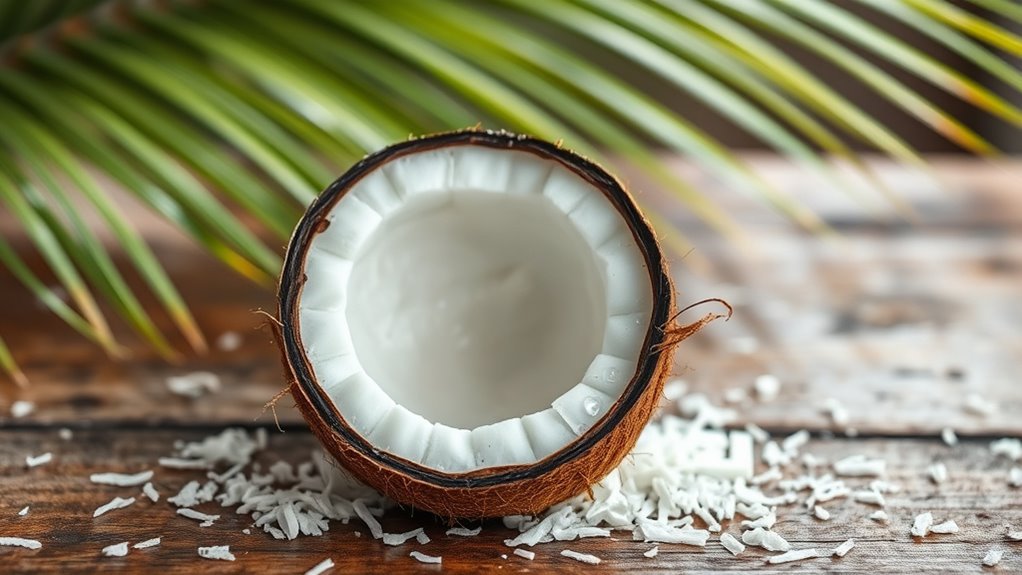

Yes, coconut is very keto-friendly! It’s packed with healthy fats, especially medium-chain triglycerides (MCTs), and has a low carbohydrate count. This makes it an ideal choice for maintaining ketosis. You can enjoy coconut oil, milk, and fresh coconut in various dishes, enriching your meals while supporting your diet. However, it’s important to monitor your portion sizes due to its calorie density. If you’re curious about delicious ways to include coconut in your meals, there’s more to explore!
Understanding the Keto Diet
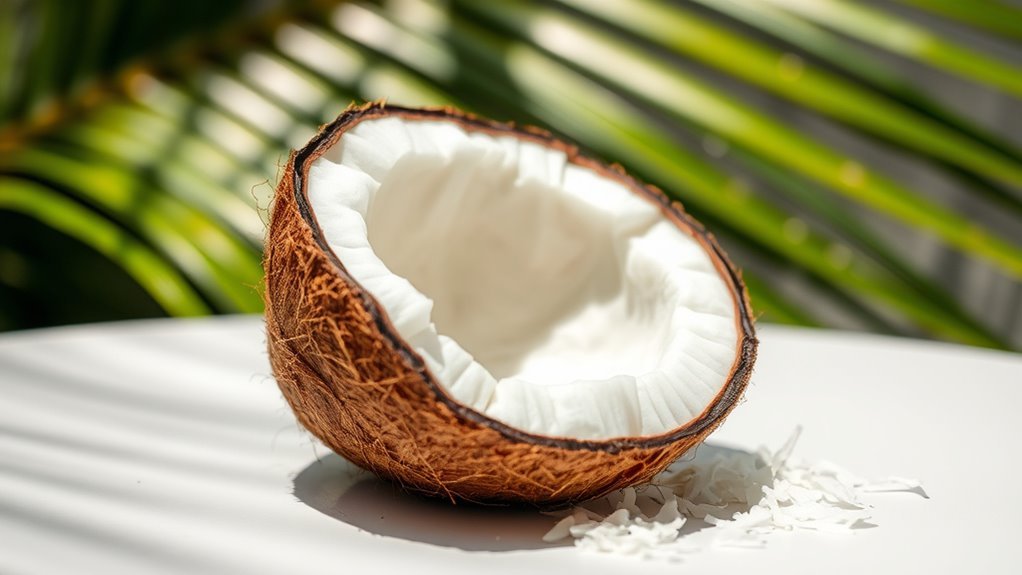
When you commence on the keto diet, you’re fundamentally shifting your body’s primary energy source from carbohydrates to fats. Understanding the keto basics is vital for success. The main diet principles involve drastically reducing carb intake and increasing healthy fat consumption. This creates a state called ketosis, where your body efficiently burns fat for energy. You’ll typically aim for a macronutrient ratio of about 70% fats, 25% protein, and 5% carbohydrates. This can offer you freedom from constant hunger and promote fat loss. However, it’s important to choose nutrient-dense foods and monitor your body’s response. Embrace this journey with an open mind and adapt your approach to find what works best for you while adhering to keto’s foundational principles.
Nutritional Profile of Coconut
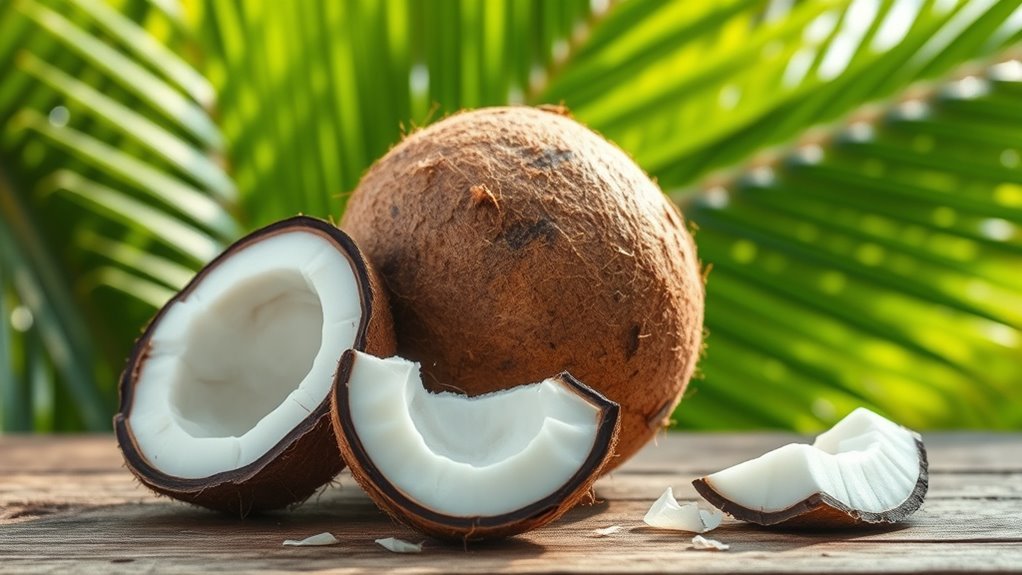
Coconut is a unique fruit that offers a variety of nutritional benefits, making it a popular choice for those on the keto diet. Its coconut composition is rich in healthy fats, primarily medium-chain triglycerides (MCTs), which can boost your energy and support weight management. With minimal carbohydrates, coconut aligns well with keto principles, allowing you to maintain ketosis while enjoying its flavor. Additionally, it provides essential nutrients like fiber, vitamins, and minerals, contributing to overall health. However, it’s important to evaluate the health implications of consuming coconut in moderation, as excessive intake may lead to increased calorie consumption. By incorporating coconut wisely into your diet, you’ll enjoy its benefits without compromising your keto goals.
Types of Coconut Products
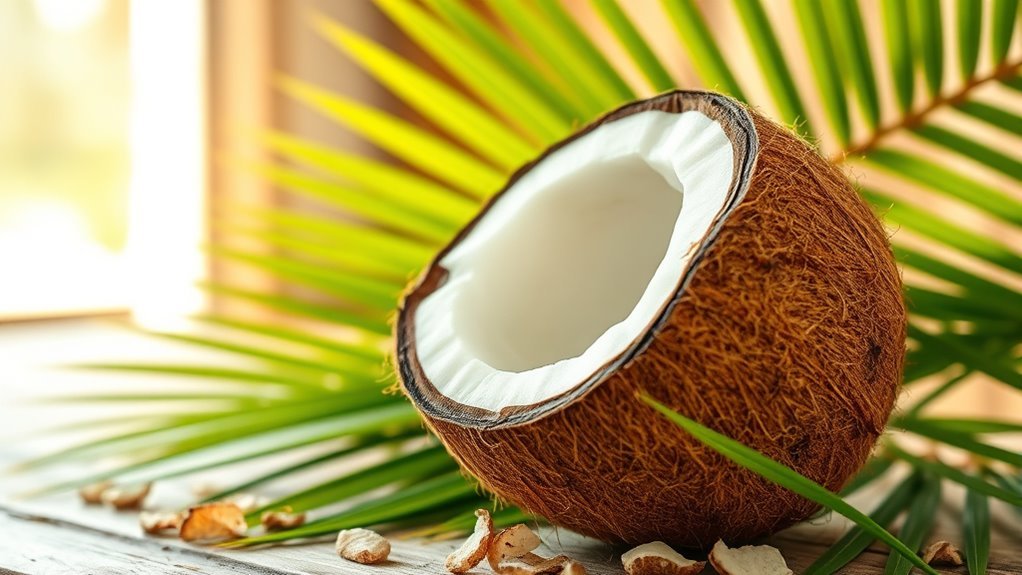
When considering coconut products, it’s crucial to understand their unique benefits and uses. Coconut oil is known for its potential health advantages, while coconut flour serves as a versatile gluten-free alternative in baking. Additionally, coconut milk offers a creamy texture and nutritional value, making it a popular choice in various diets.
Coconut Oil Benefits
Although many people associate coconut primarily with its delicious flavor, the various products derived from it, particularly coconut oil, offer a range of health benefits worth exploring. Coconut oil is a versatile ingredient that enhances cooking methods and promotes weight loss by increasing metabolism. It provides an energy boost, making it a popular choice among those following a keto diet. Beyond the kitchen, its skin benefits, such as moisturizing and improving elasticity, make it a staple in beauty routines. Additionally, coconut oil serves as an effective hair treatment, adding shine and reducing frizz. Its anti-inflammatory properties contribute to overall wellness, making it a valuable addition to your lifestyle. Embracing coconut oil can enhance both your health and beauty regimen.
Coconut Flour Uses
Many people may not realize that coconut flour is a versatile ingredient that can enhance a variety of recipes, especially for those following low-carb or gluten-free diets. Here are some popular uses for coconut flour:
- Baking: Use it in muffins, pancakes, or bread as a gluten-free alternative.
- Thickening Agent: Add it to soups or sauces to achieve a creamy texture.
- Breading: Coat proteins or vegetables for a crunchy, low-carb crust.
- Pudding or Smoothies: Mix it into these for added fiber and a subtle coconut flavor.
If you’re looking for coconut flour substitutes, almond flour or flaxseed meal can work well. For best results, store coconut flour in a cool, dry place to maintain its freshness.
Coconut Milk Nutrition
Coconut milk is a creamy, nutrient-rich beverage derived from the flesh of mature coconuts, making it a popular choice among those seeking dairy alternatives. Its nutritional value is impressive; it’s high in healthy fats, particularly medium-chain triglycerides (MCTs), which may support weight management and energy levels. When considering its health benefits, coconut milk can improve heart health and may offer antimicrobial properties. For those on a keto diet, its keto compatibility is favorable due to low carbohydrates and high fat content. You can incorporate coconut milk into various recipe ideas, from smoothies to soups, adding both flavor and nutrition. Embrace coconut milk as a versatile ingredient in your journey to a healthier lifestyle!
Coconut Oil: Benefits and Uses
Coconut oil offers a range of health benefits, including potential boosts in metabolism and heart health due to its unique fatty acid composition. In the kitchen, it’s a versatile ingredient that can enhance both flavor and cooking methods, making it suitable for various dishes. Understanding these aspects can help you incorporate coconut oil effectively into your diet.
Health Benefits Overview
While you might associate coconut oil primarily with cooking, its health benefits extend far beyond the kitchen. Incorporating coconut oil into your lifestyle can enhance your overall well-being thanks to its unique coconut nutrients. Here are four key benefits:
- Boosts Heart Health: Coconut oil’s medium-chain triglycerides may improve cholesterol levels.
- Supports Weight Management: It can help promote fat loss by increasing energy expenditure.
- Enhances Brain Function: The ketones produced from coconut oil may support cognitive health.
- Antimicrobial Properties: Lauric acid in coconut oil can help fight harmful bacteria and viruses.
Embracing these coconut health benefits can empower you to make choices that support your vigor and wellness effortlessly.
Culinary Applications Explained
When exploring the culinary applications of coconut oil, you’ll find its versatility makes it a popular choice in various dishes. Rich in medium-chain triglycerides (MCTs), coconut oil can boost energy and support weight management, aligning well with a keto lifestyle. You can use it for sautéing, baking, or even in smoothies, enhancing flavors while adding a nutritious twist. Its high smoke point makes it ideal for frying, ensuring stability under heat. Additionally, coconut oil’s unique flavor can inspire culinary creativity, whether you’re making curries or desserts. Embracing this oil allows you to experiment freely, enriching your meals while adhering to dietary goals. So, consider incorporating coconut oil for both its health benefits and its delicious culinary applications.
Coconut Milk and Cream: Keto-Friendly Options
One of the standout features of coconut milk and cream is their impressive low-carb profile, making them excellent choices for anyone following a keto diet. Their creamy texture adds richness to dishes without elevating your carb intake. Here are some nutritional benefits you can enjoy:
- Low in Carbs: Coconut milk and cream contain minimal carbohydrates, perfect for maintaining ketosis.
- Healthy Fats: They provide medium-chain triglycerides (MCTs), which can boost energy levels.
- Vitamins and Minerals: Rich in essential nutrients like manganese and copper, supporting overall health.
- Versatile Use: Ideal for smoothies, soups, and desserts, allowing you to create a variety of keto-friendly meals.
Incorporating coconut milk and cream into your diet can be both delicious and healthful.
Shredded Coconut: How to Incorporate It
If you’re looking to add a nutritious crunch to your keto meals, shredded coconut can be a fantastic option. It’s versatile and can enhance your diet in various ways. You can sprinkle it on top of keto desserts, blend it into coconut smoothies, or create delicious coconut snacks. Here’s a table to help you incorporate shredded coconut into your meals:
| Meal Type | Ideas | Serving Size |
|---|---|---|
| Keto Desserts | Coconut macaroons | 2-3 pieces |
| Coconut Snacks | Energy bites | 1-2 balls |
| Coconut Smoothies | Tropical smoothie blend | 1 cup |
| Toppings | Salads or yogurt | 2 tbsp |
With shredded coconut, you’re not just adding flavor; you’re boosting your nutrition too!
Fresh Coconut: A Low-Carb Treat
Fresh coconut is not only a delicious treat but also an excellent low-carb option for those following a keto diet. It’s packed with healthy fats and fiber, making it a satisfying choice. Incorporating fresh coconut into your meals can be simple and enjoyable. Here are some fresh coconut recipes and coconut snack ideas to take into account:
- Coconut Chunks: Slice fresh coconut into bite-sized pieces for a revitalizing snack.
- Smoothie Add-In: Blend fresh coconut with spinach and avocado for a creamy smoothie.
- Salad Topper: Add shredded fresh coconut to salads for a tropical twist.
- Coconut Curry: Use fresh coconut in your curry dishes for added flavor and texture.
With these ideas, you can easily enjoy the benefits of fresh coconut while staying true to your keto lifestyle!
Coconut Flour: Baking on a Keto Diet
Coconut flour, while not as commonly used as other flours, can be a game-changer for those on a keto diet looking to indulge in baked goods without the carbs. This low-carb flour is high in fiber and healthy fats, making it a fantastic alternative for cookies, muffins, and pancakes. When baking with coconut flour, remember that it absorbs more liquid than traditional flours, so you’ll need to adjust your recipes accordingly. Using coconut flour substitutes, like almond flour or sunflower seed flour, can also enhance your baking experience. Experimenting with different baking techniques, such as adding eggs for moisture or combining it with other keto-friendly flours, can yield delicious results, allowing you to enjoy treats while staying true to your dietary goals.
Potential Risks and Considerations
While coconut products can be a great addition to a keto diet, there are some potential risks and factors to keep in mind. Here are four important points to reflect on:
Coconut products can enhance a keto diet, but be aware of allergies, digestive issues, and caloric density.
- Coconut Allergies: Some people may have allergies to coconut, leading to skin reactions or gastrointestinal distress.
- Digestive Issues: Excessive consumption of coconut products, especially fiber-rich ones, can cause digestive discomfort such as bloating and gas.
- Saturated Fat Content: Coconut is high in saturated fats; while this can be fine in moderation, overconsumption might raise cholesterol levels for some individuals.
- Caloric Density: Coconut products are calorie-dense, so it’s vital to monitor portion sizes to maintain your keto goals.
Stay informed and mindful of your body’s responses to guarantee a balanced approach.
Delicious Keto Recipes With Coconut
If you’re looking to incorporate coconut into your keto diet, there are plenty of delicious recipes to explore. Coconut flour is a great low-carb alternative for baking, while coconut oil offers numerous health benefits, including improved fat metabolism. Let’s take a closer look at some tasty ways to use these coconut-based ingredients in your meals.
Coconut Flour Recipes
When you’re looking to incorporate coconut flour into your keto diet, you’ll discover a versatile ingredient that not only adds flavor but also provides a low-carb alternative to traditional flours. Here are some delicious coconut flour recipes you can try:
- Coconut Flour Pancakes – Light and fluffy, they’re perfect for a low-carb breakfast.
- Coconut Flour Cookies – Soft and chewy, these treats satisfy your sweet tooth without the carbs.
- Coconut Flour Bread – A great option for sandwiches or toast.
- Coconut Flour Muffins – Ideal for a quick snack or breakfast on-the-go.
These recipes are not only simple to make but also help you stay on track with your keto goals while enjoying tasty meals. Embrace the freedom of creativity in your cooking!
Coconut Oil Benefits
Coconut oil is a powerhouse ingredient that complements your keto diet with its numerous health benefits. With its unique fatty acids, it serves as an excellent energy source and supports weight management. Plus, it’s versatile for cooking uses, enhancing flavors in your keto recipes.
| Benefit | Description |
|---|---|
| Brain Health | May improve cognitive function and memory |
| Digestion Support | Aids in digestion and promotes gut health |
| Skin Care | Hydrates and protects skin, promoting a healthy glow |
Incorporating coconut oil into your routine can also provide skin care benefits, making it a multi-purpose staple. Embrace its richness while enjoying delicious keto meals!
Frequently Asked Questions about Coconut on a Keto Diet
1. Is coconut suitable for a ketogenic diet?
Yes, coconut is suitable for a ketogenic diet. It is low in carbohydrates and high in healthy fats, making it an excellent choice for those following a keto lifestyle. Coconut products, such as coconut oil, coconut milk, and shredded coconut, can provide essential fats that support ketosis.
2. What types of coconut can I consume on a keto diet?
On a keto diet, you can consume various forms of coconut, including coconut oil, coconut milk, shredded coconut, and coconut flour. Each of these products contains healthy fats and minimal carbs, making them ideal for maintaining ketosis. However, always check the labels for added sugars or preservatives.
3. How many carbs are in coconut?
The carbohydrate content in coconut varies depending on the form. For instance, one cup of shredded coconut contains approximately 12 grams of carbs, but it also has a high fiber content (about 7 grams), which effectively reduces net carbs to about 5 grams. Coconut oil, on the other hand, contains no carbohydrates, making it a perfect addition to a keto diet.
4. Can I eat coconut on a daily basis while on keto?
Yes, you can eat coconut daily on a keto diet, but moderation is key. Due to its high-fat content, it can contribute significantly to your daily calorie intake. Including coconut in your meals can provide essential nutrients while helping you stay in ketosis, but balance it with other low-carb foods to maintain nutritional variety.
5. Are there any health benefits of consuming coconut on a keto diet?
Yes, consuming coconut on a keto diet offers several health benefits. Coconut is rich in medium-chain triglycerides (MCTs), which can boost energy levels and promote fat burning. Additionally, it contains antioxidants and fiber, which can improve digestive health. The healthy fats in coconut may also support heart health and help regulate cholesterol levels.
References
- https://en.wikipedia.org/wiki/Coconut
- https://www.ncbi.nlm.nih.gov/pmc/articles/PMC6313445/
- https://www.healthline.com/nutrition/coconut-oil-and-keto-diet
- https://www.webmd.com/diet/obesity/features/coconut-oil-and-weight-loss
- https://www.hopkinsmedicine.org/health/wellness-and-prevention/the-truth-about-coconut-oil
- https://www.mayoclinic.org/healthy-lifestyle/nutrition-and-healthy-eating/in-depth/coconut-oil/art-20045883
- https://www.heart.org/en/news/2020/11/25/what-you-should-know-about-coconut-oil-and-heart-health
- https://www.verywellfit.com/coconut-oil-and-keto-diet-5115558