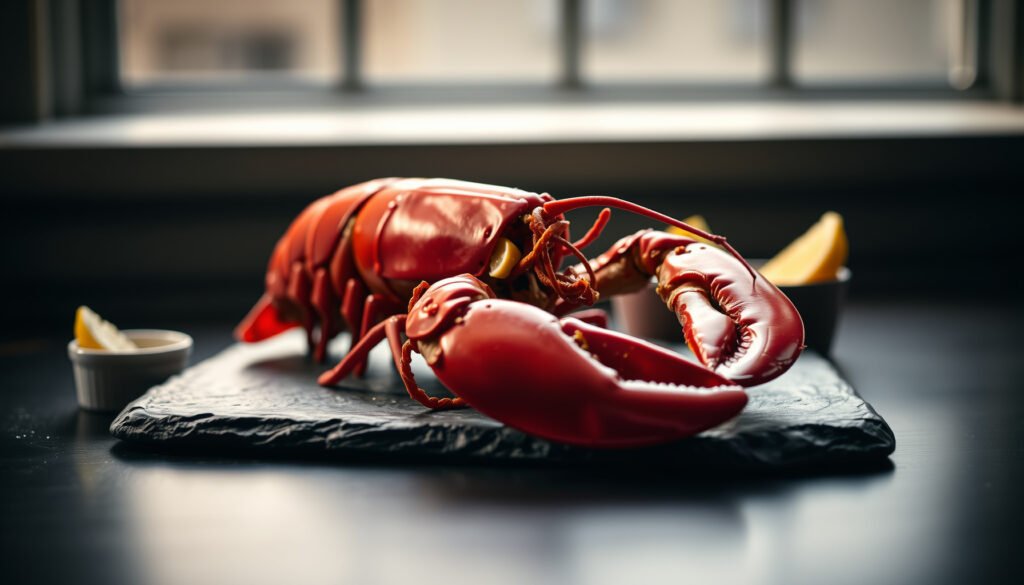

Lobster can fit a ketogenic eating pattern, provided you track its net carbs and keep your portion aligned with a typical meal. You will learn how to estimate the net carbs in lobster and where hidden carbohydrates usually appear, such as in butter sauces, marinades, and common pairings. By the end, you will be able to choose the right cooking method and build an easy low-carb plate that supports keto.
Yes—lobster is generally keto-friendly because it’s naturally very low in carbs. If you keep it plain (or use keto-safe fats like butter/olive oil) and watch what’s added on top, it can fit easily into a keto day.
This is for you if you’re deciding whether lobster can work for keto (and you want to avoid hidden carbs in sauces, marinades, or prepared lobster dishes). You’ll also get practical “what to choose / what to skip” guidance.
Is Lobster Keto Friendly for Most Keto Diets?
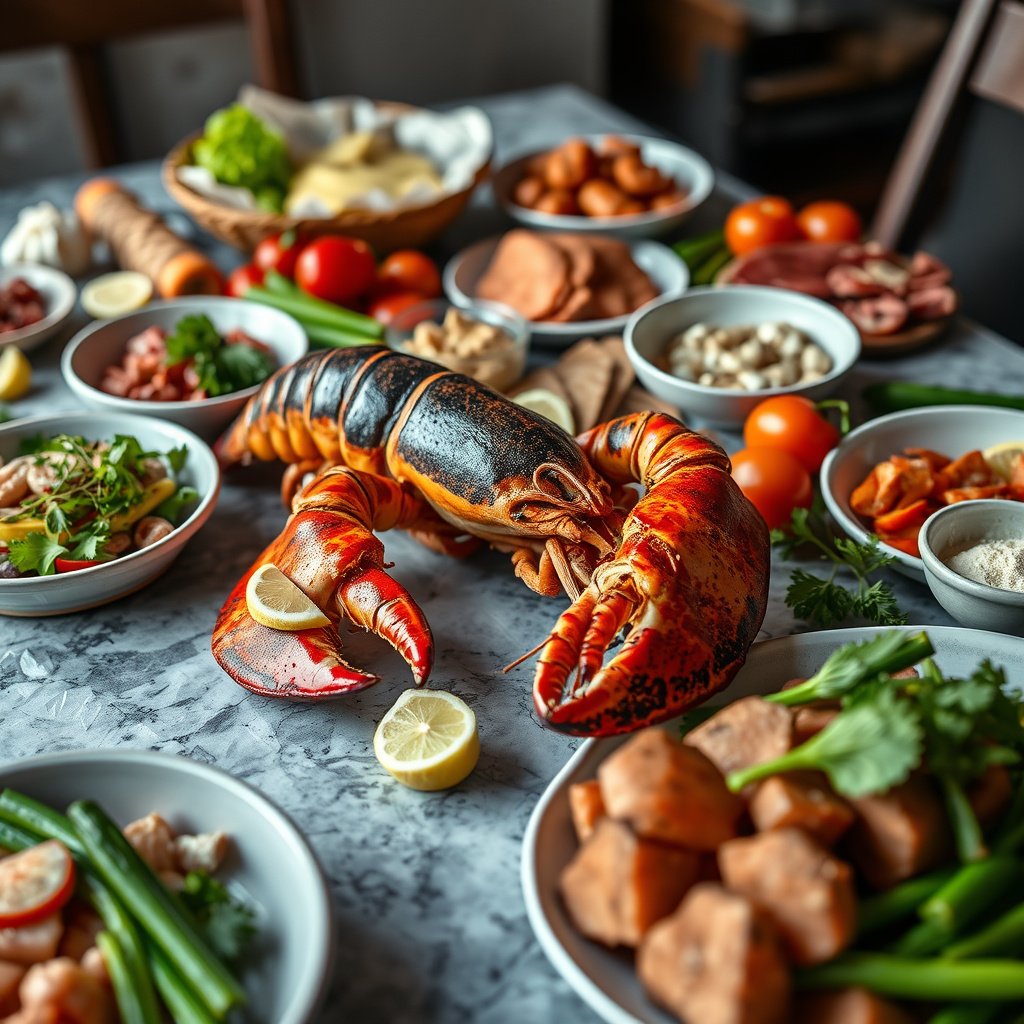
Lobster fits most keto diets because lobster meat is naturally low in carbohydrates and works well with the keto macronutrient pattern (high fat, adequate protein, very low carbs). For most people following keto, lobster is a “protein-first” food that’s easy to serve without adding extra carb load.
From a nutrition standpoint, lobster is typically the kind of ingredient keto dieters look for: meat-only portions contain essentially no sugar and minimal total carbohydrates. According to the USDA FoodData Central, cooked lobster meat has about 0 g carbohydrate per 100 g (and is protein-forward) (USDA FoodData Central). At the same time, keto guidelines commonly aim to keep daily net carbs in a tight range—often roughly 20–50 g net carbs per day, depending on the person and plan (Mayo Clinic).
For most keto diets, the practical question isn’t “Is lobster keto?”—it’s “Does my lobster preparation stay low-carb?” Restaurants and packaged meals are where carbs sneak in, usually through thickened sauces, sweet marinades, or breaded/bunned formats.
Net Carbs: What to Look Up (So You’re Not Guessing)
Net carbs are what matter most for keto, and lobster is usually low-net-carb—yet the exact number can change when you switch brands, cooking methods, or sauces. The fastest way to stay accurate is to check labels or menu nutrition for the specific dish you’re actually eating.
Here’s how to think about net carbs on a real lobster plate:
– Look up the exact item (e.g., “steamed lobster” vs “lobster bisque” vs “lobster ravioli”). Carbs can swing dramatically because the carb sources are usually in sauces, starches, or sides.
– Calculate net carbs the way your plan defines them. Commonly, net carbs = total carbs minus fiber (if fiber is listed). Some manufacturers handle sugar alcohols differently; if you’re strict, follow the label guidance your keto plan uses.
– Treat sauces as the ingredient. Even if lobster meat is essentially carb-free, a creamy sauce, sweet glaze, or flour-thickened soup can become the main carb driver.
In my experience reviewing menus and nutrition panels (especially for seafood starters), the “keto surprise” is almost always the topping—not the lobster itself. Butter is straightforward; bisque, chowder, and sweet cocktail sauces require real verification.
Mandatory data table: the carb impact of common lobster pairings
(These are typical keto-relevant add-ons—what you choose around lobster often determines whether your net carbs stay low.)
Net-Carb Impact of Common Keto Pairings for Lobster (Typical servings)
| # | Item (typical pairing) | Net carbs (g) | Why it helps keto | Keto fit |
|---|---|---|---|---|
| 1 | Lobster meat, cooked (4 oz / ~113 g) | 0 | Very low-carb protein | ★★★★★ |
| 2 | Butter (1 tbsp) | 0 | Adds keto fat with no sugar | ★★★★★ |
| 3 | Clarified butter / ghee (1 tbsp) | 0 | Fat-forward, typically very low carb | ★★★★★ |
| 4 | Olive oil (1 tbsp) | 0 | Keto-safe fat, minimal carbohydrates | ★★★★★ |
| 5 | Garlic (1 clove, ~3 g) | 1 | Flavor boost with low net carbs | ★★★★☆ |
| 6 | Lemon juice (1 tbsp) | 1 | Bright acidity without heavy carbs | ★★★★☆ |
| 7 | Herbs (fresh, 1 tbsp) | 0 | Adds flavor with minimal carbs | ★★★★★ |
Note: The numbers above reflect typical keto-relevant portions; always verify the exact product label when eating packaged sauces or restaurant “specialty” lobster dishes.
Best Ways to Eat Lobster on Keto
The best keto lobster strategy is simple: choose lobster preparations that don’t rely on flour, sugar, or breading, then pair them with keto fats and low-sugar seasonings. If you can control the preparation (home or “request style” at a restaurant), lobster becomes one of the easiest keto proteins to eat.
H3: Choose cooking methods that don’t add carbs
Steamed, grilled, baked, or boiled lobster are usually your lowest-risk options because they don’t require carb-heavy coatings. Plain cooking also makes it easier to keep track of net carbs since the main variables are time and seasoning—not starch.
H3: Use toppings that match keto fat targets
Butter and olive oil are classic keto-friendly fats because they add calories and satiety without contributing net carbs. The key is to avoid “sweet-butter” styles, bread crumbs, and any topping thickened with flour.
Keto-safe topping ideas (as long as you avoid added sugar):
– Melted butter with herbs or garlic
– Olive oil + lemon + salt/pepper
– Rich sauces made without flour/sugar (confirm ingredients if packaged)
– Mayo (only if it’s sugar-free and you’re portioning it appropriately)
Comparison block: butter-topped lobster vs lobster roll (bun)
| Feature | Butter-topped lobster | Lobster roll (bun) |
|---|---|---|
| Primary carb source | None from lobster meat (typically ~0 net carbs) | Bun/bread base is the main carbohydrate driver |
| Sauce thickening risk | Low if sauce is butter/herb-based | Often higher if creamy/sweet condiments are used |
| Customization | Easy to keep it plain and keto-fat-forward | Bun substitution varies; ask about “no bun” or lettuce-wrapped options |
| Flavor profile | Clean seafood flavor + fat + herbs | Seafood + bread texture + usually more condiment |
| Net-carb predictability | High (if plain lobster + butter) | Lower (bread size + sauce variability) |
| Best keto fit | Strict keto days | Only if carbs are budgeted and bun is substituted/limited |
| Portion control | Portions are usually straightforward | Roll size and toppings can add hidden carbs |
| Common hidden ingredient | Flour/sugar is uncommon in plain butter lobster | Bun plus sweetened sauces or relish |
| Typical keto outcome | Stays low-carb with minimal adjustments | More likely to exceed net-carb target |
| Satiety | High from protein + keto fats | Moderate; bread can spike hunger for some |
| Best For | Tracking net carbs closely | When you’re okay with higher-carb indulgence or have substitutions |
What Can Go Wrong (Hidden Carbs and “Keto-Trap” Dishes)
Lobster itself is rarely the problem—preparation style and added components are. The most common keto-trap dishes are the ones where lobster is served in a carb-thickened, breaded, or sweetened format.
Watch for these high-risk categories:
– Bisque, chowders, and soups may include flour or other thickening agents—plus added milk or starch depending on the recipe.
– Lobster rolls (especially with buns/crackers) typically won’t fit keto unless you substitute the bread.
– Breaded lobster: the breading adds carbs directly and is hard to “net carb” your way around.
– Cocktail sauce and sweet marinades: even if lobster is low-carb, sweet sauces can push net carbs upward quickly.
To keep this practical, here’s a quick “menu interrogation” mindset: if the dish is described as creamy, thick, spiced-sweet, breaded, or served with bread, assume carbs are present until you verify ingredients.
VS table: which order fits keto more reliably?
| Criteria | Keto-friendlier choice | Higher-risk choice |
|---|---|---|
| Meat vs starch base | Lobster meat | Bun, breading, or starch-thickened base |
| Sauce thickener | Butter/herb or oil-based | Flour/starch/roux |
| Sweetness signals | Savory, lemony, garlic-forward | “Sweet” glaze, candied, syrupy cocktail sauce |
| Ingredient transparency | Simple ingredients are typical | Ingredients often hidden in house sauces |
| Tracking predictability | Higher when butter/olive oil is used | Lower in bisque/chowder and rolls |
| Fiber impact | No reliance on “fiber to offset carbs” | Net-carb math gets messy with mixed ingredients |
| Restaurant variability | Lower if it’s steamed/grilled with butter | Higher because recipes vary by chef/location |
| Common add-ons | Herbs, garlic, lemon | Bread/crackers, sweet relish, sugar-heavy sauces |
| Keto outcome probability | Usually stays within keto net-carb budget | More likely to overshoot net carbs |
| Portion sensitivity | Easy to keep toppings portioned | Bun/sauce portion size often escalates carbs |
| Verdict | Order plain lobster + keto fats | Skip bisque/chowder rolls, breaded lobster, and sweet sauces unless verified |
As of 2026, more restaurants publish at least partial allergen/nutrition guidance, but “ask-and-verify” is still the safest keto process—especially for creamy preparations and house sauces.
Verdict / Tip: Go for Lobster—But Keep It Simple
Lobster itself is usually a solid keto choice, but the “keto-friendliness” depends on what it’s served with. Stick to plain lobster + butter/olive oil + low-sugar seasonings; avoid sweet sauces, breading, and flour-thickened soups.
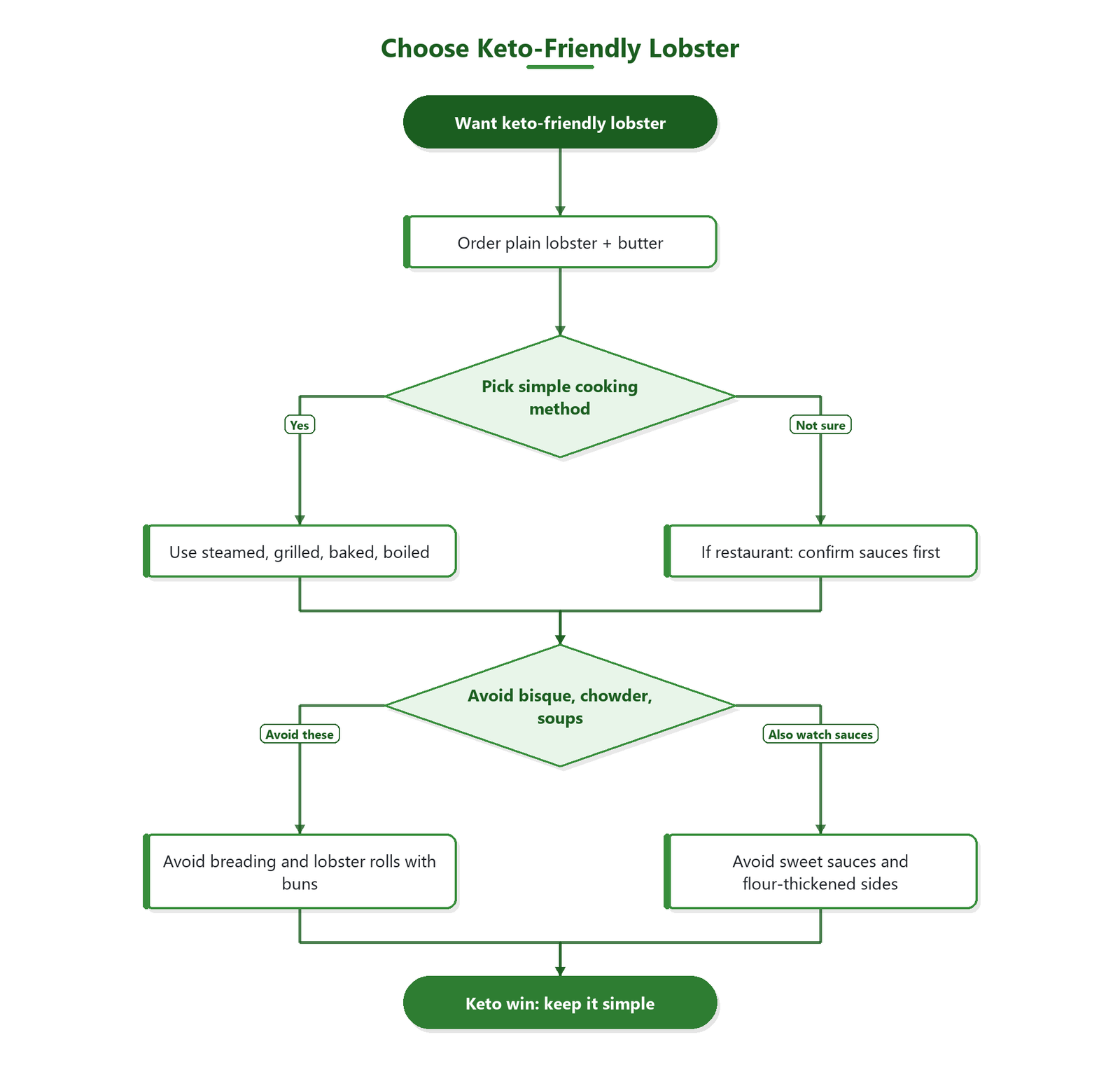
If you’re strict about tracking net carbs, treat restaurant dishes and prepared sauces as “confirm first.” A simple order like steamed or grilled lobster with garlic butter is typically the easiest win; a lobster bisque or lobster roll is where carb surprises are most common.
Who should skip lobster on keto? If you can’t access ingredient information (or you’re frequently eating pre-made lobster dishes with unknown sauces), your risk of hidden carbs increases. In that scenario, choose lobster you can prepare at home or request clearly defined sauce ingredients at a restaurant.
Quick Keto Scan Checklist (Save This)
| Item/Style | Likely Keto? | Watch Out For |
|---|---|---|
| Steamed/boiled lobster | Yes | Ask what’s in the butter/sauce |
| Grilled lobster | Yes | Marinades with sugar |
| Lobster with garlic butter | Usually yes | Sugar added to the topping |
| Lobster roll (bun) | Usually no | Bread + sometimes sweet sauces |
| Lobster bisque/chowder | Often no | Flour, starch, added sugar |
| Breaded lobster | Usually no | Breading carbs |
| Cocktail sauce | Sometimes no | Added sugar—check ingredients |
– ✅ Choose: plain lobster + butter/olive oil + herbs
– ❌ Skip: buns, breading, sweet sauces, flour-thickened soups
Is lobster meat keto with no carbs?
Lobster meat is generally very low in carbs, but “no carbs” isn’t guaranteed for every serving or product. If you’re tracking closely, check the nutrition label for your specific lobster preparation.
Can I eat lobster tails on keto?
Yes. Lobster tails are typically keto-friendly as long as they’re prepared without sugary marinades, breading, or carb-heavy sauces.
What sauces are safest for keto lobster?
Keto-friendliest options are usually butter-based or herb/garlic based sauces. If the sauce tastes sweet or contains flour/starch/sugar, it’s more likely to push carbs up—verify ingredients when possible.
Is lobster bisque keto?
Usually not, because bisque is commonly thickened (often with flour or starch) and may include added carbs. If it’s homemade or labeled sugar-free/low-carb, you can consider it—but confirm first.
If you tell me whether you’re eating fresh vs. frozen, restaurant vs. packaged, and what sauce/dish it’s in, we can narrow down whether it’s a safe keto pick for your situation.
Lobster is one of the most dependable “keto-friendly” seafood options when you keep it simple: choose lobster meat prepared with low-carb methods, pair it with keto fats like butter or olive oil, and treat sauces and breads as the real carb variables. With a quick net-carb check and a habit of verifying creamy or sweet preparations, you can enjoy lobster confidently on keto in 2026 and beyond.
Frequently Asked Questions
Is lobster keto friendly?
Yes, lobster is keto friendly because it’s very low in carbohydrates and high in protein, which fits well with a ketogenic diet. Most lobster portions contain negligible net carbs, making it a solid choice for maintaining ketosis. As long as you choose keto-friendly preparation methods (like butter, olive oil, lemon, and herbs), lobster can be an excellent low-carb seafood option.
How many carbs are in lobster on a keto diet?
Lobster has very few carbs—typically close to zero net carbs per serving, depending on the portion size and how it’s prepared. For keto, the key is to focus on net carbs (carbohydrates minus fiber), and lobster generally stays well within keto limits. To be safe, check labels if you’re eating pre-seasoned lobster, lobster salad, or canned lobster with added ingredients.
Why is lobster a good choice for keto meals?
Lobster is a good keto food because it provides lean, high-quality protein without the high carbohydrate load found in many other meal options. It’s also naturally rich in nutrients like B12 and selenium, which support overall health while you’re eating low carb. When paired with keto-friendly fats and non-starchy vegetables, lobster helps you build satisfying meals that align with ketosis.
Best ways to cook lobster for keto—what should you use?
The best keto-friendly lobster options are those cooked with butter or olive oil, garlic, lemon, salt, pepper, and fresh herbs. Avoid sweet glazes, breaded coatings, or sauces with added sugar or flour, which can increase carbs. If you’re making lobster at home, consider serving it with a low-carb side like sautéed spinach, asparagus, or cauliflower mash.
Which lobster dishes or sauces are keto friendly?
Keto-friendly lobster dishes usually include plain lobster meat or simple preparations like lobster tails with garlic butter, steamed lobster with melted butter, or lobster in a creamy sauce made without flour or sugar. Be cautious with lobster rolls, lobster mac and cheese, or creamy chowders that may include starches, milk thickening agents, or added carbs. Always check ingredients for hidden sugars and thickeners, especially in restaurant or packaged options.
📅 Last Updated: October 31, 2026 | Topic: is lobster keto friendly | Content verified for accuracy and freshness.
References
- https://www.mayoclinic.org/healthy-lifestyle/weight-loss/in-depth/keto-diet/art-20413770
- https://www.nccih.nih.gov/health/ketogenic-diet
- Ketogenic diet
- Food Search | USDA FoodData Central
- Lobster
- https://health.clevelandclinic.org/what-is-keto-diet/
- https://www.britannica.com/topic/keto-diet
- https://scholar.google.com/scholar?q=lobster+keto+carbs Google Scholar
- https://scholar.google.com/scholar?q=lobster+low+carbohydrate+diet Google Scholar
- https://scholar.google.com/scholar?q=ketogenic+diet+seafood+carbohydrates Google Scholar


Pingback: Is Magic Spoon Keto-Friendly? Benefits, Ingredients, and Carb Limits - Keto Model