

Most people think keto and Atkins are the same because they both limit carbs, but keto is designed to keep you in nutritional ketosis while Atkins is a broader, staged approach that often reintroduces carbs over time. That difference matters in everyday choices like how strictly you track carbs, how meals are structured, and what level of ketosis you can expect. Knowing which one you’re actually following helps you set realistic expectations and avoid accidental mismatch with your goals.
No—keto and Atkins are related, but they’re not the same. Keto is specifically about getting your body into and staying in nutritional ketosis by keeping carbs very low, while Atkins is a phased low-carb program that often loosens carb limits later. If you’re choosing between them for fat loss, blood sugar support, or meal planning in 2026, the carb “intent” (stay in ketosis vs ramp carbs based on your response) is the difference that matters most.
Who this is for (and when it applies)
This keto vs Atkins comparison is most useful when the names are getting mixed up in your feed and you need clarity on what you’d actually be following. It’s also relevant if you want a plan you can sustain for months, not just through a strict start.
– You’re comparing keto vs Atkins because the names get used interchangeably online.
– You want to know whether “Atkins” automatically means “keto” (and whether it will feel as strict).
– You’re deciding what to follow based on carb limits, cravings, and long-term adherence.
In practical terms, keto and Atkins both rely on carb reduction, so it’s easy to see overlap—especially at the beginning. But the longer you plan to eat this way, the more you’ll feel the structural difference: keto is designed to keep carbs consistently low, while Atkins is designed to adjust carbs upward after an initial phase. That distinction strongly affects appetite, energy stability, and whether you can stay in nutritional ketosis.
Keto vs Atkins: the core difference
The core difference is that keto aims to maintain nutritional ketosis, while Atkins uses phases and often increases carbs later. They can start similarly, but their end goals and rules diverge once you move past the earliest phase.
– Keto is a framework focused on staying in ketosis; carbs are kept very low so your body keeps using fat for fuel.
– Atkins is a phased low-carb program (often starting most restrictive, then easing up), and the end goal for many people includes adding carbs back.
– They can overlap—especially in the early, lower-carb phase of Atkins—but the intent and structure aren’t identical.
A helpful anchor is how nutritional ketosis is commonly defined in medical keto discussions. According to a comprehensive medical review, nutritional ketosis generally corresponds to beta-hydroxybutyrate at or above ~0.5 mmol/L (Yancy et al., 2019). Keto protocols target this state as a continuing goal; Atkins may produce it early, but its later phases may allow enough carbohydrates to move you out of that ketosis range.
How each plan typically works (in plain English)
The simplest way to understand keto and Atkins is that keto is “consistent rules,” while Atkins is “start strict, then individualize.” Both restrict carbs, but they manage carbs differently over time.
Keto basics
Keto works by limiting carbs to a level that reduces glucose availability and encourages fat-derived ketones to become a primary fuel source. In practice, that usually means tracking carbs (often net carbs) closely and maintaining a relatively stable daily limit. As of 2026, most consumer keto approaches land in the broad “ketosis-supporting” range—commonly around 20–50 g net carbs/day, though individuals vary.
Keto meal patterns are typically built around:
– Fats (to provide energy and satiety)
– Moderate protein (enough to support muscle, but not so high that carb intake becomes hard to manage)
– Low-carb vegetables and careful carbohydrate choices (so you don’t accidentally overshoot your limit)
What trips people up most often is the belief that “low carb = keto.” It’s not just low carb—it’s low carb enough and consistent enough to keep you in ketosis. In my day-to-day conversations with people comparing keto vs Atkins, the moment they loosen carb control on keto “for convenience,” ketosis tends to weaken or disappear.
Atkins basics
Atkins is a structured, phased approach. It typically begins with an intentionally restrictive stage (commonly called Induction) and then gradually adjusts carbs upward based on progress and—depending on the specific Atkins version—your “acceptable carb” range. Atkins is less about keeping ketosis as an ongoing requirement and more about using carb progression as a method for adherence and long-term maintenance.
In plain language, Atkins usually looks like this:
– Induction: most restrictive period to quickly reduce carb intake
– Ongoing Weight Loss (OWL): gradual carb increases while monitoring hunger and weight trends
– Transition / Pre-maintenance and Maintenance: more individualized carb targets designed to help you stay satisfied without regaining weight
According to Atkins guidance, Induction commonly starts at 20 g net carbs/day and runs for about 14 days (Atkins guidance on Induction phase). That early stage is why Atkins can feel keto-like at first—especially for people who only follow the first phase and don’t move into later carb reintroduction.
Keto vs Atkins carb targets in “what you actually track”
Below is a quick reference for how the carb targets often differ when people are trying to stay in nutritional ketosis versus progressing through Atkins.
Typical Net-Carb Targets and Expected Ketosis Consistency (Keto vs Atkins, 2026 practice)
| # | Approach (example target) | Typical net carbs/day | How “always-on” ketosis is | Ketosis consistency (★/5) | Primary risk |
|---|---|---|---|---|---|
| 1 | Classic keto (staying in ketosis) | 20–30 g | High | ★★★★★ | Carb creep ends ketosis |
| 2 | Moderate keto (still ketosis-oriented) | 30–50 g | Moderate | ★★★★☆ | Some days may drop below/above ketosis |
| 3 | Atkins Induction (Phase 1) | 20 g | Limited window | ★★★★☆ | Ketosis may not last into later phases |
| 4 | Atkins OWL (early reintroduction) | 25–35 g | Variable | ★★★☆☆ | May move out of measurable ketosis |
| 5 | Atkins OWL (mid-range carbs) | 35–50 g | Lower | ★★☆☆☆ | Ketosis may be inconsistent |
| 6 | Atkins pre-maintenance (individualized) | 45–60 g | Often off | ★☆☆☆☆ | No longer keto-adherent unless re-tightening |
| 7 | Atkins maintenance (carb range varies) | 50–100 g | Low | ☆☆☆☆☆ | Not designed for ongoing ketosis |
What can go wrong (common mistakes & edge cases)
The most common failures happen when people treat keto and Atkins as interchangeable when they’re not. The moment carb intent changes—especially Atkins’ later phases—results and symptoms often shift.
– Assuming they’re interchangeable: You can do Atkins in a way that looks like keto early on, but the carb reintroduction later can move you out of ketosis.
– Protein/carbs confusion: Some people raise protein thinking it’s always fine, then unintentionally struggle with ketosis (especially on stricter keto approaches).
– Skipping the “transition” thinking: If you switch from keto to Atkins later (or vice versa), cravings and energy levels may change because your carb pattern changes.
– Medication/safety concerns: If you have diabetes or take glucose-lowering meds, lowering carbs can affect blood sugar—work with a clinician to avoid hypoglycemia risk.
Here’s one more operational issue: keto and Atkins can both be low-carb, but neither plan is “automatically complete.” Keto-style eating often reduces fiber unless you plan carefully with low-carb vegetables. The Dietary Guidelines for Americans recommend adequate fiber—commonly about 25 g/day for women and 38 g/day for men (Dietary Guidelines for Americans 2020–2025). If fiber drops, digestion and appetite can worsen, which can make the plan feel “harder” even if carbs are technically within range.
Also, the “net carbs” concept (total carbs minus fiber) can create confusion. Some tracking apps and food labels count differently, and small errors can matter if you’re aiming for ketosis. If you choose keto, you typically need tighter tracking consistency. If you choose Atkins, your tracking still matters, but the goal becomes finding your personal carb tolerance without triggering unwanted weight regain.
Verdict / tip (what I’d recommend, and who should skip)
The best choice depends on what you want the diet to do: keto targets ketosis continuously, while Atkins targets a phased low-carb progression. In 2026, the most reliable decision rule is to match your choice to your carb-intent, not the name you’ve heard online.
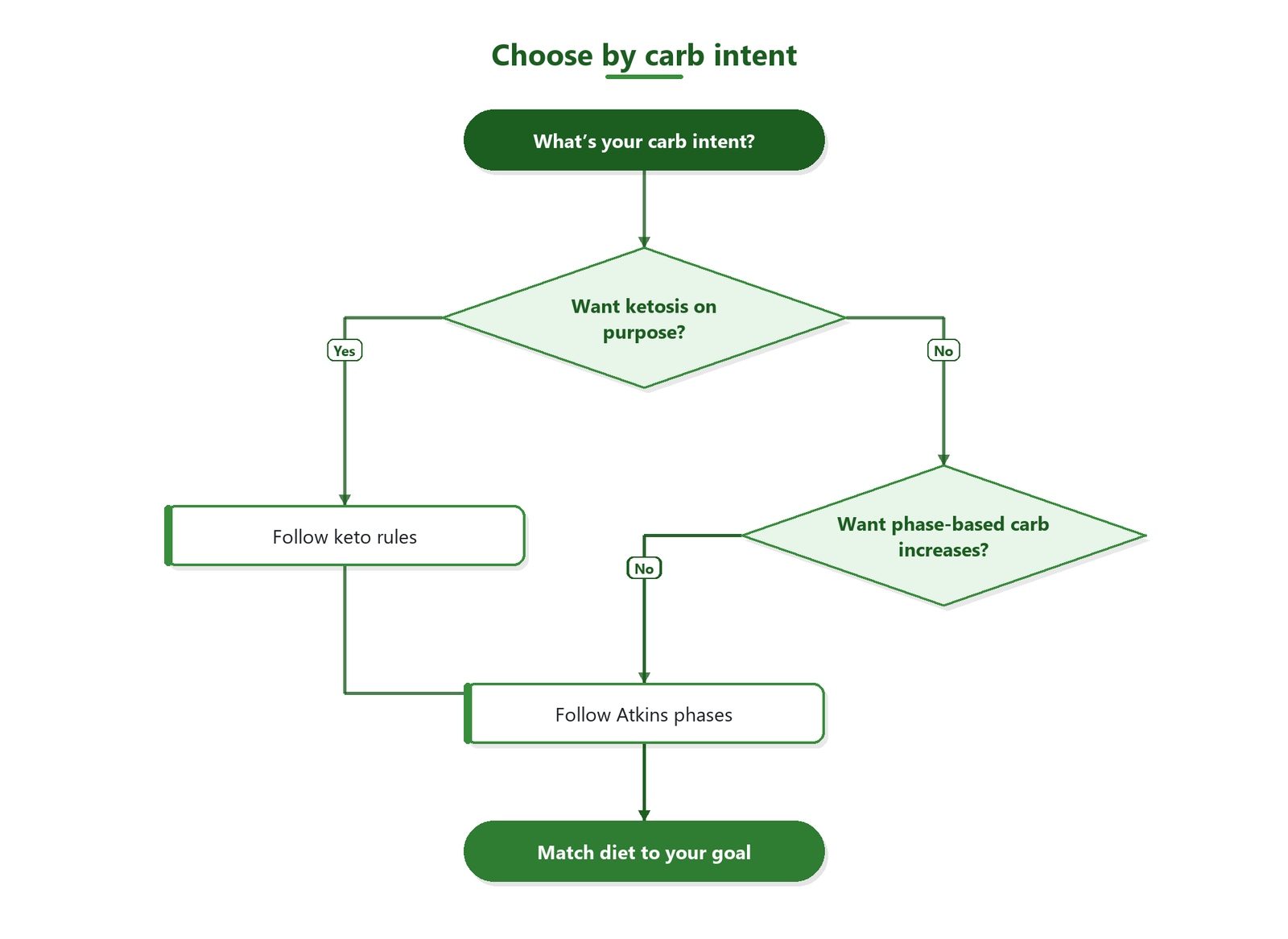
– If your goal is staying in ketosis (common for keto dieters), follow keto rules, not just “low carb.”
– If your goal is a structured plan that may allow more carbs later, Atkins can be a better fit—especially if adherence is easier when restrictions loosen.
Here are the tradeoffs people usually notice first:
| Plan | Pros (what tends to work) | Cons (what tends to feel harder) |
|---|---|---|
| Keto |
Designed to maintain nutritional ketosis; often more predictable energy/appetite patterns once adapted. |
Can feel strict long-term; social situations and “carb creep” can quickly disrupt ketosis. |
| Atkins |
Phased structure and carb reintroduction can improve long-term adherence for many people. |
If you expect ongoing ketosis, later phases can surprise you (and reduce keto-specific effects). |
Downsides to consider:
– Keto can be harder socially and may feel strict long-term for some people.
– Atkins can be confusing if you think “Atkins = keto” and then feel surprised when ketosis stops during later phases.
Skip or get medical guidance first if you’re managing diabetes, have a history of eating disorders, are pregnant/breastfeeding, or have kidney disease—carb changes and ketosis can impact your situation.
Quick scan: Keto vs Atkins checklist
| Checkpoint | Keto | Atkins |
|---|---|---|
| Main goal | Stay in ketosis | Follow phases; often reduce carbs then reintroduce |
| Carbs | Consistently very low | Very low at first; may rise later |
| Structure | Ongoing keto-style carb control | Phase-based progression |
| If you “do Atkins” will you be in ketosis? | Not guaranteed (depends on phase) | Often during the most restrictive phase |
Fast decision rule:
– Want ketosis on purpose? Choose keto.
– Want a phase-based plan with carb increases later? Consider Atkins.
Frequently Asked Questions
Is keto the same as Atkins?
Keto and Atkins are related low-carbohydrate diets, but they are not the same. Atkins typically starts with a strict carb reduction and then gradually increases carbs during “induction” and “ongoing weight loss” phases, depending on your plan. Keto is a metabolic approach that aims to keep your body in nutritional ketosis by limiting net carbs consistently and often prioritizing higher fat intake.
How do keto and Atkins differ in carbohydrate limits?
Keto generally requires you to keep net carbs low enough to maintain ketosis, often around 20–50 grams of net carbs per day, depending on the person. Atkins has a more phased structure where carb grams may increase over time as you progress through maintenance or other stages. Because the carb targets and progression differ, you may be able to eat more carbs on Atkins than on strict keto while still following its guidelines.
Which diet is better for weight loss: keto or Atkins?
Both keto and Atkins can support weight loss because they reduce refined carbohydrates and often improve appetite control. Keto may lead to faster initial results for some people because ketosis can reduce hunger and stabilize blood sugar. Atkins can work well too, especially if you prefer a structured plan that gradually reintroduces carbs, but the best choice depends on your lifestyle, food preferences, and how consistently you can follow the carb targets.
Why do people say keto and Atkins work similarly?
Keto and Atkins both emphasize limiting carbs and increasing dietary fat and protein, which can lower insulin levels and shift your metabolism away from glucose. This overlap is why many people notice similar benefits such as reduced cravings and improved satiety. However, keto’s primary goal is nutritional ketosis, while Atkins focuses more on a phased carb strategy that may or may not keep you in ketosis at every stage.
What should you do if you’re switching from Atkins to keto?
If you’re moving from Atkins to keto, you’ll usually need to tighten your net carb target to stay in ketosis and reduce the carbs that Atkins adds back during later phases. Track net carbs (total carbs minus fiber) and consider using ketone testing or keto-focused macros to confirm you’re actually in ketosis. Also watch for “keto flu” symptoms during the transition by staying hydrated and ensuring adequate electrolytes like sodium, potassium, and magnesium.
📅 Last Updated: October 31, 2026 | Topic: is keto the same as atkins | Content verified for accuracy and freshness.
References
- Ketogenic diet
- Atkins diet
- Low-carbohydrate diet
- Ketosis
- https://pubmed.ncbi.nlm.nih.gov/?term=ketogenic+diet+atkins+diet
- https://pubmed.ncbi.nlm.nih.gov/?term=low+carbohydrate+diets+ketogenic+vs+atkins
- https://pubmed.ncbi.nlm.nih.gov/?term=atkins+diet+ketogenic+diet+comparison
- https://scholar.google.com/scholar?q=ketogenic+diet+vs+atkins+diet Google Scholar
- https://scholar.google.com/scholar?q=ketogenic+diet+atkins+low+carbohydrate+diet Google Scholar
- https://scholar.google.com/scholar?q=carbohydrate+restriction+ketosis+atkins+diet+review Google Scholar


Pingback: Is Keto the Same as Low Carb? Key Differences Explained - Keto Model
Pingback: Is Keto Worth It? What to Know Before You Start - Keto Model