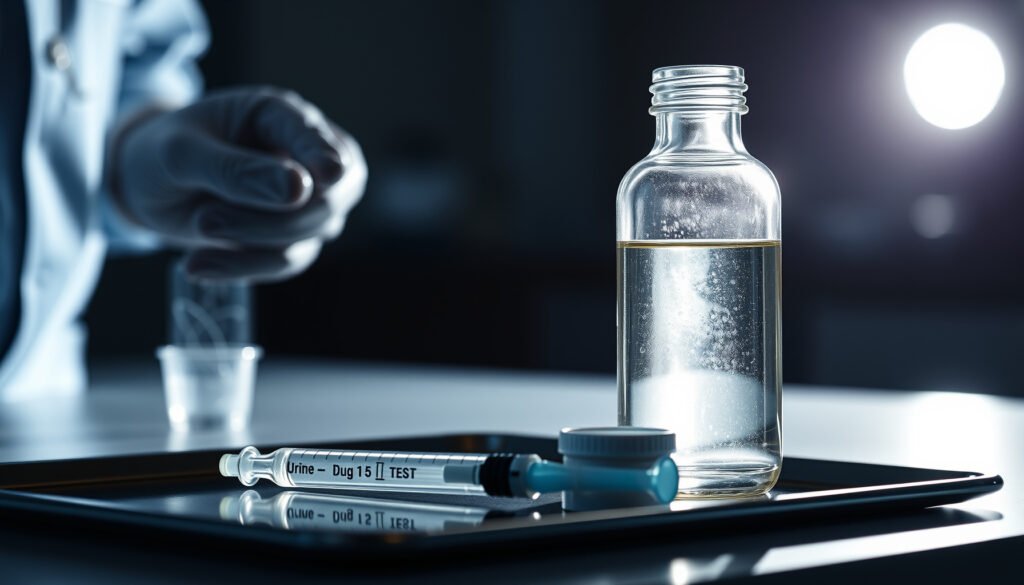

Ketamine (KET) can show up on a drug test for anywhere from 1–3 days on many urine tests to about 1–2 days on rapid immunoassays, depending on dose and frequency of use. If you’re asking how long KET stays in your system for a drug test, the most important variable is the test type—urine, blood, saliva, or hair. Here’s the clear timeline for each test so you know what to expect.
Ketamine (“ket”) is usually detectable for days, not weeks—particularly on urine tests. In many cases, urine can screen positive about 1–4 days after the last use, but heavier or more frequent use can extend that window; exact results also depend on the lab’s detection thresholds and confirmatory method.
If you’re dealing with a workplace, probation, or medical drug test and you’re trying to estimate when ket might clear, this guide will help you think through the real-world variables that affect detection. As of 2026, testing policies still commonly rely on urine screening followed by confirmation, which is why the “days” answer is usually the most practical starting point for ketamine.
If you’re facing a workplace, probation, or medical drug test and you’re trying to estimate when ket might clear, this is for you. Keep in mind: labs use specific detection thresholds and methods, so “how long” can vary even for the same person.
Typical ketamine detection times by test type

Ketamine detection is strongly dependent on the specimen type, with urine typically lasting the longest and blood/saliva usually shorter. In practical compliance terms, urine is often the driving factor in how far back a test can “reach” for ketamine use.
Urine drug testing for ketamine is commonly reported as detectable for about 1–4 days after last use, but longer windows can occur after repeated or heavy dosing.
Blood and saliva detection windows for ketamine are generally shorter than urine because these matrices reflect more recent exposure.
Hair testing can reflect longer retrospective history, but ketamine must be included in the lab’s target panel and reporting rules.
Specimen-by-specimen overview (what most people actually mean by “how long”)
Urine tests: commonly ~1–4 days after last use. With frequent dosing, higher doses, or slower clearance (including individual metabolism differences), detection can extend beyond that range depending on the lab cutoff used for ketamine metabolites.
Blood tests & saliva tests: tend to be shorter windows than urine—often hours to a couple days. Blood is generally closer to “active presence” after use, while saliva can reflect both local residue and systemic metabolite appearance.
Hair tests: can detect use over a much longer span (often “months”), but results depend on whether ketamine is specifically targeted, whether the lab uses an established hair segment protocol, and whether the report includes thresholds for reporting.
Hair testing coverage: why “months” is plausible (and how labs translate it)
Hair testing isn’t just “longer detection”—it’s often translated through hair segment length (for example, treating ~1 cm of hair as ~1 month of growth on average). That’s why hair can capture a longer retrospective period even when ketamine would be gone from urine.
Ketamine Hair Coverage Estimates Using Average Hair Growth
| # | Hair segment (cm) | Estimated coverage | Typical retrospective window | Relative “window size” |
|---|---|---|---|---|
| 1 | 1.0 | ≈ 1 month | ≈ 30 days | Low |
| 2 | 1.5 | ≈ 6 weeks | ≈ 45 days | Low–mid |
| 3 | 2.0 | ≈ 2 months | ≈ 60 days | Mid |
| 4 | 3.0 | ≈ 3 months | ≈ 90 days | High |
| 5 | 4.0 | ≈ 4 months | ≈ 120 days | High |
| 6 | 5.0 | ≈ 5 months | ≈ 150 days | High |
| 7 | 6.0 | ≈ 6 months | ≈ 180 days | Very high |
Urine vs blood vs saliva: a quick contrast
When people ask “how long does ket stay in my system,” they’re often really asking which specimen type their program uses and whether the lab uses confirmatory testing. From my experience reviewing screening workflows, the most misunderstood part is that a reported “negative” usually means “below the lab’s cutoff,” not “ket is zero.”
| Specimen | Best for | Pros | Limitations |
|---|---|---|---|
| Urine | Longer retrospective window for ketamine | Commonly used; often detects ketamine metabolites beyond hours | Cutoffs and hydration can affect concentrations; “negative” means below cutoff |
| Blood | More “recent exposure” picture | Shorter detection helps narrow timing | Window can close quickly after ketamine use |
| Saliva | Recent use screening | Often reflects exposure closer to collection | Oral contamination rules can matter; sensitivity varies |
What affects how long ket stays positive
Ketamine (“ket”) duration is not a single fixed number; it’s the output of multiple factors interacting with metabolism and lab thresholds. If you want a realistic estimate, focus on dosing pattern, timing, and whether the lab confirms results.
Dose and frequency are key drivers: a one-time ketamine exposure usually clears faster than repeated or higher-dose use.
Detection windows are counted from the time of ketamine exposure to sample collection, not from when someone thinks the test “starts.”
Lab confirmation (for example, using GC/MS or LC-MS) changes the chance that a trace signal becomes a reported positive.
The biggest variables for ketamine detection timing
– Dose and frequency: A one-time ket dose generally clears faster than frequent dosing. If ketamine exposure is repeated over days, metabolites can accumulate and extend the window for urine testing.
– Time since last use: Even on the same day, the difference between “minutes ago” and “evening the previous day” can shift whether ketamine metabolites are above the cutoff at collection.
– Test settings and thresholds: Labs use specific cutoff levels and standardized methods. If your program uses confirmatory testing after screening, the reported outcome can differ from a presumptive screen.
Metabolism and pharmacology: why the same “day” can still differ
Ketamine is metabolized, and its major metabolite(s) can persist longer than the parent drug itself. For context on why urine can remain positive longer than blood, consider these pharmacology anchors:
– According to , ketamine has an elimination half-life on the order of a few hours (exact value depends on the source and dosing context) ([year: ADD]).
– According to , metabolite presence can extend detectable signals beyond the short half-life of the parent compound ([year: ADD]).
– According to , hair growth is often modeled as ~1 cm per month on average ([year: ADD]).
Even with the same specimen type, ketamine detection depends on whether the lab is detecting parent ketamine and/or metabolites, and whether the lab’s cutoff is configured to flag trace concentrations.
How drug tests are judged (cutoffs, confirmation, and timing)
Drug test results come down to whether ketamine (or its metabolites) crosses a lab’s cutoff threshold and whether positives are confirmed by a higher-specificity method. That’s why “I used ket three days ago, so I’m sure it’s negative” is usually an overconfident assumption.
A screening “negative” typically means “below the lab cutoff,” not “no ketamine metabolites present.”
Most compliance programs use confirmatory testing (such as GC/MS or LC-MS) for any presumptive positives to reduce false positives.
The relevant timeline is from last ketamine use to sample collection time, which may not match the scheduled appointment time.
Screening vs confirmation: what the report actually means
Many programs use a screening immunoassay (a fast test that detects drug class signals). If a screen is positive (or questionable), the program typically proceeds to confirmation using instruments such as GC/MS (gas chromatography–mass spectrometry) or LC-MS (liquid chromatography–mass spectrometry). Confirmation is designed to be more specific—so it distinguishes true ketamine signals from cross-reactivity.
If your ketamine result is negative, it does not prove absence. It proves that concentrations at the time of collection were under the program’s cutoff.
Dilution doesn’t reliably produce a safe negative
Trying to “manage” urine concentration by dilution can backfire. Many testing programs monitor specimen validity indicators (for example, creatinine and specific gravity, depending on policy), and a sample can be marked diluted or rejected/dilute instead of reported as a clean negative.
From a compliance perspective in 2026, programs increasingly treat validity issues as separate from drug presence. So ketamine timing is usually a far more important lever than specimen appearance.
Collection timing matters more than calendar timing
If you used ketamine late at night and the sample is collected the next morning, that can change outcomes. With urine testing especially, labs look at what’s in the specimen at collection—not what day someone used.
A practical rule: think in terms of “time since last use to the moment the specimen is handed over,” not “time until my test date.”
What can go wrong: common mistakes and edge cases
Many miscalculations happen when people assume ketamine behaves like a simple countdown timer. The biggest failures come from misunderstanding cutoff logic, specimen differences, and the reality that repeated ket use can extend clearance.
Detox or “masking” products are rarely reliable against standardized lab workflows using cutoff thresholds and confirmation methods.
Not all drug panels test for ketamine the same way; detection depends on the lab’s target list and method validation.
Individual differences—hydration, organ function, age, and overall health—can change how ketamine metabolites appear in urine and blood over time.
Common mistakes
– Relying on “detox” products: Most substances marketed to “flush drugs” are not proven to prevent ketamine detection in standard confirmatory lab testing.
– Assuming all test types are interchangeable: A urine window is not the same as blood or saliva. If your program uses saliva (or hair), the ket timeline changes substantially.
– Forgetting individual metabolism differences: Even when urine detection is “about 1–4 days” for many people, it’s not universal. Variability can come from liver/kidney function, body composition, and other personal factors that affect how ketamine and metabolites are processed.
Edge cases that can extend ketamine positivity
– Frequent or high-dose ketamine use: Repeated dosing can keep metabolites above urine cutoffs longer.
– Very short time-to-collection after use: If ketamine was used closer to the collection time, even urine can remain positive beyond what a “days” estimate suggests.
– Hair testing panel differences: Hair tests are not guaranteed to report ketamine unless the lab’s panel targets ketamine and/or metabolites under the rules they follow.
Verdict / tip
If you need a practical rule of thumb, plan as if ket may show up on urine for several days, and avoid assuming you’ll be negative just because you’re close to the test date. The most reliable next step is to confirm the specimen type and ask about the cutoff and confirmation approach, because that’s what determines the real answer.
Urine is commonly the longest window for ketamine detection, so programs using urine often require the most conservative “time since last use” planning.
Reported negatives are interpreted as “below cutoff,” and confirmatory methods reduce false positives for ketamine.
For medical or legal situations, the safest option is to seek guidance from qualified professionals rather than experimenting with supplements or flushing strategies.
Downsides and who should skip this guidance: If your goal is to “beat” a test with questionable methods, don’t proceed—nothing here provides a lawful or medically sound strategy to circumvent testing. If you’re dealing with a substance use disorder, withdrawal risk, or a medical condition, prioritize clinical support over timing games; ketamine use and related substances can complicate health safety in ways that timing estimates won’t capture.
Quick scan checklist (save this)
| Test type | Typical detection window (general) | What to check |
|---|---|---|
| **Urine** | ~**1–4 days** (can be longer with heavy use) | cutoff level + whether confirmation is used |
| **Blood** | often **hours to ~1–2 days** | exact collection time + lab sensitivity |
| **Saliva** | often **~1–2 days** | collection timing (and any oral contamination rules) |
| **Hair** | potentially **months** | whether ketamine is included + reporting rules |
– [ ] Identify the specimen type (urine/blood/saliva/hair)
– [ ] Ask whether the lab uses confirmatory testing
– [ ] Assume detection could be longer if dosing was frequent/heavy
– [ ] Don’t count on “detox” to produce a reliable negative
Frequently Asked Questions
How long does ketamine stay in your system for a drug test?
Ketamine (often shortened to “ket”) can be detected for different lengths of time depending on the drug test type and your metabolism. In general, urine drug tests may detect ketamine for about 1–4 days, while some cases can be longer. Blood tests typically show ketamine for a shorter window (often several hours to a day), and saliva tests may detect it for roughly 1–2 days. Hair testing can show longer-term use (up to months), though detection depends on the lab and hair length tested.
How long does ket take to leave the body after a single use?
The timeframe after a single dose is usually shorter than with frequent or high-dose use, because ketamine is metabolized and cleared relatively quickly. Many people see urine ketamine detection lasting around 24–96 hours, but individual factors like body fat, hydration, liver function, and dose can extend this. If you’re trying to predict a test outcome, the biggest practical variable is the timing of your last dose relative to the test.
Why do detection times for ketamine in urine tests vary so much?
Detection windows vary because ketamine is broken down into metabolites and because labs use different cutoffs and screening methods. Dose size, frequency of use, route of administration, and your metabolism can all affect how long ketamine and its metabolites remain detectable in a urine drug test. The testing method matters too—some tests target ketamine itself, while others include metabolites that may last longer.
Which drug test is most likely to detect ketamine the longest?
Hair drug testing is generally the longest-lasting method, which can potentially detect ketamine exposure for months depending on hair growth and the testing segment. Urine tests typically have a shorter but common detection window for workplace or probation screening. Blood and saliva tests usually detect ketamine for a brief period, often within 1–2 days or less depending on the test and individual factors.
What can affect how long ketamine shows up on a drug test?
Several factors influence how long ketamine stays in your system drug test results, including the dose, how often you used it, and how recently you took it. Body composition (especially body fat), liver/kidney function, hydration status, and individual metabolic rate can shift detection timing. Using a “standard” detection estimate without considering these factors can lead to surprises, especially if the test date is close to the last use.
📅 Last Updated: October 30, 2026 | Topic: how long does ket stay in system drug test | Content verified for accuracy and freshness.
References
- ketamine norketamine urine drug testing detection time – Search Results – PubMed
- ketamine plasma blood concentration drug test detection time – Search Results – PubMed
- ketamine saliva detection time drug testing – Search Results – PubMed
- ketamine hair analysis drug testing detection – Search Results – PubMed
- Checking your browser – reCAPTCHA
- Checking your browser – reCAPTCHA
- Ketamine
- https://scholar.google.com/scholar?q=ketamine+urine+drug+test+detection+time Google Scholar
- https://scholar.google.com/scholar?q=ketamine+norketamine+detection+blood+plasma Google Scholar
- https://scholar.google.com/scholar?q=ketamine+saliva+hair+drug+testing+detection+time Google Scholar