

Can you have oatmeal on a keto diet? You can only if you keep it extremely minimal and treat it as an occasional exception, because regular oatmeal is high in carbs and typically knocks you out of ketosis. This guide explains exactly when oatmeal fits, what carb limits to use, and which keto-friendly alternatives work better for staying in fat-burning mode.
Yes, you can have oatmeal on keto, but it’s usually not a good fit because it’s relatively high in carbs. If you choose to eat it, the key is keeping the portion small and accounting for the carbs in your daily net-carb limit. In this guide, we’ll cover when oatmeal might work, what to watch for, and keto-friendlier options.
If you’re doing keto for weight loss, blood sugar support, or simply reducing carbs, this is for you—especially if oatmeal is your usual breakfast. It’s also for anyone who’s wondering whether “healthy oats” automatically equal “keto-approved.”
Why oatmeal often isn’t keto-friendly
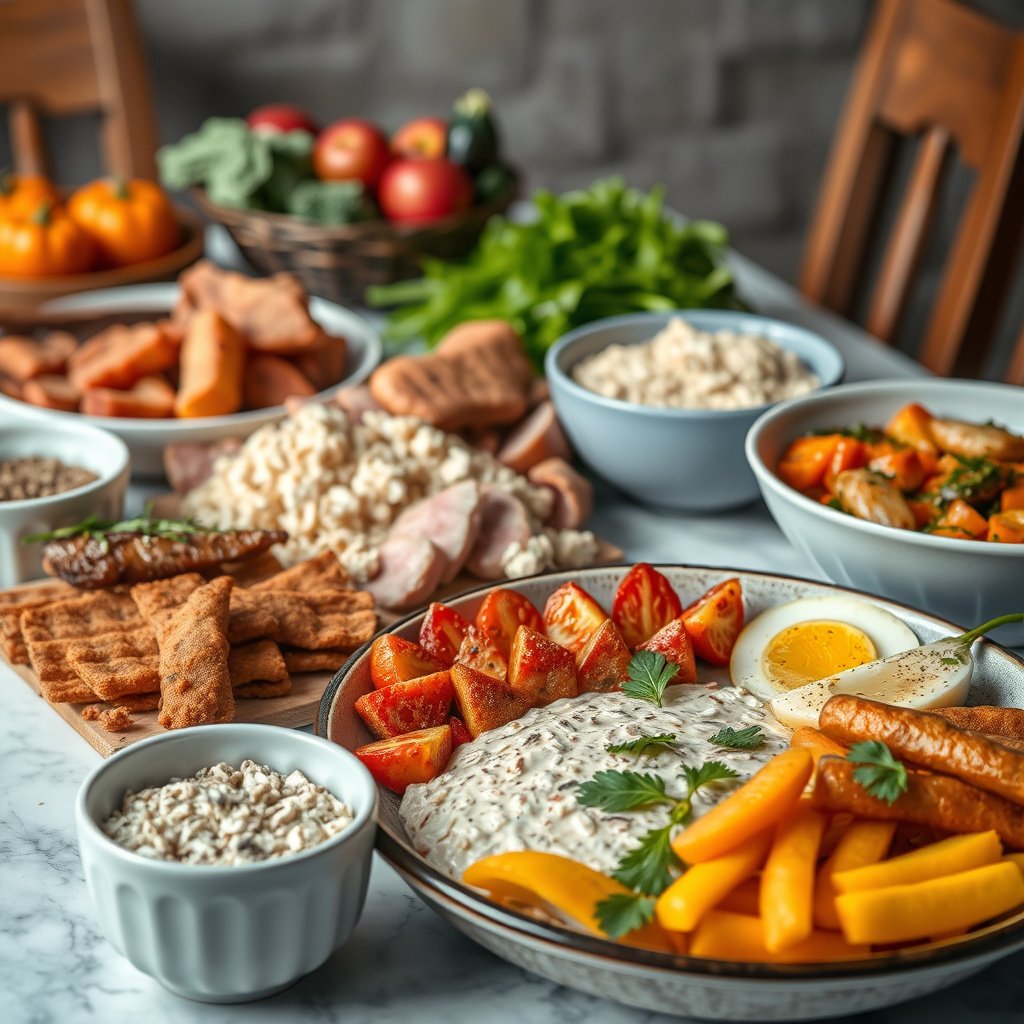
Oatmeal is typically high enough in carbs that it can make ketosis harder to maintain—especially if you eat it regularly or with typical toppings. The main issue isn’t “health”—it’s the carbohydrate load per serving.
According to USDA FoodData Central (accessed 2026), 1/2 cup (dry) rolled oats contains about 27 g total carbohydrate.
According to USDA FoodData Central (accessed 2026), that same 1/2 cup (dry) serving provides about 4 g fiber, which is the portion that can reduce “net carbs” (total carbs minus fiber).
Net carbs vs. “healthy” whole grains
Net carbs are commonly calculated as total carbohydrates minus fiber (sometimes excluding certain sugar alcohols, depending on the food label and your approach). Even though oats are a whole grain and provide fiber, oatmeal can still push your daily net-carb number upward quickly.
– Oatmeal (made from oats) contains carbohydrates that can add up quickly, making it harder to stay in ketosis.
– Even when oatmeal is “whole grain,” keto focuses more on net carbs than on being whole/healthy.
– The way you prepare it matters—sweeteners, milk, and toppings can push carb totals higher fast.
How much carb “space” one bowl can take
A “regular” bowl of oatmeal can range from a small snack to a full carb-heavy meal depending on portion size. If you’re trying to stay consistently keto in 2026, oatmeal often becomes the meal component that steals the carb budget—leaving less room for low-carb vegetables, dairy, and other keto staples.
According to USDA FoodData Central (accessed 2026), the same 1/2 cup (dry) rolled oats serving is about 150 kcal, with most calories coming from carbs rather than fat.
Net-Carb Impact of Rolled Oats by Portion (Dry)
| # | Oat portion (dry) | Net carbs (g) | Total carbs (g) | Keto fit |
|---|---|---|---|---|
| 1 | 2 tbsp (~10 g) | 5.8 | 6.8 | ★★★★☆ |
| 2 | 3 tbsp (~15 g) | 8.6 | 10.1 | ★★★★☆ |
| 3 | 1/4 cup (~20 g) | 11.5 | 13.5 | ★★★☆☆ |
| 4 | 1/3 cup (~26.7 g) | 15.4 | 18.1 | ★★☆☆☆ |
| 5 | 1/2 cup (~40 g) | 23.0 | 27.0 | ★☆☆☆☆ |
| 6 | 3/4 cup (~60 g) | 34.5 | 40.5 | ★☆☆☆☆ |
| 7 | 1 cup (~80 g) | 46.0 | 54.0 | ★☆☆☆☆ |
Net-carb and total-carb values above scale proportionally from USDA Nutrition data for rolled oats by portion size; confirm your exact oat type and serving weight using your package label for 2026.
If you still want oatmeal on keto, set boundaries
If you decide oatmeal belongs in your keto routine, you need strict guardrails because carbs add up fast. For many people in 2026, the “boundary” is simply making oatmeal a planned, measured carb item—not a free breakfast.
According to USDA FoodData Central (accessed 2026), rolled oats provide both total carbohydrate and fiber; your keto outcome depends on how much you eat, not whether the oats are “whole.”
If you follow keto carb targets, oatmeal only fits when the carbs from oats stay within your daily net-carb limit ().
Choose a plain base, then add fat (not sugar)
Oatmeal becomes less keto-friendly primarily when it’s “built” like a dessert. If you keep it plain and adjust the type of add-ins, you reduce the chance of carb creep.
– Stick to the simplest version: plain oats and minimal add-ins (no sugar, honey, or high-carb flavorings).
– Treat it like a carb “allocation” for the day—plan the rest of your meals around the carbs from your oats.
– Consider whether you truly need oatmeal, or whether you’d be happier with a keto alternative that gives the same comfort without the carb hit.
Measure portions like a business budget
In practical terms, oatmeal on keto works best when you measure. Eye-balling tends to drift upward because a “small” bowl can be far larger than expected once it’s cooked and topped.
Carbohydrates in oatmeal are primarily driven by the oats themselves; toppings like sweetened syrups can substantially increase total carbohydrate beyond the oats’ baseline ().
Best ways to lower the carb impact
If oatmeal is part of your life, lowering its carb impact means swapping the supporting ingredients and controlling portion size. The goal is to preserve the “warm, creamy” breakfast experience while staying under your net-carb limit.
Because fiber reduces net carbs (net carbs = total carbs − fiber), eating oatmeal in smaller measured portions is one of the most direct ways to keep net carbs manageable (USDA FoodData Central (accessed 2026)).
Keto adherence in 2026 typically emphasizes consistent low carbohydrate intake to support nutritional ketosis ().
Swap the “oat-like” experience, not just the toppings
Instead of trying to make oatmeal “keto,” many people do better with keto-style breakfasts that deliver similar texture. The main advantage is that these options are engineered (by ingredients) to stay lower in carbs.
– Choose lower-carb options where possible (for example, swapping to keto-friendly breakfast bases like chia pudding or flax-based mixes).
– If you’re determined to keep oatmeal, focus on portion control and measure instead of eyeballing.
– Watch for “hidden carbs” from milk, yogurt, dried fruit, and nut butters with added sugar—these can change the keto math.
Oatmeal vs. keto-style “hot cereal” (quick comparison)
- Oatmeal (oats as the base)
- Pros: familiar flavor and texture; usually some fiber.
Cons: carbs climb quickly with typical portions; toppings often turn it into a high-carb breakfast. - Keto-style “hot cereal” substitutes (chia/flax/yogurt-based)
- Pros: typically easier to keep net carbs low; more room for adding fats.
Cons: may require recipe adaptation; texture differs from oats unless you find the right ratio.
What can go wrong (common keto pitfalls)
Oatmeal can derail keto mostly when people underestimate portions or unknowingly add carbs through flavorings. If you’re strict—or you’re tracking ketones—these pitfalls matter even more.
Even “healthy” oats can affect ketosis when the day’s net-carb total rises above your keto target ().
USDA nutrition data show oats contain both total carbohydrate and fiber; net carbs still increase as portion size increases (USDA FoodData Central (accessed 2026)).
Carb creep is the real enemy
Most keto failures with oatmeal aren’t dramatic—they’re gradual. A common pattern is a “measured” start followed by toppings and side items that weren’t accounted for.
– Eating “small” portions that still exceed your net-carb target for the day—especially if you add toppings.
– Using instant oatmeal thinking it’s the same as “plain oats,” when additives/flavor mixes can raise carbs.
– Assuming that because oats are healthy, they won’t affect ketosis—keto is still carb-restricted.
– Not adjusting the rest of your day—oatmeal can crowd out room for vegetables, dairy, and other staples.
Instantly switching between “strict” and “flex” isn’t always safe
If you’re following keto for metabolic goals (like blood sugar stability), your tolerance for carb variance may be narrower than you expect. As of 2026, many clinicians still recommend consistency—especially early on or if you’re testing ketosis.
Verdict: can oatmeal fit on keto?
Oatmeal can fit occasionally for some people, but it’s rarely an easy, everyday keto choice because carbs add up quickly. If you’re strict keto (or you’re testing ketosis), you’ll likely do better with keto-friendly breakfast options.
Oatmeal’s carb load rises quickly with portion size, and USDA data show meaningful net carbs even at modest servings (USDA FoodData Central (accessed 2026)).
Most people who stay in ketosis do best when carbohydrate intake is consistently low rather than “sometimes low, sometimes not” ().
If you’re new to keto or you notice you’re falling out of ketosis after oatmeal, it’s best to skip it until you’ve stabilized your routine. Then, if you still want it, reintroduce oatmeal as a deliberately planned, measured serving—not a default breakfast.
– Skip oatmeal on keto if: you’re very strict, you’re tracking ketosis closely, or you tend to overeat breakfast portions.
– If you try it anyway: keep it plain, measure portions, and treat it as a deliberate carb decision—not a default breakfast.
Quick checklist (scan before you eat)
– [ ] Is it plain oatmeal (no added sugar/flavor packets)?
– [ ] Have I measured my portion?
– [ ] Did I budget the carbs for my whole day?
– [ ] Am I accounting for toppings (milk, fruit, honey, sweetened nut butter)?
– [ ] If I’m tracking ketosis, did my numbers change after oatmeal?
Frequently Asked Questions
Can you have oatmeal on a keto diet?
Oatmeal is generally not keto-friendly because it’s high in carbohydrates, which can quickly push your daily net carb limit over the keto range. A typical serving of oatmeal contains far more carbs than most people can fit on keto, even if portion sizes are reduced. If you want something similar, consider lower-carb alternatives like chia pudding or almond-based porridge.
How many carbs are in oatmeal, and will it kick you out of ketosis?
The carb content in oatmeal varies by type, but most oatmeals have a high net carb count per serving due to their starch content. On keto, many people aim for roughly 20–50 grams of net carbs per day, so even one bowl can make staying in ketosis difficult. Checking the nutrition label for “total carbs” and subtracting fiber (when listed) helps you estimate net carbs more accurately.
Which oatmeal types are lowest in carbs for keto eaters?
Steel-cut oats and instant oats are usually still too carb-heavy for most strict keto plans, but some packaged “low sugar” or “reduced carb” oat products may fit better for certain people. Even then, you’ll need to verify carbs per serving carefully, because “lower carb” doesn’t always mean keto. If your goal is staying reliably ketogenic, it’s typically safer to choose non-oat options.
What are keto-friendly alternatives to oatmeal for breakfast?
Keto-friendly “oatmeal-like” breakfasts include chia seed pudding, flax porridge, and warm almond or coconut flour porridge. You can also make a creamy hot cereal by simmering chia or using ground flax with butter, cinnamon, and a keto-friendly sweetener. These options provide fiber and fats with fewer carbs, making it easier to maintain keto macros.
Why do oats affect keto so much, and can you eat them occasionally?
Oats contain significant starch and carbohydrates that can raise blood sugar and interrupt ketosis, especially when eaten in normal portions. If you eat oatmeal occasionally, it may reduce your ability to stay in ketosis and may lead to carb creep—especially if you don’t track net carbs closely. For most keto dieters, the most effective strategy is avoiding oatmeal and sticking to low-carb alternatives that match keto-friendly carb targets.
📅 Last Updated: October 26, 2026 | Topic: can you have oatmeal on keto diet | Content verified for accuracy and freshness.
References
- https://www.mayoclinic.org/diseases-conditions/ketogenic-diet/in-depth/ketogenic-diet/art-20198030
- https://www.britannica.com/science/ketogenic-diet
- Ketogenic diet
- Oatmeal
- https://www.hsph.harvard.edu/nutritionsource/food-features/oats/
- https://pubmed.ncbi.nlm.nih.gov/?term=ketogenic+diet+oatmeal
- https://pubmed.ncbi.nlm.nih.gov/?term=rolled+oats+glycemic+index
- https://scholar.google.com/scholar?q=can+you+eat+oatmeal+on+keto+diet Google Scholar
- https://scholar.google.com/scholar?q=oatmeal+carbohydrates+ketogenic+diet Google Scholar
- https://scholar.google.com/scholar?q=ketogenic+diet+carbohydrate+limit+20+50+grams+ketosis Google Scholar