

Sweet potatoes are generally not considered keto-friendly due to their higher carbohydrate content. However, there are ways to enjoy them in moderation and still maintain a low-carb lifestyle. In this article, we will explore the nutritional aspects of sweet potatoes, alternatives, and tips for incorporating them wisely into a ketogenic diet.
Understanding Keto and Carbohydrates

The ketogenic diet focuses on low carbohydrate intake to achieve ketosis, a metabolic state where the body burns fat for fuel instead of glucose. This typically requires limiting daily carbohydrate consumption to about 20-50 grams, depending on individual factors. Sweet potatoes, while nutritious, contain approximately 20 grams of carbohydrates per 100 grams, which is significantly higher than what is usually acceptable on a ketogenic diet. This high carbohydrate content can quickly consume your daily allowance, making it challenging to remain in ketosis. Therefore, while they can technically be included in your diet, it is crucial to approach their consumption with caution and awareness of your overall carb intake.
Nutritional Profile of Sweet Potatoes
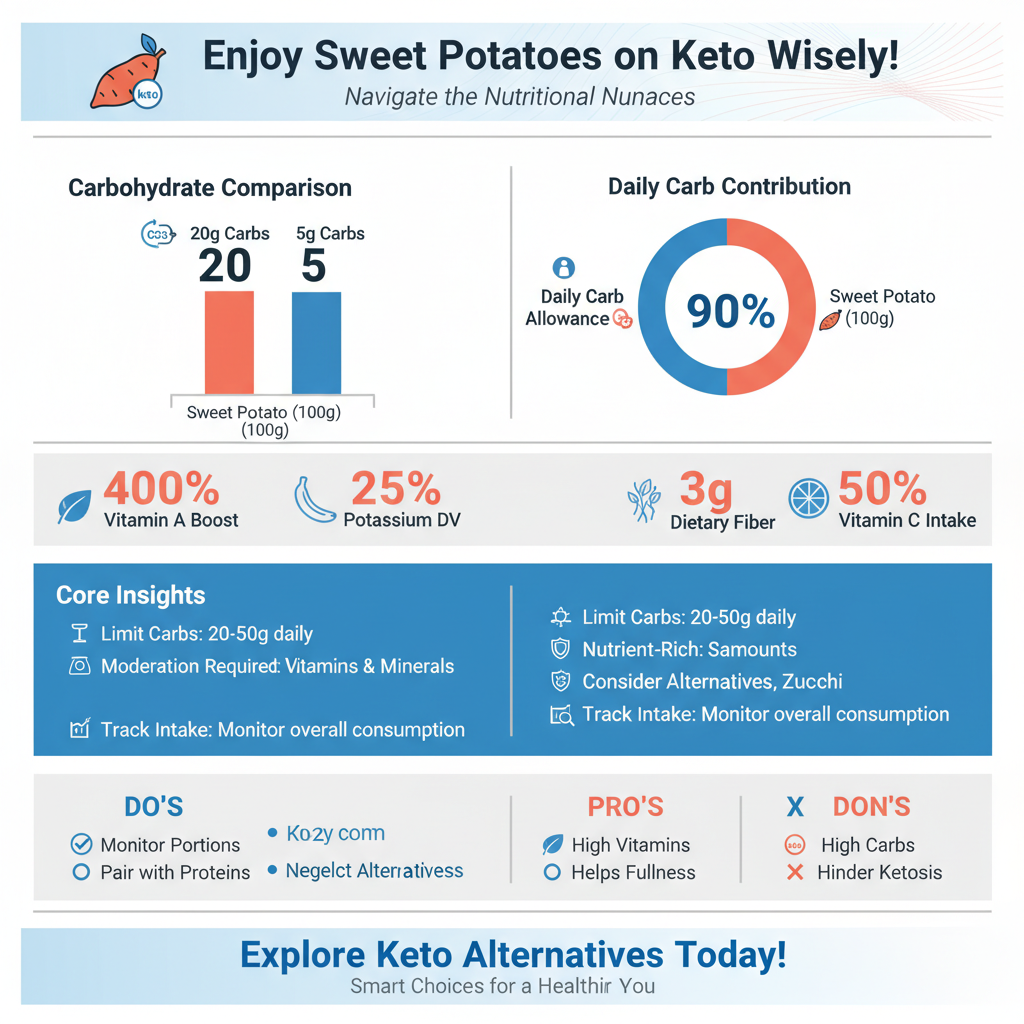

Sweet potatoes are celebrated for their rich nutritional profile, offering a variety of vitamins and minerals. They are an excellent source of vitamin A, primarily in the form of beta-carotene, which is vital for eye health and immune function. Additionally, sweet potatoes provide significant amounts of vitamin C, which supports the immune system and acts as an antioxidant. They also contain vitamin B6, which aids in metabolism and brain function.
In terms of minerals, sweet potatoes are a good source of potassium, which helps regulate blood pressure and fluid balance in the body. Furthermore, they are high in dietary fiber, contributing to digestive health and promoting feelings of fullness, which can be beneficial for those on a weight loss journey. However, the fiber content does not offset the high carbohydrate count, emphasizing the need for moderation when incorporating sweet potatoes into a keto diet.
Alternatives to Sweet Potatoes on Keto
For those committed to a ketogenic lifestyle, several low-carb alternatives can mimic the texture and taste of sweet potatoes without the hefty carbohydrate burden. Cauliflower is one of the most popular substitutes; it can be mashed, roasted, or turned into a rice-like texture, making it incredibly versatile. Zucchini, with its mild flavor, can be spiralized into noodles or baked into casseroles as a low-carb alternative. Turnips also provide a similar texture and can be roasted or mashed to create a satisfying dish.
Exploring recipes that utilize these substitutes can help create meals reminiscent of sweet potato dishes without the associated carbs. For example, cauliflower can be used to make a creamy “cauliflower mash” that serves as a delicious side dish, or spiralized zucchini can be paired with a rich, creamy sauce to create a comforting meal that aligns with keto principles.
Strategies for Incorporating Sweet Potatoes
If you choose to include sweet potatoes in your diet, moderation is key. Using them sparingly as a side dish or in small amounts can allow you to enjoy their flavor without compromising your ketogenic goals. One effective strategy is to pair sweet potatoes with high-fat foods, such as butter, cheese, or olive oil, to help balance the meal and slow down the absorption of carbohydrates. For instance, a small serving of roasted sweet potatoes drizzled with olive oil and sprinkled with feta cheese can provide a delightful taste while still keeping carb intake manageable.
Another approach is to prioritize consuming sweet potatoes around your workout times. Some individuals find that consuming a small portion of sweet potatoes post-workout can help replenish glycogen stores without significantly impacting ketosis, especially if they are engaging in high-intensity exercise.
Portion Control and Meal Planning
Monitoring portion sizes is essential when incorporating sweet potatoes into a ketogenic diet. A small serving, such as 50 grams, may contain around 10 grams of carbohydrates, which could fit within your daily limit if consumed thoughtfully. To make informed choices, consider using a food scale and tracking your carbohydrate intake using a nutrition app.
Meal planning is another effective strategy to ensure that sweet potatoes do not exceed your carb allowance for the day. By planning your meals ahead of time, you can allocate specific times to enjoy sweet potatoes while keeping your overall carbohydrate intake in check. For example, if you plan to have a small serving of sweet potatoes for dinner, you can adjust your other meals throughout the day to accommodate this addition without surpassing your carb limit.
Listening to Your Body
Ultimately, personal experience plays a significant role in determining how sweet potatoes affect your ketogenic journey. It is essential to pay attention to your body’s response after consuming sweet potatoes. Keeping track of how you feel, as well as monitoring your ketone levels through testing, can provide valuable insights into whether including sweet potatoes disrupts your state of ketosis.
Many individuals on a ketogenic diet find that they can tolerate certain carb sources better than others. By experimenting with small amounts of sweet potatoes and observing the effects, you can tailor your diet to suit your personal preferences and physiological responses, allowing for a more enjoyable and sustainable ketogenic experience.
Incorporating sweet potatoes into a ketogenic diet can be challenging but possible with careful planning and portion control. By understanding their nutritional profile and exploring alternatives, you can enjoy these delicious tubers without derailing your diet. Consider experimenting with small amounts and other low-carb options to find what works best for you. Ultimately, the goal of the ketogenic diet is to find a sustainable and enjoyable way to maintain your health and wellness.
Frequently Asked Questions
Can I eat sweet potatoes on a keto diet?
Sweet potatoes are generally not recommended on a keto diet due to their high carbohydrate content. A medium sweet potato contains about 26 grams of carbs, which can quickly exceed the daily carb limit for those following a strict ketogenic lifestyle. Instead, consider low-carb alternatives such as cauliflower or zucchini, which can provide similar textures and flavors without derailing your ketosis.
What are the carbohydrate counts for sweet potatoes compared to other vegetables?
Sweet potatoes typically have around 20-26 grams of carbohydrates per 100 grams, making them one of the higher-carb vegetables. In contrast, non-starchy vegetables like spinach, broccoli, and cauliflower contain only 3-7 grams of carbohydrates for the same serving size. This significant difference makes low-carb vegetables more suitable for those on a keto diet, helping maintain the desired state of ketosis.
How can I satisfy my craving for sweet potatoes while on keto?
To curb your sweet potato cravings on a keto diet, try using low-carb alternatives such as roasted cauliflower seasoned with cinnamon and nutmeg, or mashed turnips with a hint of butter. These substitutes can mimic the sweet and creamy texture of sweet potatoes while keeping your carb intake within keto guidelines. Additionally, incorporating herbs and spices can enhance the flavor and make these alternatives more satisfying.
Why are sweet potatoes considered high in carbs, and what are the effects on a keto diet?
Sweet potatoes are high in carbohydrates primarily due to their natural sugars and starches, which provide energy. On a keto diet, where the goal is to enter a state of ketosis by drastically reducing carb intake, consuming high-carb foods like sweet potatoes can prevent your body from burning fat for fuel. This can hinder weight loss and energy levels, making it crucial to choose low-carb vegetables instead.
Which vegetables are the best alternatives to sweet potatoes for a keto diet?
The best alternatives to sweet potatoes for a keto diet include cauliflower, zucchini, and radishes. Cauliflower can be riced, mashed, or roasted to create a versatile substitute, while zucchini can be spiralized for a noodle-like dish or grilled for added flavor. Radishes can be roasted or sautéed, offering a slightly sweet, crunchy option that complements many keto meals. These vegetables provide lower carbohydrate counts while still satisfying your cravings.
References
- https://www.healthline.com/nutrition/keto-diet-food-list
- Ankylosing spondylitis: How to recognize symptoms, and more
- Keto Diet Foods: What to Eat and Avoid – Diet Doctor
- https://www.ncbi.nlm.nih.gov/pmc/articles/PMC6520968/
- https://www.webmd.com/diet/what-is-keto-diet
- https://www.ncbi.nlm.nih.gov/pmc/articles/PMC7071225/
- https://www.health.harvard.edu/staying-healthy/the-ketogenic-diet
- https://www.mayoclinic.org/healthy-lifestyle/nutrition-and-healthy-eating/expert-answers/keto-diet/faq-20466424