

Eating oranges on a keto diet is generally not recommended due to their relatively high carbohydrate content. While they are healthy and nutritious, their sugar levels can interfere with ketosis. In this article, we’ll explore the carbohydrate content of oranges, alternatives that fit better within a keto lifestyle, and tips for enjoying fruit while staying on track with your diet.
Understanding Keto and Carbohydrate Limits

The ketogenic diet typically limits carbohydrate intake to around 20-50 grams per day, depending on individual metabolic factors and dietary goals. This restriction is essential for entering and maintaining a state of ketosis, where the body shifts from burning glucose for energy to burning fat. High-carb foods like oranges can quickly consume a significant portion of your daily carb allowance. For instance, if you consume a medium-sized orange that contains approximately 15 grams of carbohydrates, you may find yourself very close to or exceeding your daily limit, especially if you consume other foods throughout the day. Therefore, careful planning and awareness of carbohydrate sources are crucial for anyone following a keto diet.
Nutritional Profile of Oranges
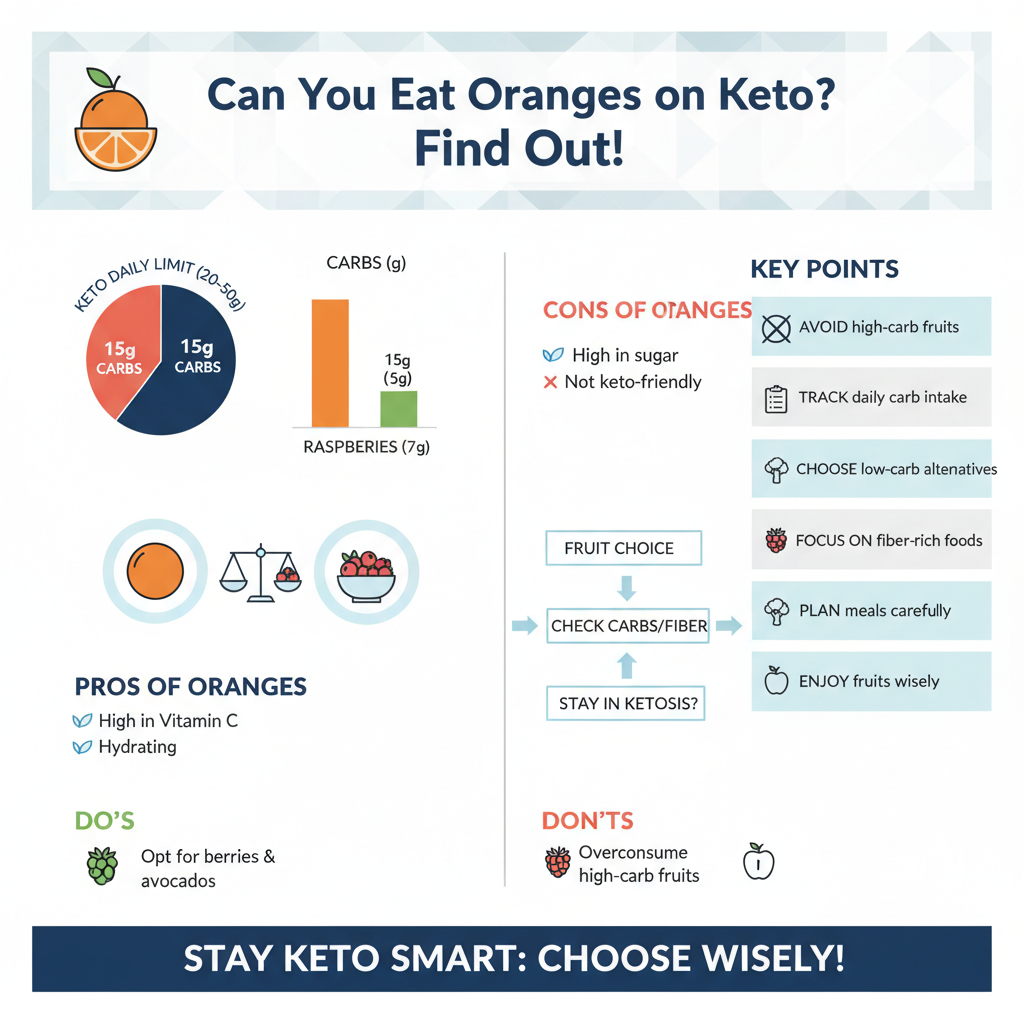

A medium orange contains about 15 grams of carbohydrates, which includes natural sugars. While oranges provide a wealth of vitamins—especially vitamin C—and antioxidants, their carbohydrate content makes them a poor choice for those on a keto diet. In addition to their carbohydrate content, oranges also contain about 12 grams of sugar and 3 grams of fiber, which provides some nutritional benefits but doesn’t sufficiently offset the carb count for those in ketosis. The vitamins and minerals in oranges can be beneficial, but given the keto diet’s focus on low-carb consumption, the trade-off may not be worth it. Thus, while they are a healthy fruit choice in general, they may not align with the goals of a ketogenic diet.
Alternatives to Oranges on Keto
When following a keto diet, it is essential to seek alternatives that provide nutritional benefits without significantly impacting your carbohydrate intake. Consider low-carb fruits like berries (strawberries, raspberries, and blackberries), avocados, or olives, which can provide similar vitamins and antioxidants while keeping carb counts low. For instance, a cup of raspberries contains only about 7 grams of carbohydrates and is high in fiber, making it a much more keto-friendly choice. Similarly, avocados are low in carbohydrates and high in healthy fats, making them an ideal fruit for the ketogenic lifestyle. These alternatives not only fit seamlessly within the parameters of a keto diet but also offer a variety of flavors and textures to keep your meals enjoyable.
How to Enjoy Fruits on a Keto Diet
If you choose to include higher-carb fruits like oranges occasionally, focus on portion control and moderation. Instead of consuming an entire orange, consider having a few slices or pairing them with healthy fats, such as nut butter, to lower the glycemic impact. This tactic can help mitigate the blood sugar spike that might occur from consuming sugary fruits. Additionally, when you do indulge in higher-carb fruits, be mindful of your overall daily carb intake and plan accordingly to ensure you remain within your limits. Using tools like a food diary or tracking apps can help you keep tabs on your intake and ensure you stay aligned with your dietary goals.
Finding Balance: Can Oranges Fit in Your Diet?
If you really love oranges, consider consuming them in very small amounts or infrequently to satisfy your cravings without derailing your keto efforts. For example, you might enjoy a few segments of orange as a garnish for a salad or as a flavor enhancer in a homemade sauce. Monitoring your overall carb intake and how your body responds to these occasional indulgences is key to ensuring you stay in ketosis. Remember that individual responses to carbohydrates can vary, so it may be beneficial to experiment with small amounts to gauge how they affect your state of ketosis.
Tips for Staying on Track with Keto
To successfully navigate a keto diet while minimizing carbohydrate intake, it’s important to keep track of your daily carb consumption. Utilizing apps or food diaries can help you maintain awareness of your intake, allowing you to make informed decisions about when and how much to eat. Additionally, educating yourself about the carbohydrate content of various fruits and other foods will empower you to make choices that align with your dietary goals. Familiarize yourself with food labels and nutritional databases, and consider preparing your meals at home to have better control over your ingredients.
Incorporating oranges into a keto diet poses challenges due to their carbohydrate content, but understanding your limits and making informed choices can help you enjoy them occasionally. If you’re committed to staying in ketosis, focus on low-carb fruit alternatives and diligently track your intake. By doing so, you can maintain your dietary goals while still savoring the flavors you love. For more tips and strategies, explore our other keto resources!
Frequently Asked Questions
Can I eat oranges on a keto diet?
While oranges are a healthy fruit packed with vitamin C and fiber, they are relatively high in carbohydrates, which makes them less suitable for a strict ketogenic diet. A medium orange contains about 12 grams of carbs, which can take up a significant portion of your daily carb allowance on keto, typically limited to 20-50 grams. If you choose to include oranges, consider portion control and balance them with lower-carb foods.
What are the best low-carb fruits to consume on keto instead of oranges?
If you’re looking for low-carb fruits that fit better into a keto diet, consider options like berries (strawberries, raspberries, and blackberries), avocados, and olives. These fruits are lower in carbohydrates and can provide essential nutrients without significantly impacting your daily carb intake. For example, a half-cup of raspberries has about 7 grams of carbs, making it a better choice for keto enthusiasts.
How many carbs are in an orange compared to other fruits?
A medium orange typically contains around 12 grams of carbohydrates, while other fruits vary widely. For instance, a medium apple has about 25 grams of carbs, and a banana can contain up to 27 grams. In contrast, a half-cup of strawberries has approximately 6 grams of carbs, making them a preferable choice for those following a ketogenic diet. Always check nutritional information to manage your carb intake effectively.
Why should I avoid high-carb fruits like oranges while on keto?
The primary goal of a ketogenic diet is to enter and maintain a state of ketosis, where your body burns fat for fuel instead of carbohydrates. Consuming high-carb fruits like oranges can disrupt this process by exceeding your daily carb limit, making it harder to achieve or maintain ketosis. Sticking to low-carb fruits helps you maximize fat-burning and stay aligned with your dietary goals.
Which types of oranges have the lowest carbohydrate content?
Among the various types of oranges, blood oranges, navel oranges, and mandarin oranges have similar carbohydrate content, averaging around 12-15 grams per medium fruit. However, if you want to minimize carb intake, consider using orange zest as a flavor enhancer instead of eating the whole fruit. The zest contains fewer carbs and can provide a burst of citrus flavor without significantly impacting your ketogenic diet.
References
- https://www.healthline.com/nutrition/oranges-and-keto
- Alzheimer’s disease: Symptoms, stages, causes, and treatments
- https://www.dietdoctor.com/low-carb/keto/vegetables/fruits
- https://www.ncbi.nlm.nih.gov/pmc/articles/PMC6470861/
- https://www.clevelandclinic.org/health/diet-nutrition/information/keto-diet-and-fruits
- https://www.webmd.com/diet/obesity/keto-diet-and-fruits
- https://www.mayoclinic.org/healthy-lifestyle/nutrition-and-healthy-eating/expert-answers/keto-diet/faq-20495656