Yes, smoothies can definitely be keto-friendly if you use the right ingredients. Focus on low-carb options like leafy greens, avocado, and healthy fats such as coconut oil or nut butter. Avoid high-sugar fruits and opt for berries instead to maintain your carb limits. Incorporating low-carb protein powders can help meet your protein needs too. With careful ingredient choices, you can create delicious, nutrient-dense smoothies that fit within your keto lifestyle. There’s more to explore about making them truly satisfying!
Understanding the Keto Diet and Its Macronutrient Ratios
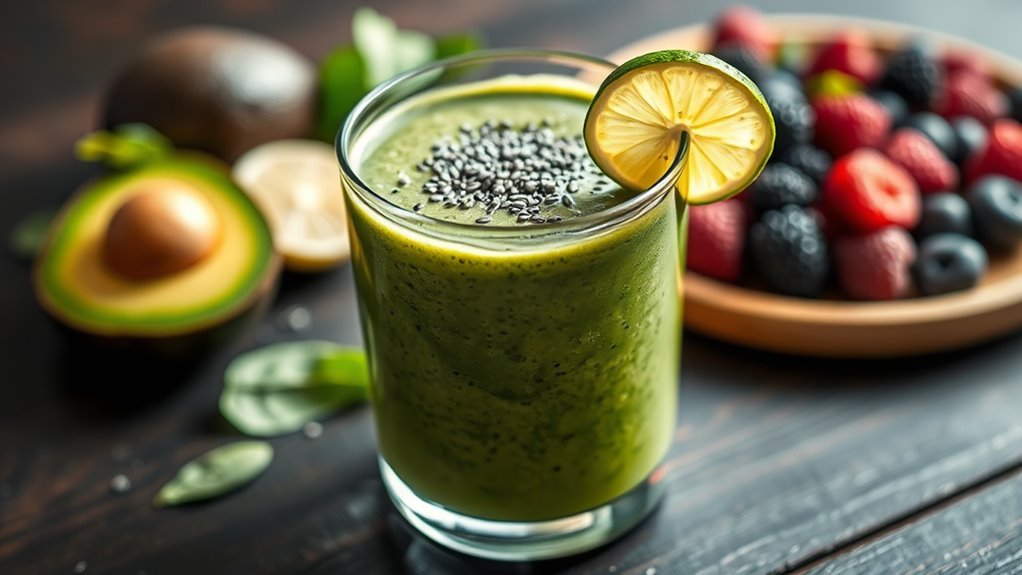
When you immerse yourself in the keto diet, it’s essential to grasp its core macronutrient ratios, as these dictate how your body processes energy. The primary keto principles emphasize a high-fat, moderate-protein, and low-carbohydrate balance—typically around 70% fats, 25% protein, and 5% carbohydrates. This macronutrient balance shifts your body into ketosis, where it burns fat for fuel instead of glucose. Understanding these ratios helps you make informed choices, allowing for greater flexibility within your diet while still adhering to keto. By focusing on healthy fats, quality proteins, and minimizing carbs, you can enjoy a variety of foods while pursuing your health goals. Ultimately, mastering these macronutrient ratios empowers you to embrace a lifestyle that supports your freedom and well-being. Additionally, tracking macronutrient ratios is crucial for maintaining ketosis and achieving desired results.
Key Ingredients for a Keto-Friendly Smoothie
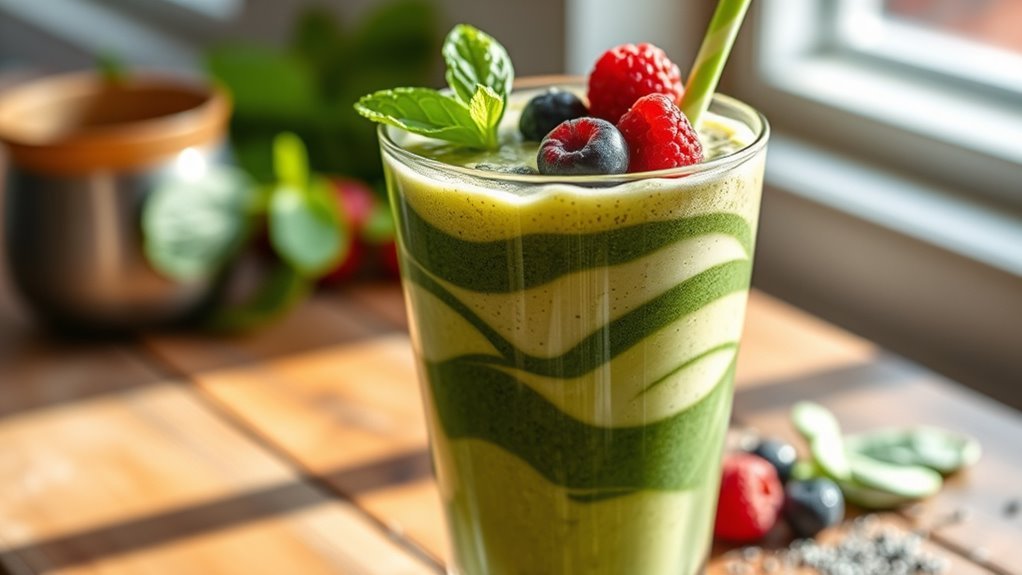
To create a keto-friendly smoothie, you’ll want to focus on ingredients that align with the diet’s macronutrient ratios, particularly low-carb options. Here are three key ingredients to contemplate:
Focus on low-carb ingredients for a keto-friendly smoothie, emphasizing nutrient density and healthy fats.
- Leafy Greens: Spinach or kale are excellent for their nutrient density and low carbs. They add essential vitamins without spiking your carb count.
- Healthy Fats: Avocados or coconut oil provide creaminess and flavor enhancement while keeping you satiated and supporting ketosis.
- Low-Carb Protein: Unsweetened protein powders can boost your smoothie’s protein content, helping you meet your daily requirements without unnecessary carbs. Additionally, it’s important to remember that maintaining low carb intake is essential for achieving health goals on keto, with the standard recommendation of 20-50 grams of net carbs daily.
Fruits to Avoid and Alternatives to Consider
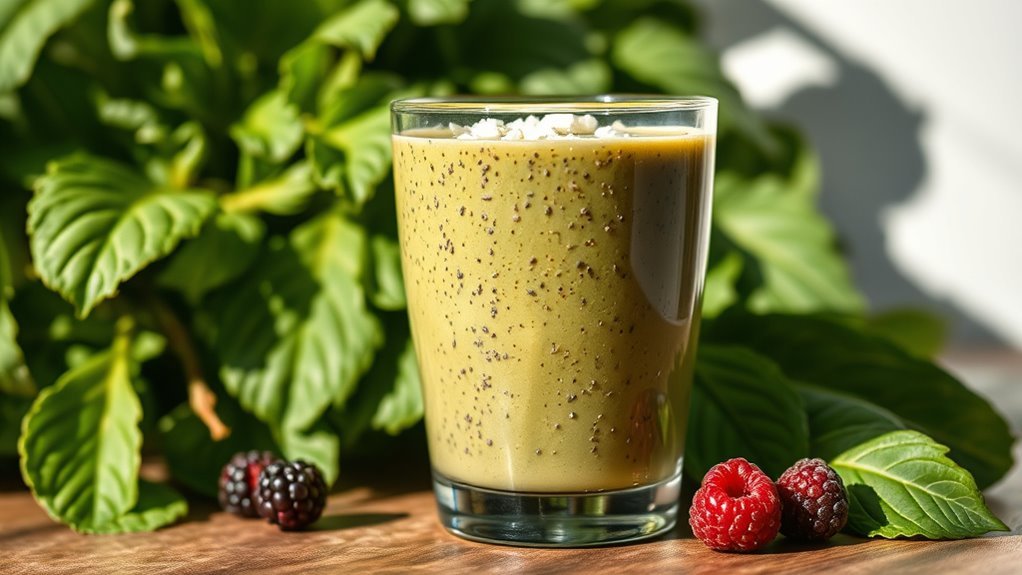
While many fruits are nutritious, they can also be high in sugars, making them less suitable for a keto diet. Fruits like bananas, grapes, and pineapples pack a carbohydrate punch that could disrupt your ketosis. Instead, consider fruit alternatives such as berries—strawberries, raspberries, and blackberries—which are lower in sugar and high in fiber. You can also explore avocado for its creamy texture and healthy fats. When sweetening your smoothies, opt for sugar substitutes like erythritol or stevia to maintain sweetness without the carbs. By choosing the right fruits and sugar substitutes, you can enjoy delicious smoothies that align with your keto lifestyle, giving you the freedom to indulge without compromising your goals. Additionally, incorporating keto-friendly fruits into your smoothies can enhance both flavor and nutritional value.
Adding Healthy Fats and Protein to Your Smoothie
Incorporating healthy fats and protein into your smoothie not only enhances its nutritional profile but also helps keep you satiated longer. This balance is essential for maintaining energy levels, especially on a keto diet. Here are some great ways to add these nutrients:
- Healthy Fat Sources: Consider adding avocado, coconut oil, or nut butter for those satisfying fats that promote fullness and flavor.
- Protein Powders: Opt for low-carb protein powders like whey, egg, or plant-based options to boost your protein intake without spiking insulin levels.
- Seeds: Chia seeds or flaxseeds not only provide healthy fats but also add fiber, further supporting digestive health. Additionally, incorporating cream cheese can enhance the creaminess while keeping the carb count low, making it a suitable option for those on a keto diet.
Delicious Keto Smoothie Recipes to Try
Finding the right balance of nutrients in your smoothies can make all the difference, especially on a keto diet. Try a creamy berry blend with unsweetened almond milk, spinach, and a scoop of protein powder. Add a handful of raspberries or blackberries for natural sweetness while keeping carbs low. For a nutty twist, blend in your favorite nut butter—like almond or macadamia—providing healthy fats and a satisfying texture. Another option is a coconut avocado smoothie, combining coconut milk, avocado, and a dash of vanilla extract for richness. Each of these recipes offers a delicious way to stay within your carb limits while enjoying the freedom of flavorful, nutrient-dense smoothies. Effective meal planning helps you avoid high-carb temptations while enjoying these tasty options. Enjoy experimenting and find the combinations that work best for you!
Frequently Asked Questions
Can I Use Protein Powder in My Keto Smoothie?
Absolutely, you can use protein powder in your keto smoothie! Imagine blending your favorite low-carb ingredients, the vibrant colors swirling together, when you add a scoop of protein powder. There are various types—whey, casein, or plant-based—each bringing unique benefits. Just be mindful of the carb content in the protein powder you choose. With the right ingredients, you’ll create a delicious, satisfying drink that keeps you on track with your keto goals.
How Often Can I Have Smoothies on a Keto Diet?
You can enjoy smoothies on a keto diet a few times a week, but it’s essential to choose your smoothie ingredients wisely. Opt for low-carb fruits like berries and incorporate keto alternatives like spinach or avocado for creaminess. Be mindful of the total carb count to stay within your daily limits. By balancing your smoothie intake with your overall diet, you can satisfy your cravings while keeping your keto goals on track.
Are Store-Bought Smoothies Keto-Friendly?
Store-bought smoothies aren’t always keto-friendly. For instance, if you grab a popular brand’s tropical smoothie, you might find it packed with high sugar content from fruits and added sweeteners. Always check the label for store-bought ingredients; many contain extra sugars that can derail your keto goals. If you want to stay on track, consider making your own smoothies using low-carb ingredients like spinach, avocado, and unsweetened almond milk for a delicious alternative.
What Are the Best Times to Consume Keto Smoothies?
The best times to consume keto smoothies are usually in the morning or post-workout. In the morning, they kickstart your day with essential nutrients, enhancing nutrient absorption throughout the day. After a workout, they help in recovery by replenishing lost energy while keeping your carb intake low. Just remember to balance your ingredients to avoid excess sugars, ensuring you stay in tune with your keto goals while enjoying the freedom of delicious flavors.
Can I Meal Prep Keto Smoothies in Advance?
Sure, you can meal prep keto smoothies in advance! Just think of them as your frozen green potions, waiting to transform you into a health guru. For smoothie storage, use airtight containers or freezer bags. As for ingredient variations, experiment with avocados, spinach, or unsweetened almond milk for that perfect blend. Just remember, they can lose some freshness over time, so it’s best to consume them within a week for ideal taste!
References
- https://www.healthline.com/nutrition/keto-smoothies
- https://www.verywellfit.com/keto-smoothies-5189766
- https://www.webmd.com/diet/obesity/ss/slideshow-keto-diet
- https://www.nutrition.org.uk/healthyliving/basics/keto-diet.html
- https://www.ncbi.nlm.nih.gov/pmc/articles/PMC6520971/
- https://www.mdpi.com/2072-6643/11/7/1531
- https://www.thekitchencommunity.org/keto-smoothie-recipes/