Ramen isn’t usually keto-friendly due to its high-carb noodles and broths. Traditional ramen noodles can have 40-50 grams of carbs per serving, making them a poor choice for a keto diet. However, you can opt for low-carb alternatives like shirataki or zucchini noodles and pair them with keto-friendly broth options. By selecting the right toppings and informing restaurant staff of your preferences, you can enjoy a delicious, low-carb ramen experience. There’s more to explore about creating keto ramen that’s satisfying and delicious.
Understanding the Basics of a Keto Diet
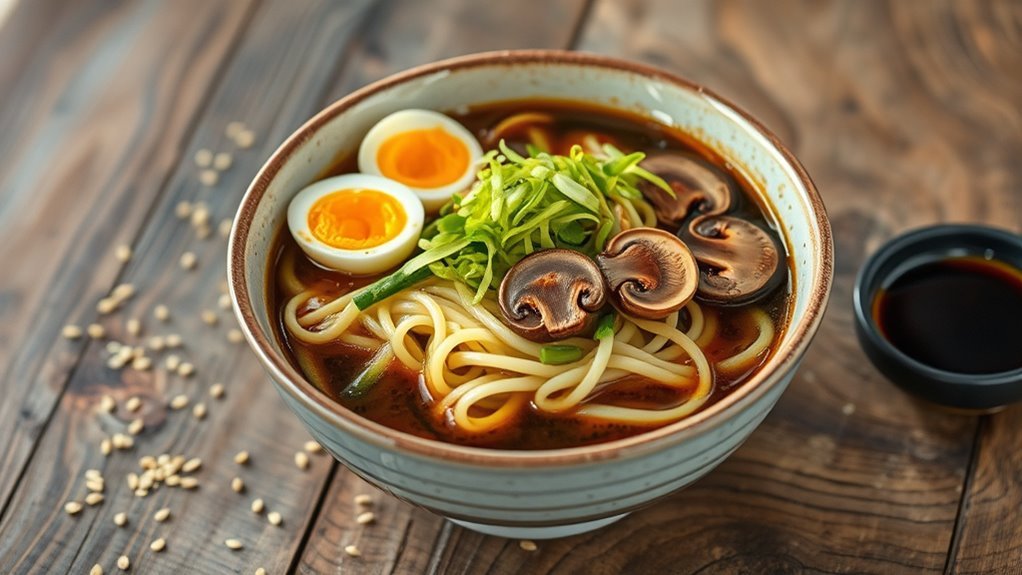
When you commence a keto diet, you’re fundamentally shifting your body’s metabolic state from relying on carbohydrates to utilizing fats for energy. The core keto principles revolve around remarkably reducing carb intake and increasing fat consumption, which forces your body into a state of ketosis. This metabolic shift can empower you to harness fat as your primary energy source, offering a sense of freedom from constant hunger or energy crashes. However, it’s essential to understand the dietary restrictions involved. You’ll need to avoid high-carb foods like grains, sugars, and certain fruits. Instead, focus on healthy fats, proteins, and low-carb vegetables. By embracing these changes, you can experience the benefits of the keto lifestyle while maintaining balance and satisfaction in your meals.
Traditional Ramen Ingredients
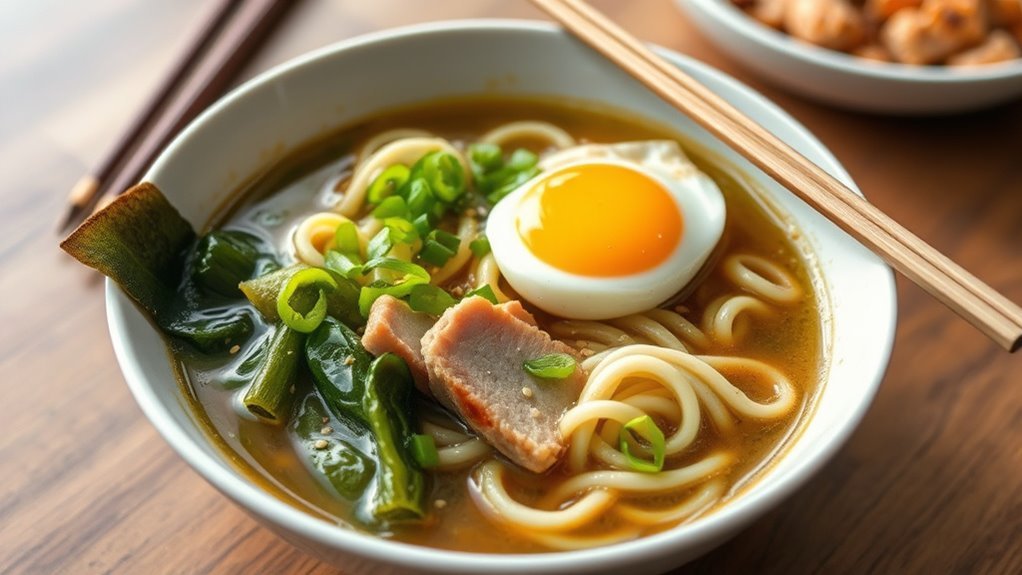
Traditional ramen, a beloved staple in Japanese cuisine, is known for its rich flavor and comforting texture. Its ramen history dates back to the late 19th century, evolving into various styles. You’ll find different noodle types, including wheat-based chūka soba and thicker udon, each contributing unique textures. The broth, typically made from pork, chicken, or seafood, is simmered for hours to develop deep flavors. Toppings like sliced pork (chashu), green onions, and soft-boiled eggs add complexity and richness. While traditional ramen is a delicious experience, understanding its ingredients helps you appreciate the dish’s cultural significance. So, whether you’re savoring it at a restaurant or making it at home, knowing these components enriches your ramen journey.
Carbohydrate Content in Ramen Noodles
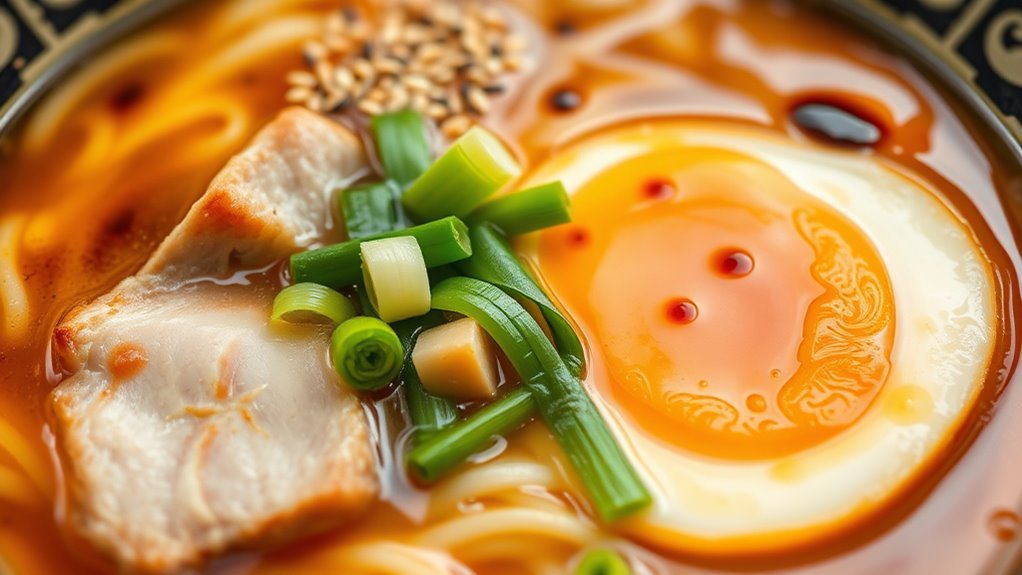
When you’re considering ramen noodles, it’s essential to look at their carbohydrate content. Typically, a serving of traditional ramen contains around 40-50 grams of carbs, which can be quite high for those on a keto diet. Comparing this with alternative low-carb options can help you make a more informed choice. Many low-carb alternatives can provide similar textures and flavors while keeping your carbohydrate intake in check.
Ramen Noodles Basics
Ramen noodles, a staple in many diets, are known for their comforting texture and quick preparation. Originating from China, their history has evolved markedly in Japan, where they became a beloved dish. You’ll find various ramen noodle types, including fresh, dried, and instant, each offering a unique taste and texture. Typically made from wheat flour, these noodles absorb flavors well, making them versatile for different broths and toppings. While they’re delicious, it’s essential to be mindful of their carbohydrate content, especially if you’re considering a keto lifestyle. Understanding the types of ramen noodles can help you make informed choices about incorporating them into your meals while balancing your dietary needs.
Carb Count Comparison
Understanding the carbohydrate content of various ramen noodle types is essential for anyone considering a keto-friendly diet. Here’s a quick nutritional comparison of popular ramen options:
- Traditional Wheat Ramen: Typically contains around 40-50g of carbs per serving, with low fiber content.
- Instant Ramen: Often has similar carb counts, generally lacking any significant fiber, making it a poor keto choice.
- Shirataki Noodles: These have less than 1g of net carbs, high in fiber, and a fantastic alternative for keto enthusiasts.
- Egg Noodles: Usually about 30g of carbs per serving, but may have slightly more fiber than traditional wheat noodles.
Choosing the right ramen can make a difference in your keto journey, so consider these options carefully!
The Impact of Broth and Toppings
When considering ramen on a keto diet, the broth and toppings can greatly affect its overall carb count. Different broths vary in ingredients, with some being more keto-friendly than others, while toppings like vegetables and proteins also contribute to the total carbohydrate content. Understanding these components helps you make a more informed choice that aligns with your dietary goals.
Broth Composition Variations
Although traditional ramen is often seen as a high-carb meal, the composition of its broth and toppings can greatly influence its keto-friendliness. The type of broth you choose plays a significant role in determining the overall carb content and flavor profiles of your dish. Here are four broth types to take into account:
- Shoyu: Soy sauce-based, offering a robust umami flavor but higher in carbs.
- Miso: Fermented soybean paste-based, providing a savory depth but can be carb-heavy.
- Tonkotsu: Rich pork bone broth, usually low in carbs and very creamy.
- Vegetable: Often lower in carbs, depending on the ingredients used.
Incorporating ingredients that align with macronutrient ratios is key to enhancing the keto-friendliness of your ramen.
Topping Carb Counts
How do the toppings you choose affect the overall carb count of your ramen? The right keto toppings can make all the difference. Incorporating low carb vegetables, like spinach and mushrooms, helps keep your meal within keto limits while adding nutrients and flavor. Additionally, consider adding low-carb leafy greens like kale to further boost the nutrient profile of your dish.
Here’s a quick look at some common toppings and their carb counts:
| Topping | Carbs (per serving) |
|---|---|
| Spinach | 1g |
| Mushrooms | 2g |
| Green onions | 1g |
| Bean sprouts | 2g |
| Bamboo shoots | 3g |
Keto-Friendly Alternatives to Ramen Noodles
While traditional ramen noodles are high in carbohydrates, there are several keto-friendly alternatives that can satisfy your cravings without derailing your diet. Here are some options you might enjoy:
- Zucchini Noodles: Spiralized zucchini offers a fresh, low-carb base for your ramen-inspired dishes.
- Egg Noodles: Made primarily from eggs, these noodles are protein-rich and low in carbs, making them a great substitute.
- Shirataki Noodles: These translucent noodles are low-calorie and made from konjac yam, providing a satisfying texture.
- Spaghetti Squash: When cooked, this veggie forms strands that resemble noodles, perfect for a hearty bowl.
With these alternatives, you can still indulge in your favorite ramen flavors while staying on track with your keto lifestyle.
Low-Carb Broth Options
When you’re looking to create a keto-friendly ramen experience, the broth is just as essential as the noodles. To keep things low-carb, consider using low carb bone broth, which is rich in flavor and nutrients without the carbs. You can easily find this at stores or make your own by simmering bones and aromatics for hours.
Keto broth recipes often incorporate ingredients like ginger, garlic, and soy sauce alternatives to enhance the taste. These options not only provide depth to your ramen but also align with your dietary goals. By focusing on broth that’s low in carbs, you guarantee that your keto ramen stays satisfying and delicious, allowing you to enjoy your meal without sacrificing your lifestyle choices. Additionally, incorporating probiotic support from the right ingredients can further enhance the health benefits of your ramen.
Creative Toppings for Keto Ramen
To elevate your keto ramen, incorporating creative toppings can make all the difference, as they not only enhance flavor but also add texture and visual appeal. Here are some ideas to get you started:
- Spicy Additions: Think chili oil or sriracha for a kick.
- Savory Garnishes: Add a sprinkle of sesame seeds or nori strips for umami flavors.
- Protein Boosts: Top with soft-boiled eggs or shredded chicken for a hearty meal.
- Crunchy Toppings: Try fried shallots or crushed pork rinds for that satisfying crunch.
Mix in vegetable twists like bok choy or zucchini noodles, and finish with herb enhancements like cilantro or green onions. Including non-starchy vegetables in your toppings not only adds nutritional value but also keeps your ramen aligned with keto principles. With these toppings, your keto ramen will be both delicious and satisfying!
Meal Prep Tips for Keto Ramen
When preparing keto ramen, choosing the right noodle alternative is key to staying within your carb limits. You can also enhance your meal by experimenting with flavorful broth options and simple, nutritious toppings. With a bit of planning, you can create a delicious and satisfying keto-friendly ramen that fits your diet. Additionally, incorporating low-carb alternatives like zucchini noodles or shirataki noodles can significantly reduce carbohydrate intake while providing a satisfying texture.
Noodle Alternatives Suggestions
Although traditional ramen noodles are off-limits on a keto diet due to their high carbohydrate content, there are several delicious alternatives that can help you maintain your low-carb lifestyle while enjoying this beloved dish. Here are some great options to ponder:
- Shirataki noodles – Made from konjac, these noodles are low in calories and carbs.
- Zucchini noodles – Spiralized zucchini offers a fresh, crunchy texture with minimal carbs.
- Cauliflower rice – A versatile base that mimics the feel of noodles while being low in carbs.
- Egg noodles – These are high in protein and can be a satisfying substitute.
Experimenting with these alternatives can keep your ramen experience exciting and keto-friendly. Additionally, it’s essential to consider low-carb alternatives to ensure you stay within your daily carb limits on a keto diet. Enjoy your noodle freedom!
Flavorful Broth Options
While many people think of ramen primarily for its noodles, the broth is just as essential in creating a satisfying dish. A rich, flavorful broth can elevate your keto ramen experience. For meat lovers, a bone broth infused with herbs and spices provides deep flavor and nutrients. If you prefer a plant-based option, a well-seasoned vegetarian broth can also be delicious. To enhance your broth, consider using homemade broth seasoning with garlic, ginger, and green onions, which can add layers of taste. Prepping your broth in advance allows you to save time during the week. Store it in portions so you can easily whip up a comforting bowl of keto ramen whenever the craving strikes. Enjoy the freedom of customizing your flavors! Incorporating low-carb vegetables can also enhance the nutrient profile of your ramen while keeping it keto-friendly.
Easy Toppings Ideas
Toppings can make or break your keto ramen experience, and incorporating a variety of them not only adds flavor but also boosts nutritional value. Here are some easy topping ideas to elevate your dish:
- Sliced Jalapeños – For those who love heat, spicy toppings like jalapeños are a must.
- Chopped Green Onions – These vegetable garnishes add a fresh crunch and vibrant color.
- Soft-Boiled Eggs – A classic choice, they enhance protein content and creaminess.
- Mushrooms – Whether you choose shiitake or enoki, mushrooms provide a savory depth.
Feel free to mix and match these toppings to create your perfect keto ramen. With these options, you’ll enjoy a satisfying meal that keeps you on track with your goals!
Popular Keto Ramen Recipes
If you’re looking to enjoy a warm bowl of ramen while sticking to your keto diet, there are plenty of delicious recipes to try. Many keto ramen recipes use noodle substitutes like zucchini noodles, shirataki noodles, or even egg-based noodles. These options reduce carbs while still providing that satisfying texture. You can create a simple broth using chicken or beef stock, flavored with soy sauce, garlic, and ginger. Top it off with sliced green onions, soft-boiled eggs, or sautéed mushrooms for added depth. Experimenting with spices can also elevate your dish. With these keto ramen recipes, you won’t just stay within your carb limits; you’ll savor every bite, enjoying the freedom to indulge in a comforting favorite without the guilt.
Finding Ramen in Restaurants on a Keto Diet
Finding ramen that fits your keto diet in restaurants can be a bit of a challenge, but it’s not impossible. Here are some tips to help you navigate restaurant options and make menu adaptations:
Navigating restaurant menus for keto-friendly ramen can be challenging, but with the right tips, it’s definitely achievable.
- Ask for Zoodles: Request zucchini noodles instead of traditional ramen.
- Broth-Based Choices: Opt for broth-heavy dishes that minimize carbs.
- Protein Boost: Load up on proteins like chicken, pork, or tofu to keep you satisfied.
- Skip the Add-Ons: Avoid high-carb toppings like corn, bamboo shoots, and certain sauces.
Many restaurants are willing to accommodate your dietary needs. Just communicate your preferences, and you might be surprised at the delicious, keto-friendly ramen alternatives you can enjoy! Including leafy greens in your meal can further enhance its nutritional value while keeping it low in carbs.
Frequently Asked Questions
Can I Eat Ramen Occasionally on a Keto Diet?
You can eat ramen occasionally on a keto diet, but it’s best to contemplate ramen alternatives that fit your carb limits. Traditional ramen is high in carbs, which can kick you out of ketosis. Instead, look for low-carb noodles made from alternatives like zucchini or shirataki. Pair these with keto snacks like sliced avocado or cheese to make a satisfying meal. Enjoying ramen occasionally is fine, but balance is key to staying on track!
Does Ramen Affect Ketosis if Consumed in Small Amounts?
Consuming ramen in small amounts can disrupt ketosis, as traditional ramen has around 40 grams of carbs per serving. Just imagine, that’s more than half of the typical daily carb limit on a keto diet! If you’re craving noodles, consider ramen alternatives made from zucchini or shirataki, which have minimal carbs and won’t impact your ketosis. Moderation is key, but opting for low-carb substitutes can help you enjoy your meals without derailing your progress.
What Are the Best Brands for Keto-Friendly Ramen?
For keto-friendly ramen, you’ll want to look for brands that offer low carb options. Some popular choices include Zenbowls and Miracle Noodle, which use konjac flour for a low-calorie, low-carb alternative. Additionally, brands like Noodle Zero provide a great texture without the carbs. Always check the nutritional labels, as some alternatives may still contain hidden sugars. Enjoying these options lets you indulge in ramen without straying from your keto goals!
How Can I Customize Ramen to Suit My Keto Needs?
To customize your ramen for a keto diet, imagine a steaming bowl filled with vibrant colors. Swap traditional noodles with zoodle alternatives, like spiralized zucchini or cucumber, for a low-carb base. Top it off with low carb toppings like sautéed mushrooms, sliced green onions, and a soft-boiled egg. You can even add rich broths infused with flavors like ginger and garlic, creating a deliciously satisfying dish that aligns with your keto needs.
Are There Any Health Risks With Keto Ramen Substitutes?
Yes, there can be health risks with keto ramen substitutes. While keto ingredients like zucchini noodles or shirataki can offer health benefits such as lower carbs, they might lack essential nutrients found in traditional ramen. Over-relying on substitutes can lead to imbalances in your diet. It’s important to guarantee you’re getting a variety of nutrients. Always consult a healthcare provider if you’re unsure about how these substitutes fit into your overall health plan.
References
- https://www.healthline.com/nutrition/keto-diet-foods#processed-foods
- https://www.ncbi.nlm.nih.gov/pmc/articles/PMC6520887/
- https://www.webmd.com/diet/obesity/keto-diet-what-to-know
- https://www.mayoclinic.org/healthy-lifestyle/nutrition-and-healthy-eating/expert-answers/keto-diet/faq-20459919
- https://www.cdc.gov/healthyweight/assessing/bmi/adult_bmi/index.html
- https://www.nutrition.org.uk/healthyliving/helping-you-eat-healthier/keto-diet.html
- https://www.washingtonpost.com/lifestyle/wellness/keto-diet-ramen/2020/01/23/1c8fe38e-37a5-11ea-bb7b-265f15f6f7c6_story.html