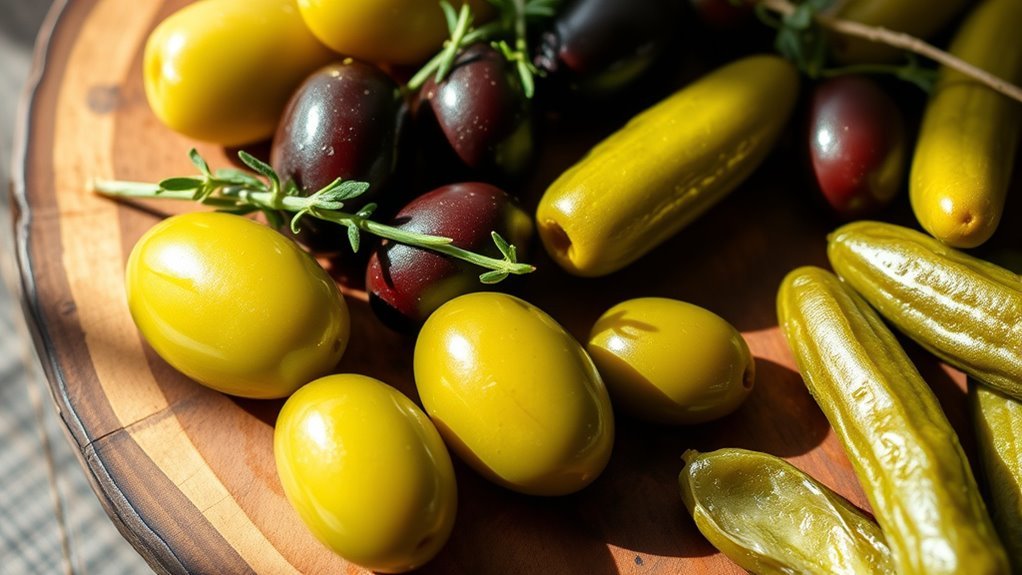

Yes, olives and pickles are keto-friendly options for your low-carb diet. Olives are low in carbs, rich in healthy fats, and packed with antioxidants, making them a great addition to your meals. Pickles, with minimal carbs and calories, can also support your keto goals, especially if you choose sugar-free varieties. Both can enhance your meals and snacks, but be mindful of sodium levels. Explore how to incorporate them effectively for maximum health benefits.
Understanding the Ketogenic Diet
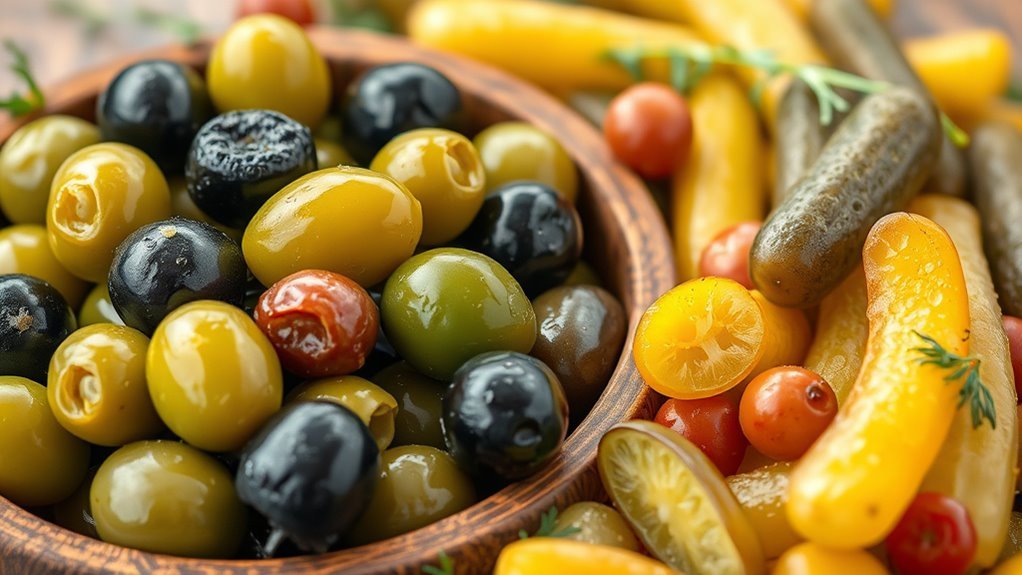
Although many diets promise quick results, the ketogenic diet stands out due to its unique focus on low carbohydrates and high fats. At its core, the ketogenic principles revolve around drastically reducing carb intake, which forces your body into a state of ketosis. In this state, your body becomes efficient at burning fat for energy instead of glucose. While this approach offers freedom from constant hunger, it comes with dietary restrictions that require careful planning. You’ll need to limit foods high in sugar and starch, making room for healthy fats, proteins, and non-starchy vegetables. Understanding these principles can empower you to make informed choices, allowing you to enjoy the benefits of a keto lifestyle while steering through your dietary landscape with confidence. Incorporating keto-friendly vegetables into your meals can enhance nutritional intake while keeping carb counts low.
Nutritional Profile of Olives
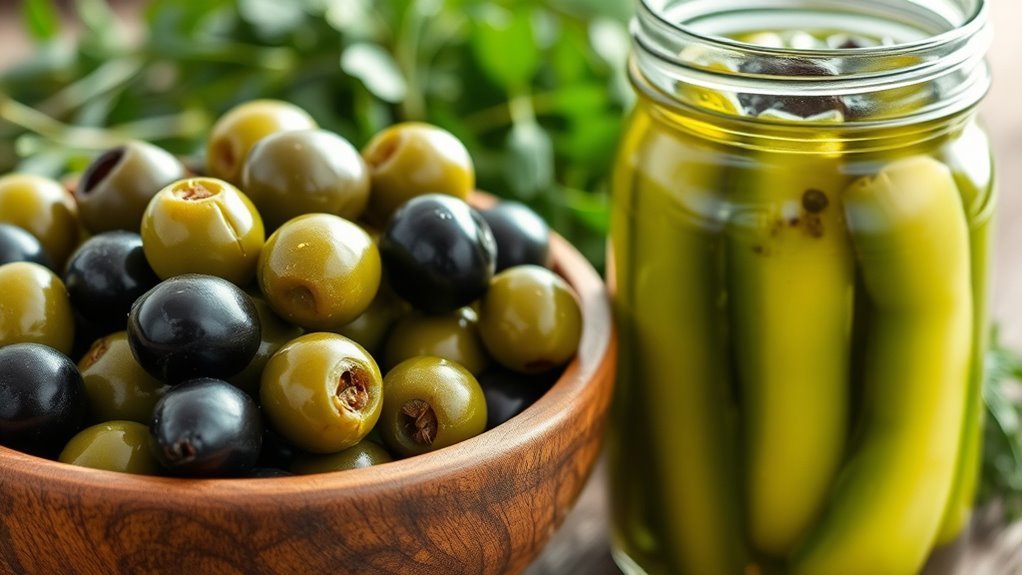
When you consider the nutritional profile of olives, you’ll find they’re relatively low in calories while being packed with healthy fats. They offer a good source of monounsaturated fats, which can support heart health. Additionally, olives contain minimal carbohydrates, making them a suitable option for those following a ketogenic diet. Their low carb content contributes to their versatility in keto meal planning.
Caloric Content Overview
Olives pack a surprising nutritional punch, with a typical serving of about 100 grams containing around 115 calories. When considering their caloric density factors, you’ll find that olives are low in carbs, making them a great fit for a keto diet. However, serving size considerations play a significant role in your overall intake. Here are some key points to keep in mind:
- Calories: Approximately 115 per 100 grams.
- Fat Content: Mostly healthy fats, contributing to satiety.
- Carbohydrates: Low in net carbs, aiding in ketosis.
- Fiber: A good source, promoting digestive health. Additionally, olives are rich in healthy fats, which support overall heart health.
Healthy Fat Sources
Incorporating olives into your diet not only adds flavor but also boosts your intake of healthy fats, which are essential for a ketogenic lifestyle. Olives are rich in monounsaturated fats, similar to those found in olive oil, making them a smart choice for maintaining heart health. You can enjoy their benefits alongside other healthy fat sources like avocados, which offer additional avocado benefits, or pair them with nut varieties and cheese options for a satisfying snack. Don’t forget about fatty fish, coconut products, and seed snacks, which also contribute to your healthy fat intake. Additionally, incorporating low-carb options like pickles into your meals can enhance flavor and provide additional health benefits. Embracing these options empowers you to enjoy a diverse and delicious keto-friendly diet while supporting your overall well-being.
Carbohydrate Levels Explained
Although you might be concerned about carbohydrate intake on a ketogenic diet, olives can be an excellent option due to their low carb content. When it comes to carbohydrate sources, olives stand out with their minimal impact on your daily counts. Here’s a quick breakdown of their nutritional profile:
- Carbs: About 1-2 grams of carbs per serving (about 10 olives).
- Fiber: Provides around 1 gram, aiding digestion.
- Calories: Roughly 50 calories per serving, making them a low-calorie snack.
- Healthy Fats: High in monounsaturated fats, supporting heart health.
Incorporating olives into your meals can help you stay on track with carbohydrate counting while enjoying delicious flavors and health benefits. Additionally, olives are a low-carb option that aligns perfectly with keto principles.
Nutritional Profile of Pickles
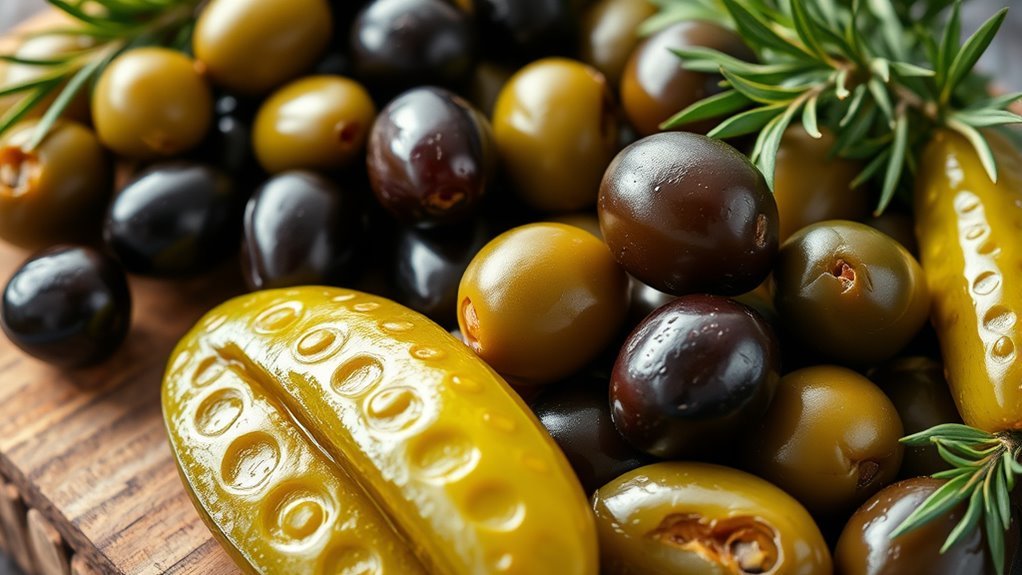
When considering pickles, it’s important to understand their caloric content and macronutrient breakdown. These fermented vegetables not only offer low calories but also provide certain health benefits, such as aiding digestion. Let’s explore how pickles can fit into your keto-friendly diet while highlighting their nutritional profile.
Caloric Content Analysis
While pickles are often seen as a low-calorie snack, understanding their caloric content is essential for anyone following a keto diet. When making caloric comparisons with other snacks, it’s important to evaluate serving sizes. Here’s a breakdown of what you typically get in a serving of pickles:
- Calories: Approximately 5-10 calories per spear or slice.
- Sodium: Can range from 200-400 mg, depending on the brine.
- Vinegar: Adds minimal calories but enhances flavor without carbs.
- Flavor Variety: Different types (dill, bread and butter) can influence caloric content.
These factors can help you make an informed choice, ensuring your snack aligns with your keto goals while keeping things enjoyable and satisfying. Additionally, the high sodium content of pickles can aid in electrolyte balance, which is particularly beneficial for those on a keto diet.
Macronutrient Breakdown
Understanding the macronutrient profile of pickles can further guide your choices when snacking on this keto-friendly option. Typically, a serving size of pickles (about 1 ounce or 28 grams) contains around 0-1 grams of carbohydrates, making it a suitable choice for low-carb diets. The macronutrient ratios are largely skewed toward minimal carbs, with negligible protein and fat content. This means you can enjoy pickles without greatly impacting your daily carb allowance. Additionally, the low-calorie nature of pickles often allows for generous serving sizes, enabling you to satisfy your cravings without guilt. Just remember to check the label for added sugars in some varieties, as they can alter the macronutrient ratios you’re aiming for. Including probiotics in fermented pickles can also enhance digestive health and support your keto journey.
Health Benefits Overview
Although often overlooked as a mere condiment, pickles offer a range of health benefits that make them a valuable addition to your diet, especially on a keto plan. Their nutritional advantages can enhance your overall well-being. Here are some key benefits:
- Low Calorie: Pickles are low in calories, making them a great snack option without derailing your diet.
- Hydration: The high sodium content can help maintain electrolyte balance, especially during ketosis.
- Probiotics: Fermented pickles provide beneficial probiotics that support gut health.
- Vitamins: They contain vitamins A and K, essential for vision and bone health.
Incorporating pickles into your meals can enhance flavor while supporting your keto lifestyle. Enjoy the crunchy goodness guilt-free! Additionally, pickles can also contribute to your daily intake of fermented foods that promote digestive health.
Carb Content in Olives and Pickles
When you’re following a keto diet, knowing the carb content in olives and pickles can be essential for maintaining your daily limits. Most olive varieties, like Kalamata and green olives, contain about 1-2 grams of net carbs per ounce, making them a great low-carb snack or addition to your meal. On the other hand, pickle types vary in carb content; dill pickles are typically lower in carbs, around 1 gram per spear, while sweet pickles can contain 5-10 grams due to added sugars. Always check labels for specific carb counts, as marinades and brines can alter the content. Incorporating these items into your diet can help you enjoy variety while sticking to your keto goals, especially since green olives are low-carb snacks that provide healthy fats and antioxidants.
Health Benefits of Olives
While you might think of olives primarily as a tasty snack or garnish, they also offer a range of health benefits that can complement your keto lifestyle. Different olive varieties, such as Kalamata and Castelvetrano, not only add flavor but also contribute to heart health. Here are some key benefits of including olives in your diet:
- Rich in Antioxidants: They contain compounds that combat oxidative stress and inflammation.
- Healthy Fats: Olives are high in monounsaturated fats, promoting heart health by improving cholesterol levels.
- Low in Carbs: Perfect for a keto diet, olives help keep your carb intake low.
- Nutrient-Dense: They provide vitamins like E and K, essential for overall well-being.
Additionally, olives can support your keto journey by providing healthy fats that are essential for achieving and maintaining ketosis.
Incorporating olives into your meals can enhance both flavor and health!
Health Benefits of Pickles
Pickles can be a surprising addition to your keto diet, as they not only add zest to your meals but also come with a variety of health benefits. They’re low in calories yet high in nutrient density, making them a smart choice for snacking. The fermentation process used in making pickles gives them probiotic properties, which can support gut health and improve digestion. Additionally, pickles contain antioxidants that help combat oxidative stress in your body. Their high sodium content can also be beneficial for those on a keto diet, as it aids in maintaining electrolyte balance. Just be mindful of portion sizes to avoid excess sodium intake. Overall, incorporating pickles into your diet can enhance both flavor and health.
How to Incorporate Olives Into Your Keto Diet
Incorporating olives into your keto diet can be both delicious and beneficial for your overall health. These little gems are low in carbs and packed with healthy fats, making them a perfect fit for your lifestyle. Here are some simple ways to enjoy olives:
Incorporate olives into your keto diet for a tasty, low-carb snack rich in healthy fats.
- Olive Snacks: Serve marinated olives as a quick, savory snack any time of day.
- Salads: Toss olives into salads for added flavor and healthy fats.
- Olive Recipes: Create a tapenade by blending olives with garlic and olive oil for a tasty spread.
- Pizza Topping: Add olives to your keto pizza for extra taste and texture.
With these ideas, you can easily enjoy olives while staying true to your keto goals!
How to Incorporate Pickles Into Your Keto Diet
How can you make pickles a delicious addition to your keto diet? Start by exploring various pickle recipes that complement your meals. Try adding dill pickles to salads for a crunchy texture or blending them into a creamy dip for veggies. You can also enjoy pickles as a low-carb snack, pairing them with cheese or cured meats for a satisfying bite. If you’re feeling adventurous, incorporate pickles into your burgers or sandwiches, replacing traditional bread. Their tangy flavor enhances many dishes without adding carbs. Remember to choose sugar-free pickles to stay within your keto guidelines. Embrace these pickle pairings to elevate your meals, bringing both flavor and variety to your low-carb lifestyle. Enjoy the freedom of creativity with pickles!
Comparing Olives and Pickles for Your Keto Lifestyle
While both olives and pickles can be excellent additions to a keto diet, they offer distinct flavors and nutritional profiles that may influence your choices. Here’s a quick comparison to help you decide:
- Olive Varieties: From Kalamata to Castelvetrano, olives provide healthy fats and antioxidants, making them a great choice for keto.
- Pickle Types: Dill, bread and butter, or spicy varieties can add crunch and flavor but may contain added sugars, so check labels.
- Calories and Carbs: Olives generally have higher fat content, while pickles are lower in calories but could have hidden carbs.
- Sodium Levels: Both can be high in sodium, so moderation is key to maintain health.
Choosing between them depends on your taste and nutritional needs, but both can fit into your keto lifestyle!
Frequently Asked Questions
Can I Eat Olives and Pickles on a Daily Basis?
You can definitely enjoy olives and pickles daily! Think of them as tiny treasures packed with health benefits. A daily serving can provide essential nutrients, like healthy fats in olives and probiotics in pickles. These snacks can add flavor and variety to your meals while supporting your overall well-being. Just be mindful of the sodium content, and balance them with other foods for a well-rounded diet. Your taste buds and body will thank you!
Are There Specific Brands of Olives or Pickles That Are Keto-Friendly?
Yes, there are specific brands of olives and pickles that are keto-friendly. Look for options like Castelvetrano olives or dill pickles without added sugars. These brands typically have low carb counts and retain the olive health benefits, such as healthy fats and antioxidants. Always check the labels for hidden sugars or preservatives. Brands like La Tourangelle and Grillo’s Pickles are great choices that align with keto guidelines while providing flavor and nutrition.
How Do Olives and Pickles Affect Ketosis?
Olives and pickles can support ketosis, as they’re low in carbs. In fact, a serving of olives contains about 1-2 grams of net carbs, making them a perfect low-carb snack. Their healthy fats offer ketosis benefits, helping you stay energized. Pickles, especially dill varieties, are also low in carbs and can satisfy your cravings without kicking you out of ketosis. Enjoy them in moderation for a tasty addition to your keto lifestyle!
Can I Make My Own Keto-Friendly Pickles at Home?
Yes, you can definitely make your own keto-friendly pickles at home! Using homemade pickle recipes, you can control the ingredients and guarantee they fit your dietary needs. Start with cucumbers and add keto-friendly spices like dill, garlic, and mustard seeds. Using vinegar as a base keeps the pickles low in carbs. Experiment with different spices to customize the flavor while sticking to your keto lifestyle. Enjoy the freedom of crafting your perfect pickle!
Are Stuffed Olives or Flavored Pickles Still Keto-Friendly?
Absolutely, stuffed olives and flavored pickles can still be keto-friendly! Just think of them as your savory companions on this low-carb journey. Stuffed olives often contain cheese or jalapeños, adding flavor without many carbs. Flavored pickles, however, should be checked for added sugars; opt for those with natural ingredients. As long as you keep an eye on labels, you can enjoy these tasty snacks guilt-free, adding variety to your keto lifestyle!
References
- https://www.healthline.com/nutrition/keto-diet-foods#low-carb-vegetables
- https://www.dietdoctor.com/low-carb/vegetables
- https://www.ncbi.nlm.nih.gov/pmc/articles/PMC6461250/
- https://www.webmd.com/diet/what-to-eat-keto-diet
- https://www.verywellfit.com/keto-diet-foods-5114212
- https://www.nutrition.gov/topics/nutrition-101/healthy-eating/what-ketogenic-diet
- https://www.sciencedirect.com/science/article/pii/S2212267219300643
- https://www.bbcgoodfood.com/howto/guide/what-keto-diet