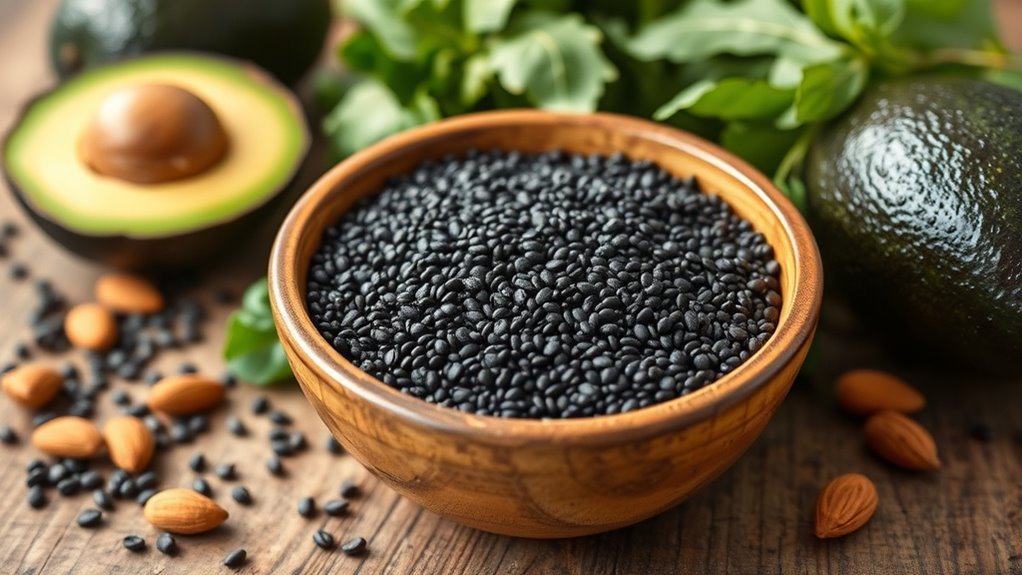

Yes, chia seeds are keto-friendly! A 1-ounce serving contains about 12 grams of carbohydrates, but with 10 grams of fiber, the net carbs are only 2 grams. They’re packed with omega-3 fatty acids and protein, making them a nutritious choice for your low-carb lifestyle. Plus, they can help with digestion and weight management. If you want to explore how to incorporate chia seeds in your meals, there’s plenty more to discover!
Nutritional Profile of Chia Seeds
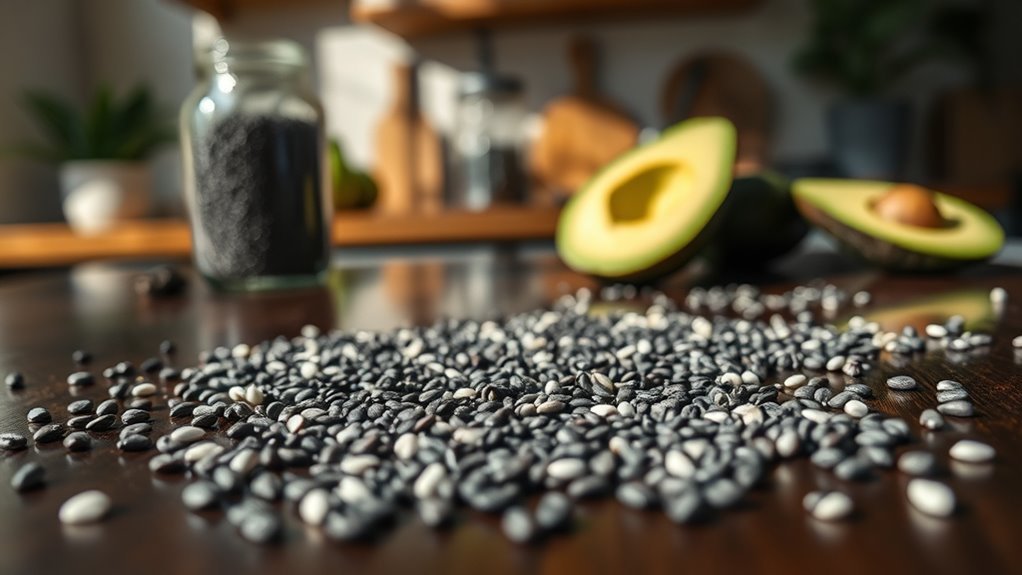
When you consider incorporating chia seeds into your diet, it’s important to understand their nutritional profile. These tiny seeds are packed with nutrients, offering a wealth of benefits. They’re high in omega-3 fatty acids, fiber, and protein, which can support heart health, digestion, and muscle recovery. Chia seeds also contain essential minerals like calcium, magnesium, and phosphorus, contributing to overall well-being. You can easily add them to smoothies, oatmeal, or yogurt, making chia seeds recipes versatile and convenient. Additionally, their ability to absorb liquid creates a gel-like texture, perfect for puddings or as an egg substitute in baking. With such a rich nutritional profile, chia seeds can be a valuable addition to your diet, enhancing both health and culinary creativity.
Carb Content and Net Carbs in Chia Seeds
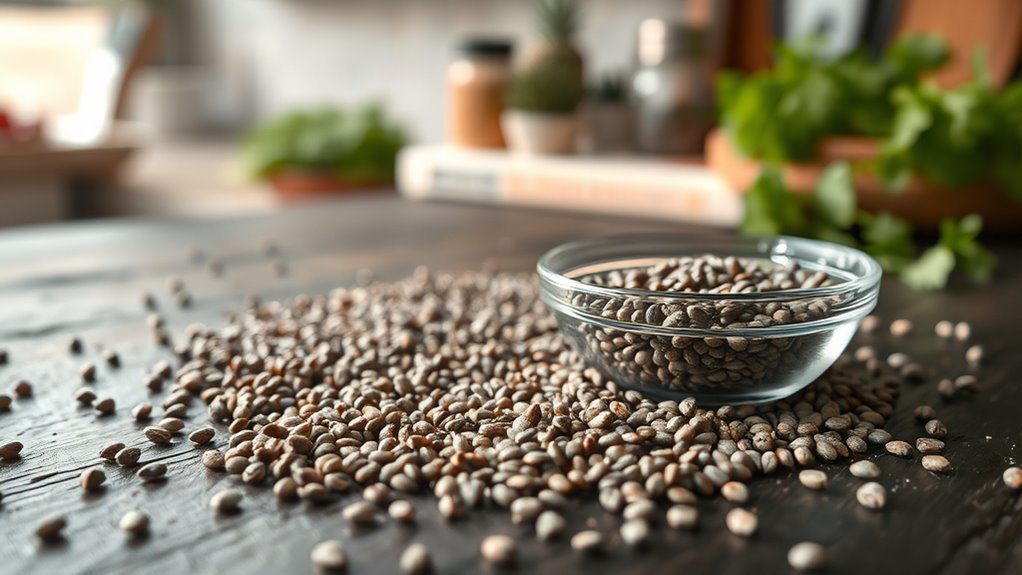
Chia seeds are not just nutrient-dense; their carbohydrate content is particularly remarkable for those following a keto diet. With about 12 grams of carbohydrates in a 1-ounce (28 grams) serving, you might be surprised. However, what’s essential is the fiber content—around 10 grams per serving—that reduces the net carbs to just 2 grams. When you do your carb calculations, this net carb comparison makes chia seeds a viable option for your low-carb lifestyle. They can add texture and nutrition without compromising your keto goals. Just remember to take into account your overall daily carb allowance and enjoy these tiny powerhouses in moderation, ensuring they fit seamlessly into your dietary freedom. Additionally, understanding carbohydrate intake is crucial for maintaining ketosis while incorporating chia seeds into your diet.
Health Benefits of Including Chia Seeds in Your Diet
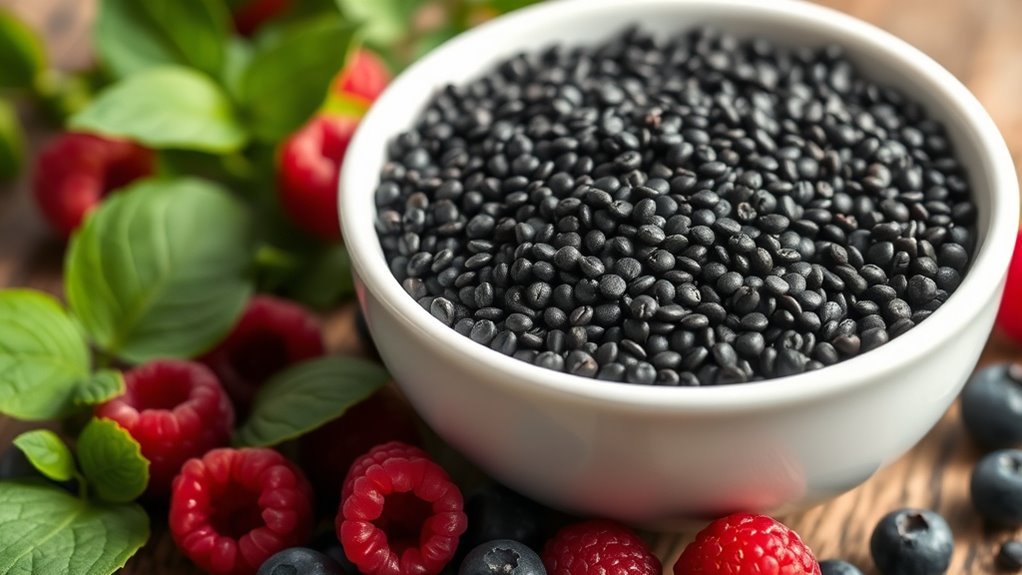
Including chia seeds in your diet can provide a wealth of health benefits that support overall well-being. They’re packed with omega-3 fatty acids, which are known to promote heart health and reduce inflammation. Chia seeds also boast high fiber content, aiding digestion and helping you feel fuller for longer, which can be beneficial for weight management. Additionally, these tiny seeds are rich in antioxidants, combating oxidative stress and supporting skin health. Their protein content can help stabilize blood sugar levels, making them a great choice for those looking to maintain energy throughout the day. By incorporating chia seeds into your meals, you can enjoy these diverse health benefits while embracing a nutritious, balanced lifestyle. Furthermore, their low glycemic index helps maintain stable blood sugar levels, complementing your overall health strategy.
How to Incorporate Chia Seeds Into Keto Meals
If you’re looking to enhance your keto meals with nutritious ingredients, chia seeds can be a fantastic addition. These tiny seeds are versatile and perfect for various chia seed recipes. Try adding them to keto smoothies for an extra boost of fiber and omega-3s. Here’s how you can incorporate them into your meals:
| Meal Type | Chia Seed Recipe | Benefits |
|---|---|---|
| Breakfast | Chia seed pudding | High in fiber |
| Snack | Chia seed energy balls | Satisfies cravings |
| Smoothie | Berry chia smoothie | Antioxidants and hydration |
| Salad | Chia seed dressing | Healthy fats |
| Dessert | Chocolate chia seed mousse | Low-carb indulgence |
In addition to their versatility, chia seeds are known for their high fiber content, which aids digestion and promotes gut health. With these ideas, you can enjoy the freedom of delicious, keto-friendly meals!
Chia Seeds Vs Other Keto-Friendly Seeds
When it comes to keto-friendly seeds, chia seeds stand out, but they’re not the only option available. In a chia seed comparison with other seeds, it’s essential to evaluate their unique nutritional profiles. Here are three notable options:
- Flaxseeds: High in omega-3 fatty acids and fiber, flaxseeds support digestive health and may help reduce inflammation.
- Pumpkin Seeds: Rich in magnesium and zinc, pumpkin seeds offer a crunchy texture and are great for snacking while providing essential nutrients.
- Hemp Seeds: Packed with protein and healthy fats, hemp seeds are a complete source of protein, making them a fantastic addition to your keto diet. Additionally, incorporating seeds like chia can enhance healthy fats in your meals, supporting overall wellness on a ketogenic diet.
Tips for Buying and Storing Chia Seeds
When you’re buying chia seeds, choosing high-quality options is essential for maximizing their nutritional benefits. Proper storage methods can greatly impact their freshness and shelf life, so it’s worth knowing how to keep them in ideal condition. By focusing on these factors, you can enhance your keto diet with chia seeds effectively.
Choosing Quality Seeds
Although chia seeds are small, their quality can greatly impact your health benefits, so choosing the right seeds is vital. When selecting chia seeds, consider these tips:
- Look for Organic Certification: Choose seeds labeled with organic certification to guarantee they’re free from harmful pesticides and chemicals.
- Check the Source: Research seed sourcing to find reputable suppliers who prioritize quality and sustainability. This can greatly affect the seeds’ nutritional value.
- Examine Packaging: Opt for chia seeds in airtight packaging that protects them from light and moisture, preserving their freshness and potency.
Proper Storage Methods
Choosing high-quality chia seeds is just the first step; proper storage methods are equally important to maintain their freshness and nutritional benefits. To guarantee your chia seeds stay viable, use airtight storage containers that prevent exposure to air and light. Glass jars or high-quality plastic containers work well. Remember, moisture control is essential—excess humidity can lead to mold growth, so keep your seeds in a cool, dry place away from direct sunlight. If you live in a humid environment, consider using desiccants in your storage containers to absorb moisture. Regularly check your seeds for any signs of spoilage or odor; fresh seeds should have a mild, nutty scent. With proper care, your chia seeds can remain a nutritious addition to your diet.
Optimal Shelf Life
For ideal shelf life, consider buying chia seeds in bulk to guarantee you have a sufficient supply while minimizing the frequency of purchases. Chia seeds boast impressive shelf stability, but to guarantee prime usage, follow these tips:
- Store in a cool, dark place: Keep your seeds away from heat and light to maintain freshness.
- Use airtight containers: This helps prevent moisture and air exposure, which can lead to spoilage.
- Check expiration dates: Always purchase seeds with a longer shelf life to maximize their longevity.
Frequently Asked Questions
Can Chia Seeds Help With Weight Loss on a Keto Diet?
Chia seeds can definitely support your weight loss efforts on a keto diet. Their high fiber content helps you feel full longer, reducing overall calorie intake. Plus, chia seed recipes, like puddings or smoothies, are delicious and easy to incorporate into your meals. Their healthy fats fit perfectly within keto guidelines, providing sustained energy without spiking your blood sugar. So, if you’re looking to shed pounds, chia seeds are a smart addition!
Are There Any Side Effects of Consuming Chia Seeds?
Yes, there can be side effects from consuming chia seeds. While they offer numerous benefits, like high fiber content and omega-3 fatty acids, some drawbacks include digestive issues, especially if you eat too many at once. You might experience bloating or gas. It’s important to drink plenty of water when consuming them. Moderation is key, allowing you to enjoy their benefits without the potential drawbacks affecting your experience.
How Many Chia Seeds Can I Eat on Keto Daily?
You can enjoy around 1 to 2 tablespoons of chia seeds daily on a keto diet. This daily chia intake provides healthy fats and fiber while keeping carbs low, making it ideal for keto meal planning. Just remember, moderation is key; too many seeds can add up in carbs. They’re versatile—sprinkle them on salads or blend them into smoothies to enhance your meals without sacrificing your carb limits. Enjoy the freedom of tasty, nutritious options!
Can I Use Chia Seeds as an Egg Substitute in Keto Baking?
Absolutely, you can use chia seeds as an egg substitute in keto baking! Just mix one tablespoon of chia seeds with three tablespoons of water to create a magical chia gel that can replace one egg. This gel binds ingredients like a superhero, making your keto recipes fluffy and delicious. Plus, it’s packed with fiber and omega-3s, adding nutritional value without sabotaging your carb goals. Enjoy the freedom of baking without eggs!
Are Chia Seeds Suitable for People With Nut Allergies?
Yes, chia seeds are generally suitable for people with nut allergies, as they aren’t classified as nuts. However, it’s important to point out that some individuals may have chia seed allergies, so always proceed with caution. If you’re looking for nut allergy alternatives, chia seeds can be a great option for adding texture and nutrition to your meals. Just keep an eye out for any reactions when introducing them into your diet.
References
- https://www.healthline.com/nutrition/chia-seeds-keto
- https://www.ncbi.nlm.nih.gov/pmc/articles/PMC6681395/
- https://www.dietaryguidelines.gov/
- https://www.webmd.com/diet/health-benefits-chia-seeds
- https://www.medicalnewstoday.com/articles/323929
- https://www.ncbi.nlm.nih.gov/pmc/articles/PMC5238768/
- https://www.hsph.harvard.edu/nutritionsource/food-features/chia-seeds/
- https://www.gardeningknowhow.com/edible/vegetables/chia-seeds.htm