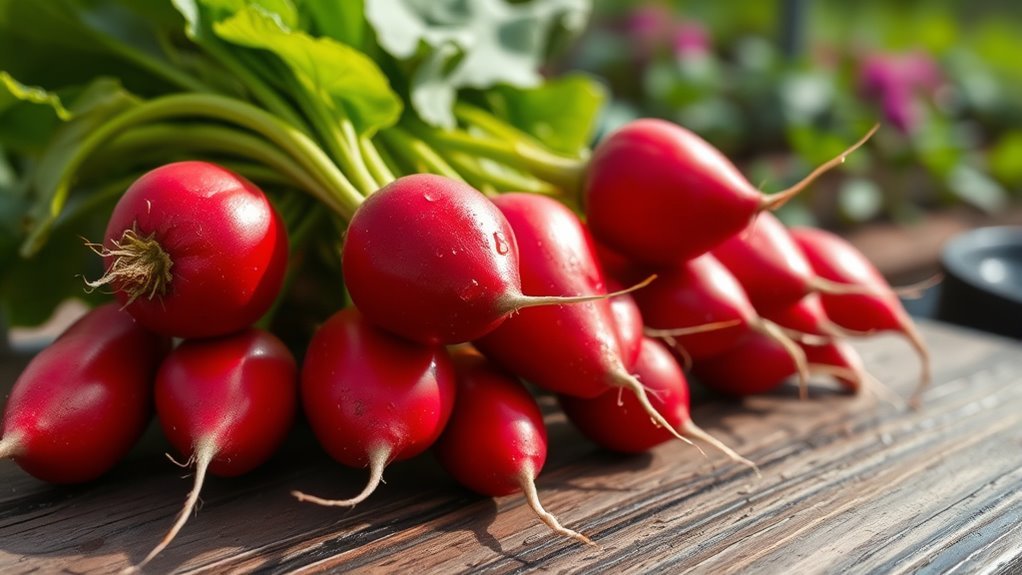

Yes, radishes are keto-approved! They’re low in calories and have about 1.8 grams of net carbs per 100 grams, making them ideal for a ketogenic diet. Rich in vitamins C and B6, as well as minerals like potassium, radishes support overall health. Their high fiber content promotes digestion and gut health. Plus, their versatile nature allows for various delicious recipes. Curious to learn more about the benefits and uses of radishes in your diet?
Nutritional Profile of Radishes
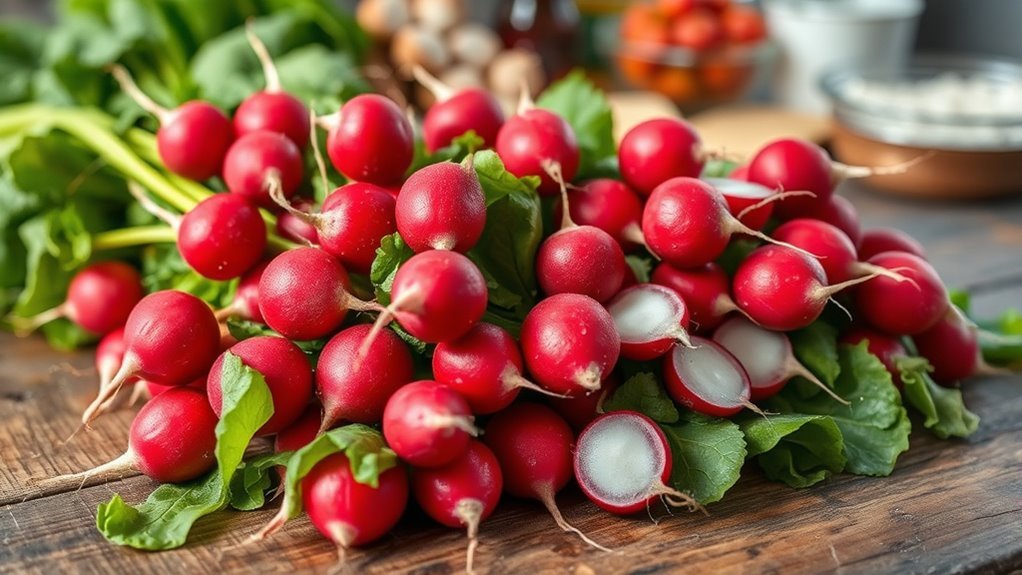
When considering a keto-friendly diet, understanding the nutritional profile of radishes can be quite enlightening. Radishes, with their various varieties like red, black, and daikon, are low in calories and high in fiber, making them an excellent addition to your meals. They’re packed with vitamins C and B6, along with essential minerals like potassium and magnesium. You can enjoy radishes raw in salads or as crunchy snacks, or you might experiment with cooking methods such as roasting or sautéing, which can enhance their flavor while retaining nutrients. Their low-carb content makes them a popular choice for those following a ketogenic diet. Each method offers a unique taste experience, allowing you to incorporate these versatile vegetables into your keto lifestyle without compromising your nutritional goals.
Carbohydrate Content in Radishes
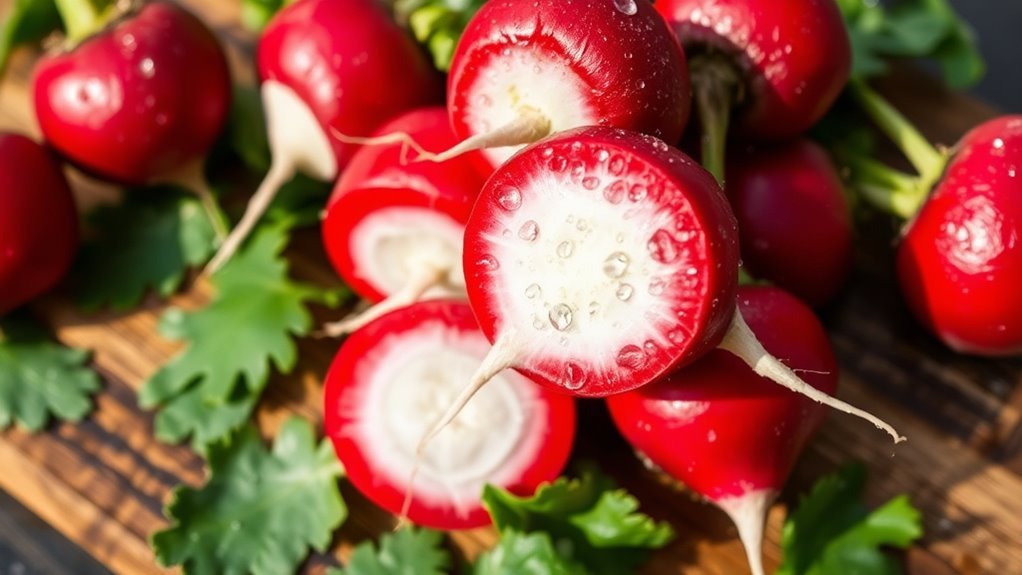
When considering radishes in your keto diet, it’s essential to understand their carbohydrate content. Radishes offer a low net carb count, making them a great choice compared to many other vegetables. Let’s break down their nutritional profile and see how they fit into your meal planning. Additionally, like broccoli, radishes are also low in calories, which supports diet management while adhering to keto guidelines.
Nutritional Profile Overview
Radishes, often celebrated for their crisp texture and peppery flavor, are an excellent choice for those following a ketogenic diet due to their low carbohydrate content. These vibrant veggies come in various radish varieties, each offering unique nutritional benefits while keeping your carb count low. Here’s why you might love incorporating radishes into your meals:
- They add a revitalizing crunch to salads.
- Their bold taste can elevate simple dishes.
- They’re packed with antioxidants to support your health.
- Radishes are hydrating, helping you stay invigorated.
- Their versatility makes them easy to include in various recipes.
With their impressive nutritional profile, radishes can help you maintain your freedom in food choices while sticking to your keto lifestyle.
Net Carbs Calculation
Although many vegetables can pose a challenge for those on a ketogenic diet due to their higher carb counts, radishes stand out with their remarkably low net carbohydrate content. A typical radish serving, which is about 100 grams, contains roughly 3.4 grams of total carbohydrates. However, since radishes are high in fiber—around 1.6 grams per serving—you can subtract this from the total carbs for a net carbs measurement of about 1.8 grams. This makes radishes an excellent choice for keto enthusiasts looking to keep their carb intake in check. By incorporating radishes into your meals, you can enjoy their crunch and peppery flavor without worrying about exceeding your daily carb limits. Additionally, their low carb count supports maintaining ketosis while adding variety to your diet.
Comparing With Other Vegetables
Many vegetables, while nutritious, can greatly impact your carbohydrate intake on a ketogenic diet. When you’re comparing radish varieties to other vegetables, radishes shine with their low net carb content. For instance, one cup of chopped radishes has about 1.8 grams of net carbs, making them a fantastic choice for keto enthusiasts. Here’s how they stack up against some common veggies:
- Cauliflower: 2 grams per cup
- Broccoli: 4 grams per cup
- Spinach: 1 gram per cup
- Zucchini: 2 grams per cup
- Carrots: 11 grams per cup
These vegetable comparisons highlight why radishes are a smart addition to your diet. By focusing on low-carb options, you can enjoy the freedom of flavorful meals while staying in ketosis. Additionally, incorporating radishes can provide essential nutrients that support overall health without compromising your carb limits.
Health Benefits of Radishes
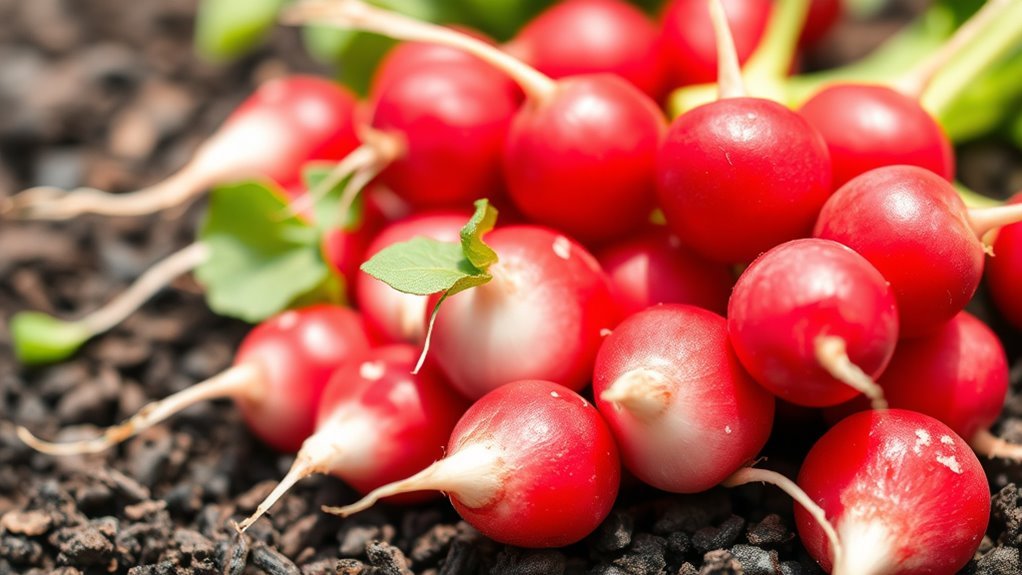
While you might think of radishes merely as a crunchy addition to salads, they offer a range of health benefits that can enhance your overall well-being. These vibrant vegetables, available in various radish varieties, are low in calories and rich in nutrients. They’re packed with antioxidants that help combat oxidative stress, support digestion, and may even improve cardiovascular health.
| Health Benefit | Description | Radish Varieties |
|---|---|---|
| Low in Calories | A great choice for weight management. | Red, Black, Daikon |
| High in Vitamin C | Boosts immune function and skin health. | Watermelon, French Breakfast |
| Supports Digestion | Contains fiber and aids in digestive health. | White Icicle, Easter Egg |
| Antioxidant Properties | Helps reduce inflammation and oxidative damage. | Purple, Cherry Belle |
How Radishes Fit Into a Keto Diet
Radishes are a great addition to your keto diet due to their low carbohydrate content and impressive nutritional profile. With only about 1 gram of net carbs per half-cup serving, they can help you maintain ketosis while providing essential vitamins and minerals. Additionally, their health benefits, including antioxidant properties and digestive support, make them a valuable choice for your meal plan.
Nutritional Profile of Radishes
When considering a keto diet, the nutritional profile of radishes makes them an excellent choice for low-carb enthusiasts. These vibrant veggies come in various radish varieties, each offering unique flavors and textures. Packed with nutrients, radishes provide numerous benefits that align with your keto lifestyle:
- Low in calories, helping you maintain your weight
- High in fiber, promoting digestive health
- Rich in antioxidants, supporting overall well-being
- Contains vitamins C and K, boosting immunity
- Versatile in dishes, adding crunch and color
Incorporating radishes into your meals not only enhances flavor but also contributes to your nutritional goals. So, embrace the freedom of enjoying this delightful vegetable while staying on track with your keto journey!
Carb Content Overview
For those on a keto diet, understanding the carbohydrate content of foods is essential for maintaining ketosis. Radishes are a great choice because they are low in carbs, making them suitable for this lifestyle. Different radish varieties, such as red, black, and daikon, offer similar carb profiles, generally around 1-2 grams of net carbs per 100 grams.
Here’s a quick overview of their carb content:
| Radish Variety | Net Carbs (per 100g) |
|---|---|
| Red Radish | 1.8g |
| Black Radish | 1.6g |
| Daikon Radish | 1.0g |
| Watermelon Radish | 1.5g |
| Green Radish | 1.7g |
You can enjoy these versatile veggies raw or cooked, enhancing your keto meals while staying on track. Additionally, radishes provide essential vitamins that contribute to overall health, making them a valuable addition to your diet.
Health Benefits of Radishes
Incorporating radishes into your keto diet not only adds flavor but also provides a host of health benefits. These vibrant veggies are low in carbs and high in essential nutrients, making them a perfect fit for your lifestyle. Here are some radish benefits you can enjoy:
- Rich in vitamin C, boosting your immune system
- High in fiber, promoting digestive health
- Contains antioxidants, helping combat inflammation
- Supports hydration due to their high water content
- Low in calories, making them ideal for weight management
With their impressive vitamin content and numerous health perks, radishes can enhance your overall well-being while keeping your carb intake in check. Enjoy them in salads, as snacks, or in various dishes to fully experience their benefits!
Creative Ways to Use Radishes in Recipes
Radishes offer a unique crunch and a peppery flavor that can elevate a variety of dishes, making them a versatile ingredient in your kitchen. You can whip up vibrant radish salads, combining them with leafy greens for a revitalizing side. For a warm option, try roasting radishes; it softens their bite and enhances sweetness. If you’re in the mood for snacks, radish chips are a crispy alternative to traditional chips. Consider making radish fritters for a delicious appetizer, or blend radishes into a zesty radish salsa. Pickled radishes add tang to any meal, while radish wraps can replace tortillas for a low-carb option. Don’t forget to experiment with radish smoothies for a nutritious twist on your morning routine!
Comparing Radishes With Other Low-Carb Vegetables
While many vegetables can fit into a low-carb diet, radishes stand out due to their unique flavor and impressive nutritional profile. When you compare radish varieties to other low-carb vegetables, you’ll find they offer a crunchy texture and a peppery taste that can elevate your meals.
Consider these emotional benefits of radishes over vegetable substitutes:
- Low in calories, allowing guilt-free snacking
- Rich in vitamin C, boosting your immune system
- High in fiber, promoting healthy digestion
- Versatile in dishes, from salads to stir-fries
- A great way to satisfy cravings without carbs
- Additionally, they are a relatively low-carb option for those following a keto diet, making them an excellent choice for meal variety.
Tips for Selecting and Storing Radishes
To make the most of radishes in your low-carb meals, knowing how to select and store them is key. When looking for fresh radish selection, choose firm, vibrant radishes without blemishes or soft spots. Their greens should be crisp and bright, indicating freshness.
For radish storage tips, here’s a quick guide:
| Storage Method | Duration |
|---|---|
| In the refrigerator | Up to 2 weeks |
| In water (submerged) | 1 week |
| In a paper bag | Up to 5 days |
Keep radishes in a cool, dark place to maintain their crunch. Following these tips guarantees you enjoy the freshest radishes in your meals!
Potential Side Effects of Eating Radishes
Although often praised for their health benefits, eating radishes can lead to some potential side effects for certain individuals. It’s important to be aware of these issues to maintain your well-being:
- Allergic reactions like skin rashes or swelling
- Digestive issues, including bloating or gas
- Unpleasant taste or bitterness in some varieties
- Potential interactions with certain medications
- Overconsumption may result in excessive fiber intake
If you notice any of these symptoms after consuming radishes, it might be best to limit your intake. Listening to your body is key to a healthy lifestyle. Always consult with a healthcare professional if you’re unsure about how radishes might affect you, especially if you have a history of allergies or digestive problems.
Radishes in Different Keto Meal Plans
When planning your keto meals, understanding radishes’ nutritional value is essential. These low-carb vegetables can be creatively incorporated into various meal prep ideas and recipes. Let’s explore how you can maximize their benefits in your keto diet. Additionally, radishes are versatile and can be used in salads or as a low-carb alternative to traditional side dishes, enhancing your meal variety while keeping carb counts low.
Nutritional Value Overview
Radishes are a low-calorie, nutrient-dense vegetable that fits seamlessly into various keto meal plans. With a range of radish varieties available, you can easily incorporate them to add flavor and texture. Here’s what makes radishes a fantastic choice:
- They’re packed with antioxidants to fight inflammation.
- Low in carbs, making them ideal for keto.
- High in fiber, promoting digestive health.
- Rich in vitamin C, boosting your immune system.
- Versatile cooking methods, from roasting to salads.
Whether you enjoy them raw or cooked, radishes can enhance your meals while keeping your carb count low. Embrace the freedom of flavorful choices with radishes, knowing you’re fueling your body with essential nutrients.
Meal Prep Ideas
Incorporating radishes into your keto meal prep can elevate your dishes while keeping carb counts in check. These versatile vegetables work well in various radish recipes, allowing you to enjoy their peppery crunch in salads, stir-fries, or as a roasted side. You can slice them thin for a revitalizing salad base or roast them with olive oil and herbs for a savory treat. For a unique twist, consider making radish chips to satisfy your snack cravings without derailing your diet. By planning your meals around radishes, you’ll not only enhance flavor but also add valuable nutrients while staying aligned with your keto goals. Embrace the freedom of creativity in your meal prep with radishes!
Recipes for Incorporation
As you explore different keto meal plans, you’ll find that radishes offer a delightful way to enhance flavor while keeping your carb intake low. These versatile veggies can easily fit into various dishes, making your meals more exciting.
- Create vibrant radish salads with fresh greens and avocado.
- Roast radishes with olive oil and herbs for a savory side dish.
- Add sliced radishes to tacos for a crunchy texture.
- Incorporate them in stir-fries for a unique twist.
- Use radish slices in place of chips for dips.
Conclusion: Adding Radishes to Your Keto Lifestyle
While many vegetables can be challenging to fit into a keto diet, radishes stand out as a versatile option that can enhance your meals without compromising your carb intake. With various radish varieties, such as the classic red, daikon, and black, you can enjoy different flavors and textures. These low-carb veggies are not only great for salads but also make excellent keto snacks when roasted or pickled. Their high fiber content aids in digestion and helps you feel full longer. By incorporating radishes into your meals, you’ll add crunch and color while staying within your carb limits. So don’t hesitate to experiment with radishes; they can play a significant role in your keto lifestyle, offering both taste and nutritional benefits. Additionally, their low carbohydrate levels make them an excellent choice for maintaining your desired macronutrient balance.
Frequently Asked Questions
Can Radishes Be Eaten Raw on a Keto Diet?
Yes, you can eat raw radishes on a keto diet! They’re low in carbs and make excellent keto snack alternatives. You can enjoy them sliced in salads or with dips for a crunchy bite. Try raw radish recipes like radish guacamole or as a substitute for chips. Their peppery flavor adds a nice kick while keeping your carb count low, allowing you the freedom to indulge without straying from your keto goals.
Are There Different Types of Radishes Suitable for Keto?
Absolutely, there are several types of radishes suitable for keto! You might be surprised to learn that popular radish varieties like the red globe, daikon, and black radish all have low net carbs. These veggies not only enhance your meals but also provide essential nutrients. Isn’t it great to know that you can enjoy these crunchy delights while sticking to your keto goals? So, go ahead and explore different radish options in your diet!
How Do Radishes Affect Blood Sugar Levels?
Radishes can help maintain stable blood sugar levels due to their low glycemic index and high fiber content. This means they won’t cause significant spikes in blood sugar after you eat them. Additionally, radish benefits include antioxidants and vitamins that support overall health, making them a smart choice for anyone looking to manage their blood sugar. Incorporating radishes into your meals can be a tasty way to enjoy these health perks without sacrificing flavor.
Can Radishes Cause Digestive Issues for Some People?
Yes, radishes can cause digestive issues for some people! If you’ve got digestive sensitivity, you might find these crunchy veggies a bit rebellious. Individual tolerance varies widely; some folks enjoy them without a hitch while others may experience gas or bloating. It’s important to listen to your body. Start with small amounts, and if you notice discomfort, consider cutting back or trying a different veggie that suits you better!
Are Radishes High in Fiber Compared to Other Vegetables?
Radishes aren’t particularly high in fiber compared to other vegetables. In fact, radish nutrition shows they contain about 1.9 grams of fiber per 100 grams. When you compare this to vegetables like broccoli or Brussels sprouts, which have considerably higher fiber content, radishes fall short. However, they still provide some fiber and can be a crunchy, low-calorie addition to your meals, enhancing variety while supporting your overall dietary goals.
Frequently Asked Questions about Radishes and the Keto Diet
1. Are radishes low in carbohydrates?
Yes, radishes are low in carbohydrates, making them an excellent choice for a keto diet. A 100-gram serving of raw radishes contains about 3.4 grams of carbs, of which 1.6 grams are fiber. This results in a net carb count of approximately 1.8 grams per 100 grams, allowing you to enjoy them while keeping your carb intake low.
2. What are the nutritional benefits of radishes?
Radishes are not only low in calories and carbohydrates, but they are also packed with nutrients. They are an excellent source of vitamin C, which is crucial for immune function, and contain potassium, which is important for heart health. Additionally, radishes provide antioxidants and compounds that may have anti-inflammatory effects. Their high water content also aids in hydration, making them a refreshing addition to your meals.
3. How can I incorporate radishes into a keto meal plan?
Incorporating radishes into a keto meal plan is easy and versatile. You can eat them raw in salads, sliced thinly on top of dishes for crunch, or pickled for added flavor. Radishes can also be roasted or sautéed, which brings out their natural sweetness. Try using radishes as a substitute for potatoes in recipes or in stir-fries, as they hold up well when cooked and provide a unique flavor profile.
4. Are there any potential downsides to eating radishes on a keto diet?
While radishes are generally safe and healthy for most people, some individuals may experience digestive discomfort due to their high fiber content, particularly if consumed in large amounts. Additionally, those with thyroid issues should consume radishes in moderation, as they contain goitrogens that can interfere with thyroid function. It’s always a good idea to listen to your body and consult with a healthcare provider if you have specific dietary concerns.
5. Can I eat radishes on a strict keto diet?
Yes, radishes are keto-approved and can be eaten on a strict keto diet. Their low net carb count makes them a great choice for those looking to maintain ketosis. Just be mindful of portion sizes, as frequent consumption of any food can add up in terms of carbs. Overall, radishes can be a delicious and nutritious addition to your keto lifestyle.
References
- https://www.healthline.com/nutrition/keto-diet-foods#veggies
- https://www.medicalnewstoday.com/articles/327401
- https://www.ncbi.nlm.nih.gov/pmc/articles/PMC6467068/
- https://www.cdc.gov/nutrition/resources-publications/healthy-eating-guide.html
- https://www.dietaryguidelines.gov/
- https://www.washingtonpost.com/food/2020/02/27/keto-diet-radishes/
- https://www.webmd.com/diet/obesity/ss/slideshow-keto-foods
- https://www.nutrition.gov/topics/whats-food/vegetables/radishes
- https://en.wikipedia.org/wiki/Radish