The Carnivore Diet restricts you to animal products only, offering less variety, while the Keto Diet allows low-carb vegetables, dairy, and nuts, promoting a more flexible eating plan. Both diets are low in carbs, but their macronutrient compositions differ; Carnivore focuses on high protein and fat, whereas Keto includes a balance of fat, moderate protein, and minimal carbs. Each diet has its unique health benefits and potential risks, which you can discover more about next.
Overview of the Carnivore Diet
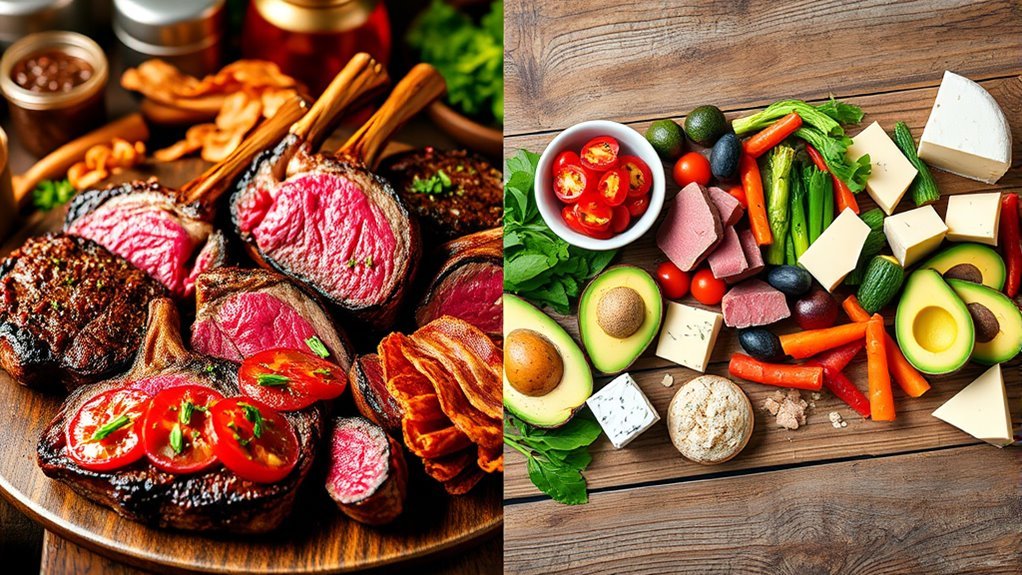
The Carnivore Diet, which primarily consists of animal products, has gained attention for its simplicity and potential health benefits. This diet focuses exclusively on meat sources, including beef, pork, chicken, and fish, while excluding all plant-based foods. By eliminating these foods, you might find it easier to manage dietary restrictions, particularly if you’re sensitive to carbohydrates or certain food additives. Advocates argue that a meat-based diet can lead to weight loss, improved mental clarity, and reduced inflammation. However, it’s crucial to take into account potential nutrient deficiencies, as essential vitamins and minerals found in fruits and vegetables are absent. If you’re contemplating this lifestyle, it’s wise to consult with a healthcare professional to make sure it aligns with your individual health needs and goals.
Overview of the Ketogenic Diet
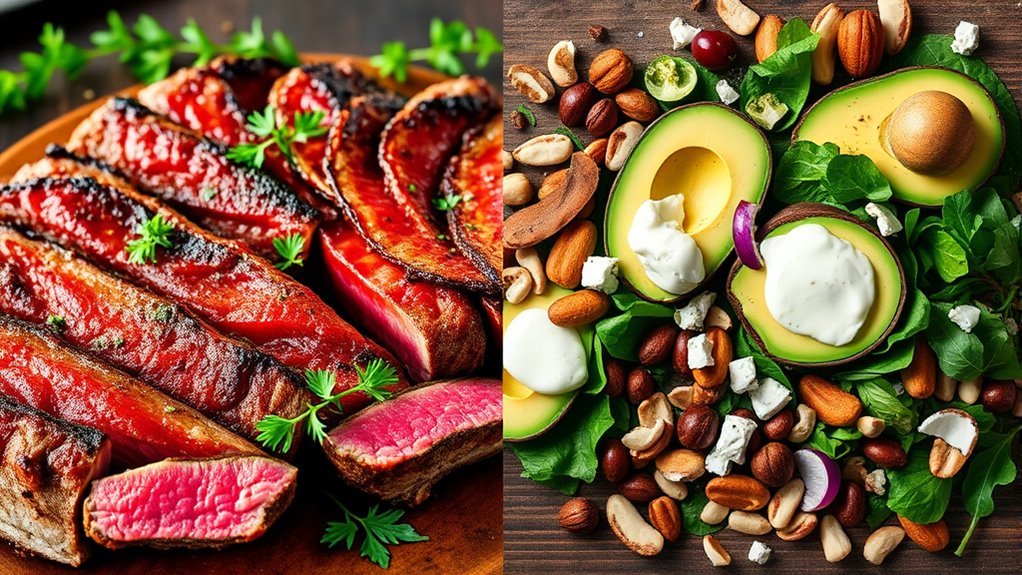
While many people are drawn to the Ketogenic Diet for its potential weight loss benefits, understanding its structure is essential for making an informed decision. The ketogenic principles focus on considerably reducing carbohydrate intake, prompting your body to enter a state of ketosis, where it burns fat for fuel instead of carbs. This approach can be liberating, allowing you to explore new food choices and meal patterns.
Understanding the ketogenic diet’s structure is crucial for harnessing its weight loss potential and exploring new food choices.
Key elements of the ketogenic diet include:
- High-fat intake to fuel your body
- Moderate protein consumption to maintain muscle mass
- Strict carb restriction to promote ketosis
- Emphasis on whole, nutrient-dense foods
Embracing these principles can lead to various health benefits beyond weight loss, such as improved energy and mental clarity. Additionally, the diet encourages diverse food options that can contribute to a balanced nutritional profile.
Key Differences in Food Choices
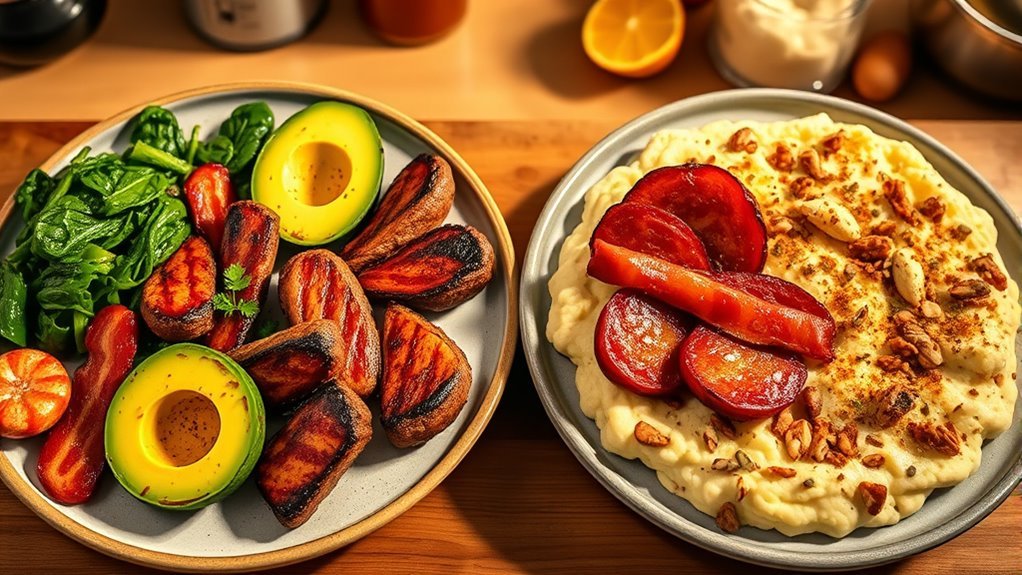
When comparing the Carnivore and Keto diets, you’ll notice considerable differences in food choices that can impact your overall experience and results. The Carnivore diet focuses exclusively on animal products, limiting you to meat, fish, and animal-based foods, which means your food variety is quite restricted. On the other hand, the Keto diet allows for a broader range of foods, including low-carb vegetables, nuts, and dairy, giving you more flexibility in meal planning. This variety can make it easier to maintain your diet long-term and keep meals interesting. Additionally, the Keto diet emphasizes healthy fats, which can enhance flavor and support overall health, further differentiating it from the Carnivore approach. While both diets aim for low-carb intake, the choices you make can considerably influence your satisfaction and adherence, ultimately affecting your success.
Macronutrient Composition Comparison
Understanding the macronutrient composition of the Carnivore and Keto diets is essential for anyone considering either approach. Each diet has distinct macronutrient ratios that influence your dietary flexibility and overall health.
- Carnivore Diet: Primarily consists of animal products, leading to a high protein and fat content, with virtually no carbohydrates.
- Keto Diet: Focuses on high-fat, moderate protein, and low carbohydrate intake, allowing for a broader range of food choices.
- Macronutrient Ratios: Carnivore typically has a 70-80% fat, 20-30% protein ratio, while Keto is often 70% fat, 25% protein, and 5% carbs.
- Dietary Flexibility: Keto allows for more variety, while Carnivore is more restrictive but can simplify choices.
- Additionally, the Keto diet emphasizes low-carb vegetables, which can enhance nutrient intake while maintaining ketosis.
Understanding these differences can help you make an informed decision about your dietary path.
Health Benefits and Considerations
Both the Carnivore and Keto diets offer unique health benefits, but it’s important to weigh these alongside potential considerations. The Carnivore diet may enhance mental clarity and reduce inflammation by eliminating carbohydrates, while the Keto diet can effectively promote weight loss and improve insulin sensitivity. However, you should consider your individual health needs and how these diets might fit into your lifestyle.
Some people may experience nutrient deficiencies on these restrictive diets, so it’s necessary to monitor your health closely. Additionally, long-term sustainability can be challenging. Each diet has its merits, but it’s significant to evaluate the health benefits against the dietary considerations that might impact your overall well-being. Always consult with a healthcare professional before making drastic dietary changes. Furthermore, many individuals on the Keto diet have reported improvements in glucose control, which can be beneficial for those managing diabetes.
Frequently Asked Questions
Can You Drink Coffee on the Carnivore Diet?
Yes, you can drink coffee on the carnivore diet. Think of coffee as a morning sunbeam, illuminating your day with its energy. The caffeine effects can boost your metabolism and enhance mental clarity, offering coffee benefits that many enjoy. While some purists may avoid it, it ultimately comes down to personal choice. Just remember to listen to your body and observe how it responds to this dark elixir of productivity.
Are There Vegetarian Options in the Keto Diet?
Yes, there are vegetarian options in the keto diet. You can include nutrient sources like avocados, nuts, seeds, and low-carb vegetables such as spinach and zucchini. Tofu and tempeh are excellent vegetarian alternatives, providing protein without the carbs. Remember to keep an eye on your total carb intake to stay within keto guidelines. With a bit of creativity, you can enjoy a varied, satisfying vegetarian keto menu while still maintaining your dietary goals.
How Do I Transition From Keto to Carnivore?
To shift from keto to carnivore, start by gradually eliminating plant-based foods while focusing on high-quality animal products. You might face keto challenges like cravings, but the benefits of carnivore—such as improved mental clarity and reduced inflammation—can be motivating. Make sure you’re staying hydrated and getting enough electrolytes. Listen to your body, adjust as needed, and enjoy the freedom of exploring a new dietary path that prioritizes simplicity and nourishment.
What Are Common Side Effects of Both Diets?
Common side effects of both diets include potential nutrient deficiencies and digestive issues. You might experience fatigue, headaches, or irritability as your body adjusts, especially if you’re cutting out certain food groups. Digestive issues, like constipation or diarrhea, can arise due to reduced fiber intake. It’s essential to monitor your health and consider supplements to address any deficiencies. Staying informed about your body’s responses can help you navigate these diets more effectively.
Can Children Follow Carnivore or Keto Diets Safely?
Sure, children can safely follow specific diets like carnivore or keto, but caution’s important! Consistent consideration of children’s health is paramount. Parents should prioritize a balanced approach, ensuring essential nutrients aren’t neglected. It’s essential to consult healthcare professionals before making dietary decisions for children. While some kids may thrive on these diets, others might face challenges. Ultimately, a tailored, thoughtful plan fosters freedom and health without compromising safety or nutrition.
References
- https://www.ncbi.nlm.nih.gov/pmc/articles/PMC7315402/
- https://www.healthline.com/nutrition/carnivore-diet
- https://www.webmd.com/diet/what-is-the-carnivore-diet
- https://www.ketogenic.com/what-is-the-keto-diet/
- https://www.cdc.gov/healthyweight/assessing/bmi/adult_bmi/index.html
- https://www.mayoclinic.org/healthy-lifestyle/nutrition-and-healthy-eating/expert-answers/keto-diet/faq-20419503
- https://www.bbc.co.uk/news/health-53934638