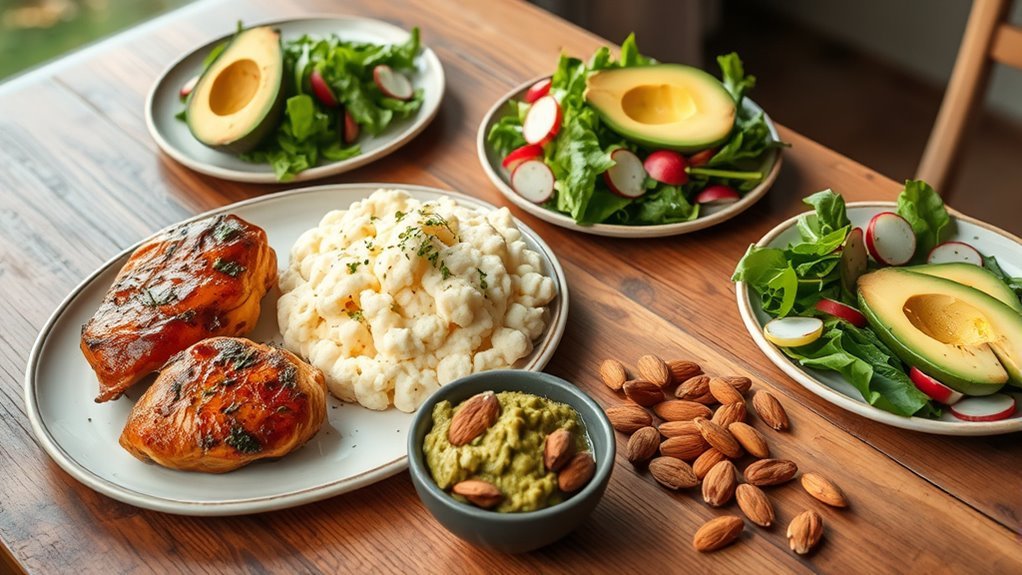

On a keto diet, you can enjoy a variety of nutritious foods. Focus on high-quality protein sources like lean meats, fish, and eggs. Incorporate full-fat dairy products, such as cheese and cream, while consuming low-carb vegetables like spinach and zucchini. Healthy fats from oils or nuts are important too. You can also savor low-sugar fruits like berries as treats. If you want to find out more about tasty options and meal planning, keep exploring!
Protein Sources: Meats and Fish

When you’re following a keto diet, choosing the right protein sources is vital for maintaining your macronutrient balance. Lean cuts of meat, such as chicken breast, turkey, and pork tenderloin, provide high-quality protein with minimal carbs, keeping you on track. Opting for fish varieties like salmon, mackerel, and sardines not only offers protein but also healthy fats, which are essential in a keto lifestyle. These fish are rich in omega-3 fatty acids, promoting heart health while helping you feel satiated. Incorporating a variety of these proteins can enhance your meals and guarantee you enjoy the freedom of flavorful options without derailing your diet. Remember, balance is key in achieving your keto goals while savoring every bite!
Dairy Products: Cheese and Cream
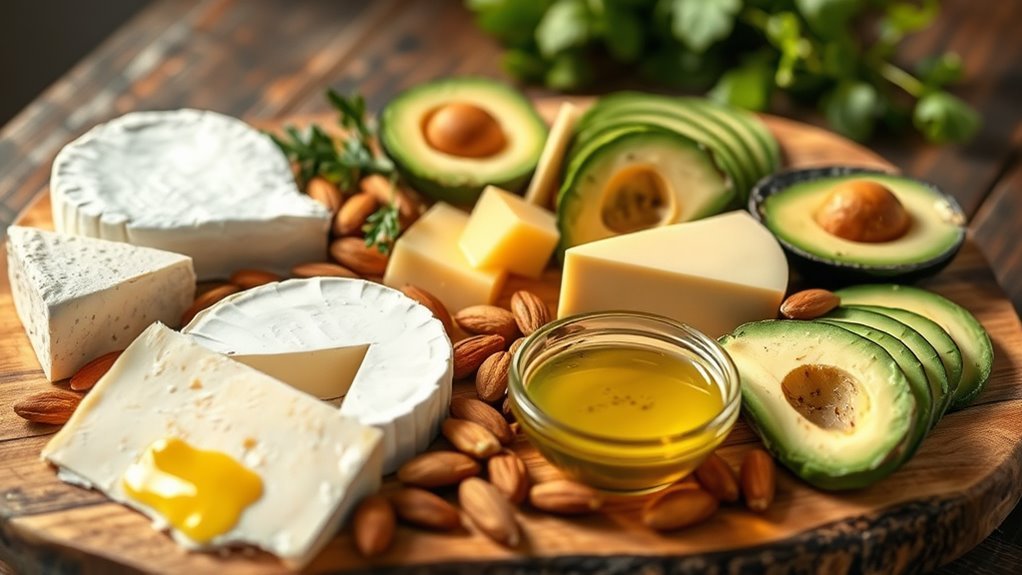
When following a keto diet, incorporating dairy products like cheese and cream can enhance both flavor and nutrition. There are various types of cheese that not only provide healthy fats but also contribute essential nutrients. Additionally, heavy cream can be used in a multitude of recipes, making it a versatile ingredient in your keto meal plan.
Types of Cheese
Cheese is a versatile staple in the keto diet, offering a variety of flavors and textures that can enhance your meals. You’ll find numerous cheese varieties that fit perfectly into your low-carb lifestyle, such as cheddar, mozzarella, and goat cheese. These options not only deliver rich tastes but also provide essential fats and proteins.
When exploring cheese pairings, consider combining aged cheeses with nuts or olives for a satisfying snack. Creamy cheeses can elevate your salads or be used in sauces to add depth. Remember, moderation is key; while cheese can be a delightful addition, it’s important to monitor your portions to stay aligned with your keto goals. Enjoy the freedom to experiment with different cheeses while keeping your diet on track!
Heavy Cream Uses
Heavy cream is a rich ingredient that can elevate a variety of dishes in the keto diet. You can use heavy cream in dessert recipes, creating delicious keto-friendly treats like cheesecake or panna cotta. For savory dishes, it adds a creamy texture to soups and casseroles, enhancing their flavor. You can even whip heavy cream to make a delightful topping for your favorite keto desserts. When it comes to sauces, heavy cream allows for countless variations, transforming simple ingredients into rich, indulgent sauces that pair perfectly with meats and vegetables. Additionally, consider adding heavy cream to your coffee for a luxurious morning boost. With its versatility, heavy cream is a must-have in your keto kitchen arsenal.
Nutritional Benefits
While many people may worry about the fat content in dairy products, cheese and cream offer significant nutritional benefits that can support a keto diet. Both are high in nutrient density, providing essential vitamins and minerals like calcium and vitamin B12. These dairy options also contribute healthy fats, which can enhance satiety and help maintain your energy levels throughout the day. Additionally, the metabolic benefits of incorporating cheese and cream into your meals can aid in fat burning and promote a steady state of ketosis. Just remember to choose high-quality, full-fat varieties to maximize these advantages. By enjoying these dairy products in moderation, you can savor their rich flavors while reaping their health benefits on your keto journey.
Low-Carb Vegetables
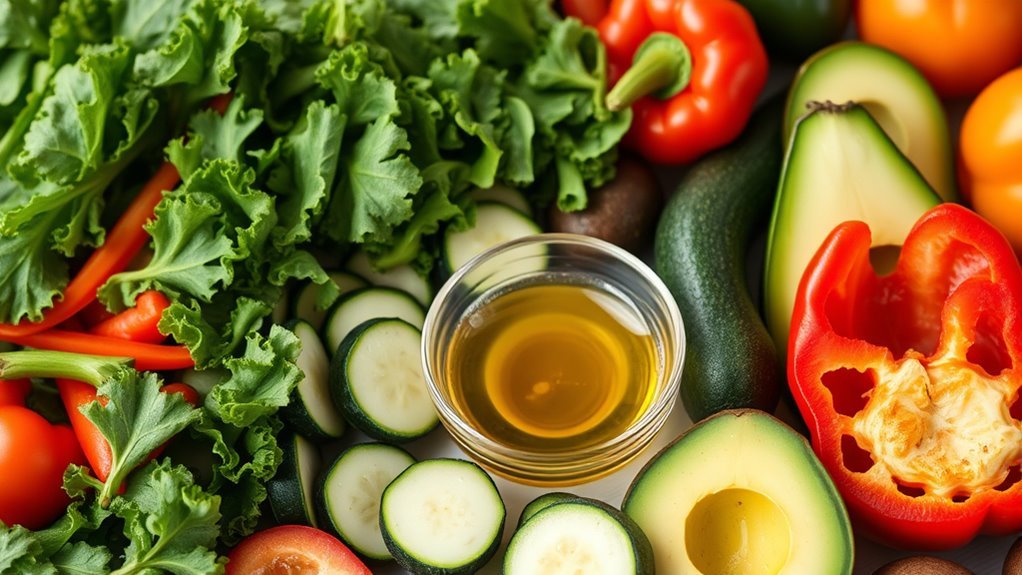
When you’re following a keto diet, choosing low-carb vegetables is essential for staying within your carb limits while still getting crucial nutrients. Foods like spinach, zucchini, and broccoli are excellent options that can be easily incorporated into your meals. Additionally, knowing some effective cooking tips and methods can help you maximize flavor while keeping those carbs in check.
Best Choices for Keto
Choosing the right vegetables can make a significant difference when following a keto diet. For ideal keto meal planning, focus on low-carb options like spinach, kale, broccoli, and zucchini. These veggies are not only low in carbohydrates but also packed with essential nutrients, making them perfect for maintaining energy levels while staying in ketosis. When grocery shopping, prioritize fresh, non-starchy vegetables, as they can add flavor and texture to your meals without derailing your carb count. Incorporate cauliflower for rice alternatives or use leafy greens as wraps. By selecting the best choices for your keto journey, you’ll enjoy a variety of dishes that support your health goals and keep your meals exciting. Embrace this freedom to explore!
Cooking Tips and Methods
To maximize the benefits of low-carb vegetables on a keto diet, it’s essential to use effective cooking methods that preserve their nutrients and enhance their flavors. Here are three cooking techniques you can incorporate into your meal prep:
- Steaming: This method helps retain vitamins and minerals, making your veggies crisp and vibrant.
- Sautéing: Using healthy fats like olive oil can enhance flavor while keeping the carb content low.
- Roasting: Caramelizing veggies brings out their natural sweetness, making them a delicious side dish.
Experiment with these techniques to elevate your low-carb meals. By understanding how to cook your veggies properly, you’ll not only enjoy their health benefits but also their incredible taste, allowing you the freedom to savor your keto journey.
Healthy Fats: Oils and Nuts
While the keto diet primarily focuses on reducing carbohydrate intake, incorporating healthy fats—like oils and nuts—plays an essential role in achieving its benefits. Nutritional oils, such as olive, coconut, and avocado oil, provide not only flavor but also healthy monounsaturated and saturated fats that support ketosis. These oils can enhance your meals while keeping your carb count low.
Nut varieties, including almonds, walnuts, and macadamia nuts, are also excellent choices. They’re rich in healthy fats and fiber, which can help you feel satisfied and curb cravings. Just remember to watch portion sizes, as nuts can be calorie-dense. By including these healthy fats in your diet, you’ll enhance your overall nutrition while enjoying the freedom of delicious, satisfying foods.
Eggs: A Versatile Keto Staple
As you commence your keto journey, eggs emerge as a versatile and nutrient-dense staple that can easily fit into your meal plan. Their low-carb profile and high protein content make them perfect for keto. Here are three reasons to embrace eggs:
- Egg Varieties: From chicken and duck to quail, each type offers unique flavors and nutrients, adding variety to your meals.
- Cooking Techniques: You can scramble, poach, or bake eggs, keeping your meals exciting while sticking to keto.
- Nutritional Benefits: Eggs are rich in vitamins and minerals, including B vitamins and selenium, which support overall health.
Incorporating eggs into your diet not only satisfies your cravings but also fuels your keto lifestyle. Enjoy the freedom of creativity with this incredible food!
Berries: Low-Sugar Fruit Options
If you’re looking for delicious ways to satisfy your sweet tooth on a keto diet, berries are an excellent choice. These low-sugar fruit options, like strawberries, raspberries, and blackberries, offer a range of flavors without derailing your carb count. Each berry variety is packed with antioxidants, which can help combat oxidative stress and support overall health. For instance, raspberries have about 5 grams of net carbs per cup, making them a smart addition to your meals. Plus, the fiber content in berries can aid digestion and keep you feeling full. Incorporating these nutritious fruits into your diet not only satisfies cravings but also provides essential vitamins and minerals, giving you freedom to enjoy nature’s candy while staying true to your keto goals.
Keto-Friendly Snacks and Treats
Enjoying snacks and treats on a keto diet doesn’t have to be a challenge, especially after incorporating low-sugar options like berries into your meals. With the right keto snack ideas, you can satisfy your cravings without derailing your goals. Here are three healthy treat options to contemplate:
- Nuts and Seeds: Almonds, walnuts, and chia seeds are packed with healthy fats and protein.
- Cheese Crisps: Baked cheese crisps offer a crunchy, satisfying snack that’s low in carbs.
- Dark Chocolate: Look for varieties with at least 70% cocoa for a guilt-free treat.
These choices not only keep you on track but also allow you to enjoy your food, giving you the freedom to indulge while maintaining your keto lifestyle.
Frequently Asked Questions about the Keto Diet
1. What foods can I eat on a keto diet?
On a keto diet, you can eat foods that are high in healthy fats and low in carbohydrates. This includes meats like beef, pork, and chicken, fatty fish such as salmon and mackerel, and eggs. Non-starchy vegetables like leafy greens, broccoli, and cauliflower are also encouraged. Additionally, healthy fats from avocados, nuts, seeds, and oils (such as olive oil and coconut oil) are great options. Dairy products like cheese and cream can be included as well, preferably full-fat versions. It’s important to avoid high-carb foods such as grains, sugar, fruits (with some exceptions like berries), and starchy vegetables.
2. Can I eat fruits on a keto diet?
Fruits are generally higher in carbohydrates, making them less compatible with a strict keto diet. However, you can enjoy some low-carb fruits in moderation. Berries such as strawberries, raspberries, and blackberries are lower in sugar and can be consumed in small amounts. Avocados are also considered a fruit and are excellent for the keto diet due to their high fat and low carb content. It’s best to avoid tropical fruits like bananas, pineapples, and grapes, which are significantly higher in carbs.
3. Are there any snacks I can have on a keto diet?
Yes, there are plenty of keto-friendly snacks you can enjoy while staying within your carb limits. Some popular options include cheese slices or sticks, hard-boiled eggs, nuts (such as almonds and walnuts), seeds, and low-carb veggies with dip (like celery sticks with guacamole). You can also have keto-friendly protein bars or fat bombs, which are made with ingredients like coconut oil and nut butter. Just be sure to check the nutritional information to ensure they fit within your daily carb allowance.
4. Can I drink alcohol on a keto diet?
Alcohol can be consumed on a keto diet, but it’s important to choose your drinks wisely. Spirits like vodka, gin, whiskey, and rum are low in carbs and can be consumed straight or with low-carb mixers. Dry wines are also generally acceptable, though sweeter wines and beer tend to be higher in carbohydrates and should be avoided. Remember to drink in moderation, as alcohol can affect your metabolism and may stall weight loss if consumed in excess.
5. How can I ensure I’m getting enough nutrients on a keto diet?
To ensure you’re getting enough nutrients on a keto diet, focus on a variety of foods from all permitted categories. Include plenty of non-starchy vegetables to provide vitamins and minerals. Incorporate different sources of protein, such as various meats and fish, and use healthy fats like olive oil, avocados, and nuts. You might also consider taking a multivitamin or specific supplements for nutrients that can be lacking in a low-carb diet, such as magnesium, potassium, and omega-3 fatty acids. Regularly monitoring your health and working with a healthcare provider or a nutritionist can help you maintain a balanced nutrient intake.
References
- https://en.wikipedia.org/wiki/Ketogenic_diet
- https://www.ncbi.nlm.nih.gov/pmc/articles/PMC7071914/
- https://www.healthline.com/nutrition/ketogenic-diet-101
- https://www.cdc.gov/healthyweight/healthy_eating/index.html
- https://www.hsph.harvard.edu/nutritionsource/carbohydrates/
- https://www.eatright.org/health/wellness/preventing-illness/the-ketogenic-diet
- https://www.mayoclinic.org/healthy-lifestyle/nutrition-and-healthy-eating/in-depth/keto-diet/art-20459832

