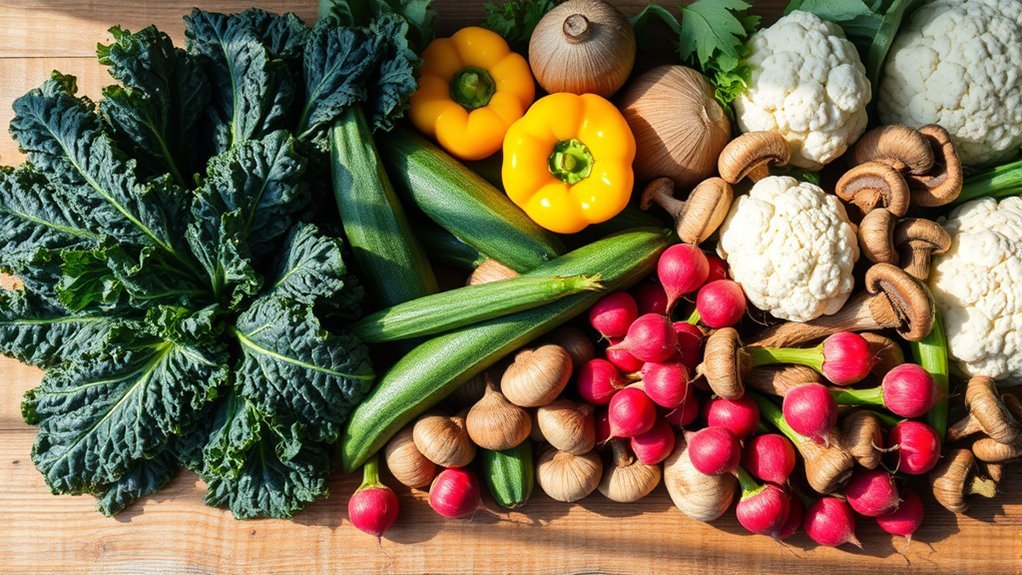

On a keto diet, you can enjoy a variety of low-carb vegetables. Leafy greens like spinach and kale are great bases for salads. Cruciferous veggies, such as broccoli and cauliflower, add fiber and flavor. While root vegetables should be limited due to higher carbs, nightshades like bell peppers and tomatoes are excellent choices. Herbs and spices also provide nutrients and enhance taste. There’s plenty more to explore about keto-friendly veggies that can invigorate your meals.
Top Low-Carb Leafy Greens
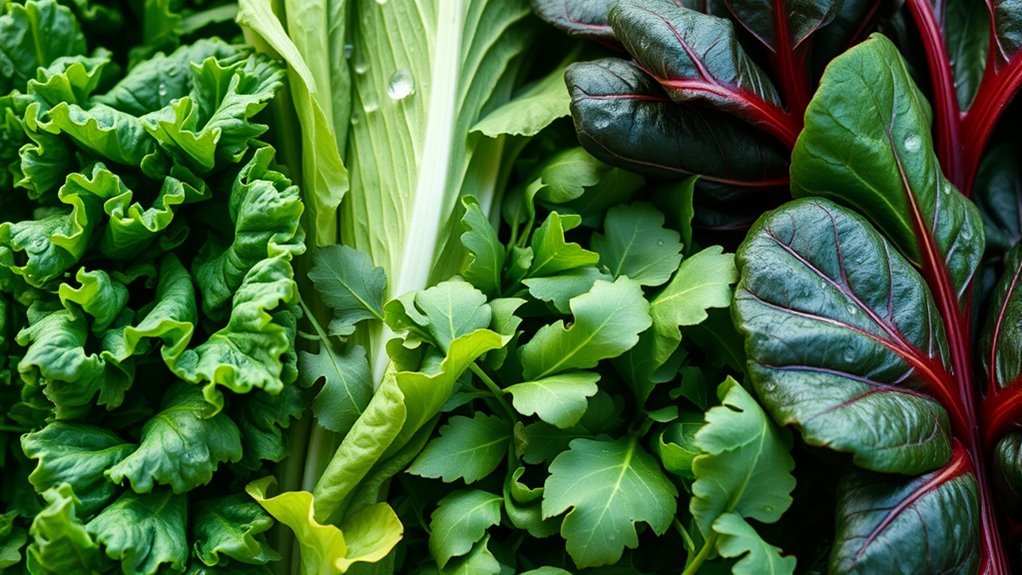
When you’re following a keto diet, choosing the right leafy greens can make all the difference in keeping your carb count low while maximizing nutrients. Spinach, kale, and arugula are excellent choices, as they’re low in carbs but high in vitamins and minerals. These greens can easily be incorporated into keto salads, providing a revitalizing base for your favorite toppings without pushing you over your carb limit. You might also consider blending them into leafy green smoothies for a nutrient-packed snack that satisfies your cravings. By focusing on these low-carb options, you’ll not only enhance your meals but also support your health goals while enjoying the freedom of delicious, satisfying food.
Flavorful Cruciferous Vegetables
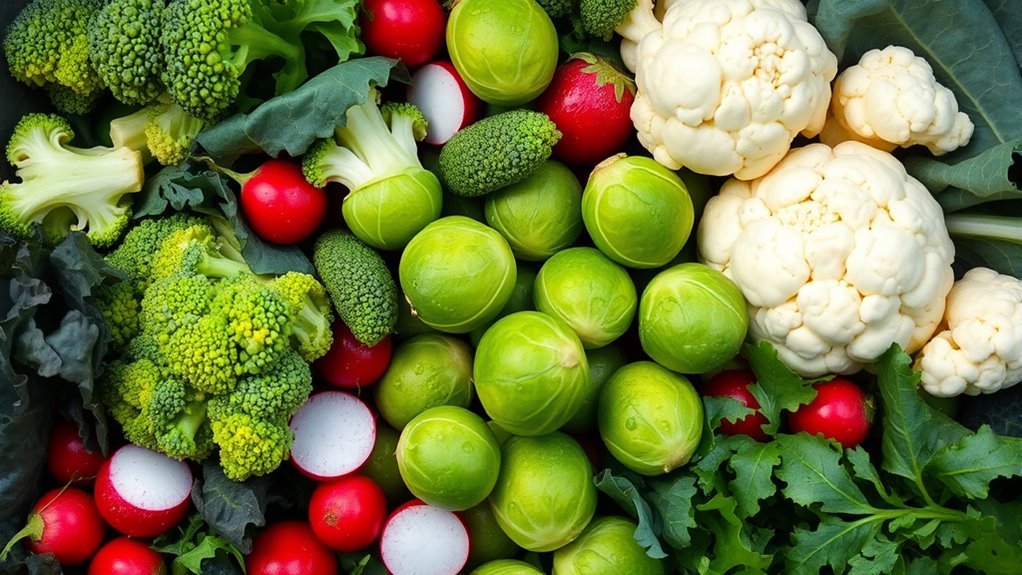
Cruciferous vegetables, such as broccoli, cauliflower, and Brussels sprouts, not only add flavor to your keto meals but also pack a nutritional punch. These veggies offer cruciferous benefits like high fiber content and essential vitamins, making them perfect for your low-carb lifestyle. You can enjoy them raw in salads or roasted to enhance their natural sweetness. Steaming is another great cooking technique that preserves nutrients while softening their texture. Experimenting with spices and healthy fats can elevate their taste, keeping your meals exciting and flavorful. Incorporating these vegetables into your diet not only supports your health goals but also gives you the freedom to explore delicious culinary creations while staying true to keto principles. Enjoy the versatility they bring!
Wholesome Root Vegetables to Limit
While root vegetables are often celebrated for their nutritional benefits, it’s important to limit their intake on a keto diet due to their higher carbohydrate content. Many popular root vegetable varieties, like potatoes, sweet potatoes, and carrots, can quickly push you over your daily carb limit. Instead, focus on keto-friendly options such as radishes or turnips, which offer a lower carbohydrate count and still provide essential nutrients. You can enjoy these alternatives in various dishes, allowing you to maintain a satisfying and diverse diet. By being mindful of your root vegetable choices, you can stay within your keto goals while still enjoying the flavors and textures you love. Remember, moderation is key!
Delicious Nightshade Options
Although some might shy away from nightshades on a keto diet, they can actually be a flavorful and nutritious addition to your meals. Nightshade varieties like bell peppers, eggplants, and tomatoes are low in carbs and rich in vitamins. You can grill or roast bell peppers for a smoky flavor, sauté eggplants with olive oil for a creamy texture, or toss fresh tomatoes into salads for a revitalizing crunch. These cooking methods enhance their natural flavors while keeping your carb count in check. Incorporating nightshades not only diversifies your meals but also provides essential nutrients like antioxidants. So, don’t hesitate to add these vibrant veggies to your keto plate and enjoy the freedom of tasty, low-carb eating!
Nutrient-Dense Herbs and Spices
When you’re looking to enhance your keto meals, don’t overlook the power of nutrient-dense herbs and spices. These flavorful additions not only elevate your dishes but also offer substantial health benefits. For instance, herbs like basil and oregano are packed with antioxidants, providing anti-inflammatory effects. You’ll find that spice varieties such as turmeric and cayenne can boost your metabolism and support digestion, making them ideal for your keto journey. Incorporating these ingredients not only keeps your meals exciting but also contributes essential vitamins and minerals, helping you maintain nutritional balance. Embrace the versatility of herbs and spices, and enjoy the freedom of creating delicious, health-focused meals that align perfectly with your keto lifestyle.
Frequently Asked Questions about Keto-Friendly Vegetables
1. What vegetables are best for a ketogenic diet?
The best vegetables for a ketogenic diet are those that are low in carbohydrates. Leafy greens such as spinach, kale, and lettuce are excellent choices, as well as cruciferous vegetables like broccoli, cauliflower, and Brussels sprouts. Other keto-friendly options include zucchini, bell peppers, asparagus, and mushrooms. These vegetables are not only low in carbs but also high in nutrients and fiber, which can keep you satiated.
2. Are there any vegetables I should avoid on keto?
Yes, there are certain vegetables you should limit or avoid on a ketogenic diet due to their higher carbohydrate content. Starchy vegetables such as potatoes, sweet potatoes, corn, peas, and carrots can spike your carb intake and may not fit into a strict keto plan. It’s best to focus on non-starchy vegetables that provide essential nutrients without the excess carbs.
3. Can I eat vegetables in unlimited amounts on keto?
While vegetables are healthy and essential, they should still be consumed in moderation on a ketogenic diet. Even low-carb vegetables can add up in carbs if eaten in large quantities. It’s important to track your carbohydrate intake to stay within your daily limits, typically around 20-50 grams of net carbs. Aim for a balanced intake that includes a variety of keto-friendly vegetables.
4. How can I incorporate more vegetables into my keto meals?
There are many delicious ways to incorporate more vegetables into your keto meals. You can add sautéed spinach or kale to omelets, use zucchini noodles instead of pasta, or prepare stir-fries with bell peppers and broccoli. Roasting vegetables with olive oil and herbs is another flavorful option. Additionally, consider using pureed cauliflower as a substitute for mashed potatoes or adding shredded cabbage to salads for crunch.
5. Are frozen vegetables okay to eat on keto?
Yes, frozen vegetables can be a convenient and healthy option on a ketogenic diet. They are often picked and frozen at peak ripeness, retaining their nutrients. Just be cautious of any added sauces or seasonings that may contain hidden sugars or carbs. Always check the nutritional label to ensure they fit within your daily carb limits.
References
- https://www.healthline.com/nutrition/keto-vegetables
- https://www.webmd.com/diet/obesity/what-to-know-about-keto-diet
- https://www.ncbi.nlm.nih.gov/pmc/articles/PMC7074116/
- https://www.verywellfit.com/keto-diet-vegetables-5192735
- https://www.eatright.org/health/wellness/preventing-illness/keto-diet-and-nutrition
- https://www.mayoclinic.org/healthy-lifestyle/nutrition-and-healthy-eating/expert-answers/keto-diet/faq-20459100
- https://www.diabetes.org/nutrition/healthy-foods/keto-diet
- https://www.cdc.gov/healthyweight/healthy_eating/vegetables.html