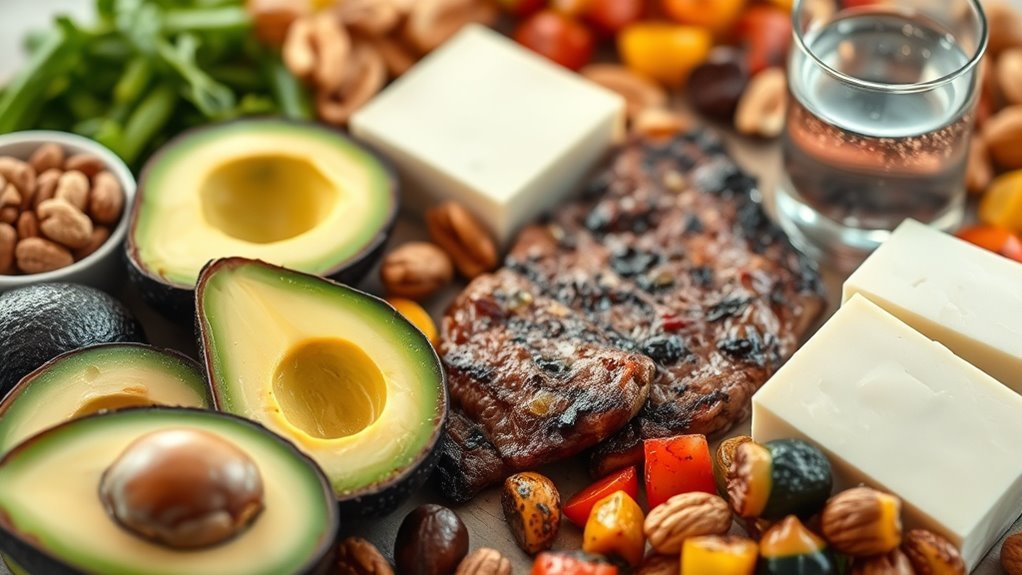

On a ketogenic diet, you should focus on low-carb vegetables like spinach and cauliflower, healthy fats such as avocados and olive oil, and high-quality protein sources like grass-fed beef and wild-caught salmon. Dairy options like cheese and unsweetened Greek yogurt can fit in too. Be mindful of your choices when dining out, and consider meal prepping to stay on track. There’s plenty more to explore about creating delicious and satisfying meals on keto.
Understanding the Ketogenic Diet
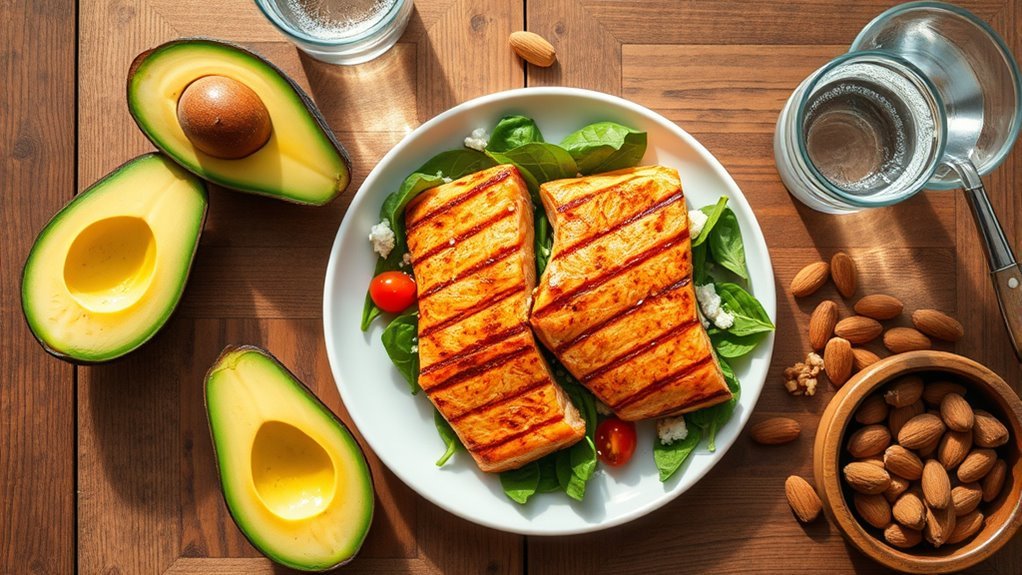
The ketogenic diet, often referred to as keto, is a low-carbohydrate, high-fat eating plan designed to shift your body’s metabolism from burning glucose to burning fat for fuel. Understanding the keto basics is essential before diving in. Many diet misconceptions surround this eating style, leading to confusion about its effectiveness and safety. For instance, some believe that all fats are harmful, but keto emphasizes healthy fats like avocados and olive oil. It’s also important to recognize that keto isn’t a one-size-fits-all solution; individual responses can vary. By educating yourself, you can navigate the keto landscape more effectively, making informed choices that align with your goals. Embrace the freedom of knowledge as you commence your keto journey!
Low-Carb Vegetables to Include
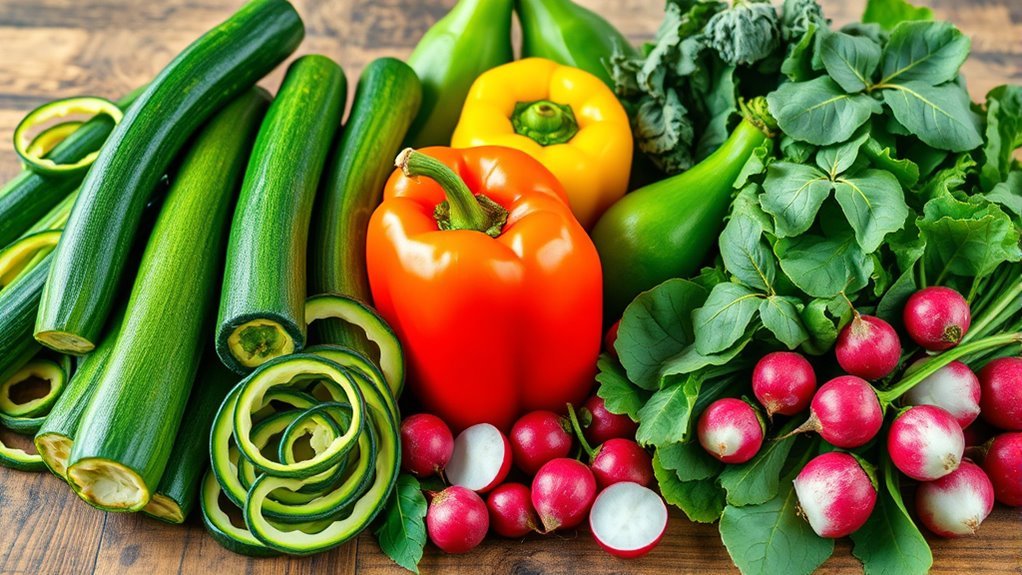
Incorporating a variety of low-carb vegetables into your ketogenic diet can enhance both nutrient intake and meal satisfaction. These keto-friendly options not only provide essential vitamins and minerals but also contribute to meal variety and flavor enhancement. Here are some great choices:
- Spinach: High in nutrient density and fiber content, perfect for salads or sautéing.
- Zucchini: Versatile for spiralizing into noodles or grilling as a side dish.
- Cauliflower: A fantastic rice substitute, great for mashing or roasting.
Utilizing seasonal vegetables can maximize freshness and taste. Experiment with different cooking methods to keep your meals exciting while practicing portion control to stay aligned with your keto goals. These low-carb vegetables are your allies in achieving a satisfying, balanced diet.
Healthy Fats for Your Keto Plate
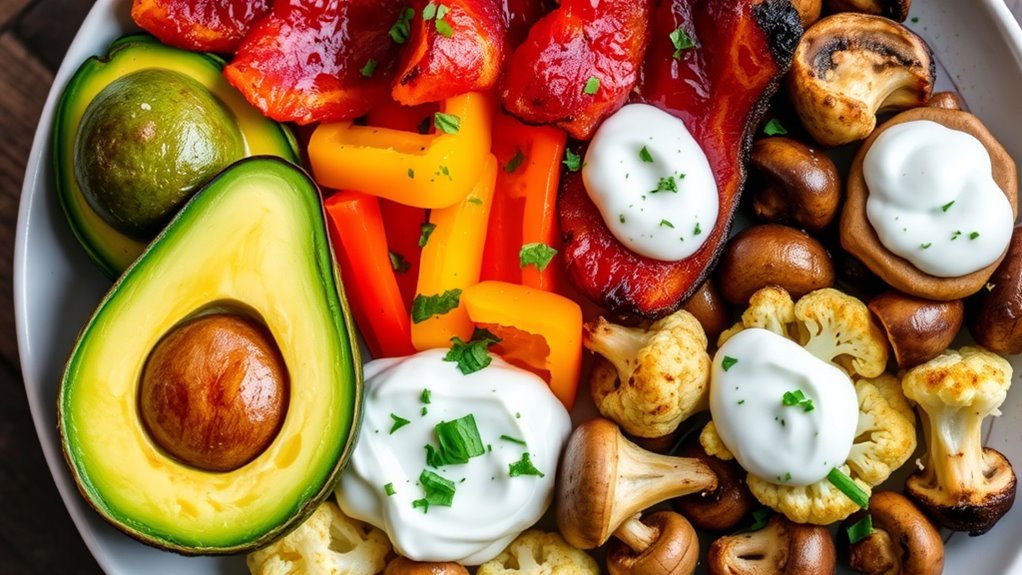
While you might think that all fats are created equal, healthy fats play an essential role in a ketogenic diet by supporting energy levels, satiety, and overall health. Incorporating the right sources of fat can enhance your meals and provide important nutrients. Here’s a quick guide to some healthy fats you should consider:
| Healthy Fats | Benefits |
|---|---|
| Avocado | Packed with fiber and nutrients |
| Olive Oil | Rich in antioxidants |
| Coconut Oil | MCTs for quick energy |
| Fatty Fish | Omega-3 fatty acids for heart health |
| Grass-Fed Butter | Contains vitamins and CLA |
Include nut butters, cheese varieties, avocado oil, and ghee options for variety. These fats not only taste great but also align with your keto goals!
Protein Sources on a Keto Diet
When you’re on a keto diet, choosing the right protein sources is essential for maintaining your macronutrient balance. You’ll want to contemplate the best meat options, explore various dairy choices, and even incorporate some plant-based proteins. Understanding these options can help you meet your protein needs while staying within your carb limits.
Best Meat Options
Choosing the right meats is essential for anyone following a keto diet, as they serve as one of the primary sources of protein and healthy fats. Focus on high-quality options that’ll keep you satisfied and nourished. Consider these fantastic choices:
- Grass-fed beef: Rich in omega-3s and vitamins.
- Wild-caught salmon: Packed with omega-3 fatty acids and protein.
- Pasture-raised chicken: Higher in nutrients and healthier fats.
Incorporating organ meats, pork belly, and lamb chops can provide a variety of flavors and nutrients. Don’t overlook options like bison burgers, smoked sausage, or game meats for a delicious twist. By choosing these meats, you’ll enjoy a flavorful and satisfying keto journey while nourishing your body.
Dairy Choices Explained
Dairy products can be excellent sources of protein and healthy fats on a keto diet, as long as you select the right ones. When it comes to cheese varieties, opt for high-fat options like cheddar and gouda, which provide rich flavor profiles and nutrient content. Cream choices, such as heavy cream, add richness to your dishes without carbs. For yogurt options, choose unsweetened, full-fat varieties for their fermentation benefits. With regard to butter types, grass-fed butter is a great choice for enhancing taste and nutrition. If you have lactose sensitivity, consider dairy alternatives like coconut or almond milk. These selections not only enhance cooking uses but also maintain the freedom to enjoy diverse flavors while staying keto-friendly.
Plant-Based Proteins
While many people associate high-protein diets with animal products, there are plenty of plant-based protein sources that fit well into a keto lifestyle. Incorporating these options can give you both variety and nutritional benefits. Consider the following:
- Tempeh benefits: Packed with protein and probiotics, tempeh can enhance gut health.
- Seitan recipes: This wheat-based protein is versatile and can be seasoned to mimic meat.
- Edamame snacks: These young soybeans are not only tasty but also high in protein and fiber.
Keep in mind the limitations of legumes on keto due to their carb content, but you can still enjoy nutritional yeast for a cheesy flavor and explore quinoa options in moderation. With these plant proteins, you can maintain a diverse and satisfying diet.
Dairy Products: What’s Allowed?
What kinds of dairy products fit into a keto diet? You can enjoy various cheese varieties like cheddar, mozzarella, and cream cheese, which are low in carbs and high in fat. For yogurt options, opt for unsweetened, full-fat Greek yogurt, as it’s lower in sugar. When it comes to cream types, heavy cream is a great choice for adding richness to dishes. Butter choices like grass-fed butter can enhance flavor while keeping carbs minimal. If you’re looking for milk alternatives, consider unsweetened almond or coconut milk. Sour cream is also keto-friendly, and cottage cheese can be enjoyed in moderation. For those avoiding dairy, dairy substitutes such as coconut yogurt or almond-based creams can provide tasty alternatives. Enjoy the freedom of flavor!
Nuts and Seeds for Snacking
When you’re looking for satisfying snacks on a keto diet, nuts and seeds offer a perfect option. They’re packed with healthy fats, protein, and fiber, making them a great choice for energy boosts. Here are some tasty ideas to reflect upon:
- Nut varieties: Almonds, walnuts, and macadamias are excellent for snacking.
- Seed benefits: Chia, flax, and pumpkin seeds provide essential nutrients and can enhance your meals.
- Homemade mixes: Combine different nuts and seeds for a delightful treat.
For effective snacking strategies, practice portion control to avoid overeating. Pair them with cheese or dark chocolate for added flavor. Remember to store them in airtight containers to maintain freshness and reflect on allergy considerations when sharing with others. Enjoy the freedom of snacking smart!
Keto-Friendly Fruits
If you’re following a keto diet, you’ll be pleased to know that there are fruits you can enjoy without derailing your carbohydrate goals. Berries, such as strawberries, raspberries, and blackberries, are low in carbs and high in antioxidants, making them ideal for your keto lifestyle. You can whip up delicious keto fruit smoothies by blending these berries with unsweetened almond milk or coconut cream. Avocado, technically a fruit, is another fantastic option, packed with healthy fats. For a sweet treat, consider making low carb desserts using coconut flour or almond flour, incorporating small amounts of these keto-friendly fruits. With a bit of creativity, you can satisfy your sweet tooth while staying true to your keto journey. Enjoy the freedom of flavorful options!
Meal Prep Tips for Success
Incorporating keto-friendly fruits into your meals can enhance your diet, but meal prep plays an essential role in maintaining your success on the keto journey. By organizing your meals ahead of time, you’ll save yourself from temptation and stress.
- Use meal prep containers to portion out your meals, making it easier to grab and go.
- Plan your grocery shopping list carefully, focusing on low-carb vegetables, healthy fats, and protein sources.
- Batch cook your proteins and veggies to guarantee you always have something ready to eat.
With these meal prep tips, you’ll streamline your keto lifestyle while enjoying the freedom of having delicious, healthy meals at your fingertips. Prioritize your prep, and you’ll find staying on track becomes effortless!
Dining Out on Keto
When you’re dining out on keto, choosing the right menu items can make all the difference. Look for dishes that prioritize protein and healthy fats while steering clear of starchy sides and sugary sauces. Additionally, selecting low-carb beverages can help you stay within your dietary goals without sacrificing enjoyment.
Menu Item Selection
Dining out on a keto diet can be straightforward, provided you know what to look for on the menu. Embrace the freedom of making smart choices that align with your dietary goals. Focus on dishes that prioritize healthy fats and protein while minimizing carbs. Here are some great options to evaluate:
- Grilled meats or fish with a side of non-starchy vegetables
- Salads topped with olive oil or avocado, avoiding sugary dressings
- Omelets or egg dishes, which are often available any time of day
Don’t hesitate to ask for ingredient substitutions, like swapping out potatoes for broccoli. With thoughtful menu planning and awareness, you can enjoy dining out while staying true to your keto lifestyle.
Beverage Choices Guide
Making the right food choices is only part of maintaining your keto diet while dining out; beverage selections also play a significant role. When you’re craving something invigorating, opt for low carb drinks like sparkling water, black coffee, or unsweetened tea. These options keep your carb count in check while still allowing you to enjoy your meal. If you’re looking for a sweet treat, consider keto smoothie options made with unsweetened almond milk, spinach, or avocado. Just be cautious of hidden sugars in pre-made beverages. By being selective with your drink choices, you can savor your dining experience without straying from your keto goals. Enjoy the freedom to indulge while staying true to your lifestyle!
Delicious Keto Recipes to Try
Whether you’re a keto veteran or just starting out, exploring delicious recipes can keep your meals exciting and satisfying. Embracing a variety of flavors is key to staying motivated on your keto journey. Here are some scrumptious ideas to try:
- Cauliflower Pizza Bites: These savory keto snacks are easy to make and perfect for satisfying pizza cravings.
- Chocolate Avocado Mousse: An easy keto dessert that’s rich and creamy, making it a guilt-free indulgence.
- Buffalo Chicken Lettuce Wraps: Spicy and filling, these wraps offer a great way to enjoy a hearty meal without the carbs.
With these recipes, you can enjoy the freedom of delicious, satisfying meals while staying true to your keto lifestyle. Happy cooking!
- 1. What foods can I eat on a keto diet?
-
On a keto diet, you should focus on high-fat, low-carb foods. This includes:
- Meats: Beef, pork, chicken, and other meats are excellent sources of protein and fat.
- Fish: Fatty fish like salmon, sardines, and mackerel are rich in omega-3 fatty acids.
- Dairy: Full-fat cheese, butter, and heavy cream provide healthy fats.
- Nuts and seeds: Almonds, walnuts, chia seeds, and flaxseeds are low in carbs and high in healthy fats.
- Low-carb vegetables: Leafy greens, broccoli, cauliflower, and zucchini are all great choices.
- Healthy oils: Olive oil, coconut oil, and avocado oil are excellent for cooking and dressings.
- 2. Are there any foods I should avoid on a keto diet?
-
Yes, on a keto diet, you should avoid foods that are high in carbohydrates. This includes:
- Grains: Bread, pasta, rice, and cereals are high in carbs and should be eliminated.
- Sugary foods: Candy, cakes, pastries, and most desserts contain high amounts of sugar.
- Starchy vegetables: Potatoes, corn, and peas are high in carbohydrates.
- High-carb fruits: Bananas, apples, oranges, and grapes are better avoided due to their sugar content.
- Processed foods: Many processed foods contain hidden sugars and unhealthy fats.
- 3. Can I eat fruits on a keto diet?
-
While most fruits are high in carbohydrates, there are a few low-carb options you can enjoy in moderation. These include:
- Berries: Strawberries, blueberries, raspberries, and blackberries are relatively low in carbs.
- Avocado: Technically a fruit, avocados are high in healthy fats and low in carbs.
- Olives: Also a fruit, olives are low in carbs and rich in healthy monounsaturated fats.
- 4. How do I ensure I’m getting enough nutrients on a keto diet?
-
To ensure you’re getting enough nutrients on a keto diet, consider the following tips:
- Eat a variety of low-carb vegetables to get essential vitamins and minerals.
- Incorporate different sources of healthy fats, such as avocados, nuts, and olive oil.
- Consider taking a multivitamin or specific supplements (like magnesium, potassium, and sodium) to cover any deficiencies.
- Focus on whole, unprocessed foods to maximize nutrient intake.
- 5. How can I make keto-friendly meals quickly?
-
Making keto-friendly meals quickly can be easy with a few strategies:
- Meal prep: Prepare meals in advance by cooking large batches of proteins and vegetables that you can easily reheat.
- Use quick-cooking methods: Grilling, sautéing, or using an Instant Pot can save time.
- Keep it simple: Opt for easy recipes like salads, stir-fries, and omelets that require minimal ingredients and time.
- Stock your pantry: Keep keto-friendly snacks and quick-fix ingredients, like canned fish, nuts, and frozen vegetables on hand.
References
- https://en.wikipedia.org/wiki/Ketogenic_diet
- https://www.ncbi.nlm.nih.gov/pmc/articles/PMC5781800/
- https://www.healthline.com/nutrition/what-to-eat-on-keto
- https://www.cdc.gov/healthyweight/healthy_eating/index.html
- https://www.verywellfit.com/what-is-the-keto-diet-5190827
- https://www.mayoclinic.org/healthy-lifestyle/nutrition-and-healthy-eating/expert-answers/ketogenic-diet/faq-20460935
- https://www.hsph.harvard.edu/nutritionsource/healthy-weight/diet-reviews/ketogenic-diet/
- https://www.webmd.com/diet/what-is-the-ketogenic-diet
- https://www.nutrition.gov/topics/nutrition-101/healthier-eating-patterns/keto-diet