For a successful keto diet, focus on low-carb foods, healthy fats, and quality proteins. Stock your pantry with almond and coconut flour, along with low-carb sweeteners. Include healthy fats like avocado oil and coconut butter for extra flavor and energy. Don’t forget low-carb vegetables like leafy greens and cruciferous options, plus proteins from lean meats, fish, and eggs. For snacks, consider cheese crisps, celery with cream cheese, or almonds. Discover more keto options to enhance your journey.
Essential Keto Foods
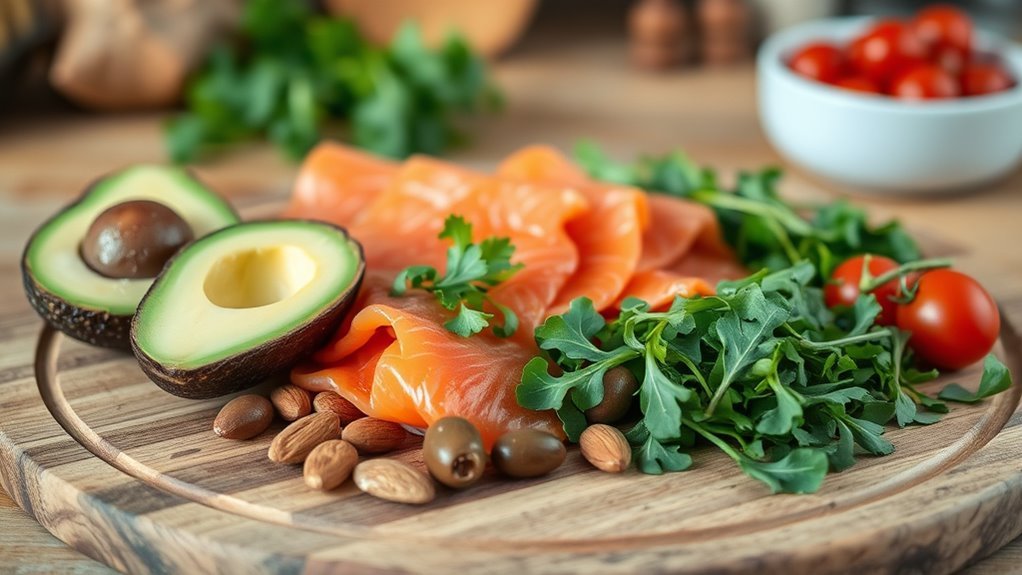
When you’re starting on a keto diet, knowing what to stock up on is crucial for your success. Effective keto meal planning hinges on having the right ingredients at your fingertips. Begin with essential pantry staples like almond flour, coconut flour, and low-carb sweeteners, which can help replace traditional carbs in your recipes. Don’t forget to stock up on spices and herbs to enhance flavors without added carbs. Canned vegetables, like spinach and mushrooms, can be convenient options for quick meals. Also, include a variety of proteins, such as eggs, chicken, and fish, to guarantee you meet your nutritional needs. By preparing your pantry thoughtfully, you’re setting yourself up for a successful and enjoyable keto journey.
Healthy Fats to Include
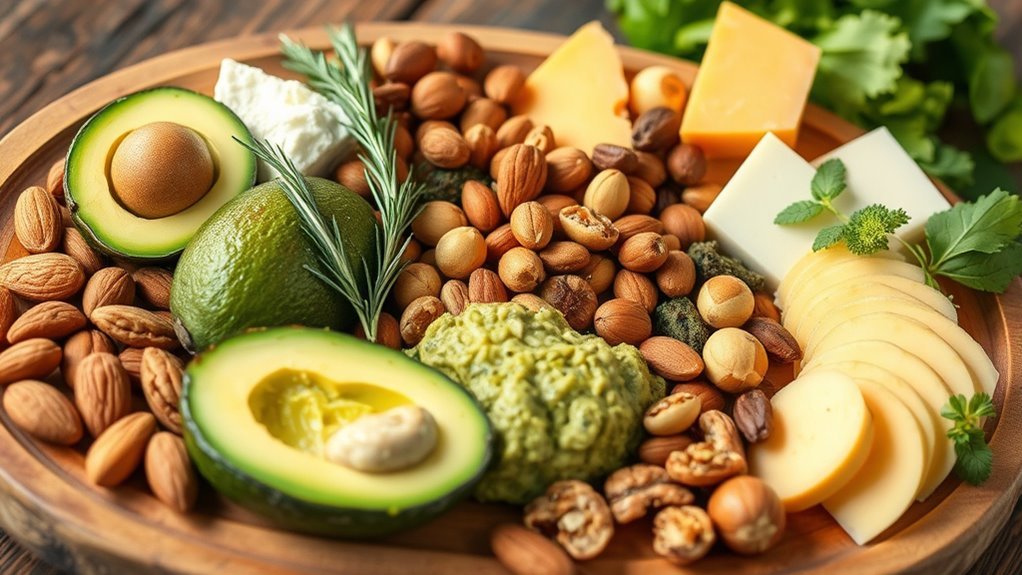
Building a well-rounded keto pantry isn’t just about stocking up on low-carb foods; incorporating healthy fats is equally important for maintaining energy levels and overall health. Healthy fats not only support your body’s energy needs but also aid in nutrient absorption and satiety.
Avocado oil is a fantastic choice, rich in monounsaturated fats and antioxidants. It’s versatile for cooking and drizzling over salads. Coconut butter, on the other hand, offers a creamy texture and a delightful flavor, providing medium-chain triglycerides (MCTs) that can boost your energy and mental clarity.
Including these healthy fats in your diet can enhance the flavor of your meals while supporting your keto lifestyle. Embrace these options to enjoy freedom in your food choices!
Low-Carb Vegetables
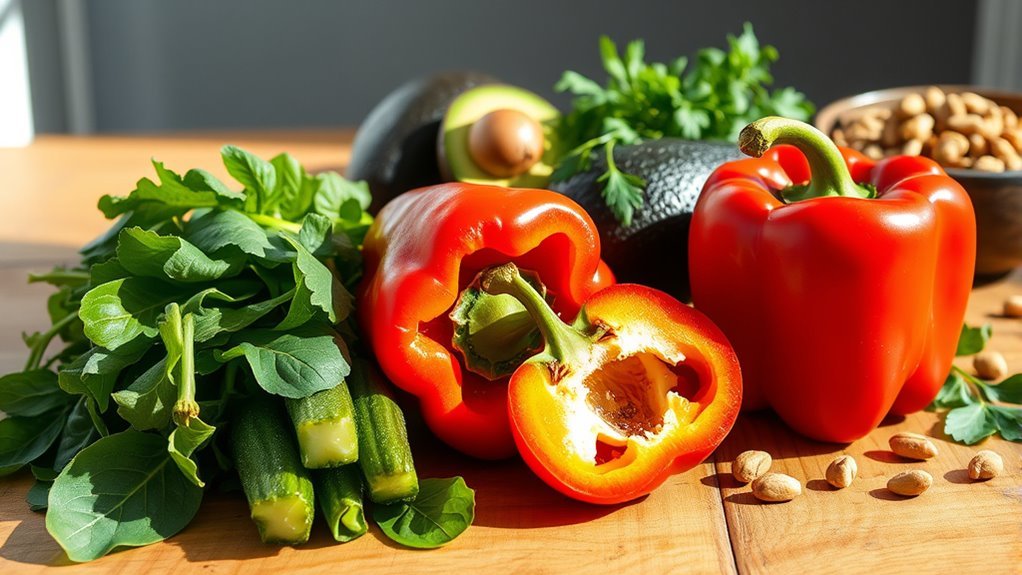
While it might seem challenging to find vegetables that fit within a low-carb framework, there are plenty of delicious options that can complement your keto meals. Leafy greens, such as spinach, kale, and arugula, are nutrient-dense choices that are low in carbs and high in essential vitamins. They can easily be incorporated into salads or smoothies. Cruciferous vegetables, like broccoli, cauliflower, and Brussels sprouts, are also excellent options. These veggies are not only low in carbohydrates but also rich in fiber, which aids digestion and keeps you feeling full. By focusing on these low-carb vegetables, you can add variety and nutrition to your meals while staying aligned with your keto goals. Enjoy the freedom of creativity in your cooking!
Protein Sources for Keto
In addition to low-carb vegetables, a well-rounded keto diet also requires a focus on quality protein sources. You’ll want to include both animal and plant proteins to guarantee you’re getting the necessary nutrients. Lean meats are a great choice, as they’re high in protein and low in carbs. Don’t overlook plant proteins, which can add variety and essential amino acids to your meals. Here are some excellent sources to evaluate:
- Chicken and turkey
- Fish and seafood
- Eggs
- Tofu and tempeh
Incorporating these options into your diet can help keep your meals satisfying while sticking to your keto goals. Remember, balance is key—mixing different protein sources will keep things interesting and nutritious!
Keto-Friendly Snacks
Finding satisfying snacks that fit into your keto diet can be a game changer, especially when cravings strike between meals. You don’t have to feel deprived; there are plenty of keto snack ideas that are both delicious and easy to prepare. Here are some quick keto bites to keep you energized throughout the day:
| Snack | Net Carbs (per serving) | Preparation Time |
|---|---|---|
| Cheese Crisps | 1g | 10 mins |
| Celery with Cream Cheese | 2g | 5 mins |
| Hard-Boiled Eggs | 1g | 15 mins |
| Almonds | 2g | 0 mins |
| Avocado Slices | 2g | 5 mins |
These snacks can help you stay on track while enjoying tasty options without guilt!
1. What foods are considered keto-friendly?
Keto-friendly foods are high in fats, moderate in protein, and very low in carbohydrates. Common options include:
- Meats: Beef, pork, lamb, chicken, and turkey.
- Fish: Salmon, trout, sardines, and other fatty fish.
- Low-carb vegetables: Leafy greens, broccoli, cauliflower, zucchini, and bell peppers.
- Dairy: Cheese, butter, and heavy cream, ideally from grass-fed sources.
- Nuts and seeds: Almonds, walnuts, chia seeds, and flaxseeds.
- Healthy fats: Olive oil, coconut oil, and avocado oil.
Avoid high-carb foods such as grains, sugars, and most fruits while following a keto diet.
2. Can I eat fruits on a keto diet?
While most fruits are high in carbohydrates and sugars, some options can fit within a keto diet in moderation. These include:
- Berries: Strawberries, raspberries, blackberries, and blueberries in small quantities.
- Avocado: Technically a fruit, it is high in healthy fats and low in carbs.
- Olives: Also low in carbs and high in healthy fats.
It’s essential to keep track of your carbohydrate intake to ensure you remain in ketosis.
3. Are there any snacks that are keto-friendly?
Yes, there are plenty of keto-friendly snacks that can satisfy your cravings without kicking you out of ketosis. Some options include:
- Nuts: A small handful of almonds, walnuts, or macadamia nuts.
- Cheese: String cheese or cheese crisps.
- Vegetables: Celery sticks or cucumber slices with cream cheese or guacamole.
- Hard-boiled eggs: A portable and protein-rich snack.
- Beef jerky: Look for low-sugar varieties.
Always check labels to avoid hidden sugars and carbs.
4. Is it necessary to track macros on a keto diet?
Tracking your macronutrients (macros) can be very beneficial, especially when starting a keto diet. The typical macro ratio for a ketogenic diet is:
- 70-75% fats
- 20-25% protein
- 5-10% carbohydrates
By tracking your macros, you can ensure you’re consuming the right amounts to stay in ketosis. Various apps and tools can help simplify this process. However, some individuals may choose to track less strictly once they become familiar with keto-friendly foods.
5. Can I drink alcohol on a keto diet?
Yes, you can drink alcohol on a keto diet, but it’s crucial to choose wisely. Some low-carb alcoholic beverages include:
- Spirits: Vodka, gin, whiskey, and rum are generally carb-free.
- Dry wine: Red or white wines with low residual sugar.
- Low-carb beer: There are several brands that offer lower-carb options.
Avoid high-carb mixers and sugary cocktails, as they can quickly increase your carb intake and hinder your progress. Always enjoy alcohol in moderation.
References
- https://www.ncbi.nlm.nih.gov/pmc/articles/PMC6831579/
- https://www.healthline.com/nutrition/what-to-eat-on-keto-diet
- https://www.webmd.com/diet/what-to-eat-on-keto-diet
- https://www.cdc.gov/healthyweight/healthy_eating/index.html
- https://www.nutrition.gov/topics/nutrition-basics/making-healthy-food-choices
- https://www.mayoclinic.org/healthy-lifestyle/nutrition-and-healthy-eating/expert-answers/keto-diet/faq-20482339
- https://www.ncbi.nlm.nih.gov/books/NBK499877/
- https://www.hsph.harvard.edu/nutritionsource/keto-diet/