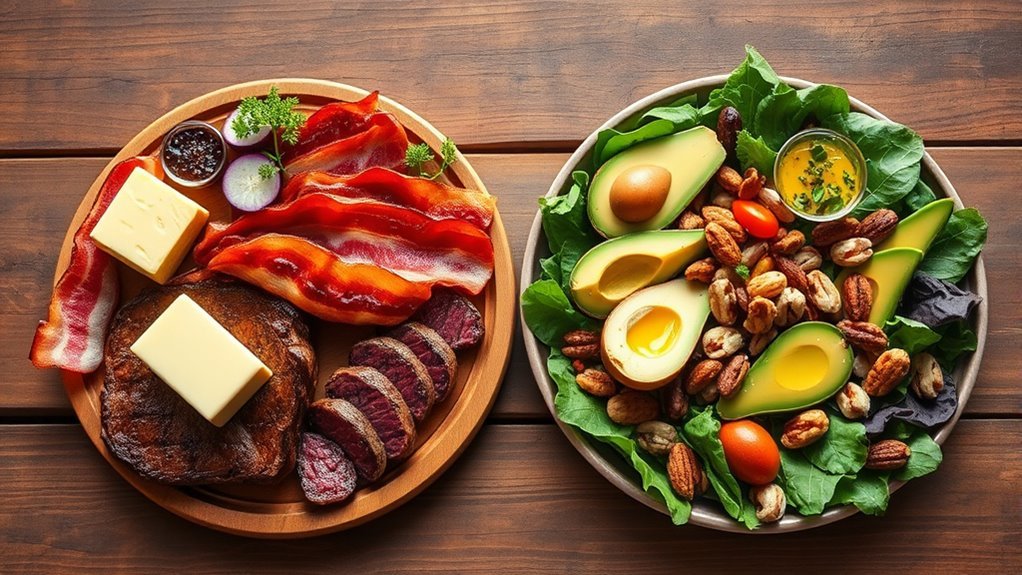

The carnivore diet focuses exclusively on animal products, eliminating plant-based foods, while the keto diet allows for a variety of foods, emphasizing high fat and low carbs. Regarding macronutrients, the carnivore diet consists of 70-80% fat with zero carbs, whereas the keto diet typically maintains about 70% fat and 5% carbs. Both diets offer health benefits but also come with challenges and potential nutritional deficiencies. There’s much more to explore about each diet’s unique aspects.
Overview of the Carnivore Diet
The Carnivore Diet, often described as an all-meat approach to nutrition, eliminates plant-based foods entirely, focusing solely on animal products. This diet’s core carnivore principles emphasize the consumption of beef, pork, poultry, fish, and animal-derived foods like eggs and dairy. Advocates argue that this diet can lead to weight loss, improved mental clarity, and enhanced energy levels by prioritizing protein and fats while eliminating carbohydrates. However, it is important to evaluate potential nutritional deficiencies and long-term health effects due to the exclusion of fruits, vegetables, and grains. While many find freedom in the simplicity of the carnivore lifestyle, it is vital to approach it with a balanced perspective, weighing both benefits and risks. Understanding these nuances can help you make informed dietary choices.
Overview of the Keto Diet
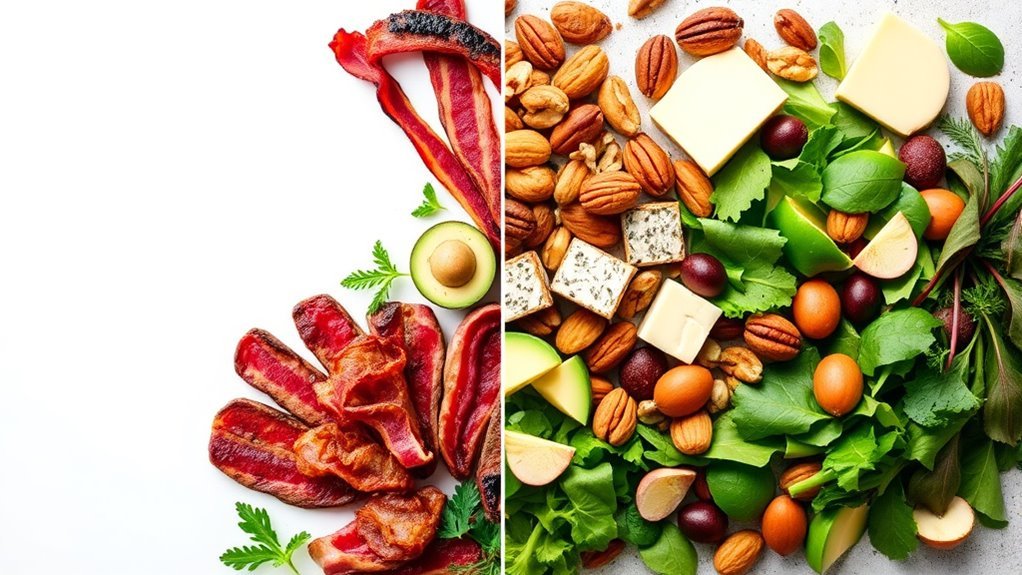
The keto diet focuses on high-fat, low-carbohydrate macronutrient ratios, typically around 70% fat, 25% protein, and 5% carbohydrates. This approach encourages specific food choices, prioritizing healthy fats, low-carb vegetables, and moderate protein sources while avoiding sugars and grains. Research suggests that following a ketogenic diet may offer various health benefits, including weight loss, improved blood sugar control, and enhanced mental clarity. Additionally, the diet promotes greater freedom in food choices, which can lead to a more enjoyable and sustainable eating experience.
Macronutrient Ratios Explained
While there are various dietary approaches for weight loss and improved health, the ketogenic (keto) diet is distinguished by its specific macronutrient ratios. Typically, keto emphasizes a macronutrient composition of about 70-75% fats, 20-25% protein, and 5-10% carbohydrates. This unique balance encourages your body to enter a state of ketosis, where it burns fat for fuel instead of carbohydrates. While some may find this restrictive, keto offers dietary flexibility if you choose the right foods within these ratios. You can enjoy a variety of healthy fats and quality proteins, all while experiencing the benefits of weight loss and improved energy levels. Understanding these macronutrient ratios is key to successfully adopting and maintaining the keto lifestyle. Additionally, following the keto diet can lead to enhanced mental clarity and improved focus throughout your day.
Food Choices Allowed
Choosing the right foods is essential for successfully following a keto diet, as it directly impacts your ability to maintain ketosis. Your meat choices are vital; opt for fatty cuts like ribeye, chicken thighs, and pork belly, which provide the necessary fats while keeping carbs low. You can also include fish and shellfish, rich in omega-3 fatty acids. When it comes to vegetable options, focus on non-starchy varieties such as leafy greens, broccoli, and zucchini. These options not only keep your carb intake in check but also offer essential nutrients. Avoid high-carb vegetables and fruits, as they can hinder ketosis. By making informed food choices, you empower yourself to enjoy the freedom and flexibility the keto diet offers while achieving your health goals. Additionally, incorporating healthy fats into your meals is crucial for supporting overall health on this diet.
Health Benefits Overview
Many people turn to the keto diet for its potential health benefits, which extend beyond just weight loss. This low-carb approach can lead to significant health improvements, including better blood sugar control and increased energy levels. Here’s a quick look at some key nutritional insights related to the keto diet:
| Health Benefits | Nutritional Insights | Impact on Lifestyle |
|---|---|---|
| Weight Loss | High-fat, low-carb intake | Flexible meal options |
| Improved Blood Sugar | Reduces insulin resistance | Stabilizes energy levels |
| Enhanced Mental Clarity | Ketones as brain fuel | Boosts cognitive function |
| Reduced Inflammation | Anti-inflammatory foods | Supports overall wellness |
| Increased Satiety | Fewer cravings | Easier adherence to diet |
In addition to these benefits, adhering to the keto diet can facilitate a shift into ketosis, where the body efficiently burns fat for energy instead of carbohydrates.
Key Differences in Food Choices
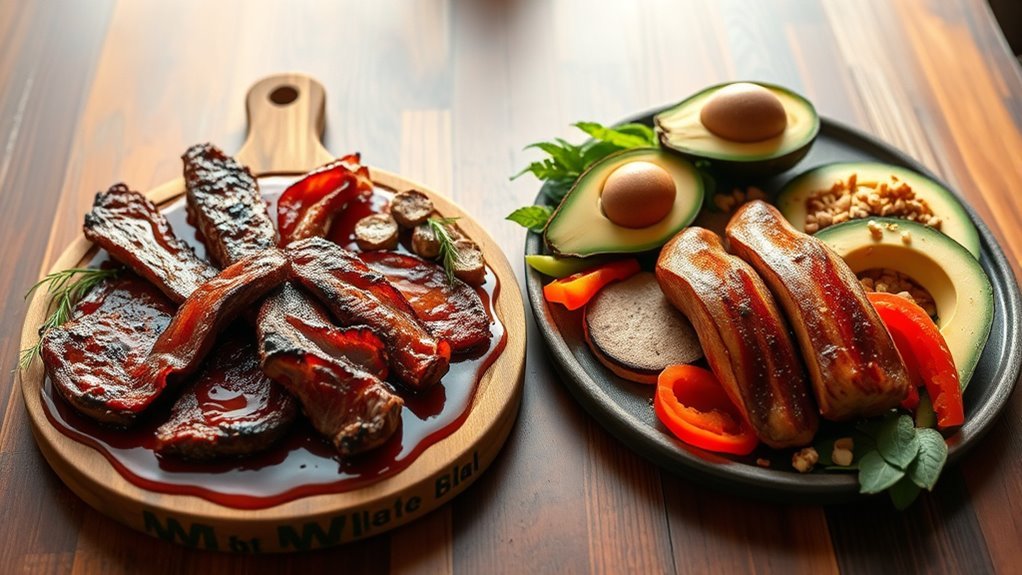
Although both carnivore and keto diets emphasize low carbohydrate intake, their food choices differ markedly. The carnivore diet focuses exclusively on animal products, limiting you to meats, fish, and animal-derived foods, which can restrict food variety considerably. In contrast, the keto diet allows for a broader range of foods, including non-starchy vegetables, nuts, and dairy, offering more options for meal preparation. This flexibility can make it easier for you to create diverse and enjoyable meals. While carnivore may appeal to those who prefer simplicity, keto’s variety might suit individuals seeking culinary freedom. Additionally, the keto diet’s emphasis on macronutrient ratios promotes success in maintaining ketosis. Ultimately, your choice depends on your personal preferences and lifestyle goals, as both diets present unique approaches to low-carb eating.
Macronutrient Ratios Compared
While both the carnivore and keto diets aim for low carbohydrate intake, their macronutrient ratios vary considerably. The carnivore diet is primarily focused on animal products, leading to a macronutrient balance that’s high in protein and fats, with virtually no carbs. In contrast, the keto diet allows for some flexibility by incorporating low-carb vegetables, resulting in a more balanced ratio.
- Carnivore: 70-80% fat, 20-30% protein, 0% carbs
- Keto: 70-75% fat, 20-25% protein, 5-10% carbs
- Dietary flexibility in keto allows for varied food sources
- Carnivore offers strict adherence with fewer choices
- Many individuals experience increased energy levels while following the keto diet.
Understanding these differences can help you choose which diet aligns with your lifestyle and nutritional goals.
Potential Health Benefits of Each Diet
When considering the potential health benefits of the carnivore and keto diets, it’s important to recognize that both approaches can offer unique advantages depending on individual health goals. The carnivore diet may lead to improved digestion and reduced inflammation, as many people report better gut health and fewer digestive issues. These carnivore benefits can be particularly appealing if you’re sensitive to carbohydrates or plant-based compounds. On the other hand, the keto diet’s advantages include enhanced mental clarity and sustained energy levels, thanks to ketone production. Additionally, keto might support weight loss and blood sugar management, making it attractive for those looking to shed pounds or stabilize their glucose levels. Furthermore, reducing carbohydrate intake can lead to more efficient insulin utilization, which is crucial for diabetics. Ultimately, choosing the right diet hinges on your personal preferences and health objectives.
Challenges and Considerations
As you explore the challenges and considerations of the carnivore and keto diets, it’s essential to recognize that both approaches come with potential drawbacks. Here are some key points to ponder:
- Diet sustainability: Long-term adherence may be difficult, leading to potential dropouts.
- Nutritional deficiencies: Both diets can lack essential nutrients, depending on food choices.
- Social situations: Managing meals with friends or family may pose challenges, impacting your social life.
- Individual variation: Not everyone responds the same way; what works for one person may not work for another.
Understanding these challenges can empower you to make informed choices while pursuing your dietary goals. Balancing freedom with health requires careful consideration, especially regarding long-term sustainability and nutritional adequacy.
Who Should Consider Each Diet
If you’re considering a diet change, understanding who may benefit from the carnivore or keto diets is essential. Ideal candidates for the carnivore diet often include those with autoimmune conditions or severe food sensitivities, as it eliminates a wide range of potential allergens. This approach may appeal to individuals who prefer a straightforward, meat-based diet. On the other hand, the keto diet suits those looking to manage weight, improve metabolic health, or control blood sugar levels. It accommodates a broader range of dietary preferences, allowing for low-carb vegetables and healthy fats. Additionally, individuals on keto may experience stabilization of blood sugar levels, which is crucial for effective diabetes management. Ultimately, your choice should align with your health goals, lifestyle, and personal tastes, ensuring that you feel empowered and satisfied with your dietary decisions.
Frequently Asked Questions
Can I Combine the Carnivore and Keto Diets?
Yes, you can combine the carnivore and keto diets. Merging these approaches may amplify carnivore benefits, like improved mental clarity and weight loss, while addressing some keto drawbacks, such as nutrient deficiencies. However, it’s crucial to verify you’re getting enough vitamins and minerals by incorporating organ meats and possibly supplements. This fusion can offer you the freedom to enjoy a variety of foods while still adhering to low-carb principles, promoting overall health.
What Snacks Are Allowed on Both Diets?
When it comes to snacks, think of them as the cherry on top of your diet sundae. For both the carnivore and keto diets, your snack options are quite limited due to diet restrictions. You can enjoy beef jerky, pork rinds, or hard-boiled eggs. If you’re leaning towards keto, add some nuts or cheese to the mix. Just remember to stick to whole, unprocessed foods to keep your goals on track!
How Do These Diets Affect Athletic Performance?
Both diets can influence athletic performance, especially in endurance training. While the keto diet may enhance fat oxidation during prolonged exercise, it can initially hinder high-intensity performance. The carnivore diet, rich in protein, supports muscle recovery effectively. However, individual responses vary, so it’s essential to listen to your body. You might find one diet better suits your energy needs and recovery preferences, allowing for greater freedom in your training regimen.
Are There Vegetarian or Vegan Alternatives for These Diets?
Yes, there are vegetarian and vegan alternatives for these diets. For instance, a study found that athletes could thrive on a plant-based diet by incorporating alternative proteins like lentils and quinoa. These plant-based options provide essential amino acids and nutrients similar to those found in animal products. You can enjoy a balanced, nutrient-dense diet while still achieving your fitness goals, offering you the freedom to choose without sacrificing performance or health.
What Are Common Misconceptions About the Carnivore and Keto Diets?
There’re several common misconceptions about the carnivore and keto diets. Many people think the carnivore diet lacks essential nutrients, but it can provide adequate vitamins and minerals when planned well. Keto myths often suggest it leads to muscle loss, but research shows it can preserve muscle mass during weight loss. Both diets can be effective for weight management, but it’s vital to understand their principles to avoid misinformation and make informed choices that support your freedom in eating.
References
- https://www.healthline.com/nutrition/carnivore-diet-vs-keto-diet
- https://www.ncbi.nlm.nih.gov/pmc/articles/PMC6315758/
- https://www.webmd.com/diet/obesity/carnivore-diet
- https://www.verywellfit.com/carnivore-diet-vs-keto-diet-5191532
- https://www.health.harvard.edu/blog/the-carnivore-diet-202205252652
- https://www.mayoclinic.org/healthy-lifestyle/nutrition-and-healthy-eating/expert-answers/keto-diet/faq-20459285