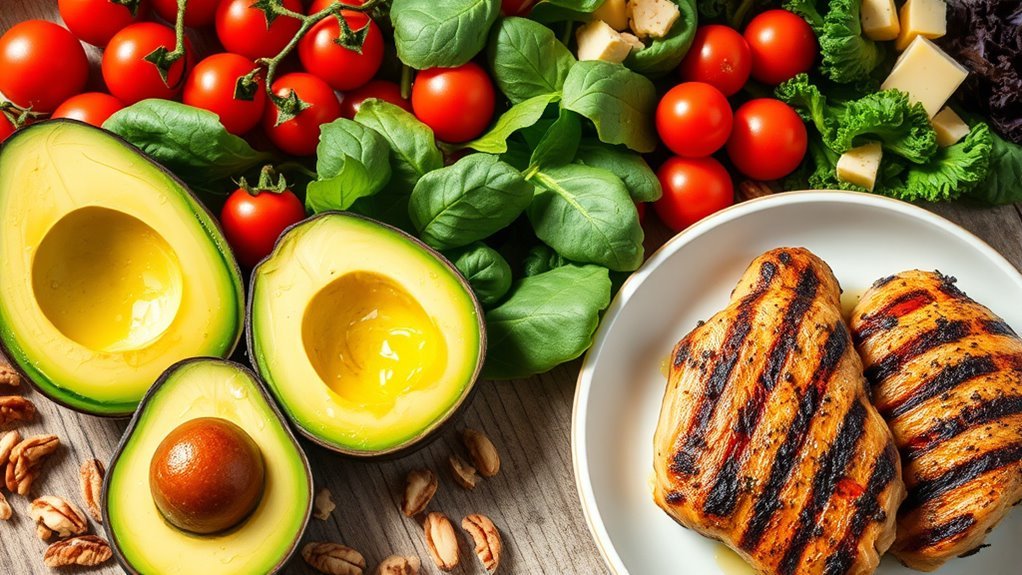

The keto diet focuses on high-fat, low-carb foods to promote ketosis, where your body burns fat for energy instead of glucose. You’ll want to include healthy fats like avocados and olive oil, along with quality proteins such as grass-fed meats and fatty fish. Low-carb vegetables like spinach and zucchini are essential too. Avoid sugary snacks, grains, and high-carb fruits. Understanding these components can help you succeed on the keto journey, and there’s much more to explore!
Understanding Ketosis and Its Benefits
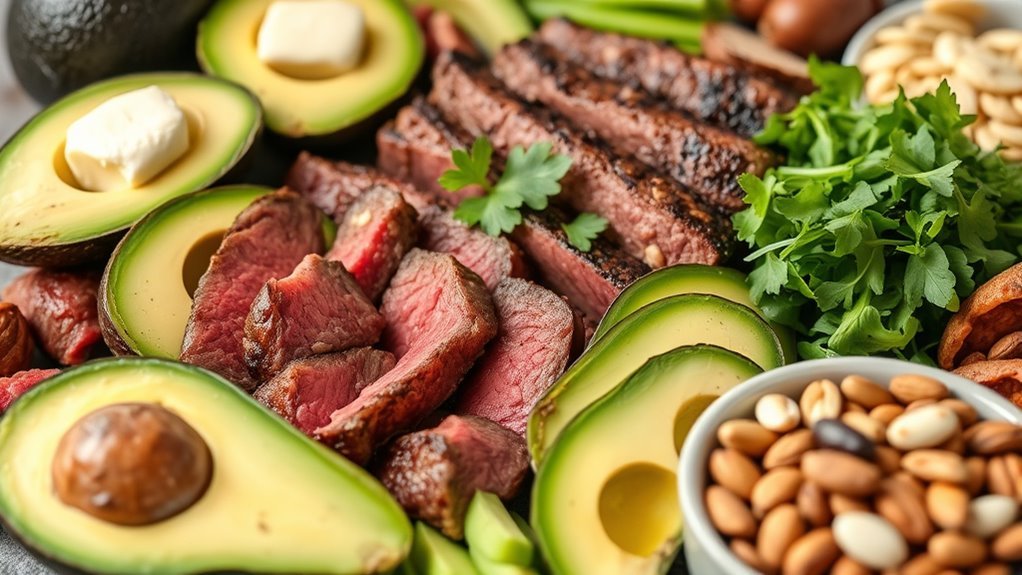
When you shift your diet to a ketogenic approach, your body enters a state called ketosis, which can lead to various health benefits. During the ketosis process, your body shifts from using glucose as its primary energy source to burning fat for fuel. This metabolic change can help with weight loss, as fat stores are utilized more efficiently. Additionally, many people report increased energy levels and improved mental clarity while in ketosis. Some studies even suggest potential health advantages, such as better blood sugar control and reduced inflammation. While the ketogenic diet may not be suitable for everyone, understanding its benefits can empower you to make informed choices about your health and well-being.
Key Components of a Keto Diet
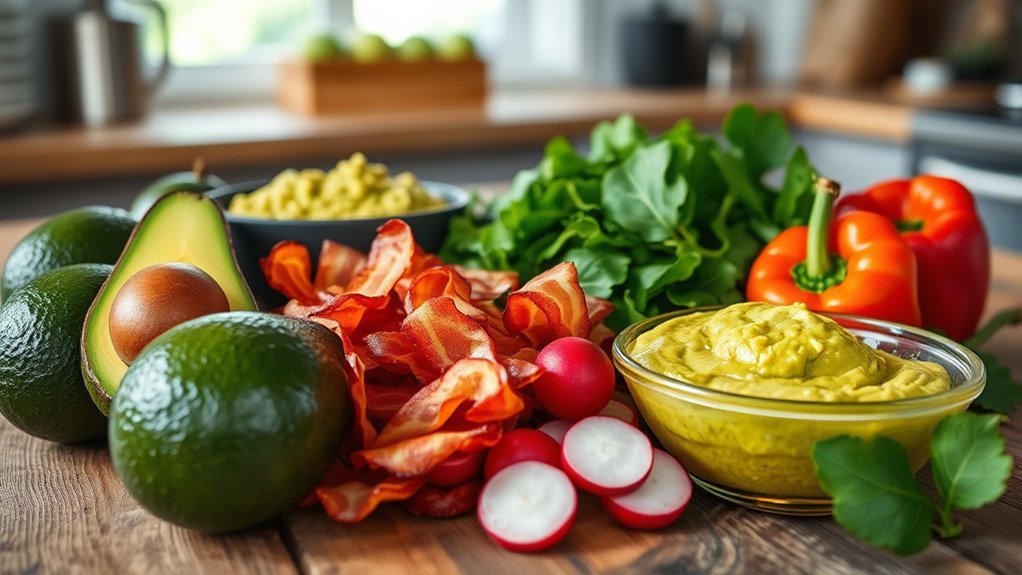
To effectively adopt a ketogenic diet, it’s important to understand its key components. The foundation of a keto diet lies in its macronutrient ratios: typically, about 70-75% of your daily calories should come from fats, 20-25% from proteins, and only 5-10% from carbohydrates. This shift in keto macronutrients encourages your body to enter ketosis, where it burns fat for fuel instead of carbs.
Keto meal prep is essential for success; planning your meals ahead helps you maintain these ratios and avoid carb-laden foods. Focus on incorporating healthy fats like avocados, nuts, and olive oil, while keeping carbs low through leafy greens and non-starchy vegetables. Mastering these components empowers your health journey with freedom and flexibility.
Foods to Include in Your Keto Grocery List
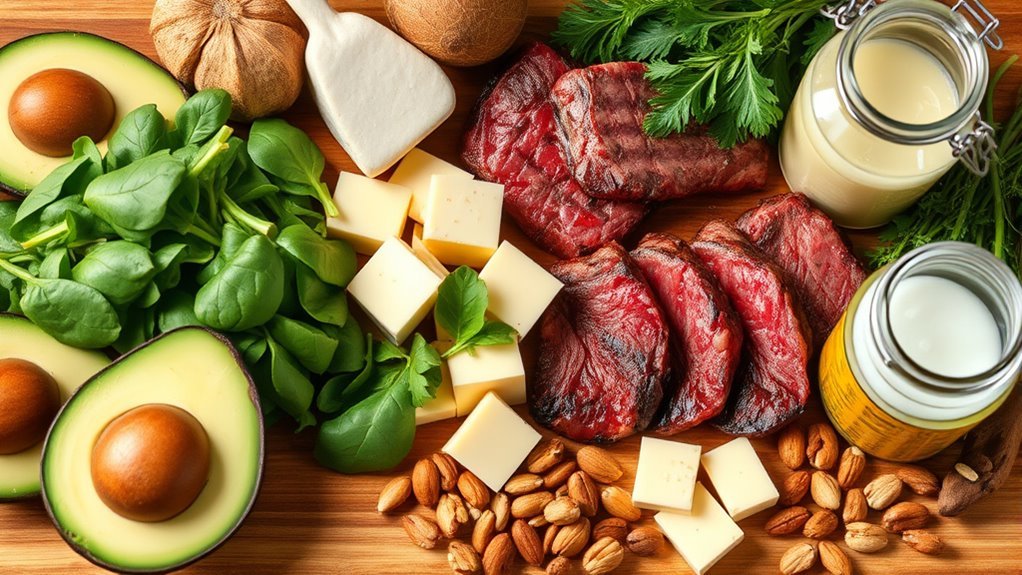
A well-curated keto grocery list is your best ally in successfully managing the ketogenic diet. Start by stocking up on high-quality fats, like avocados, olive oil, and coconut oil. These nutrient-dense options provide energy while keeping you satisfied. Don’t forget to include protein sources such as grass-fed meats, fatty fish, and eggs. For your veggie fix, focus on low carb vegetables like spinach, kale, and zucchini, which are versatile and low in carbohydrates. You can also add some keto snacks, such as nuts, cheese, and seeds, to keep cravings at bay. Finally, consider low-sugar condiments and spices to enhance your meals without compromising your carb intake. With this list, you’ll feel empowered to embrace your keto journey.
Foods to Avoid on a Keto Diet
While embracing the keto diet, it’s crucial to be mindful of what you’re putting on your plate. To achieve ketosis, you’ll want to avoid high carb foods that can sabotage your efforts. This includes bread, pasta, rice, and most grains, which are typically packed with carbohydrates. Additionally, steer clear of sugary snacks, desserts, and beverages, as they can spike your blood sugar levels. Even some sugar alternatives can be problematic, so always check labels for hidden carbs. Fruits high in sugar, like bananas and grapes, are also best eliminated. By being conscious of these foods, you’ll maintain the freedom to enjoy your keto journey without unnecessary setbacks. Remember, sticking to low-carb options is key to your success.
Tips for Meal Planning on Keto
After identifying the foods to avoid on a keto diet, it’s time to focus on how to effectively plan your meals. Meal prep can save you time and help maintain your keto lifestyle. Here are some snack ideas to keep you satisfied between meals:
| Protein Sources | Healthy Fats | Low-Carb Veggies |
|---|---|---|
| Grilled chicken | Avocado slices | Spinach |
| Hard-boiled eggs | Olive oil drizzle | Zucchini |
| Beef jerky | Nut butter | Cauliflower |
What foods can I eat on a keto diet?
On a keto diet, you can enjoy a variety of foods that are high in healthy fats and low in carbohydrates. Some examples include:
- Meats: Beef, pork, chicken, and fatty fish like salmon.
- Low-carb vegetables: Leafy greens, broccoli, cauliflower, and zucchini.
- Dairy: Cheese, butter, and cream.
- Nuts and seeds: Almonds, walnuts, and chia seeds.
- Healthy oils: Olive oil, coconut oil, and avocado oil.
It’s important to avoid high-carb foods such as grains, sugars, and most fruits to maintain ketosis.
Are there any foods I should avoid on a keto diet?
Yes, there are several foods you should avoid on a keto diet to stay within your carb limits. These include:
- Grains: Bread, pasta, rice, and cereals.
- Sugary foods: Sodas, candies, and desserts.
- High-carb fruits: Bananas, grapes, and apples.
- Starchy vegetables: Potatoes, corn, and peas.
- Processed foods: Many packaged snacks and convenience foods often contain hidden sugars and carbs.
Sticking to whole, unprocessed foods is key to successfully following a keto diet.
Can I eat fruit on a keto diet?
While most fruits are high in carbohydrates and should generally be avoided, there are a few exceptions that can be consumed in moderation. These include:
- Berries: Strawberries, raspberries, and blackberries are lower in carbs compared to other fruits.
- Avocado: Technically a fruit, avocados are high in healthy fats and very low in carbs.
- Olives: Another low-carb fruit, they are also a great source of healthy fats.
When consuming fruit on a keto diet, it’s important to be mindful of portion sizes to avoid exceeding your carbohydrate limit.
What are some keto-friendly snacks?
Keto-friendly snacks are those that are low in carbohydrates and high in fats. Here are some great options:
- Nuts and seeds: Almonds, walnuts, and pumpkin seeds.
- Cheese: String cheese or cheese slices.
- Vegetable sticks: Celery or cucumber with cream cheese or guacamole.
- Hard-boiled eggs: A portable, high-protein snack.
- Bacon: Cooked bacon or pork rinds for a crunchy treat.
Always check the nutritional content to ensure they fit within your daily carb allowance.
How can I ensure I’m getting enough nutrients on a keto diet?
To ensure you’re getting enough nutrients on a keto diet, consider the following tips:
- Eat a variety of foods: Include a wide range of meats, vegetables, and healthy fats to cover different nutrient needs.
- Focus on low-carb vegetables: Leafy greens and colorful veggies provide essential vitamins and minerals.
- Consider supplements: Talk to your healthcare provider about whether you might need vitamins or minerals, especially magnesium, potassium, or omega-3 fatty acids.
- Stay hydrated: Drink plenty of water and consider electrolyte supplements if you experience symptoms of the “keto flu.”
Monitoring your nutrient intake can help you maintain a balanced and healthy diet while following keto.
References
- https://www.who.int/news-room/fact-sheets/detail/healthy-diet
- https://www.ncbi.nlm.nih.gov/pmc/articles/PMC6483124/
- https://www.health.harvard.edu/staying-healthy/the-truth-about-the-ketogenic-diet
- https://www.cdc.gov/healthyweight/healthy_eating/index.html
- https://www.medicalnewstoday.com/articles/324659
- https://www.mayoclinic.org/healthy-lifestyle/nutrition-and-healthy-eating/in-depth/keto-diet/art-20459800
- https://www.nutrition.gov/topics/whats-your-diet/keto-diet
- https://www.webmd.com/diet/what-is-the-keto-diet