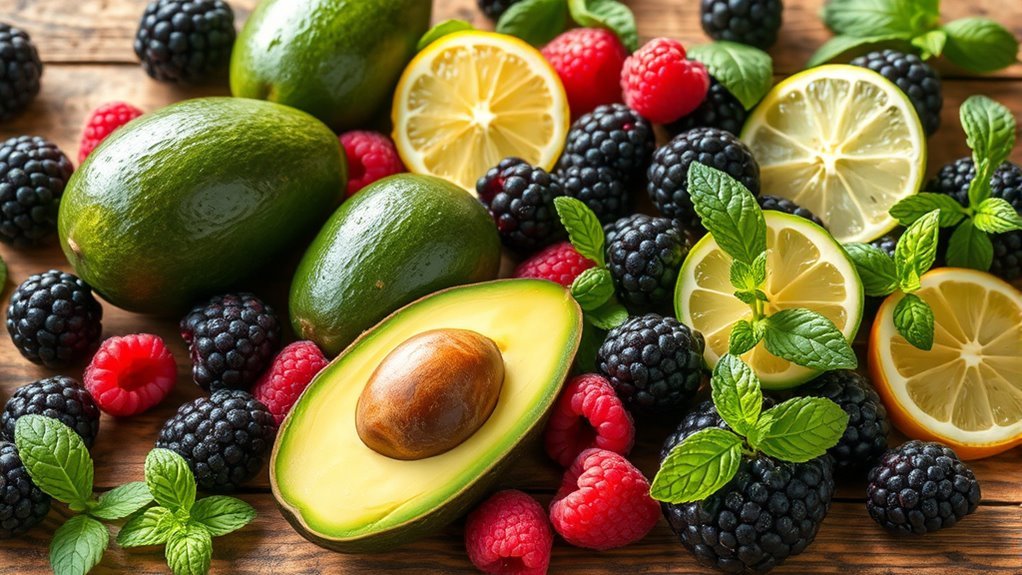

On a keto diet, you can enjoy several low-carb fruits that satisfy sweet cravings without derailing your ketosis. Avocados are packed with healthy fats and fiber. Berries like strawberries, blackberries, and raspberries provide delicious low-carb options. Lemons and limes add zesty flavor with minimal carbs, while watermelon keeps you hydrated. Even tomatoes make the cut as a surprising fruit. Want to discover more fruity options and their benefits? Keep going to explore!
Avocados: the Creamy Fruit Packed With Healthy Fats
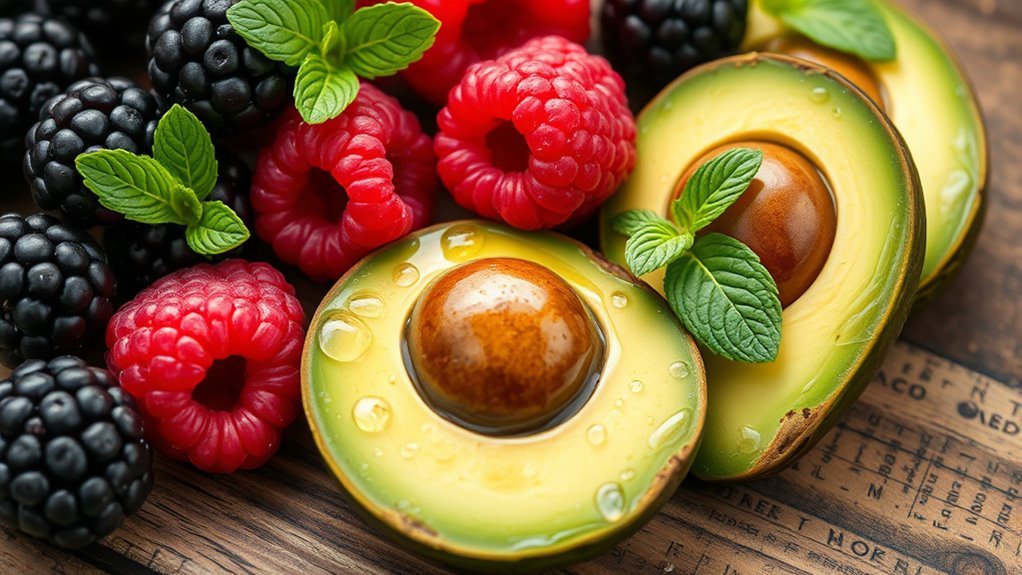
When you’re following a keto diet, incorporating avocados can greatly enhance your meals due to their rich content of healthy fats. These creamy fruits are packed with monounsaturated fats, which can help support heart health and keep you feeling full longer. The avocado benefits don’t stop there; they’re also a fantastic source of fiber, which aids digestion and helps maintain stable blood sugar levels. Plus, they’re low in carbs, making them an ideal choice for your keto lifestyle. You can easily add avocados to salads, smoothies, or use them to create delicious dips. By embracing avocados, you not only elevate your meals but also nourish your body with essential nutrients that promote overall well-being. Enjoy the freedom of flavor they bring!
Berries: A Low-Carb Option for Sweet Treats
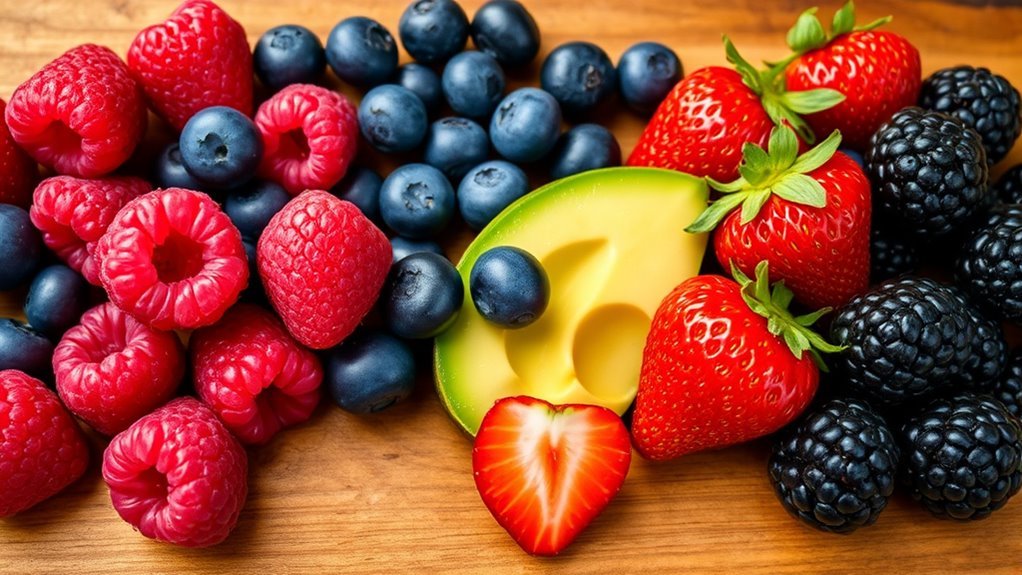
If you’re craving something sweet while sticking to a keto diet, berries can be a delightful solution. These low-carb fruits offer a variety of flavors and nutrients, making them perfect for satisfying your sweet tooth without derailing your diet. Here are some popular berry varieties you can enjoy:
Craving something sweet on keto? Berries are the perfect low-carb solution to satisfy your sweet tooth!
- Raspberries – High in fiber and low in carbs, great for snacking.
- Blackberries – Packed with antioxidants, perfect for adding to keto desserts.
- Strawberries – Versatile and delicious, they can be enjoyed fresh or in smoothies.
- Blueberries – Slightly higher in carbs but still manageable in moderation.
Incorporating these berries into your meals can help you create delicious keto desserts while keeping your carb intake in check. Enjoy the freedom these sweet treats offer!
Lemons and Limes: Zesty Flavors With Minimal Carbs
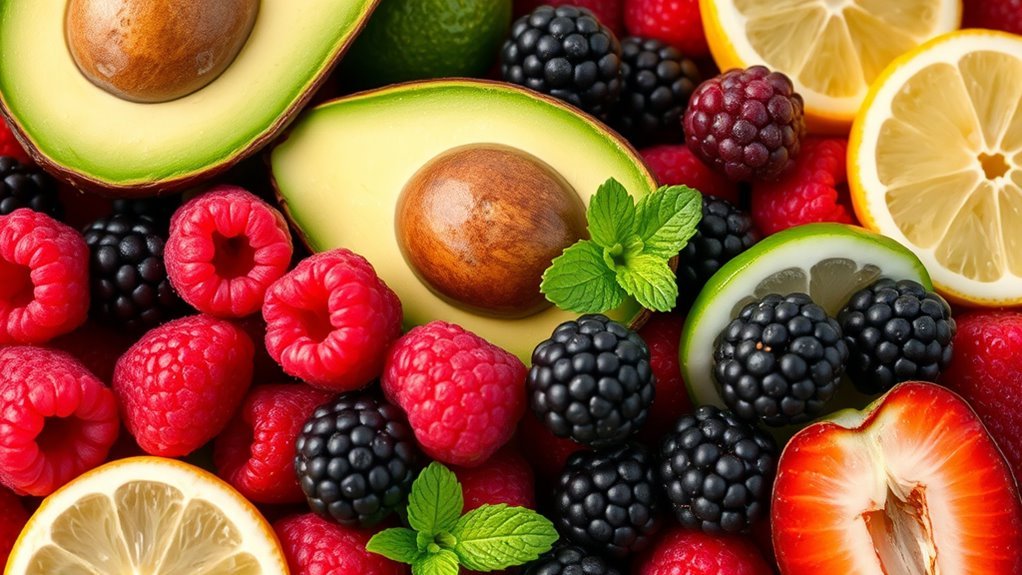
Lemons and limes bring a burst of zesty flavor to your keto meals without adding significant carbs. Both fruits are low in carbohydrates, making them ideal for your ketogenic lifestyle. A tablespoon of lemon juice contains just about 1 gram of carbs, while lime juice has similar stats. You can enhance your dishes with fresh lemon zest or a splash of lime juice without worrying about exceeding your carb limits. These citrus fruits not only add flavor but also provide vitamin C and antioxidants, supporting your overall health. Incorporate them into dressings, marinades, or even sparkling water for a revitalizing twist. Enjoy the freedom to spice up your meals while staying on track with your keto goals!
Watermelon: Refreshing Hydration With a Keto Twist
While lemons and limes are fantastic for adding flavor to your keto meals, watermelon offers a different kind of refreshment, especially during warmer months. With its high water content, this fruit provides notable hydration benefits, making it a great choice for staying refreshed. Here are a few reasons to enjoy watermelon on your keto journey:
Watermelon is a refreshing, hydrating fruit perfect for your keto meals, especially in warmer months.
- Low in Carbs: Most watermelon varieties contain only about 7-8 grams of net carbs per 100 grams.
- Hydration Boost: Comprising about 92% water, it keeps you hydrated.
- Rich in Vitamins: It’s a good source of vitamins A and C, supporting overall health.
- Versatile Enjoyment: Eat it fresh, blend it into smoothies, or even grill it for a unique twist.
Watermelon truly is a delightful keto-friendly fruit!
Cantaloupe: A Sweet and Satisfying Choice
Cantaloupe is not just a tasty treat; it also offers impressive nutritional benefits, making it a great addition to your keto diet. With its low carbohydrate content and high water volume, you can enjoy a satisfying serving without compromising your macro goals. Let’s explore the ideal serving sizes and how this sweet fruit can fit into your meal plan.
Nutritional Benefits of Cantaloupe
When it comes to satisfying your sweet tooth on a keto diet, cantaloupe stands out as a delicious option. Packed with nutrients, this fruit offers several cantaloupe benefits that can enhance your health while keeping your carb count in check. Here are four key advantages:
- Low in Carbs: Cantaloupe is relatively low in carbohydrates, making it a keto-friendly fruit.
- Hydration: With high water content, it helps keep you hydrated.
- Vitamins and Minerals: It’s rich in vitamins A and C, supporting immune function and skin health.
- Antioxidants: Cantaloupe contains antioxidants that can combat oxidative stress.
Incorporate cantaloupe into your keto friendly recipes for a rejuvenating treat while enjoying its nutritional perks!
Serving Size Recommendations
Finding the right serving size for cantaloupe can enhance your keto diet without sabotaging your carb goals. To maintain portion control, aim for about ½ cup of diced cantaloupe, which contains roughly 6 grams of net carbs. This amount allows you to enjoy its sweetness while staying mindful of your overall carb intake. If you’re looking for fruit alternatives, consider pairing cantaloupe with low-carb options like berries to diversify your snacks. Remember, moderation is key—too much of any fruit can disrupt your ketosis. By sticking to recommended serving sizes, you can savor the revitalizing taste of cantaloupe guilt-free, keeping your keto journey enjoyable and sustainable. Enjoy the freedom of making smart choices!
Strawberries: Deliciously Low in Carbs
Although many fruits are high in carbohydrates, strawberries stand out as a delicious option for those on a keto diet. With only about 6 grams of net carbs per cup, they’re perfect for satisfying your sweet cravings without derailing your progress. Here are some ways to enjoy strawberries on keto:
Strawberries are a keto-friendly fruit with just 6 grams of net carbs per cup, perfect for satisfying sweet cravings.
- Create invigorating strawberry smoothies with almond milk and spinach.
- Add them to your favorite low-carb yogurt for a tasty snack.
- Use strawberries in keto-friendly desserts like cheesecake or panna cotta.
- Mix them into salads for a burst of flavor.
Incorporating strawberries into your diet not only keeps it exciting but also provides essential vitamins and antioxidants. Enjoy those strawberry recipes while staying on track!
Raspberries: A Tasty Snack for Keto Lovers
Raspberries are a delightful and nutritious choice for those following a keto diet. With just 5 grams of net carbs per cup, they’re a fantastic low-carb fruit option. Packed with antioxidants, these berries offer significant health benefits, including improved heart health and reduced inflammation. You can enjoy them fresh or incorporate them into various raspberry recipes, like keto-friendly desserts or smoothies. Their natural sweetness can satisfy your cravings without derailing your diet. Plus, they’re rich in fiber, which aids digestion and can keep you feeling full longer. So, whether you munch on them raw or blend them into a delicious treat, raspberries are a tasty snack that aligns perfectly with your keto lifestyle.
Blackberries: Antioxidant-Rich and Low-Carb
When you’re looking for a delicious and nutritious fruit that fits seamlessly into your keto diet, blackberries are an excellent choice. These berries offer fantastic blackberry benefits, making them a must-have in your low-carb lifestyle. Here are four reasons to include blackberries in your diet:
- Low in Carbs: Just 6 grams of carbs per 100 grams.
- High in Fiber: Supports digestion and keeps you full longer.
- Rich in Antioxidants: Helps fight oxidative stress and inflammation.
- Versatile for Keto Recipes: Perfect for smoothies, desserts, and salads.
Incorporating blackberries into your meals not only satisfies your sweet cravings but also enhances your overall health while adhering to your keto goals. Enjoy the freedom of delicious, guilt-free eating!
Tomatoes: A Surprising Fruit for Your Keto Diet
Even if you think of tomatoes as a vegetable, they’re actually a fruit that can fit perfectly into your keto diet. With various tomato varieties like cherry, heirloom, and beefsteak, you’ve got options to add flavor and nutrition to your meals. Tomatoes are low in carbs, making them an ideal choice for maintaining ketosis without sacrificing taste.
In addition to their versatility, they offer numerous health benefits. Rich in vitamins C and K, tomatoes support immune function and bone health. They also contain antioxidants like lycopene, which may reduce the risk of chronic diseases. So, don’t shy away from incorporating tomatoes into your keto lifestyle; they can enhance both your meals and overall well-being.
1. What fruits are low in carbohydrates and suitable for a keto diet?
Fruits that are low in carbohydrates and fit well into a keto diet include berries such as strawberries, raspberries, and blackberries. Avocados are also a great choice as they are high in healthy fats and low in carbs. Other options include olives and tomatoes, which are technically fruits but often mistaken for vegetables. These fruits can be consumed in moderation to maintain ketosis.
2. Can I eat any type of fruit on a keto diet?
While fruits are generally healthy, many are high in sugars and carbohydrates, which can hinder your ability to stay in ketosis. Most traditional fruits such as bananas, apples, and grapes are not suitable for a keto diet due to their high carb content. It’s important to choose low-carb options and keep portion sizes in mind to prevent exceeding your daily carb limit.
3. How many carbs should I aim for when consuming fruits on a keto diet?
On a keto diet, the typical daily carbohydrate intake is around 20 to 50 grams, depending on individual factors like activity level and metabolic health. When incorporating fruits, aim for those that provide minimal carbs, mainly focusing on serving sizes. For instance, a half-cup of berries can contain around 5-7 grams of carbs, making it a reasonable option within your carb limit.
4. Are there any fruits that I should completely avoid on a keto diet?
Yes, there are several fruits that should be avoided on a keto diet due to their high sugar and carb content. Fruits like bananas, grapes, cherries, mangoes, and pineapples are particularly high in sugar and can quickly elevate your carb intake. Instead, focus on low-carb fruits like berries, which provide essential nutrients without the high sugar load.
5. How can I include fruits in my keto meal plan?
To include fruits in your keto meal plan, opt for low-carb varieties and keep servings small. You can add berries to smoothies, yogurt, or salads. Avocados can be used in salads, spreads, or smoothies. Olives can be a great snack or an addition to salads. Always track your carb intake to ensure you remain within your limits, and consider pairing fruits with healthy fats to lower their glycemic load.
References
- https://www.healthline.com/nutrition/keto-diet-fruits
- https://www.ncbi.nlm.nih.gov/pmc/articles/PMC6470868/
- https://www.dietdoctor.com/low-carb/keto/fruits
- https://www.medicalnewstoday.com/articles/322991
- https://www.washingtonpost.com/lifestyle/wellness/what-fruits-are-keto-friendly/2021/07/07/3d3c2b2e-dc9a-11eb-9f56-8c2a2c1f1c2c_story.html
- https://www.clevelandclinic.org/health/diseases/21380-ketogenic-diet
- https://www.mayoclinic.org/healthy-lifestyle/nutrition-and-healthy-eating/in-depth/keto-diet/art-20459611