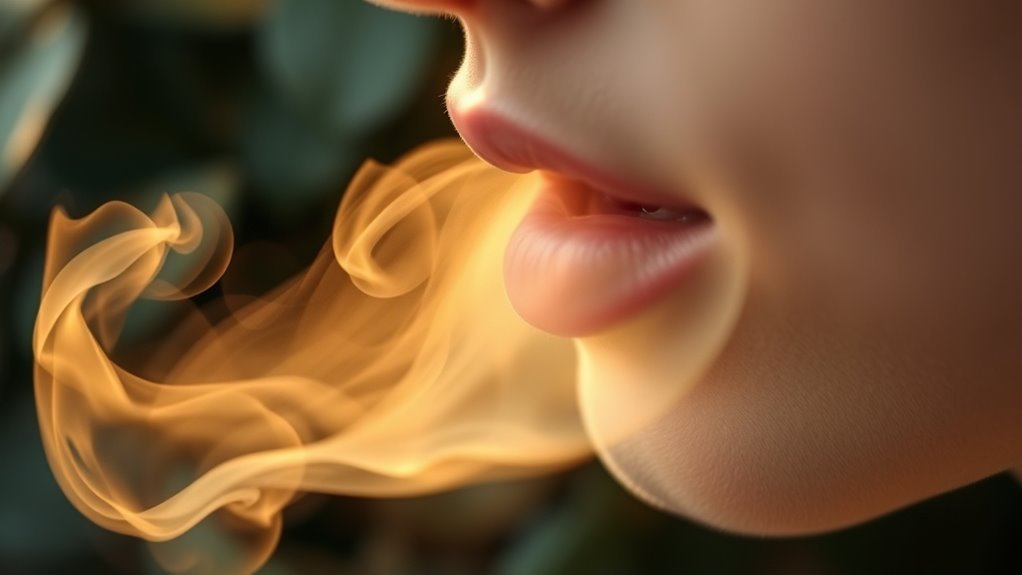

Keto breath often has a metallic or chemical-like taste, a result of ketone production during fat metabolism. This unique taste can accompany a sweet or fruity odor in your breath, similar to nail polish remover or overripe fruit. Individual variations in metabolism and hydration can influence the intensity of these sensations. Staying hydrated and practicing good oral hygiene can help manage the taste and smell. Discovering more about these factors can help you better understand your experience.
Understanding Ketosis and Its Effects on Breath

When you enter a state of ketosis, your body shifts from using carbohydrates as its primary energy source to burning fat. This metabolic change can lead to various ketosis symptoms, including breath variations. As your body breaks down fat, it produces ketones, which are released through your breath and urine. One of the most notable breath variations you might notice is a slightly sweet or fruity odor, often described as reminiscent of nail polish remover. While this could be off-putting, it’s a sign that your body is efficiently burning fat. Increased energy levels can also accompany this metabolic shift, enhancing your overall experience on the keto diet. Staying hydrated and maintaining good oral hygiene can help mitigate these breath variations, allowing you to embrace the freedom that comes with a ketogenic lifestyle while managing any side effects.
The Science Behind Keto Breath

When you enter ketosis, your body shifts to burning fat for fuel, leading to noticeable changes in your breath. This occurs due to the production of acetone, a type of ketone that can be released through your breath. Understanding this process can help you better manage the effects of keto breath. Additionally, the production of ketones is part of the body’s metabolic adaptation as it switches from glucose to fat for energy.
Ketosis and Breath Changes
Ketosis, a metabolic state achieved through a low-carbohydrate diet, brings about notable changes in your body, including alterations in breath odor. As your body shifts from burning glucose to fat for fuel, it produces various ketosis symptoms, one of which is the distinctive breath associated with this diet. Breath analysis can reveal the presence of compounds like acetone, which contribute to the unique scent. This change in breath is often described as fruity or metallic and can be a sign that you’re in ketosis. While some find it off-putting, it’s a natural part of the process. Understanding ketone production can help you navigate your ketogenic journey with confidence and awareness, embracing the freedom it offers.
Acetone Production Explained
Although many people associate keto breath with an unpleasant odor, it actually stems from a fascinating biochemical process. When you enter ketosis, your body shifts from using glucose to breaking down fats for energy. This process produces ketone bodies, including acetoacetate and β-hydroxybutyrate. During acetone metabolism, some of these ketones are converted into acetone, which is released through your breath. This is what creates the distinct smell often described as fruity or nail polish remover-like. While the odor can be off-putting, it’s a sign that your body is efficiently using fat for energy. Embracing this change can empower you to pursue your health goals while understanding the science behind your body’s new metabolic state.
Common Descriptions of the Taste and Smell

As your body shifts into ketosis, you might notice a distinct change in your breath that many describe as having a sweet, fruity odor. This is often likened to the smell of nail polish remover or ripe fruit, primarily due to the production of acetone. Taste descriptions can vary, with some individuals reporting a metallic or chemical-like flavor that accompanies the aroma. In smell comparisons, others have noted it resembles overripe apples or even fermented products. While these sensations can be off-putting, they’re a natural consequence of your body burning fat for fuel. Understanding these common descriptions can help you navigate the keto experience, allowing for greater awareness and acceptance of this unique metabolic state.
Factors That Influence Keto Breath
While many factors can influence the presence and intensity of keto breath, individual variations in metabolism, hydration levels, and diet play significant roles. Understanding these factors can help you navigate the breath changes that occur on a keto diet. Here are three key influences:
- Metabolism: Your body’s ability to process fats can affect how ketones are produced and subsequently impact breath odor.
- Hydration Levels: Staying well-hydrated can dilute the concentration of ketones in your breath, potentially reducing intensity.
- Dietary Choices: The specific foods you consume while on the keto diet can influence the byproducts of fat metabolism, altering breath characteristics.
Tips for Managing Keto Breath
Managing keto breath can be effectively addressed through proper hydration and oral care. Staying well-hydrated helps dilute the compounds causing bad breath, while maintaining good oral hygiene can reduce bacteria in your mouth. Additionally, incorporating breath-freshening foods into your diet can provide temporary relief and improve your overall breath quality. It’s also important to be aware of potential nutritional deficiencies that may arise from the keto diet, as they can affect overall health and, consequently, breath quality.
Hydration and Oral Care
To effectively combat keto breath, staying hydrated is essential, since dehydration can exacerbate the condition. Here are some hydration tips to help you maintain fresh breath and good oral hygiene:
- Drink Water Regularly: Aim for at least 8 cups a day to keep your mouth moist and wash away odor-causing bacteria.
- Incorporate Electrolytes: Consider adding electrolyte-rich drinks to your routine, as they can help with hydration without adding sugar.
- Chew Sugar-Free Gum: This stimulates saliva production, which naturally cleanses your mouth and helps neutralize bad breath. Additionally, adequate water intake is crucial for balanced hydration and can help mitigate the diuretic effects of ketosis.
Breath Freshening Foods
Keto breath can be a challenging side effect for many on a ketogenic diet, but incorporating certain breath freshening foods can make a significant difference. Consider adding minty snacks, like fresh mint leaves, to your diet. Citrus fruits are also excellent; their acidity not only freshens breath but aids digestion. Sipping herbal teas can provide a soothing effect while combating odor. Chewing gum, especially sugar-free varieties, can stimulate saliva production, which naturally cleanses the mouth. Fresh vegetables, like celery and cucumber, help scrub your teeth and provide hydration. Spicy foods can increase saliva flow, while essential oils, such as peppermint or lemon, can be potent breath fresheners. Finally, indulge in sugar-free candies for a quick fix.
When to Seek Help for Keto Breath Issues
Have you noticed that your breath has taken on an unusual odor since starting a low-carb diet? While keto breath is common, you should know when to seek help. If you experience any of the following persistent symptoms, it’s time to consult a healthcare professional:
- Severe or worsening odor: If the smell becomes unbearable or unusual beyond typical keto breath.
- Accompanied by other symptoms: Such as nausea, vomiting, or confusion, which could indicate ketoacidosis.
- Impact on daily life: If the odor considerably affects your social interactions or mental well-being.
Frequently Asked Questions
Can Keto Breath Occur in Non-Keto Diets?
Keto breath can occur in non-keto diets, though it’s less common. When you greatly reduce carbohydrate intake, your body enters a metabolic state called dietary ketosis, producing breath acetone as a byproduct. However, even with a higher carbohydrate intake, certain factors like fasting, intense exercise, or a low-calorie diet can lead to breath changes similar to those experienced on a keto diet. So, it’s not exclusive to those strictly following a keto plan.
Does Hydration Affect the Intensity of Keto Breath?
When it comes to keto breath, hydration levels can really make a difference. If you’re not drinking enough water, you might find that your breath intensity increases, making it more noticeable. Staying well-hydrated helps flush out ketones and reduces that strong odor. So, if you’re feeling parched, don’t hesitate to sip some water; it can keep your breath fresher and help you feel your best while enjoying your keto journey.
Is Keto Breath Permanent or Temporary?
Keto breath isn’t permanent; it’s typically a temporary side effect of ketosis. As your body shifts to burning fat for fuel, it produces ketones, which can cause the breath odor. Managing keto breath involves staying hydrated, maintaining oral hygiene, and possibly adjusting your diet. While it may be bothersome, the smell often diminishes as your body adapts to the ketogenic lifestyle. Give it time, and consider implementing strategies for better breath management.
Can Certain Foods Worsen Keto Breath?
Yes, certain foods can worsen keto breath. For instance, garlic effects and onion reactions can intensify the odor, leaving you wondering if it’s the ketones or something else entirely. Both garlic and onion contain sulfur compounds, which can linger in your mouth and exacerbate the smell. If you’re seeking fresh breath on your keto journey, it might be wise to limit these foods. Your taste buds—and those around you—might just thank you.
How Long Does Keto Breath Typically Last?
Keto breath typically lasts a few weeks, especially as your body adjusts to ketosis. The duration can vary based on your individual metabolism and how well you’re managing keto breath. Keeping hydrated and maintaining oral hygiene can help minimize the issue. If you find the breath persists longer than expected, consider evaluating your diet and exploring additional ways to manage keto breath effectively. Remember, it’s a temporary phase in your keto journey.
References
- https://www.healthline.com/nutrition/keto-breath
- https://www.webmd.com/diet/what-is-the-keto-diet
- https://www.ncbi.nlm.nih.gov/pmc/articles/PMC6520703/
- https://www.medicalnewstoday.com/articles/323910
- https://www.bbc.com/news/health-51047975
- https://www.nutrition.gov/
- https://www.ketogenic.com/what-is-keto-breath/

