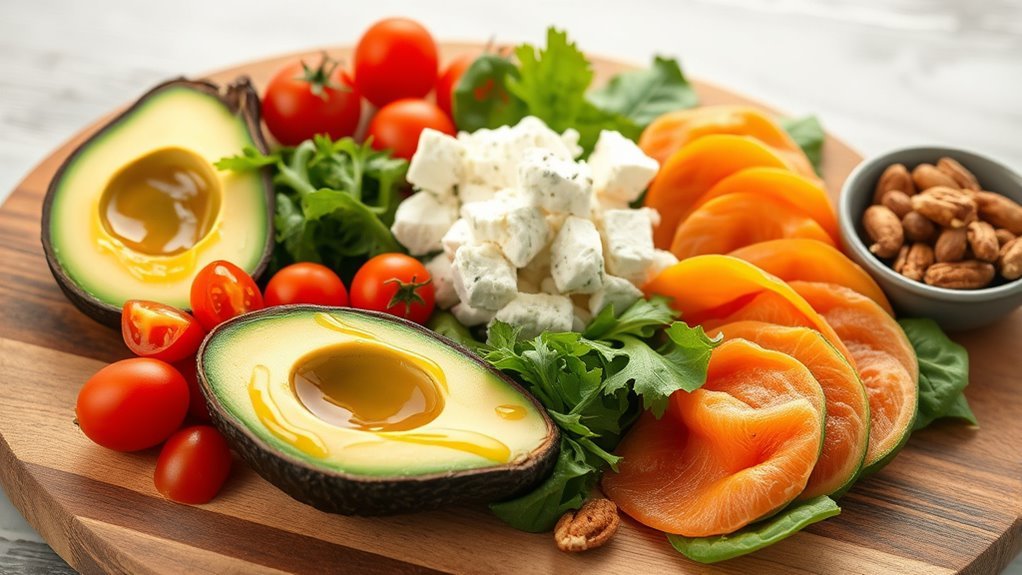

On a keto diet, you’ll eat high-fat and moderate-protein foods while severely limiting carbs to 20-50 grams daily. Focus on low-carb vegetables like spinach and zucchini, and enjoy protein from meats, seafood, and dairy like heavy cream and cheese. Healthy fats, such as olive and coconut oil, will fuel your body in ketosis. This diet not only promotes energy and weight loss but also includes tasty options to keep you satisfied. Discover more ways to thrive on keto.
Understanding the Ketogenic Diet Principles
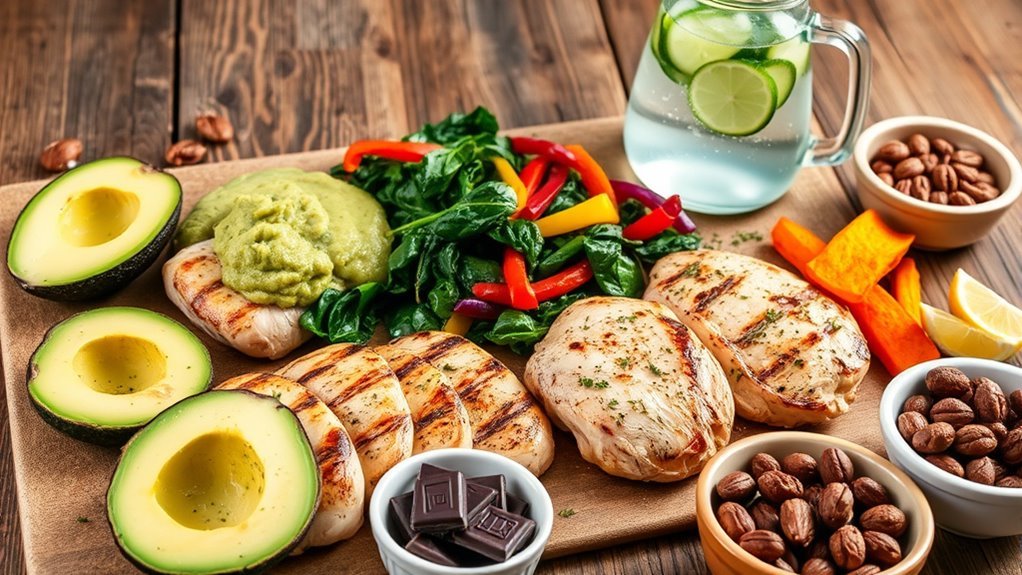
When you immerse yourself in the ketogenic diet, it’s vital to understand its core principles to effectively reap its benefits. The keto diet basics revolve around significant carbohydrate restriction, which typically means limiting your daily intake to about 20-50 grams. This drastic reduction forces your body into a state of ketosis, where it burns fat for fuel instead of glucose. You’ll focus on higher fat intake, moderate protein, and minimal carbs, which can lead to improved energy levels and weight loss. However, it’s essential to choose quality fats and maintain a balanced nutrient profile. Understanding these principles will empower you to make informed choices, ensuring you enjoy the freedom of a healthier lifestyle while adhering to the ketogenic framework.
Low-Carb Vegetables to Include
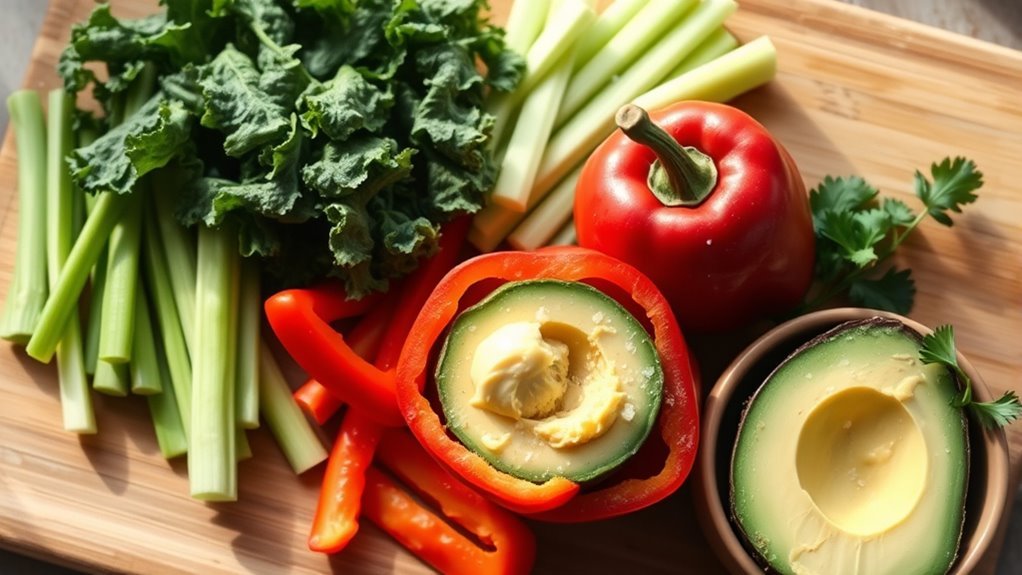
Including low-carb vegetables in your ketogenic diet is essential for maintaining nutritional balance while keeping your carbohydrate intake in check. Incorporating a variety of keto-friendly greens and low-carb roots can provide necessary vitamins and minerals without disrupting ketosis.
Here’s a quick reference table for some great options:
| Keto Friendly Greens | Low Carb Roots |
|---|---|
| Spinach | Radishes |
| Kale | Turnips |
| Zucchini | Cauliflower |
| Broccoli | Cabbage |
These vegetables are not only low in carbs but also rich in fiber, which can aid digestion and keep you feeling full. Embrace these options to sustain a vibrant and healthy ketogenic lifestyle while enjoying the freedom of diverse flavors!
Delicious Protein Sources for Keto
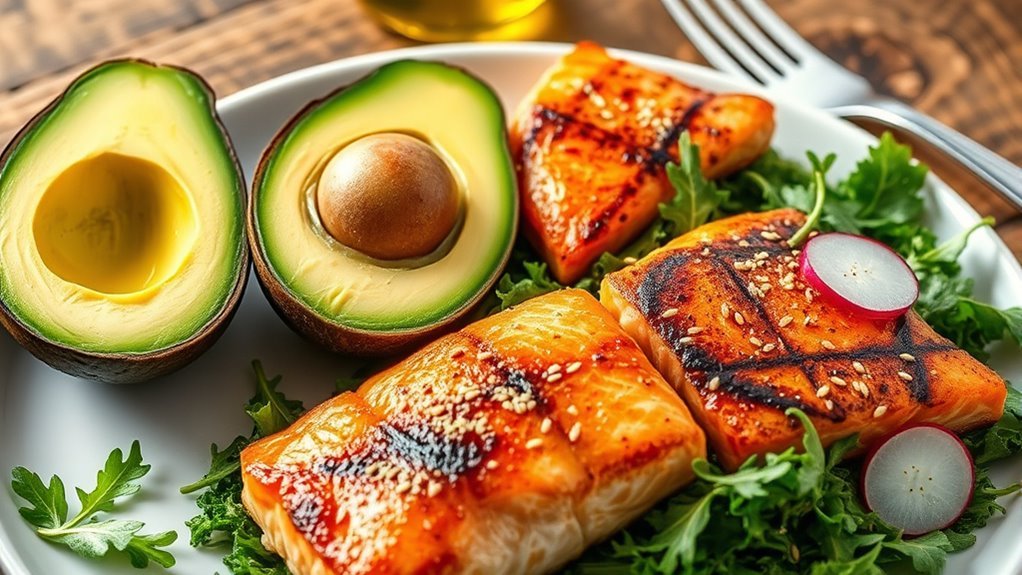
While you navigate the ketogenic diet, finding delicious protein sources is essential for supporting your energy levels and muscle health. Here are some tasty options to explore:
- High Protein Meats: Think chicken, beef, and pork. They’re not just satiating but also rich in essential nutrients.
- Seafood Options: Fatty fish like salmon and mackerel provide omega-3s along with your protein boost.
- Plant-Based Proteins: Explore tofu varieties and legumes for a vegetarian-friendly approach that still aligns with your dietary needs.
Don’t forget about protein shakes for a quick snack or egg dishes filled with flavor. Incorporating organ meats can also elevate your nutrient intake, making it easier to thrive on your keto journey. Enjoy experimenting!
Healthy Fats That Fuel Ketosis
To successfully enter and maintain ketosis, incorporating healthy fats into your diet is essential. Healthy oil choices like olive oil and coconut oil can provide the necessary fat content while promoting overall health. These oils not only support ketosis but also offer anti-inflammatory benefits. Avocado benefits are impressive, too; they’re rich in monounsaturated fats and fiber, which can help you feel full longer and aid in digestion. Including avocados in your meals can enhance flavor while keeping your carb intake low. Embracing these healthy fats empowers you to enjoy your meals without feeling restricted, allowing for a satisfying keto lifestyle. Prioritize these options, and you’ll fuel your body effectively while enjoying the freedom of your dietary choices.
Dairy Products Suitable for Keto
Incorporating healthy fats is just one aspect of a successful keto diet; dairy products can also play a significant role in your meal planning. Choosing the right dairy can enhance your meals while keeping you in ketosis. Here are some great options to evaluate:
- Cheese Varieties: Opt for high-fat cheeses like cheddar, mozzarella, and cream cheese. They’re low in carbs and rich in flavor.
- Heavy Cream: This is a versatile cream option you can use in coffee, sauces, or recipes for added richness.
- Greek Yogurt: Choose full-fat, unsweetened Greek yogurt, which can be a great snack or ingredient in smoothies.
These dairy products not only fit your keto lifestyle but also offer delicious ways to enjoy your meals.
Nuts and Seeds for Snacking
Nuts and seeds are not just tasty snacks; they’re also nutrient-dense options that can complement your keto diet. When you choose from various nut varieties like almonds, walnuts, and macadamias, you’re getting healthy fats, fiber, and protein—all essential for maintaining energy levels. Additionally, seeds like chia, flax, and pumpkin offer impressive seed benefits, including omega-3 fatty acids and antioxidants.
Snacking on these foods can help curb cravings and keep you satisfied between meals. Just be mindful of portion sizes, as calories can add up quickly. Incorporating a mix of nuts and seeds into your diet allows you to enjoy a variety of flavors and textures while supporting your health goals. So, feel free to snack wisely!
Keto-Friendly Condiments and Sauces
While many people think of condiments and sauces as mere flavor enhancers, they can play an essential role in a keto diet by adding taste without excess carbohydrates. Choosing the right options allows you to enjoy your meals while staying within your carb limits. Here are three keto-friendly condiments to evaluate:
Condiments can enhance flavors in your meals while keeping carbs in check on a keto diet. Choose wisely to enjoy every bite!
- Homemade Mayo: This creamy staple can be easily made using eggs and healthy oils, keeping it low in carbs and high in healthy fats.
- Sugar Free Ketchup: Look for brands or recipes that use natural sweeteners to satisfy your cravings without the carbs.
- Mustard: Most varieties are low in carbs, making it a great option to spice up your dishes.
These condiments can elevate your meals while supporting your keto journey.
Satisfying Keto Desserts
After enhancing your meals with keto-friendly condiments, you might be wondering how to satisfy your sweet tooth without derailing your diet. Fortunately, there are plenty of options that keep your carb count low while still delivering on taste. One popular choice is keto chocolate, which is often sweetened with erythritol or stevia, allowing you to indulge without guilt. You can also whip up a delicious low carb cheesecake, made with cream cheese, almond flour, and a sugar substitute, providing a creamy texture that’s hard to resist. These desserts not only satisfy cravings but also align with your keto lifestyle, giving you the freedom to enjoy treats while maintaining your dietary goals. Enjoy experimenting with these options!
Beverages to Enjoy on a Keto Diet
When you’re on a keto diet, choosing the right beverages is essential for staying within your carb limits. Here are some keto-friendly options to keep you refreshed:
- Herbal Teas: These are naturally low in carbs and can be enjoyed hot or iced. They come in various flavors, making them a versatile choice.
- Sparkling Water: Opt for unsweetened, flavored varieties. They provide a satisfying fizz without the carbs found in sugary drinks.
- Keto Friendly Cocktails: When you want to indulge, consider drinks made with low-carb mixers, like vodka with soda water and a splash of lime.
Staying hydrated and enjoying your beverages can be simple and delicious while adhering to your keto lifestyle!
Meal Planning Tips for Success on Keto
Meal planning is essential for sticking to a keto diet, as it helps guarantee you’re consuming the right balance of macronutrients. To successfully navigate your meal prep, consider these tips for portion control and variety:
| Protein Sources | Healthy Fats | Low-Carb Vegetables |
|---|---|---|
| Chicken Thighs | Avocado | Spinach |
| Salmon | Olive Oil | Broccoli |
| Eggs | Coconut Oil | Zucchini |
Frequently Asked Questions about the Keto Diet
1. What foods can I eat on a keto diet?
On a keto diet, you can enjoy a variety of foods that are low in carbohydrates and high in healthy fats. This typically includes meats (like beef, pork, chicken, and fish), eggs, non-starchy vegetables (such as leafy greens, broccoli, and cauliflower), nuts and seeds, avocados, and healthy oils (like olive oil and coconut oil). Dairy products like cheese and heavy cream are also allowed in moderation. It’s important to avoid sugary foods, grains, and starchy vegetables to maintain ketosis.
2. Can I eat fruits on a keto diet?
While fruits are generally healthy, many are high in sugars and carbohydrates, which can hinder ketosis. However, you can enjoy small portions of low-carb fruits such as berries (like strawberries, raspberries, and blackberries) in moderation. It’s important to track your carbohydrate intake and choose fruits that fit within your daily limits.
3. What should I avoid while on a keto diet?
On a keto diet, it’s crucial to avoid foods that are high in carbohydrates. This includes grains (like bread, pasta, and rice), sugary foods (including sweets, sodas, and most desserts), starchy vegetables (such as potatoes and corn), and most fruits (except for small portions of low-carb options). Always check labels for hidden sugars and carbs, especially in processed foods.
4. How do I ensure I’m getting enough nutrients on a keto diet?
To ensure adequate nutrient intake on a keto diet, focus on consuming a wide variety of low-carb vegetables, high-quality proteins, and healthy fats. Incorporate nutrient-dense foods like leafy greens, cruciferous vegetables, and nuts to enhance your vitamin and mineral intake. You might also consider taking supplements for nutrients that could be lacking, such as magnesium, potassium, and omega-3 fatty acids, but consult with a healthcare provider before starting any supplements.
5. How can I make keto-friendly meals?
Making keto-friendly meals is easier than it sounds! Start by choosing a protein source, like chicken or fish, and pair it with low-carb vegetables. Use healthy fats for cooking, such as olive oil or butter, and add herbs and spices for flavor. You can also experiment with recipes that substitute high-carb ingredients for low-carb alternatives, like cauliflower rice instead of regular rice or zucchini noodles instead of pasta. Meal prepping can also help you stick to your diet by having ready-to-eat options on hand.
References
- https://www.ncbi.nlm.nih.gov/pmc/articles/PMC6313440/
- https://www.health.harvard.edu/staying-healthy/the-ketogenic-diet
- https://www.cdc.gov/healthyweight/healthy_eating/index.html
- https://www.webmd.com/diet/what-is-the-keto-diet
- https://www.mayoclinic.org/healthy-lifestyle/nutrition-and-healthy-eating/expert-answers/keto-diet/faq-20458856
- https://www.nutrition.org.uk/healthyliving/basics/keto-diet.html
- https://www.ncbi.nlm.nih.gov/books/NBK499877/